Category Archives: Energy and Climate Change

News and articles on climate change, vehicle pollution, and renewable energy.

Majority of drivers would consider EV purchase after lockdown

The majority of drivers have noticed a decline in air pollution during lockdown and would be willing to purchase an electric vehicle (EV) to help keep it this way, according to a survey carried out Smart Home Charge.

According to the survey, which was conducted on 291 people, 72.5% of respondents said good air quality was ‘very important’ to them with 97% saying they have noticed the positive effect that lockdown has had on local air quality.

68.4% of respondents acknowledged that having too many petrol/diesel vehicles on the road is having the biggest impact on air pollution and consequently 66% said they would be willing to purchase a fully electric car to help keep air pollution levels down.

14.4% said they would be willing to cycle and walk more, 2.1% said they would consider car-sharing, and 3.1% said they would avoid driving into town altogether.

Over 50% of respondents also said they would be more likely to buy a new or used EV in the next year if the government introduced a scrappage scheme for petrol and diesel cars.

Read more: Air Quality News

It’s Time to Go Green!

If you would like to know more about Solar Panels and the PowerBanx range of home battery systems, and get a free instant quote, please complete our online form:

MPs call for accelerated rollout of EV infrastructure and emission zone extensions

The All-Party Parliamentary Group for Air Pollution has called for an accelreated roll out of electric vehicle infrastructure and for emissions zones to be extended to help tackle climate change as the coronavirus lockdown starts to lift.

The APPG has launched its Strategy to Reduce Coronavirus Infection as we emerge from Lockdown in order to keep air pollution low.

The group said studies in the US, China and Europe have identified the strong correlation between areas of high air pollution and COVID-19 deaths.

Part of the suggested proposals include extending emission zones in UK cities, introducing scrappage schemes for older vehicles, accelerating the roll out of EV infrastructure and bringing forward a ban on new fossil fuel engines to 2030 at the latest.

Geraint Davies, chair of the APPG Air Pollution, said:

“There is a risk that increased private transport as lockdown measures are reduced will increase pollution levels beyond pre-lockdown levels.

“Government must provide a clear message that pollution should be reduced, while supporting greener transport with fiscal measures and giving local government the tools to help do the job.”

Read more: Smart Transport

It’s Time to Go Green!

If you would like to know more about Solar Panels and the PowerBanx range of home battery systems, and get a free instant quote, please complete our online form:

Electric cars gain market share in Europe despite Covid-19 crisis

Data suggests that carmakers are making progress towards meeting emissions reductions targets

Electric and hybrid cars gained traction among European buyers in April despite coronavirus lockdowns stalling the market, suggesting carmakers are likely to avoid potential fines potentially worth billions of euros if they fail to reduce average emissions.

Battery electric vehicles and plug-in hybrid cars accounted for 17% of sales across all European markets, including the UK, in April, according to data collated by industry analysts Jato Dynamics. That was more than double the 7% market share achieved in April 2019.

The data show buyers were more likely to opt for electric and hybrid cars even as overall sales fell dramatically. Total car sales, including petrol and diesel models, fell from 1.34m units in April 2019 to 292,600 vehicles in April 2020, the lowest level since the 1970s, Jato said.

Sales of battery electric cars fell by 29% during the month compared with the previous year, but performed far stronger than the 78% decline seen across the market as a whole as sales of petrol and diesel cars decreased much faster.

Sales of plug-in hybrid cars rose by 7% according to Jato. Volkswagen, Volvo and Ford all benefited from strong growth in sales of plug-in hybrids.

Read more: The Guardian

It’s Time to Go Green!

If you would like to know more about Solar Panels and the PowerBanx range of home battery systems, and get a free instant quote, please complete our online form:
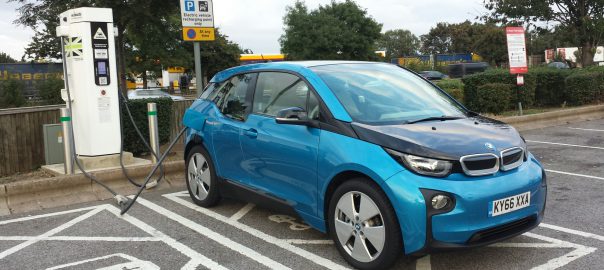
The future of transport – building EV growth into the energy network

Climate change has raced up the list of priorities for the public during the last year or so.

MORI polls have shown that this is now at the top of the public’s concerns, sharing importance levels only achieved by Brexit, social care and the NHS

But there is much to do in order to meet the government’s legally binding targets of the UK being net-zero carbon by 2050. Of the key areas of electricity supply, heating and transport, progress in the latter is slower by some margin.

So, what are the answers?

Government policy is lagging behind where it should be and attracting criticism from the independent Committee on Climate Change. The automobile industry is moving ahead regardless, perhaps seeing the way the wind is blowing. Local authorities are declaring climate emergencies and introducing wide ranging local plans to achieve even more stringent targets.

More infrastructure is being delivered to facilitate EV charging but, more importantly, this is being linked to wider green agenda aims via vehicle to grid chargers. These fit EV ownership nicely into the thread of ‘homes / buildings as power stations’ in their own regard and the very definition of decentralisation. All of these will play a role in the future. Government policy looks forward to 2035 but perhaps by then the deep seated and intractable desire of the British individual to own a car at all might be starting to fade, with car clubs and shared transportation becoming the norm.

Climate Change

There is a whole international infrastructure which oversees climate change across the globe. The UNFCCC and IPCC have been saying for years that global warming is worsening and that urgent action needs to be taken. However, the IPCC report of October 2018 touched a particular nerve with the public.

This was the most hard-hitting report to date and effectively said that the world has 12 years to get a grip on global warming, or there will be irreparable damage to the world’s ecosystems and environment. From this report sprung a new vigour of climate action. Greta Thunberg and Extinction Rebellion were but two indicators of this.

Read more: Air Quality News

It’s Time to Go Green!

If you would like to know more about Solar Panels and the PowerBanx range of home battery systems, and get a free instant quote, please complete our online form:

Lambeth cracks down on harmful car idling

Lambeth Council is introducing £20 fines for drivers who leave their engine running whilst stationary and will run a new awareness campaign as part of the ongoing battle to improve air quality in the London borough.

Drivers who allow their vehicle engines to run unnecessarily when parked in the borough will be asked to turn off their engines, and if they fail to cooperate, will be issued with a fine under the new policy adopted in May. The move builds on previous anti-idling events in the borough to raise awareness and educate drivers on the effects of idling.

Councillor Claire Holland, Lambeth’s Deputy Leader (Sustainable Transport, Environment & Clean Air), said: “Cleaning up toxic air is an absolute priority for this council.

“Poor air quality is a huge health risk to our residents, and engine idling is a major contributor. We are determined to tackle the issue and are confident these new measures will help encourage people to change their behaviour so that everyone in Lambeth – particularly young children due to the effects on their development – is able to breathe clean air.”

Read more: Smart Transport

It’s Time to Go Green!

If you would like to know more about Solar Panels and the PowerBanx range of home battery systems, and get a free instant quote, please complete our online form:

Brits predicted to surge to electric vehicles post-lockdown

Improved air pollution levels during lockdown could result in a surge towards electric vehicles (EVs), a new study has found.

The latest research by online parking portal YourParkingSpace.co.uk discovered that 4-in-10 people are more likely to purchase an EV in the future as a direct result of the lockdown which has seen fewer vehicles on the road, resulting in less pollution.

Indeed, the findings correspond to April’s car sales, which although dramatically down due to the government restrictions, saw the electric Tesla Model 3 as the UK’s best-selling car and EVs take a record market share of 32 per cent.

Harrison Woods, managing director at YourParkingSpace.co.uk, commented: “The lockdown has changed nearly every aspect of life, including less vehicles and traffic fumes, and our study would indicate that this will result in a surge in popularity towards electric vehicles.

“While plug-in cars have been growing in popularity over the last few years, seeing and feeling the benefits of less pollution means we will probably see many more EVs on the roads of Britain sooner rather than later.”

Read more: Fleet Point

It’s Time to Go Green!

If you would like to know more about Solar Panels and the PowerBanx range of home battery systems, and get a free instant quote, please complete our online form:

Number of diesel cars on UK roads falls for first time in 25 years

There were 111,000 fewer diesel cars in the UK in 2019 than the year before as people switched from polluting vehicles to greener ones

The UK has reached a motoring milestone, passing ‘peak diesel’ as the number of diesel cars on the roads fell for the first time in at least 25 years.

There were 111,000 fewer diesel cars in the UK in 2019 than the year before as people switched from polluting vehicles to greener, electric ones, according to government figures.

Although sales of diesel vehicles have been falling for a while this is the first time that the total number on the roads has declined, according to data from the Department for Transport.

“These figures hint at a motoring milestone – the possibility that we have hit or even passed ‘peak diesel’,” said Steve Gooding, director of the RAC Foundation.

Collapse in diesel sales

“This was due to the collapse in sales of new diesel cars together with the scrapping of older diesels, which have either come to the end of their useful lives or whose owners fear increasing restrictions on their use because of air quality concerns,” he said.

Read more: iNews

It’s Time to Go Green!

If you would like to know more about Solar Panels and the PowerBanx range of home battery systems, and get a free instant quote, please complete our online form:

Electric cars could cut total CO2 by 12 per cent, Nottingham study shows

Total carbon emissions in the UK will be cut by almost 12 per cent if the country exclusively uses electric cars in future, a new study shows.

Research by Nottingham Trent University shows that 42 million tons of CO2 (MtCO2) will be removed from the atmosphere in the UK – a reduction of 11.89 per cent of the UK’s 351.5 MtCO2 total emitted last year.

The analysis offsets the increase in carbon emissions for the electricity grid which is required to power the country’s 32 million cars and taxis if they were switched to electric vehicles.

The switch to electric cars is found to save 14 per cent from the total carbon emissions, but will also cause an increase in carbon emissions from electric power stations of about 2.1 per cent for the additional electricity needed, making the net savings to be about 11.89 per cent.

The research – by PhD candidate George Milev, from the School of Architecture, Design and the Built Environment – considers fully electric cars currently used in the UK, including the Tesla Model 3, Nissan Leaf, Jaguar I-Pace, and more.

“These are encouraging findings and show just how much impact the switch to electric cars could have,” said researcher Mr Milev.

“In the wake of the Covid-19 pandemic, we are regularly seeing reports on how the environment has benefitted from the decreased use of combustion engines.

“If and when the UK moves exclusively to electric car usage, we will similarly see real benefits in the dramatic reduction in levels of CO2.”

Read more: Westbridgford Wire

It’s Time to Go Green!

If you would like to know more about Solar Panels and the PowerBanx range of home battery systems, and get a free instant quote, please complete our online form:

Electric cars: Have we reached turning point?

Electric cars are coming, but we already know this to be a fact.

Carmakers are ramping up their battery-powered fleets in significant numbers – everyone from Audi to Volkswagen and most brands in between. Until now, the widespread acceptance of them has been relatively minor, but are we about to see a dramatic change?

It’s human nature to try and look for the silver lining in the darkest times. And as the COVID-19 pandemic has engulfed the world, one of the few positives to come from this crisis is the dramatic reduction in air pollution around the world, largely brought on by the drop in traffic as people leave their cars in the driveway and stay inside.

You may have seen anecdotal evidence on your social media feed – pictures of clearer skies over major cities like London and Sydney – but there’s scientific evidence to back this up. Earlier in April, NASA released satellite data that showed a 30 per cent drop in air pollution over the north-eastern corner of the United States. The space agency’s images showed the dramatic reduction around major cities, including New York and Boston as well as regional areas, comparing the average concentration each March between 2015 and 2019 to March 2020.

A report from the BBC cited the UK Department for Environment, Food and Rural Affairs indicating air pollution in some cities had dropped up to 60 per cent in March, after British prime minister Boris Johnson encouraged people to work from home.

The evidence demonstrates what we have all known for some time but have largely ignored: the overwhelming reason for poor air quality is vehicle traffic using internal-combustion engines.

Read more: Cars Guide

It’s Time to Go Green!

If you would like to know more about Solar Panels and the PowerBanx range of home battery systems, and get a free instant quote, please complete our online form:

Why EV battery recycling is set to take off

Today we look at the matter of recycling batteries – covering why nervousness about their life cycle is overlooking other opportunities, how new efficiencies are being found, and which emerging technologies may influence its future.

Zero to hero

While EV battery recycling is still in its infancy, the industry is projected to be worth over $500 billion by 2050 as the electric car revolution takes off.

In fact, in the past year alone, a number of major global vehicle manufacturers have announced their own recycling schemes alongside the roll-out of their first forays into the EV market, as they understand the potential of this emerging sector. For example, VW’s plant is due to come online in 2020 and will churn out 1,200 tonnes of recovered parts – enough for about 3,000 new batteries, with the potential for greater capacity as EV take-up grows.

59210374 – isometric design of energy efficient house using renewable energy and home energy storage

At present just 5% of all lithium ion-batteries are recycled, and as such the car industry has the potential to revolutionise the way that we recycle everything from smartphones to laptops – with 1.56 billion lithium-ion powered smartphones sold worldwide in 2018 alone, that could have a major impact on reducing mining efforts and supporting a more sustainable, circular economy.

Making gains

As the first generation of EV batteries come to the end of their projected 10-year life cycle, most retain around 70-80% of their capacity. While manufacturers recommend that these are replaced in vehicles, due to the workload that they face and reducing returns for range, these batteries still offer a wealth of capacity which can be used to store solar energy for homes, power streetlights, and as back-up power sources for elevators or data centres.

“A lithium-ion battery never actually dies, it’s just like you can take an alkaline battery out of your flashlight and put it into a remote control, and it’ll still be good enough,” explains Hans Eric Melin, Founder of Circular Energy Storage Research and Consulting.

In short retired EV batteries can immediately begin a second, useful life immediately and offer years more service.

Read more: Fully Charged

It’s Time to Go Green!

If you would like to know more about Solar Panels and the PowerBanx range of home battery systems, and get a free instant quote, please complete our online form: