Monthly Archives: July 2021

Solar + storage could provide 80% of annual EV power needs

A new EUPD Research report shows that a PV system can cover 39% of the power demand of an electric vehicle, but this potentially rises to 80% if storage is included.

A 7 kW PV system connected to a 7 kWh residential battery could provide 80% of the power needed by an electric vehicle with an average driving profile of 14,000 kilometers per year, according to a new report by Germany-based EUPD Research.

The market research firm said this corresponds to 2,500 kWh of electricity consumption over an entire year. It said an EV with a driving profile of 5,000 kilometers per year and electricity demand of 900 kWh could achieve the same percentage with a 6 kW PV array combined with a 6 kWh battery. It has also calculated that a 12 kW system with storage capacity would be needed for a frequent driver with 5,000 kWh of electricity needs.

Even without storage, EV drivers can use a high share of solar power. For example, with a 7 kW system and no battery, 39% of a vehicle’s electricity needs could be covered over the course of a year from solar power generation.

Read more: pv magazine

It’s Time to Go Green!

If you would like to know more about Solar Panels and the PowerBanx range of home battery systems, and get a free instant quote, please complete our online form:

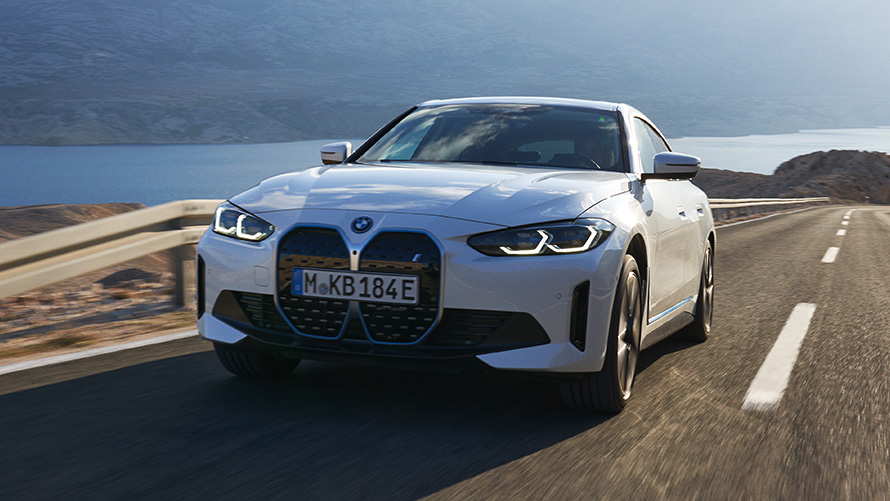
BMW i4 (Image: BMW.co.uk)

New 2021 BMW i4 makes UK debut ahead of autumn sales

Final i4 shown at Goodwood ahead of a market launch three months early, in line with BMW’s accelerated EV plans

BMW has revealed the final, production-spec version of its new i4 saloon to the UK public for the first time at this year’s Goodwood festival of speed, as it gears up to launch the Tesla Model 3 rival three months ahead of schedule.

“The decision to launch three months early was easy,” according to CEO Oliver Zipse, who outlined how BMW is “picking up the pace” with respect to the electrification of its line-up. Full specifications will be announced in the coming weeks.

The i4 will go on sale alongside the i3 electric hatchback, new iX3 mid-sized SUV and iX flagship in BMW’s expanding electric line-up. By 2023, the firm will have 12 pure EVs on sale worldwide, with an electric option available in 90% of its current market segments.

BMW i4 (Image: BMW.co.uk)

The i4’s production-spec debut comes as BMW unveils a plan to radically overhaul its approach to electric car development from 2025.

The ‘Neue Klasse’ transformation process will see the firm usher in a radically new design approach and place a heightened emphasis on technology and software. A new modular powertrain family will also be introduced, as will more efficient battery technology and greater use of recycled materials in the production process.

The final i4 stays true to the design of last year’s production-previewing concept and is clearly visually related to the combustion-engined 4 Series that went on sale late last year. The upcoming 4 Series Gran Coupé will be largely identical to the exclusively four-door i4.

Precise technical specs remain under wraps, but we know the range-topping model – likely badged i4 M – will send up to 523bhp to both axles and offer a range of 367 miles. A 0-62mph time of around 4.0sec and top speed of more than 124mph are likely.

Read more: AUTOCAR

It’s Time to Go Green!

If you would like to know more about Solar Panels and the PowerBanx range of home battery systems, and get a free instant quote, please complete our online form:

The Mobility House completes first grid-friendly second-life car battery storage system in France

A consortium led by The Mobility House has installed its first storage facility comprising both used and new Renault ZOE batteries in France, thus growing the network of such storage facilities in Europe.

The premiere was made possible by Munich-based company The Mobility House, which specializes in the use of second-life batteries and vehicle-to-grid applications.

Together with its partners Mobilize, which belongs to the Renault group, the Banque des Territoires and the Ecological Transport Modernization Fund, which is managed by the investment manager Demeter, it set up the 4.7 MW storage facility on the factory premises of the Renault branch in Douai, France.

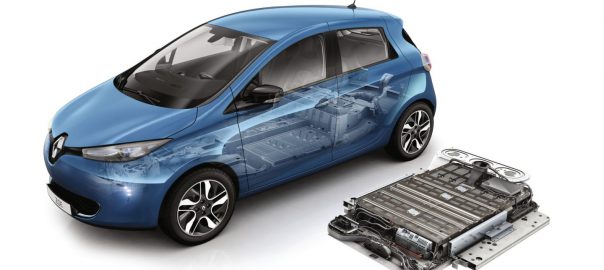
Renault ZOE, Battery illustration (image: Renault)

Of this capacity, 4 MW are prequalified for participation in the primary control power market. The Mobility House states that this project has helped increase the total capacity of car batteries it uses for the control power market in France, the Netherlands, and Germany to 33 MW.

The Renault storage system consists not only of used car batteries, but also first-life batteries. Car manufacturers are obliged to keep a certain number of batteries available as replacements. However, since they are difficult to store, one solution is to integrate them into storage devices. To achieve the optimum state of charge, they are only minimally charged and discharged.

“We have been working successfully on the integration and marketing of electric car batteries in the electricity market since 2014 and are already active in various European markets and the USA,” said Robert Hienz, CEO of The Mobility House. “With the integration of a storage facility in the capacity market, as is now the case in France, we are once again expanding our technology spectrum with an innovative application.”

Read more: pv magazine

It’s Time to Go Green!

If you would like to know more about Solar Panels and the PowerBanx range of home battery systems, and get a free instant quote, please complete our online form:

Tesla Cybertruck (Image: Tesla)

Why Do Electric Cars Look The Way They Do? Because They Can

Free from traditional gas engines, EV designers are rethinking the shape of cars. We take a detailed look at the shape of things to come.

What should the cars of the future look like? How smooth, how tall, how spacious should they be? For more than a century, most automotive designers have had to work around an internal-combustion engine and transmission. Gas, diesel, and hybrid powertrains need room to spin and breathe—sometimes to the detriment of passengers. We’re so used to stumbling over the hump of a driveshaft tunnel and giving up kneeroom for the sake of a set-back engine that it never occurred to most of us that anything could be different. But in the future, especially the near future, with a focus on electric cars built on new, dedicated platforms, designers have a rare opportunity to reimagine what a car can offer.

Many early EV ventures used existing platforms and arranged electric powertrains to fit where gas engines and transmissions had previously resided. Even Tesla’s first attempt was a revamped Lotus Elise without its 1.8-liter inline-four. Working on a nondedicated, or “nonnative,” electric platform limited designers’ options for positioning the battery and motor. Automakers often stacked batteries under the rear seat—which is why early EVs sometimes offered less legroom or cargo space than their gas counterparts—and put the motor assemblies under the hood. Even the Nissan Leaf, which packages an underfloor battery in a dedicated EV platform, still follows the old philosophy of carrying a motor where an engine normally goes. Aesthetically, too, the early electrics couldn’t break away from distinct grille shells and large air vents.

Tesla Cybertruck (Image: Tesla)

In 2017, the consulting firm McKinsey & Company said long-term use of nonnative platforms for electric-vehicle design was inefficient. Most automakers seem to agree. This year we’ve seen a wave of new models on dedicated EV platforms similar to the flat-battery, motors-at-the-axles “skateboard” layout Tesla has been using since the Model S launched in 2012. Rearrange the words “global,” “modular,” and “electric” and pick your platform from a variety of scalable roller skates with acronyms like EVA and E-GMP to see how designers reshape the automobile when they aren’t working around an engine.

What’s Inside Counts
“We have the opportunity to give the car a totally new kind of proportion,” says Steffen Köhl, Mercedes-Benz director of advanced exterior design. Köhl worked on the EQS, the first car on Mercedes’s new Electric Vehicle Architecture (EVA). The EQS is a luxury sedan with a long wheelbase, a sweeping bridge of a roofline, and a large, screen-filled cabin. Think of it as the S-class of EVs. The underpinnings of an EV allow for bigger interiors in smaller vehicles, he says. It can be “cabin-forward, with short overhangs in front and rear. Since the battery is flat ground, we can try a new kind of interior—smooth panels, the center console floating. There are no more ups and downs between the seats.”

Escaping the tyranny of the center tunnel is exciting to many designers. Imagine trying to decorate a room with an undulating hardwood floor. Furniture would be pushed to the side, with the center of the space unusable. In cars, designers regularly hide the hump with a shallow console in the front; in the back, they simply cover it with carpet and ignore it. But now that they can smooth out that hump, there’s a lot more room to play with. Köhl’s team on the EQS used this newly available real estate for an elegant multilevel console with room for a large bag in a pass-through by the driver’s knee. In Hyundai’s new Ioniq 5, which rides on the Electric Global Modular Platform (E-GMP), the space is left open, giving driver and passenger the opportunity to bump knees romantically at stoplights, although that’s not in the press literature. The flat floor also allowed Hyundai designers to put in a deep console that slides rearward so front-seat occupants can enter or exit from either side of the car.

The Great Outdoors
Early discussion of EV design was a chorus of moans from car enthusiasts about how designers would become slaves to the wind tunnel, pursuing a coefficient of drag that made everything look like an owl pellet on wheels. This dire prediction has not come to pass. Aero­dynamicists have been able to work with shapes that range from the tennis-shoe profile of the Volkswagen ID.4 to the shocking angles of the Tesla Cybertruck to the sports-car smirk of Porsche’s Taycan. According to Köhl, the smooth blob that caused the great panic was never a technical requirement; it was more of a marketing choice.

Read more: CAR AND DRIVER

It’s Time to Go Green!

If you would like to know more about Solar Panels and the PowerBanx range of home battery systems, and get a free instant quote, please complete our online form:

Hyundai Ioniq 5 (Image: hyundai.co.uk)

New Hyundai Ioniq 5 2021 review

The new Hyundai Ioniq 5 has arrived and it’s simply one of the best electric cars on sale right now

Verdict
If the Ioniq 5 is a signal of intent from Hyundai, then rival car brands should be worried. This showcase of the Korean firm’s next generation electric car tech is hugely impressive in almost every area; from the performance to the charging speeds, few rivals can match it for the money. That it also looks unlike anything else on sale, inside and out, has great tech and is relaxing to drive, means there’s very little to fault.

This is the all new Hyundai Ioniq 5. The first car that will showcase the Korean brand’s second generation EV tech – quite an ominous thought for rivals considering that, at the more affordable end of the electric car market, Hyundai and its sister brand Kia already build some of the best offerings in the business.

This time, however, Hyundai is aiming higher. This is a car that has set its sights on premium rivals, with cars like the Audi Q4 e-tron and the upcoming Tesla Model Y seen as competition as much as the likes of the Volkswagen ID.4 and Ford Mustang Mach-e.

Hyundai Ioniq 5 (Image: hyundai.co.uk)

With premium construction comes a premium design. The Ioniq 5 is a world away from the Kona Electric or indeed anything else on the road; the retro-modern shape is covered in cool details. The multi-slotted glowing front panel, the 8-bit headlights (made from 256 individual LED ‘cubes’) and bold side surfacing are just some of the features that have created a proper head-turner.

Unlike Hyudai’s previous EVs, which used architecture designed to be compatible with combustion-powered offerings, the Ioniq 5 uses the brand’s Electric Global Modular Platform. It’s the first car to ride on the fully electric architecture, with the equally dramatic looking Kia EV6 set to be the next model to hit the roads.

The move upmarket has also resulted in an increase in size. Don’t let those neat proportions fool you – when you realise that the wheels this car rides on measure a whopping 20 inches, you realise that it’s almost like Hyundai has taken the blueprints for a family hatchback and clicked ‘select all’ then ‘resize 110 per cent’. At 4,635mm long and 1,890mm wide, the Ioniq 5 is longer and wider than Hyundai’s Tucson mid-size SUV – though its roofline is slightly lower. Perhaps more significant is the wheelbase; at 3,000mm, the gap between the front and rear axles is a couple of millimeters longer even than that on an Audi A8.

It’s a stat that really makes itself known once you swing open the huge back doors – the Ioniq’s cabin is simply vast. The floor is almost completely flat throughout, and rear occupants get genuinely limo-like levels of legroom. Yet compared to the finest luxury saloons, the Ioniq’s open plan feel and big windows make it so much brighter and more airy. The boot floor is high and the space is fairly shallow, but the area it covers is so huge that there’s still an impressive 527 litres of volume on offer.

Ahead of the driver sit a pair of screens. The central infotainment display uses a similar interface to other Hyundai models, but with cleaner graphics. The digital instrument display is equally clear to read – they’re not quite the sharpest resolution you’ll find in an EV (Tesla still holds that title) but everything is very logical and intuitive. The driver assist systems are particularly well integrated; on versions equipped with blind spot cameras, the images are displayed in real time in the instrument panel when the indicators are turned on.

It’s comfy, too. The seats are squishy yet supportive, while those in the front can recline almost completely – ideal if you fancy a quick nap when the car is charging.

Read more: Auto EXPRESS

It’s Time to Go Green!

If you would like to know more about Solar Panels and the PowerBanx range of home battery systems, and get a free instant quote, please complete our online form:

Vauxhall Grandland X Hybrid4 (Image: Vauxhall.co.uk)

U.K. Dodges Brexit Auto Disaster as Vauxhall Plant Goes Electric

Stellantis NV will convert its lone U.K. car factory to make electric vans, ending months of anguish at an almost 60-year-old plant threatened by the economic fallout from Brexit.

The automaker will spend 100 million pounds ($138 million) retooling its Ellesmere Port plant near Liverpool, which employs roughly 1,000 people. Production of Vauxhall and Opel Astras will end early next year, and output of Vauxhall, Opel, Peugeot and Citroen vans will begin by the end of 2022.

Securing the future of the factory is a boon to local workers and the U.K. government, which has been trying to safeguard the nation’s auto industry amid an accelerating shift to electric vehicles. It’s the latest post-Brexit boost for Prime Minister Boris Johnson after Nissan Motor Co. last week announced plans to create a new 1 billion-pound EV and battery hub in northern England.

Vauxhall Grandland X Hybrid4 (Image: Vauxhall.co.uk)

“It’s a huge vote of confidence in our economy, in the people of Ellesmere Port and in our fantastic post-Brexit trading relationships,” Johnson said in a video message.

As part of the conversion, Stellantis will build a new body shop and on-site battery pack assembly. The carmaker formed from the merger of PSA Group and Fiat Chrysler will shrink how much of the site it uses to reduce inefficiencies and consider redeveloping excess land.

Read more: Bloomberg

It’s Time to Go Green!

If you would like to know more about Solar Panels and the PowerBanx range of home battery systems, and get a free instant quote, please complete our online form:

Volvo Polestar 2 (Image: Volvocars.com)

EV designers are seeing grilles in a whole new way

Electric vehicle designers have a new canvas on which to mark their brand image: the front end.

Since EVs don’t contain hot combustion engines, they don’t need the grilles that have shaped the look of autos for decades, with large air vents to cool what’s behind them.

EVs present the industry with a fundamental change in design because electric motors require far less space, and batteries are placed low on a skateboard platform, leaving room for more flexible interior and exterior designs. Some of the key “hard points” that define internal combustion cars, particularly the engine compartment, are now fair game for experimentation on EVs.

The question facing automakers now is what to do with all the new design space.

Not surprisingly, they disagree.

“With reduced cooling needs, an EV’s grille can be more about form than function,” said Karl Brauer, a veteran auto analyst and executive publisher at CarExpert. “That widens the EV designer’s options, but it doesn’t reduce the importance of a grille’s design, as that area can still make or break an overall look.

“I’ve seen EVs with, essentially, no grille, and I don’t think that’s the smart way to go,” he said. “A grille can provide both character and distinctiveness to a vehicle’s appearance. The lack of any grille squanders the opportunity to enhance those areas.”

Volvo Polestar 2 (Image: Volvocars.com)

The coming Tesla Cybertruck has a flat piece of unpainted metal where a grille would normally go. Besides the concept truck’s geometric weirdness, the front end is too minimalistic, Brauer contends. A blend of old and new probably strikes the best note during the great EV transition.

“Cars like the Audi A6 E-tron or GMC Hummer do an effective job of merging a traditional grille with a minimalist grille design, resulting in a sleek yet engaging front-end appearance,” he said.

Eventually, mimicking internal combustion designs may go away entirely. But the transition is likely to be gradual, over some years, so that consumers don’t recoil from the shock of the new.

Warned Brauer: “We’re not ready to give up our grilles. Yet.”

The first-generation Nissan Leaf had a sloping nose, in body color, with the charge port in the middle. That look was unique but too bland for some critics. The second-generation Leaf went for a more mainstream look, employing Nissan’s signature V-shaped grille.

Hyundai’s first EVs in the U.S., the Ioniq hatch and Kona crossover, were based on gas counterparts, so designers simply covered the grille area with textured plastic. But the coming new generation of Hyundai EVs is more adventurous.

Tesla has projected its EV image by doing away with the idea of a grille almost entirely. The first Tesla Model S sedan did have a rounded black panel that mimicked a grille, but that was later revised in favor of a small T-shaped design also found on the Model X crossover. The Model 3 sedan and Model Y crossover have no grille but do have a notable lower air intake.

Read more: AsumeTech

It’s Time to Go Green!

If you would like to know more about Solar Panels and the PowerBanx range of home battery systems, and get a free instant quote, please complete our online form:

Vauxhall Vivaro-e (Image: gb-media.vauxhall.co.uk)

Electric Van of the Year 2021: Vauxhall Vivaro-e

The Vauxhall Vivaro-e is the 2021 Auto Express Electric Van of the Year, with the LEVC VN5 and Renault Zoe Van commended

Electrification is big news in the van market, which is why we’ve created this new category. The Vauxhall Vivaro-e is a worthy first winner, because it helps to banish concerns about range anxiety. The Vivaro-e shares its technology with the Citroen e-Dispatch, Peugeot e-Expert and Toyota Proace Electric vans, but unlike those three it also comes as a five-seat Crew Van, which edges it ahead.

Vauxhall Vivaro-e (Image: gb-media.vauxhall.co.uk)

Power comes from a 134bhp electric motor, while the van’s long platform means there’s room for 50kWh or 75kWh batteries. Even the smaller pack offers a WLTP-rated range of 133 miles where rivals are struggling to break 100 miles, while the 75kWh version is rated at 195 miles. In addition, the Vivaro-e is more like a car to drive than a commercial vehicle and features the latest safety kit.

Commended
LEVC VN5
If you’re an electric sceptic, then taxi maker LEVC offers its range-extending VN5 plug-in hybrid van. It uses the same running gear as the TX taxi, so has a similarly tight turning circle, a 60-mile electric-only range and a maximum range of 300 miles once the petrol engine cuts in.

Renault Zoe Van
For the Zoe Van, Renault has simply ditched the back seats of its supermini, added a level floor and blacked-out rear windows, and fitted a mesh partition. The running gear and cabin remain unaltered, so you get the same range of 245 miles and all the connectivity you could need.

Read more: Auto EXPRESS

It’s Time to Go Green!

If you would like to know more about Solar Panels and the PowerBanx range of home battery systems, and get a free instant quote, please complete our online form:

Powerful fictions (and some facts): The truth about the harms of EV batteries

Electric vehicles are growing in popularity, but there are frequent claims the batteries in them aren’t up to snuff. Andrea Graves sets the record straight.

The electric vehicle feebate announcement has spurred keyboard warriors to “educate” others on the harms of EV batteries. Environmental and human rights advocates have emerged from unexpected quarters: Winston Peters is concerned about labour conditions in African mines and joins Judith Collins in fretting about a looming stockpile of depleted EV batteries.

These alarming claims deserve more than research via social media. Are they true?

Fiction: EV batteries will form a waste mountain
The worried politicians could turn to New Zealand’s Battery Industry Group (BIG), a stakeholder group of businesses, individuals, organisations and academics from energy, transport, waste and battery sectors. It’s committed to avoiding a large-battery legacy problem and co-designed a circular product stewardship scheme that is now with the Ministry for the Environment.

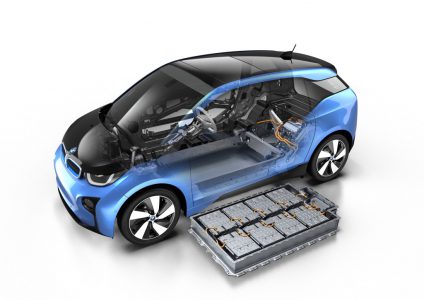
If the scheme becomes a regulation, all large batteries will have their chain of custody tracked after import. Their life expectancy varies by make, but the life of a Nissan Leaf’s relatively small and faster-degrading battery might look like this: five years with an owner who needs a long-range vehicle, who sells to someone who’s willing to charge up more often, who after another five years sells cheaply to someone who only tootles around town. A few years later, its remaining capacity can remain useful for a “second life” outside a car. Counties Power, for example, will shortly install ex-Nissan Leaf batteries to store electricity to cover outages and voltage fluctuations in remote locations. It’s also working on a battery bank to store off-peak electricity to power EV charging stations.
Fiction: EV batteries aren’t recyclable
BIG proposes collecting a fee when a battery is imported, which would fund the dissemination of batteries for second-life uses or recycling. Dr Peng Cao of the MacDiarmid Institute and the University of Auckland says that EV batteries are completely recyclable – but it’s not profitable and existing methods are polluting. Local recycling options are being explored, and nationwide scrap dealer Metalman hopes to soon offer a recycling service for all common battery types.

Fact: EV batteries (and all electronics) contain toxic materials
All electronic gear, from cellphones to televisions and electric toothbrushes, includes materials that can be toxic. Like oil, the materials are extracted from somewhere on the planet, and the resulting environmental destruction is comfortably distanced from our shopping experience. EV battery metals are no exception, but there is a mammoth push to do better.

“Developing environmentally friendly, less toxic batteries is a really hot research topic globally,” says Cao, who is part of this effort. “The second generation of EVs tried to minimise the use of cobalt. Now producers are trying to move away from it altogether. And the new chemistry batteries should be cheaper.”

A battery based on aluminium, an abundant and less toxic metal, is being developed by Wellington startup TasmanION.

Fact: Children mine cobalt for batteries (and oil refining etc)
This is true and troubling. About 40,000 children are thought to be involved in dangerous, unregulated mining in Democratic Republic of Congo. Poverty drives their families to it. The most valuable metal they unearth is cobalt – the same metal battery manufacturers are trying to retire from their products. International coalitions are working to improve the conditions that drive children to work in the mines and to source less exploitative cobalt from the murky supply chain.

But before you throw stones in a cobalt revolt, check whether you’re living in a glass house. Cobalt is also used in oil refining, the superalloys of aircraft engines and prosthetic joints. And do you own gold, drink coffee, eat chocolate, sugar or bananas or wear cotton? These are some of the products produced by an estimated 160 million children who labour in often dangerous conditions.

There are also valid concerns about rechargeable batteries’ other metals, particularly lithium. Again, there’s a huge research thrust to address that, with a local company at the cutting edge.

Read more: THE SPINOFF

It’s Time to Go Green!

If you would like to know more about Solar Panels and the PowerBanx range of home battery systems, and get a free instant quote, please complete our online form:

Tesla showroom in Milton Keynes (Image: T. Larkum)

The age of the electric vehicle is upon us

Last August included an exciting day with the arrival of my first electric car. From an early age I took an interest in cars and in particular their internal-combustion engines. I never expected to see a competing automotive propulsion technology in my lifetime.

At the Frankfurt Motor Show in 2009, Tesla Inc. stunned the world with a prototype of the car that would eventually become the Model S. The first electric car that looked like a car, not a glorified golf cart or something from a Sci-Fi movie set.

In one fell swoop, Tesla silenced all critics with a car that had the style, poise, and range to be anyone’s daily driver. Introduced to the public in June of 2012, by 2016 the P100D version of the Model S boasted a range of over 300 miles and enough horsepower to turn the standing start quarter mile at over 120 miles per hour, making it one of the most powerful mass-produced cars ever made.

The key technology that made the Model S possible is a lithium ion — or Li-ion — battery, a technology that’s been around for years powering laptop computers and cell phones and other devices that benefit from power dense batteries. The Model S became a reality because Tesla had the vision to see all the pieces of a modern electric vehicle put together with 1995 technology, and the audacity to take on the worldwide automotive industry.

Tesla showroom in Milton Keynes (Image: T. Larkum)

Gas cars by default

The fact is the IC, the internal-combustion engine, was never the best propulsion device for a car, it was simply the only propulsion device that 19th century technology had to offer that provided the power and range to meet consumer demand.

The electric motor was always the best propulsion device, but the best electric energy storage at the time (lead-acid batteries) didn’t have anywhere near the energy density needed to compete with IC engines for range. Internal combustion won the day and went on to become the dominant — and then the only — propulsion device for cars for over 100 years.

Internal-combustion engine development progressed in every decade garnering significant research and development budgets. The 130-year effort to develop IC technology for vehicles showed the ingenuity and perseverance that determined people can put forward when challenged. Starting in the 19th century with noisy, smelly and inefficient engines that required constant maintenance, engineers plied their craft to make modern IC engines quiet, power dense, reasonably efficient and remarkably reliable.

Yet all that progress is easily eclipsed with a modern EV.

Future arrives EVs produce zero tailpipe emissions, have significantly fewer moving parts, are as reliable as your refrigerator, and operate at a fraction of the cost of an IC-powered car. EVs don’t require multi-speed transmissions or a reversing gear. To go in reverse, the electric motor simply spins backwards.

Read more: The Day

It’s Time to Go Green!

If you would like to know more about Solar Panels and the PowerBanx range of home battery systems, and get a free instant quote, please complete our online form: