Peugeot’s boxy, van-based Rifter has proved a hit with active families
The new electric model is available in two trim levels: allure premium and the GT
Have you noticed how van drivers who whizz past you or sit on your tail always seem to look happy and contented?
That’s because vehicle manufacturers know that ‘white van man’, who almost lives in his vehicle and covers exceptionally long distances, needs very comfortable seats, a high driving position, a practical layout with lots of storage and cubby holes, plenty of cargo space, and a good lick of pace.
That’s why Peugeot’s boxy, van-based Rifter has proved such a hit with active families and couples seeking a no-nonsense vehicle that will carry up to seven people, be flexible enough to load up with leisure equipment, and be no slouch on the road.
If you would like to know more about Solar Panels and the PowerBanx range of home battery systems, and get a free instant quote, please complete our online form:
THE electric van segment is expanding at an impressive rate. Vans make excellent platforms for electric powertrains, with their long wheelbases and relatively square dimensions ensuring that batteries and motors fit snugly and without any intrusions into the all-important payload.
But with a bigger selection than ever, which one do you opt for? Let’s take a look at some of the best electric vans available today…
1. Peugeot e-Expert
The entirety of the PSA Group is on a real electric endeavour at the moment. It’s particularly noticeable in its range of vans, which spread wide across the group’s various brands. One particular standout is the Peugeot e-Expert, which arrives with a range of 205 miles – one of the best in the business. Practical and well-made inside, and the cab features a clever central touchscreen with plenty of functions.
2. Citroen e-Berlingo
Citroen’s Berlingo has been one of the go-to compact vans for some time now, so it’s only natural that an electric powertrain would be added to it. In the e-Berlingo you get a range of up to 171 miles from a single charge, thanks to a 50kWh battery pack, while a 100kW motor provides sprightly performance. Plus, thanks to 100kW rapid charging, the e-Berlingo’s batteries can be taken to 80% in 30 minutes.
3. Nissan e-NV200
Nissan’s e-NV200 was one of the early adopters of electric power. This compact van brings a range of up to 124 miles during mixed driving – though Nissan says you could see up to 187 miles from a single charge if you’re doing predominantly city driving. As well as the conventional panel van, you can also get a passenger-focused version in the e-NV200 Combi. It only adds another string to the van’s bow.
Nissan’s e-NV200 Electric Ice Cream Van (Image: Nissan)
4. Mercedes eVito
The Vito is an ever-popular van from Mercedes, providing the same high level of fit-and-finish you get from the firm’s road cars, but with a great level of flexibility and practicality. The eVito aims to bring the same positive factors but with an efficient electric powertrain. Though its 92-mile range might mean it’s better suited to short journeys, it’s still available in two lengths – helping it to be more flexible to a variety of buyers.
If you would like to know more about Solar Panels and the PowerBanx range of home battery systems, and get a free instant quote, please complete our online form:
Morgan Stanley analyst Adam Jonas wrote in a note to clients on Friday that global EV sales will grow 50% or more next year, while sales of internal combustion engine vehicles are expected to grow 2% to 5%. He also predicted that global EV penetration will rise from 4% to 31% by 2030.
Those predictions may or may not come true, but one thing is certain and that is 2021 is shaping up to be a critical year for EV adoption. Mercedes-Benz just announced its Tuscaloosa plant will build large, electric SUVs starting from 2022 as part of what it calls its electric-vehicle “fireworks display”. Aiming to take the lead in premium EVs from Tesla Inc (NASDAQ: TSLA), Mercedes-Benz announced plans to deliver eight new all-electric models starting from early 2022.
But near-term, Europe remains the most fertile EV ground. Stricter emission regulations and government subsidies that make these vehicles much more affordable are speeding up the de-adoption of internal combustion engine (ICE) vehicles. Here are six electric vehicles that could bring on the “ICEpocalypse” to European roads.
Volkswagen’s ID.3 And ID.4
Volkswagen’s (Pink: VWAGY) ID3 was the top-selling EV in Europe only one month after being launched. But Europe has been shifting toward larger vehicles, so the ID.4 should grow in popularity quickly and, with its highly competitive price considering the range and specs, it should give the ID.3 a run for its money.
Renault ZOE
ZOE (Pink: RNLSY) has been the top-selling electric vehicle on the continent in most of the last decade. As it continues to improve and range increases, the ZOE should replace the Clio, which sold 230,000 units in Europe during the first 10 months of the year. Although the ZOE, which was the top-selling EV in Europe until the ID3 came along and took its throne in October, was at 73,403 units, it’s only a matter of time before it reaches 100,000 in European sales per year. But it needs to fend off the competition and grow a backbone.
The improved Renault Zoe has a longer range and posher interior (Image: Renault)
Tesla’s Model 3 and Model Y
Tesla’s Model 3 is the top selling EV in the world. In Europe, it is second on the top-selling list. It’s not exactly on track to beat 100,000 sales in 2020, but Tesla is determined to win over Europe considering its ambitious developments at its upcoming Berlin factory. However, it has been ordered again to suspend its preparations due to a successful court injunction by environmentalists. This time round, Tesla was stopped by snakes and lizards. But its Model Y will arrive to Europe eventually and it is probably going to sell considerably better than the Model 3, due to its features and an overall preference for its class of vehicle.
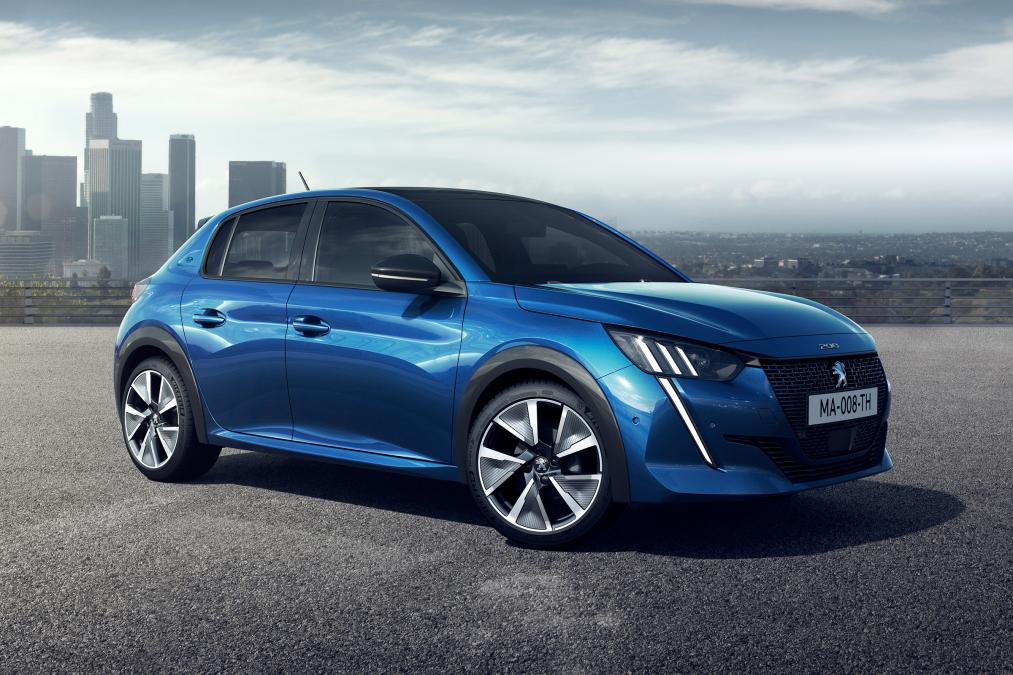
Peugeot e-208
Peugeot’s (Pink: PUGOY) 208 was the 7th best-selling vehicles in the first 10 months of the year. So, while the e-208 had only about 25,000 sales in that time period, it could gradually rise up the rankings as tech improves, range increases, and cost drops in the coming year. It is considered by many as one of the best European EV offerings on the market, a testament to Peugeot’s upswing.
If you would like to know more about Solar Panels and the PowerBanx range of home battery systems, and get a free instant quote, please complete our online form:
As it turns out, not all electric cars are created equal
Electric cars are not absolute newcomers to the car industry anymore. Over the past five years or so, most carmakers have churned out at least one electric car with plans to release a handful of others over the coming decade or so. The charging infrastructure has grown, too.
While this is obviously good news, it also leaves us (and the customer) with quite a big pond of EVs to choose from. To add more to the confusion and indecision, electric cars come in all shapes and sizes, set in motion by just one electric motor, two, or even three, and, obviously, very different price tags. Long story short, picking your next electric car might leave you scratching the top of your head. We get it.
Fret not, though. We’ve been kindly invited by Romania’s leading car outlet, Automarket, to an eight-day, eight-car real-life experiment that set out to discover just how good (or bad) the latest electric cars are in actual traffic both in and outside the city. What followed was to be known as Electric Romania 2020, basically a workshop on wheels powered by Vitesco Technologies, joined by other partners such as Michelin. The experience helped us better digest and understand both the strengths and shortcomings of today’s electric car: range-wise but also in terms of comfort, dynamics, user friendliness, tech-savviness, and overall liveability.
Porsche Taycan Turbo S (Image: Porsche)
This is where I started feeling like doing my dissertation paper all over again. Firstly, Electric Romania was thought out and designed as a tour of Romania done with EVs.
In case you’re asking why eight days, well, the backbone of the tour consisted of eight cars – all launched in 2020 on the Romanian market – and 14 journalists and content creators that would sample the said cars.
Basically, you got to drive another car each day, and the end of which you had to fill in a form with various bits of information: distance travelled, total time of travel, charging times, how much battery you had left at the destination, how much electricity went into the battery during charging, average speed, and so on.
So, each electric car was put through its paces over eight days, but every time by a different driver with a completely different set of driving habits than the one before him and on a different route. This included highways, winding A- and B-roads through the mountainside and hillside, as well as flat, plain-splitting roads where the elevation didn’t change much.
As for the car lineup itself, this is it, in the exact order we drove them:
Porsche Taycan
Renault Zoe
Volkswagen ID.3
Audi e-tron Sportback
Hyundai Kona Electric
Kia e-Niro
Mini Cooper SE
Peugeot e-2008
From here on, each car’s battery pack, electric motor (or motors), range, other specs as well as driving impressions will be presented as it follows.
Porsche had to get its first electric car right. And good God, it did. The Taycan Turbo is not just a flurry of performance, but a smile magnet. Sitting behind the wheel in the handful of traffic jams that slowed us down is the best way to enjoy the most honest smiles I’ve been treated with in a luxury car. Some people see you in Mercedes-AMG S63 or in a Panamera Turbo and you can just read either envy or loathing on their faces. With the Taycan, it’s the complete opposite: candid, genuine smiles from folks of all ages, walking on the street or driving in the next lane.
When you’re not sitting in a traffic jam, the Taycan Turbo’s personality can flip from tame to psycho as quick as it can go from naught to 60 mph: three seconds flat with Launch Control, on its way to a top speed of 260 kph (162 mph). The acceleration is brutal. You can easily squeeze a lot of squeal out of the wider-than-life rear tires from a standstill and with a drop of bad luck, you can even fracture a vertebra before the electronic nannies kick in or you decide to lift off. Even at highway speeds, smashing the accelerator will make the Taycan squat then shoot straight up ahead. The back of your head never leaves the headrest. Even if it wants, it can’t. At this point, I’m scared just thinking of what the Turbo S can do.
For a car this wide and long, city cruising is surprisingly swift and easy, but it’s the outer roads that make your spine tingle inside the Taycan. When on, the Launch Control feature triggers the Overboost function that unlocks the Turbo’s 500 kilowatts (670 hp, 680 PS) and 850 Newton-meters (627 pound-feet) coming from two electric motors fed by the 83.7-kWh battery pack (that’s the net, usable capacity – gross capacity according to Porsche literature is 93.4 kWh).
If you would like to know more about Solar Panels and the PowerBanx range of home battery systems, and get a free instant quote, please complete our online form:
Peugeot has delivered a mid-life facelift for its 3008 SUV, the hybrid version of which will be priced starting from £37,530 in the UK
Peugeot has rung the changes on its popular 3008 SUV, a car that has carved out a profitable niche by bringing an extra touch of design flair to the compact SUV class since its launch in 2016. This new facelifted 3008 went on sale in the UK in early October 2020, with the plug-in hybrid version priced from £37,530.
The 3008’s mid-life refresh is focused on the car’s looks and technology. The two plug-in hybrid powertrain options that were released earlier in 2020, forming an increasingly important part of the car’s engine range, remain unaltered – as do the conventional petrol and diesel engine options.
Peugeot 3008 hybrid SUV (Image: peugeot.co.uk)
That means buyers can opt for the front-wheel-drive 3008 Hybrid with its single electric motor and 1.6-litre PureTech petrol engine producing 222bhp. Alternatively, there’s the Hybrid4, which adds a second electric motor for an output of 296bhp that’s sent to all four wheels. Prices for the latter version kick off at £42,530.
The standard hybrid model offers an official electric driving range of 35 miles with CO2 emissions of 30g/km. The Hybrid4 trumps that despite its extra power, with a 37-mile official electric range and 29g/km emissions. Both hybrid options are paired with Peugeot’s eight-speed automatic gearbox.
So with the 3008’s plug-in contingent continuing as before, what’s new with the facelifted version of Peugeot’s Nissan Qashqai and Skoda Karoq rival? On the outside, a new grille dominates the front end, bordered by redesigned headlamp units with LED technology rolled out to all models in the range. The rear lights are now LEDs, too, with an interesting smoked glass effect that’s designed, we’re told, to make the tailgate look wider.
Aside from that, there’s now an optional Black Pack on the high-spec GT and GT Pack trim levels that swaps the car’s metallic finishes for darker metalwork and introduces a new set of 19-inch alloys. Celebes Blue and Vertigo Blue join the list of available exterior colours, too.
Inside, there are more telling revisions. The impressive 12.3-inch digital instrument display gets a new look for its graphics and better contrast to make it easier to read. The 10-inch touchscreen alongside it is now higher resolution and there are seven piano-key buttons below providing shortcuts to key features. Wireless phone charging has also arrived and the USB socket count has increased, so that there’s now one in the front and two in the rear. A night-vision system is also available.
If you would like to know more about Solar Panels and the PowerBanx range of home battery systems, and get a free instant quote, please complete our online form:
That’s because it is. PSA doesn’t do a special, electric-only model like the Renault Zoe or Honda e. Rather than spend a vast amount of time and money designing and building a bespoke EV platform, it engineered its so-called ‘CMP’ architecture to accept both petrol/diesel and electrified powertrains. Every car that’s based on it (the 208, 2008, DS3 Crossback, Vauxhall Corsa and soon, Vauxhall Mokka and Citroen C4) gets the option of electric propulsion.
And these cars are not for zero-emission virtue signallers. PSA’s electric cars look and feel almost exactly like their petrol-powered counterparts. That’s the point – to normalise what is for many still a scary, new technology. You just fill them with electrons instead of inflammable liquid.
Surely the electric ones are more expensive?
Peugeot e-2008 electric SUV (Image: Peugeot)
They are. The e-2008 is available in all the same trim levels as the regular 2008, with prices (including the Government’s £3,000 grant) coming in at around £5,600 more than the equivalent petrol auto if you’re buying outright.
But you’re not buying outright, are you? Lease direct from Peugeot, and you’ll pay around £60 more per month for the electric-powered car. Remember, though, that the EV is exempt from road tax and BIK (potentially saving company car drivers thousands) and a full charge should only cost a little over £7 if you do it at home, while a full tank of petrol costs £50.
Yes a tank of fuel will get you further than a fully-charged battery, but not that much further.
How far can the e-2008 go on a charge, then?
Far enough. Peugeot claims between 191 and 206 miles, which is a smidge less than the mechanically largely identical e-208 because of the e-2008’s increased size and weight. We think 160 miles is a fair estimate of what most people will see, but pop it into Eco mode, amp up the regen and switch off the air conditioning and obviously you’ll go further.
In a 65-mile test the e-2008 managed 3.9 miles/kWh, which is actually very good. Its range computer is annoying though. Rather than counting down progressively as you cover distance, like other EVs, it tends to stick at one reading for miles, then loses a load of range in one big lump when you gently accelerate up a slip road. This is annoying and not massively confidence-inspiring.
A three-pin plug takes 24 hours to fully charge the e-2008, so if you’re got a driveway definitely get yourself a 7kW wallbox. It does the same in less than eight hours – a good night’s sleep. Find one of the relatively few 100kWh chargers out in the wild, and your e-2008’s 50kWh battery will charge to 80 per cent of its capacity in just 30 minutes.
If you would like to know more about Solar Panels and the PowerBanx range of home battery systems, and get a free instant quote, please complete our online form:
Seemingly from nowhere, French automaker PSA has assaulted a tardy Volkswagen to deliver what could be the people’s electric car.
Yes, the Renault Zoe and the Nissan Leaf, along with strong EV players from Hyundai and Kia, rule the sub-€40,000 EV roost in Europe, but the 210-year-old Peugeot has surprised the market.
Peugeot e-208 (Image: Peugeot)
PSA has already proven itself well managed to weather the Covid-19 pandemic, with a first half profit of €595 million despite its biggest markets being locked down for months.
And now figures have emerged showing its e-208, the all-electric version of its mass-volume small hatchback, stunning the market in Europe.
The e-208, which is built on the same production lines as the combustion-powered 208 models, achieved orders of 17 percent of Peugeot’s 208 model mix across its 10 biggest European markets in June.
If you would like to know more about Solar Panels and the PowerBanx range of home battery systems, and get a free instant quote, please complete our online form:
Peugeot has dived into the electric car market with the excellent e-208 supermini. We check it out in GT trim.
What’s new?
Peugeot has taken the plunge and entered the EV market with two stylish offerings – the e-208 supermini and the e-2008 crossover.
Peugeot e-208 (Image: Peugeot)
The French manufacturer has taken a different route from rivals like Renault and Volkswagen, making the electric version just another option in the range, rather than a specialised vehicle like the Renault Zoe, Nissan Leaf or VW’s forthcoming ID.3.
It’s fair to say this is definitely not tokenism from Peugeot; the e-208 is an excellent car that’s been clearly made with the belief that the day of the zero-emissions car has finally dawned.
It fits brilliantly into the new 208 range and makes a strong statement that not only is Peugeot committed to electrification, but that electric vehicles are actually its very future.
In short, if you’re interested in a smaller electric car, the e-208 should be at the top of your consideration list: it’s stylish, fast, bursting with tech and has an excellent official range of 211 miles – more than enough for most drivers. Should you need juice away from home, it will charge to 80% in half an hour.
Plus, it has Peugeot’s brilliant 3D iCockpit system that brings everything into the driver’s eyeline in a fabulously innovative way.
What does it look like?
Impressive, actually – just like the new 208 in general. It will appeal to a range of buyers, young and old, with or without families.
If you would like to know more about Solar Panels and the PowerBanx range of home battery systems, and get a free instant quote, please complete our online form:
The electric Peugeot 2008 compact crossover brings zero-emissions power to a conventional-feeling car
What is it?
Another week, another feature that opens with the line ‘another week, another compact crossover’. A further opportunity will come in January. But this week it’s the Peugeot e-2008, the taller small Peugeot that is not quite as small as the last one. At 4.3m long, it’s 15cm longer than the 2008 it replaces, so is now longer than a Volkswagen Golf.
Peugeot e-2008 electric SUV (Image: Peugeot)
It sits on Peugeot’s CMP (Common Modular Platform) small car architecture which, you may know, means it comes with a choice of internal combustion power or as a pure battery-electric vehicle, as tested here. Plug-in hybridisation is saved for bigger Peugeots and Citroëns and DSs now, Vauxhalls later and who knows what beyond that, once parent company PSA Group merges with Fiat Chrysler as is planned next year.
Anyway, the idea is that, instead of Peugeot making a stand-alone electric vehicle, you choose a car from the regular Peugeot range and then choose your powertrain – ‘thermal’ or, increasingly, electric – to suit you, which strikes me as a pragmatic long-term approach. We’ve only tested the combusted and electric versions separately because they’re still widely searched for separately online – I guess electrification’s work will be done when searches are powertrain agnostic and the EV will have truly entered the everyday motoring lexicon.
Meantime, the e-2008 is meant to feel much like an ICE 2008. Like all big car companies, Peugeot needs a mix of low- or zero-tailpipe-emission vehicles to meet legislated CO2 targets. Its current order bank, with electrified versions into double-figure percentages, suggests it’ll meet them comfortably.
The 134bhp electric version will make up a double-digit percentage of 2008 sales, considerably more than the 99bhp manual-only diesel, which thanks to Volkswagen’s diesel cheating will likely make up just one 2008 in every 20. You can try to make a good case for a clean modern diesel, Peugeot CEO Jean-Philippe Imparato tells us, but “nobody’s listening”.
The new 2008 joins a raft of compact crossovers and, at this size and price, is pitched against rather a lot of family hatchbacks too. Other crossovers have not exactly set a high bar, but the best small family hatchbacks are really rather good.
Prices for combusted 2008s start at around £20,000 and rise to £31,000, with e-2008s costing £28,000 to £34,000 after the government grant, though lower servicing and refuelling costs on the BEV are meant to keep overall ownership costs equivalent to a 129bhp petrol.
What’s it like?
You can get this electrically powered SUV in every one of the 2008’s available trim levels but the one we tried was a GT Line (£32,000), three-quarters of the way up the ladder and quite classy inside, with some faux-leather and funky contrast stitching, with silvered plastics used sparingly enough that you can almost be convinced they’re actual chrome.
If you would like to know more about Solar Panels and the PowerBanx range of home battery systems, and get a free instant quote, please complete our online form:
Experts are predicting that 2020 will be the year of the electric car as sales continue to rise.
Figures released today by the Society of Motor Manufacturers and Traders (SMMT) show that the number of battery-electric vehicles registered in November increased by 228.8 per cent compared to the same month in 2018 – with over 4500 new EVs hitting the roads.
So far this year, nearly 14,000 electric cars have been registered in the UK, compared to 38,500 plug-in hybrids and nearly 80,000 hybrids. Mild hybrids have also seen a dramatic increase in popularity, with registrations of mild-hybrid diesels increasing by more than 450 per cent last month.
Peugeot e-208 (Image: Peugeot)
Car manufacturers are rushing to launch new electric cars in a bid to meet new emission targets set by European Union legislators. By 2021, they face strict fines if their average CO2 emissions for each car exceed 95g/km. By selling more electric vehicles (with zero tailpipe emissions) and hybrids (with reduced tailpipe emissions), average CO2 emissions will drop.
Kia recently admitted that it has 3000 customers on a waiting list for the e-Niro – something it says it intends to clear in the first half of 2020, despite previously having to halt orders as it couldn’t keep up with demand.
Volkswagen is set to launch its new electric ID range with the ID.3 hatchback, while the Volkswagen Up, SEAT Mii and Skoda Citigo city cars are also going electric-only for 2020. Vauxhall’s new Corsa is available as a pure-electric model, as is the closely-related Peugeot 208.
If you would like to know more about Solar Panels and the PowerBanx range of home battery systems, and get a free instant quote, please complete our online form: