Category Archives: Electric Cars

News and reviews of the latest electric cars (full electrics and plug-in hybrids).

Electric car servicing and repairs in the UK: costs, pitfalls and finding a local garage

The popularity of electric cars is growing exponentially. But with more and more on the road, where do you go to get your pride and joy maintained and repaired?

Electric cars are here to stay. Before too long, they’ll be the only option open to new car buyers in the UK and a little while after that they’ll be the majority of all cars on the road. That, of course, means people are going to need to service, maintain and repair electric cars in rapidly increasing numbers.

The environmental angle is a big selling point for electric cars but to get the full benefit the car needs to be used for a long time, not treated as a disposable commodity. That means we need the availability of high quality servicing and maintenance from dealers and independent garages that know what they’re doing.


Kia Niro PHEV, Plug In Hybrid, Geneva Motorshow 2017 (Image: Kia)

This is a big challenge for the car industry. Electric cars are different to the internal combustion engined vehicles we’ve been using for a century. The right training and tooling are needed before mechanics used to petrol and diesel cars can turn their hand to EVs or even plug-in hybrids. Right now, electric car owners can take their cars to main franchised dealers where the investment in the necessary skills should have happened but in the future we will also need cheaper, independent options to keep older EVs on the road.

Read more: AutoExpress

It’s Time to Go Green!

If you would like to know more about Solar Panels and the PowerBanx range of home battery systems, and get a free instant quote, please complete our online form:

Hyundai Kona Electric (Image: Hyundai)

IT’S COMING OHM I travelled around Qatar in an electric car – where the chargers are free but nobody uses them

“I HAD David Beckham in the car a few weeks ago,” says our guide Manu, as we buzz past Qatar’s Lusail stadium. 

“To be honest I am not a big football fan, so we talked about our families instead.”

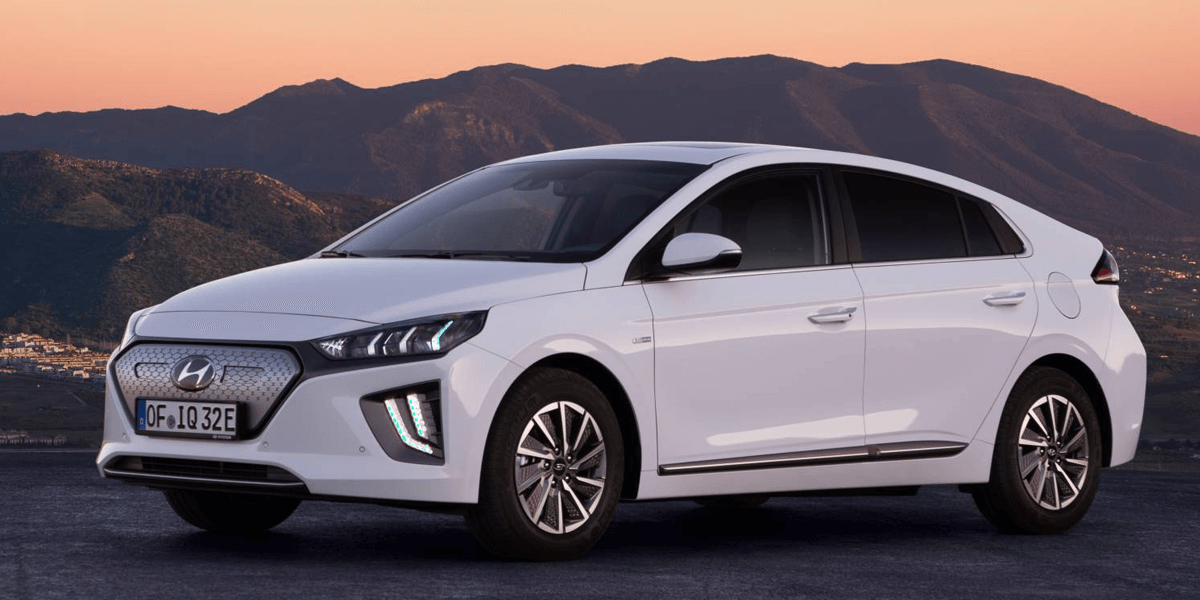
This quietly spoken IT engineer has a job for the next few weeks chaperoning the stars of the beautiful game around Doha in a fleet of Hyundai Ioniq 5s.

Spilling the beans on his celebrity clientele would not go down well so he discreetly refuses to spill Beckham’s beans.

We agree Lusail is an impressive stadium, but our favourite is the one close to Doha airport, through which 1.2million fans will pass over the next a month and a half.

The stadium we like most is 974, a structure made from 973 shipping containers. The 974th sits out front as a gate guardian.

From 974 to Lusail is 18 miles. The furthest any two of the eight stadia are apart is 25 miles. It is the most compact World Cup ever.

Qatar, the UK’s second-largest supplier of natural gas, is still wedded to gas-guzzling V8s

The immaculate streets of Doha are populated with Toyota Land Cruisers, V8 Land Rover Defenders and giant Chevy Escalades made popular by Hollywood’s red-carpet brigade.

Read more: TheSun

It’s Time to Go Green!

If you would like to know more about Solar Panels and the PowerBanx range of home battery systems, and get a free instant quote, please complete our online form:
Citroen Ami (Source: uk-mediacitroen.com)

‘It’s so sad that Britain’s new electric car battery factory is already going bankrupt’

As we approach the end of 2022, Mike Rutherford thinks motorists in the UK have never had it so bad

Much as we love it, the car isn’t always the star. Sometimes it’s actually less important than the people, the numbers, and the jobs in and around the automotive business.

First, a handful of (many) developments in growth-obsessed, recession-ravaged Britain as we approach the end of 2022: the population recently hit 68 million (in a land where our road ‘system’ is set up to deal with more like 50 million); the general annual inflation rate hit a 41-year high of 11.1 per cent; and hikes in the prices of new cars, and the petrol, diesel and electricity to power them, are even higher.

Smart FourTwo

As for interest rates, they’re through the roof, too. And with few, if any, ordinary, working-class families able to save up the necessary £40,000(ish) for even a modest, medium-sized new electric car, increasingly expensive loans are more obligatory than optional these days. Yet, as our Government proves, large debts and high interest rates can be ruinous.

If you, dear car user, aren’t miffed at the rocketing MIF (Motoring Inflation Figure), you bloody well should be. The motorist has never had it so bad.

Read more: AutoExpress

It’s Time to Go Green!

If you would like to know more about Solar Panels and the PowerBanx range of home battery systems, and get a free instant quote, please complete our online form:

Why solar electric vehicles might be the next generation of EVs

The world’s first commercial solar electric vehicles are hitting the U.S. and European markets in the next few years. German company Sono Motors, Southern California-based Aptera Motors, and Dutch company Lightyear are all producing electric vehicles with integrated solar panels, which can harness the sun’s power to provide around 15-45 additional miles on a clear day.

These vehicles also have regular, lithium-based batteries that can be charged using electricity from the grid, so for longer drives these cars essentially function like a standard EV. But for commuters and other short-distance drivers, the majority of their miles could be fueled almost entirely from the sun, free of charge.


Dan Kammen, professor of energy at U.C. Berkeley, said he expects this tech will make good financial sense for many consumers.

“Solar panels are so inexpensive and integrating them into the skins is so easy that once you get over that initial learning curve, those initial couple thousand vehicles out there, it’s hard for me to envision that this won’t be cost-effective,” Kammen said.

The cars coming to market

The Sono Sion, which is expected to begin production in Europe in mid-2023, is priced starting at just $25,000. Its battery has a 190-mile range, and while the car also has 465 integrated solar half-cells on its exterior, the boxy, five-seat hatchback appears unassuming and practical.

Read more: CNBC

It’s Time to Go Green!

If you would like to know more about Solar Panels and the PowerBanx range of home battery systems, and get a free instant quote, please complete our online form:

New ECIU study shows EVs are cheaper to own than fossil fuelled vehicles

A study commissioned by the Energy & Climate Intelligence Unit (ECIU) has shown that electric vehicles (EV) owners in the UK are currently saving £600 a year, totalling £8,300 over the 14-year lifetime of an EV, making them cheaper to run than fossil fuelled vehicles.

The research organisation’s Global Momentum on Clean Transition report also found that the number of EV sales doubled globally in 2021 reaching 6.6 million cars and the market is on track to double this figure again in 2022. The number of EV models available has also grown to 184, five times more than there was five years ago.


It is unclear how the removal of the Vehicle Excise Duty exemption for EVs in 2025 in the UK will effect this continued growth.


More positive findings highlighted by the report include that owners of second-hand EVs could get a battery bonus, with the potential return of 10-20% of the vehicle’s value, by selling its battery for recycling at the end of its life-span.

“This is a UK snapshot of a global story, of a car market that is speeding ever faster towards an electric future. EVs charged, increasingly by cheap renewables, will bring down the cost of driving for everyone, particularly as more and more EVs find their way on to the second-hand market,” commented Colin Walker, transport lead at ECIU.

Read more: Current+

It’s Time to Go Green!

If you would like to know more about Solar Panels and the PowerBanx range of home battery systems, and get a free instant quote, please complete our online form:

Vauxhall Grandland X Hybrid4 (Image: Vauxhall.co.uk)

Comment: What will electric car tax mean to EV drivers like me? How much will it cost?

After any budget announcement there is always a great deal of hand-wringing from those who are suddenly being taxed more, or feel that incentives don’t go far enough.

This time, it is the turn of electric car drivers like me.

The chancellor stood up today and said that the zero rate for road tax on electric cars is going to end. In addition, benefit-in-kind rates for company car drivers making the switch are going to rise 1% per year from 2025.

There are concerns, of course, but generally the reaction from electric car drivers across social media has been much less angry than expected.


Vauxhall Grandland X Hybrid4 (Image: Vauxhall.co.uk)

Drivers seem to acknowledge that the change was inevitable as electric cars became more popular and the hole in the government’s finances became bigger.

Battery electric vehicles have accounted for 14.6 per cent of the total new car sales so far this year, outstripping the demand for diesel.

The share is growing fast, with registrations up nearly 40 per cent this year, meaning there are now more than a million plug-in vehicles on British roads. That’s a lot of tax to give away for free.

Read more: CarDealer

It’s Time to Go Green!

If you would like to know more about Solar Panels and the PowerBanx range of home battery systems, and get a free instant quote, please complete our online form:

Cheapest Electric Cars UK (Image: Fuel Included)

Autumn Statement: Company car tax to increase by one percentage point

The Government has announced in the Autumn Statement that benefit-in-kind (BIK) tax for electric vehicles (EVs) will continue to be kept low to increase uptake.

The Chancellor, Jeremy Hunt, said he had listened to the fleet industry and would increase company car tax for EVs by one percentage point year-on-year for three years from 2025.

Cheapest Electric Cars UK (Image: Fuel Included)
Cheapest Electric Cars in the UK (Image: Fuel Included)

Currently, BIK for a pure EV is 2% (2022/23) and remains at that rate up to April 2025. The Chancellor’s announcement means that it will increase to 3% in 2025/26, to 4% in 2026/27, and 5% in 2027/28.

Paul Hollick, chair of the Association of Fleet professionals (AFP), said: “We have been strongly expressing that the position of EVs in the UK fleet sector remains at a relatively early stage of adoption and the increases in company car taxation, of 1% percent per year, seems well-judged to us at first glance.

“Crucially, they will allow fleet decision makers to plan for the second half of the decade as they continue the process of electrification.

“This is something for which we have been campaigning in conjunction with BVRLA and it is to be welcomed.”

Ashley Barnett, head of fleet consultancy at Lex Autolease, said that the publication of company car rates beyond 2025, “reaffirms” the Government’s commitment towards a greener future and gives decision makers the clarity they need to accelerate their transition towards EVs.

Read more: FleetNews

Long term report: Cupra Born makes a case for EV motoring masses

It is easy to see the potential velocity of UK new car buyers’ uptake of electric vehicles in the years ahead. The more drivers that have an EV, the better the understanding their friends and family gain and the fear and ignorance begins to disappear.

Around AM’s home city of Peterborough the game of spotting other electric cars by their green-edged number plate has become a routine, and even on the brief school run we’re counting into double figures.

In the months I’ve spent running this Cupra Born it has convinced my wife that the next car after her current diesel Volvo estate will be an EV.

Her remaining reservation is that we have “only” one Podpoint charger at home, which amuses me given that I plug my Cupra Born into it just one night – occasionally two – per week.

The fully charged range of around 220-240 miles is sufficient for most private motorists, I would contend.

The Cupra Born has converted our friends too. They first experienced EVs on a night out to a neighbouring city almost a decade ago in a first generation Nissan Leaf I was testing, when, I admit, we were all slightly nervous as its 120-mile official range rapidly diminished.

Read more: am-online

It’s Time to Go Green!

If you would like to know more about Solar Panels and the PowerBanx range of home battery systems, and get a free instant quote, please complete our online form:

Sales of used electric vehicles reach record highs – but rest of the market feels full impact of stock shortage

According to a new report published by the Society of Motor Manufacturers and Traders (SMMT), used battery electric vehicle (BEV) demand reached record levels in Q3, as sales grew by 44.1% to 16,775 vehicles.
However, the UK used car market saw transactions fall 12.2% in Q3, with only 1,785,447 vehicles changing hands.

This is the second consecutive quarter of decline as new car supply shortages are being blamed for the drop in sales.


This is the first time that Q3 transactions have fallen below two million since 2015.

The SMMT believe that semiconductor shortages that are impacting a healthy supply of stock is the core issue.

This is further shown in the year to date information, as sales are now down 9.7% to 5,319,482 compared to the previous year.

Electric car charging – how it works and how much it costs
The road to electric – in charts and data
Electric cars – a definitive guide and tips for buyers

Despite the challenges facing the wider industry, there is positive news for the electric vehicle market.

Used BEV sales have now reached 48,032 in the year to date (January to September 2022).

The market for used hybrid electric vehicles (HEVs) also grew, up 2.5% in the quarter with 41,479 transactions.

Read more: RAC

It’s Time to Go Green!

If you would like to know more about Solar Panels and the PowerBanx range of home battery systems, and get a free instant quote, please complete our online form:

Shift to electric cars happening too slowly to avoid “climate catastrophe,” report finds

Major automakers and governments have avowed that the future of cars is electric. And with transportation making up about a quarter of the carbon pollution emitted by humanity, scientists say phasing out gas- and diesel-powered cars is imperative for there to be any hope of avoiding the worst effects of global warming.

But the shift away from fossil-fuel burning cars is happening too slowly to stave off climate catastrophe, according to a report released by Greenpeace this week.

“Leading auto manufacturers, including Toyota, Volkswagen, and Hyundai, are transitioning far too slowly to zero-emission vehicles, which has dangerous consequences for our planet,” Benjamin Stephan, climate campaigner at Greenpeace Germany, said in a statement. “Toyota, Volkswagen and other leading automakers are on a collision course with the climate.”

The researchers calculated how many new gas-guzzlers humanity can afford to put on the roads, assuming that global temperatures are on track to rise 1.5 degrees Celsius above pre-industrial levels. Keeping global heating below that level is essential to avoid catastrophic effects, including runaway ice melt and sea-level rise, scientists say.


Under that limit, the world’s carmakers can build and sell 315 million gas-burning cars between now and 2050, Greenpeace calculated. However, carmakers have already planned to produce and sell nearly twice that number of gas-burning cars, the group’s analysis found — 645 million to 778 million light-duty vehicles over the next 25 years.

Read more: CBSNews

It’s Time to Go Green!

If you would like to know more about Solar Panels and the PowerBanx range of home battery systems, and get a free instant quote, please complete our online form: