All posts by Trevor Larkum

Electric Vehicles: how green became the new black

EVs haven’t always been cool but now they’re bonafide celeb magnets. Just ask Kylie Jenner

Electric vehicles used to be, well, let’s just say they weren’t cool. The first EV you were aware of was probably a milk float. Not exactly a cutting-edge ride.

In the 80s they got arguably even less cool, thanks to vehicular duds like the C5, brainchild of British electronics pioneer Clive Sinclair and one of the biggest embarrassments in contemporary tech. Intended to be a one-person car, it was basically an electric-assisted pedal tricycle that failed to capture the public imagination. Just 5,000 of the 14,000 made were sold ‒ Sinclair lost £7m of his own money.

Other similar ideas bombed in the 1990s (Chrysler’s TEVan, anyone?), hampered by a lack of range and speed. By the turn of the millennium, electric cars still carried such an unfashionable aura of quirk that even celebrity endorsement ‒ usually a rubber stamp of cool ‒ failed to make sales soar.

Indeed, stars who did choose electric were even derided. USA Today described Mel Gibson’s love for his EV as “a wee bit unhinged”. The Daily Mail called Tom Hanks’ Scion XB an “ugly, teal green monstrosity”, while Jeremy Clarkson said Kristin-Scott Thomas’ beloved G-Wiz was “like walking, only less comfortable”.

Read more: Standard

MG 5 EV (Image: mg.co.uk)

New MG 5 EV 2020 review

The new all-electric MG 5 starts from under £25k and boasts a 214-mile range

Verdict
If you want a cheap electric car then the new MG 5 EV deserves serious consideration. It’s not glamorous, even compared with the electric ZS SUV, but the no-frills approach means it combines solid range with vast amounts of space, strong levels of equipment, and even a turn of pace when you need it for a very enticing price tag. If all you are looking for is as many miles of range as possible for as little money as possible, it makes a strong case for itself.

This week, Tesla boss Elon Musk announced that his company would be able to offer an electric car for a price of £25,000 a few years from now. But Chinese-owned MG can sell you one right now in the form of this: the MG 5 EV.

MG 5 EV (Image: mg.co.uk)

It’s MG’s second electric car, sitting alongside the ZS EV but commanding a smaller price tag. Priced from £24,495, rising to £26,995 for the range-topping Exclusive model we’re driving here, the MG 5 is, in effect, a European-market version of the Roewe Ei5. It represents one of the most affordable ways into emissions-free family motoring on sale in Britain today, undercutting key favourites like the Renault Zoe and Nissan Leaf.

While it offers up a price tag cheaper than those cars, it also brings one key bonus – space. As you can see, the MG 5 EV isn’t a small hatchback, but is instead a decently sized family estate car. Similarly, it doesn’t skimp on range either; a 52.5kWh battery pack means a claimed range of 214 miles under WLTP rules, and a 0-80 per cent recharge will take 50 minutes, thanks to standard 50kW charging support. These are promising figures for the cash.

It also greatly eclipses the 163-mile range of the more expensive ZS EV. More subjectively, it’s not as glamorous or desirable as the brand’s electric SUV. But for buyers prioritising range and value for money, this could well be a new champion.

On a full charge we found the readout claimed 191 miles. However, the switchable drive modes of the MG 5 meant we could eke out more from the cell, with a claimed maximum of 205 miles showing when flicked into Eco mode. This limits the level of performance on offer, but it’s a mode many buyers will default to, given that it still offers more than enough shove to get around.

Read more: AutoExpress

It’s Time to Go Green!

If you would like to know more about Solar Panels and the PowerBanx range of home battery systems, and get a free instant quote, please complete our online form:

Renault Captur Plug-in and Renault Clio Hybrid (Image: Renault)

RENAULT DETAILS ALL-NEW CAPTUR PLUG-IN AND ALL-NEW CLIO HYBRID

  • Efficient new E-TECH variants added to two popular Renault models
  • All-New Captur Plug-in Hybrid brings benefits of PHEV powertrain to best-selling crossover
  • Renault’s first PHEV boasts up to 30 miles all-electric driving range with CO2 emissions of 33g/km and 188.3mpg
  • Free BP Chargemaster Wallbox to customers of the All-New Captur Plug-in Hybrid
  • All-New Clio Hybrid is first hybrid version of the popular supermini, offering performance and efficiency
  • Available across All-New Clio trim levels, including new range-topping Launch Edition
  • All-New Clio Hybrid capable of driving on electric power for 80 per cent of urban journeys
  • All-New Captur customer deliveries starting from September and All-New Clio deliveries beginning in September
  • Attractive Benefit In Kind (BIK) rates for 2020/2021 with 22 per cent for All-New Clio Hybrid and 10 per cent for All-New Captur Plug-in Hybrid
  • Prices start OTR from £19,595 for the Clio Hybrid and £30,495 for the Captur Plug-in Hybrid
  • Available to order now

Renault UK has confirmed full specifications of new E-TECH versions of the two most popular model line-ups: All-New Captur Plug-in Hybrid and All-New Clio Hybrid.

Renault Captur Plug-in and Renault Clio Hybrid (Image: Renault)

Already offered with a wide range of powertrain options giving customers more choice than ever before, these electrified versions enhance the Captur and Clio’s appeal further for those looking for strong performance and low running costs.

The All-New Captur Plug-in Hybrid (PHEV) benefits from a new petrol-electric powertrain, making it the most efficient and economical in the range as well as the most powerful. Meanwhile, All-New Clio Hybrid gets a petrol hybrid setup offering a smooth and responsive drive with all the benefits of an economical hybrid drivetrain capable of completing most urban journeys in zero-emissions electric mode.

The new Plug-in Hybrid and Hybrid variants benefit from technology shared across the Alliance (the 1.6-litre engine and two electric motors, plus clutchless gearbox), while technology influenced by the Renault Formula One Team also features. Energy management and braking system knowledge has been shared, allowing both All-New Captur and All-New Clio E-TECH models to recuperate energy lost during braking and deceleration.

Both All-New Captur and All-New Clio models get unique E-TECH design details on the exterior and interior to differentiate from the rest of the line-up, complementing the eye-catching and sophisticated look of both model ranges.

All-New Renault Captur Plug-in Hybrid
A favourite in the Renault range, the All-New Captur is more athletic and dynamic than ever, and with an even stronger SUV identity. An unmistakable presence on the road the totally redesigned exterior is more modern, distinctive and expressive, yet remains true to Renault’s core design values.

The introduction of this powertrain means that it is unique in offering an appealing plug-in hybrid drivetrain in the compact crossover segment, delivering excellent performance and class-leading low running costs. It makes plug-in hybrid mobility available to a wider spectrum of buyers than ever before, and with attractive BIK rates of just 10 per cent for company car drivers for 2020/2021, the Captur Plug-in Hybrid is a tempting and affordable option for business users too.

Read more: Renault Press

It’s Time to Go Green!

If you would like to know more about Solar Panels and the PowerBanx range of home battery systems, and get a free instant quote, please complete our online form:

Nissan NV-400 (Renault Master ZE) Ambulance

Nissan NV400 becomes Japan’s first electric ambulance

It will be used by the Tokyo Fire Department

Consumer passenger cars aren’t the only vehicles undergoing electric transformations. We’ve seen the introduction of early electric fire trucks, and now Japan is getting its first electric ambulance. It’s a Nissan NV400, and it will be used by the Tokyo Fire Department at the Ikebukuro station.

Nissan NV-400 (Renault Master ZE) Ambulance

Though badged as a Nissan, the NV400 is at its heart a Renault Master Z.E. electric van. The powertrain is the same as the French van with a 33-kilowatt-hour battery (7 kWhs less than the base Nissan Leaf) and a 55-kW motor driving the front wheels. That translates to 74 horsepower and 162 pound-feet of torque. That doesn’t sound like much, but in as dense a city as Tokyo, it’s not likely the NV400 will be able to reach high speeds at all, even if it had a Hellcat engine.

There are a couple of unique additions to the van to enhance its ambulance capability. One is the inclusion of a separate 8-kWh lithium-ion battery that can operate all the equipment on board for long periods of time without eating into the ambulance’s range. It can even be used like a generator to provide power to external emergency equipment. Then there’s the stretcher, which Nissan vaguely says is electrified to make it easier to use by the medical personnel. We presume the stretcher has an electric motor to make it easier to push around.

Read more: Autoblog

It’s Time to Go Green!

If you would like to know more about Solar Panels and the PowerBanx range of home battery systems, and get a free instant quote, please complete our online form:

Nissan Leaf (Image: Qurren/Wikipedia)

Amsterdam stadium integrates bi-directional charging

As of today, visitors to the Johan Cruijff Arena (JCA) in Amsterdam can actively contribute to the power supply of the arena with their electric cars by integrating them into the stadium’s power grid.

The first of 15 bidirectional charging stations in the JCA is now officially in operation.

The project combines the 15 new charging stations with the existing 3 MW battery storage – consisting of 148 Nissan Leaf batteries – and the 1 MW photovoltaic system on the roof of the arena. An innovative charging and energy management system is working in the background.

Nissan Leaf (Image: Qurren/Wikipedia)

In the future, all of JCA’s nearly 2,000 parking spaces will be successively equipped with intelligent charging infrastructure. “Enabling visitors to give back clean energy to the stadium ensures they have a smart way of doing their bit towards the ecosystem,” Gers Baron, CTO for the Amsterdam City Council.

The intelligent software control was supplied by The Mobility House, based in Munich, Germany. It coordinates the energy supply in both directions – car-to-stadium and stadium-to-car. This enables electric cars to transfer energy from stadium visitors – with their consent – to boost the maximum current capacity of the stadium, “thus reducing the stadium’s electricity bill and contributing to a more stable national grid.” At the same time, the system ensures that the car battery is recharged in time when visitors want to drive home.

Read more: Electrive

It’s Time to Go Green!

If you would like to know more about Solar Panels and the PowerBanx range of home battery systems, and get a free instant quote, please complete our online form:

Cheap Motoring

Why manufacturers aren’t delivering your EV sooner

If you have ordered an existing model in the past months, it’s unlikely you will pick it up at the dealer’s before January.

If you have put your name down for a model that is yet to be launched, you will probably have to wait until the end of 2020. What’s going on?

Getting electric vehicles to market has always been troublesome for Western OEMs. From the first-gen Renault Zoé to the Tesla Model 3 and the Audi e-tron: they have all arrived on the market later than planned. Somehow, manufacturers have a tendency of promising more than they can deliver, perhaps underestimating the challenges behind developing an EV and getting the supply chain and factories ready to build them.

Cheap Motoring

It seems that the Asian manufacturers have been better at managing this. It should hardly come as a surprise that in the land of affordable EVs with a decent range, it’s the Koreans and Japanese that rule. Hyundai Ioniq and Kona, Kia Niro, Nissan Leaf: they head the electric vehicle sales charts in Europe. They give the nearly pre-historic, totally obsolete VW e-Golf and equally retirement-deserving BMW i3 a run for their money.

Super credits

Whichever mass-production electric model you may have ordered in the past months, chances are you won’t see your EV arrive at the dealer’s before the first months of 2020. The same goes for the premium crossovers that go by the name Audi e-tron, Jaguar I-Pace or Mercedes EQC, incidentally. Is battery supply the issue, or is there more at play?

There are indeed only a handful of suppliers – mainly Chinese, Korean and Japanese – on the global lithium ion cell market and they are calling the shots. If you want cells as an OEM, you either pay a hefty price, or you wait until prices come down. The longer you wait, the cheaper you can buy, essentially. Guess which option most OEMs choose?

There is another, more important thing obstructing the delivery of EVs: the so-called super credits. Starting in 2020, every vehicle that emits less than 50g/km counts double in the calculation of an OEMs weighted average CO2 emissions. The average target is 95g/km and needs to be reached by 2021. No wonder that OEMs and their importers are postponing the delivery of as many EVs as possible.

Read more: Fleet Europe

It’s Time to Go Green!

If you would like to know more about Solar Panels and the PowerBanx range of home battery systems, and get a free instant quote, please complete our online form:

My MG ZS EV Test Drive

On Saturday I had the chance to take my family for a test drive in the new electric version of MG’s ZS.

While the name MG (‘Morris Garages’) has a lot of history, particularly in connection with sports cars, the current MG Motors is a Chinese brand. They have had some success in the budget end of the UK market, but have made waves with the new EV version of their ZS crossover. It has a good enough range (about 160 miles) at a low enough price (in the £21k to £28k range) to make people sit up and take notice.

MG ZS EV (Image: T. Larkum)

I’m not going to go into great detail on the car specs, how it handles, etc. (for some of that, see our MG ZS news and reviews page). Instead I’ll give a summary of our impressions:

  1. It looks good close-up, in a typical SUV way. That’s to say, if you take the badge off one SUV it could be almost any other SUV on the road. But in this context, with a low price example of the breed, that’s a great result. We’d be happy to have one on our drive.
  2. It drives well enough, absorbing most though not all of the roads’ bumps. It accelerates well, though it was very quick to wheelspin when I tried it a couple of times in Sport mode (though, to be fair, it was raining the whole time).
  3. It felt spacious, particularly in the back. There was a noticeable gap between the knees of the rear passengers and the backs of the front seats. Conversely, the middle rear seat was very narrow – it would only suffice for a child, and then only without a car seat.
  4. The multimedia console was pretty good – a touchscreen with satnav, handsfree phone, music, etc. The satnav had a noticeable lag the first time it loads but after that it seemed pretty responsive. It is compatible with both Apple CarPlay and Android Auto.
  5. The boot was a decent size (something lacking in my current BMW i3!) even with the charging cables stored underneath. It had quite a big lip, but this could be reduced by raising the boot floor to a higher point when it was also nearly level with the back seats when folded forward and so giving a very large usable space overall. The seats don’t fold completely flat though.
  6. We test drove the top-of-the-range Exclusive version which had lots of nice extras that we appreciated such as a panoramic sunroof, electrically adjustable seats, roof rails, leather seats and rear parking camera.
MG ZS EV (Image: T. Larkum)

Overall we were impressed with the car, particularly at the suggested price (equivalent to about £360 per month for the Exclusive with a £1500 trade in). Definitely one to consider if you’re in the market for a medium range EV at at good price.

It’s Time to Go Green!

If you would like to know more about Solar Panels and the PowerBanx range of home battery systems, and get a free instant quote, please complete our online form:

MG ZS EV (Image: Auto Express)

New 2019 MG ZS EV makes London Motor Show debut

The new MG ZS EV will arrive with a 170-mile range in September, and will cost less than the Kia e-Niro and Hyundai Kona Electric

MG’s first all-electric car made its UK debut at this year’s London Motor and Tech Show, ahead of its planned launch on 1 September. The MG ZS EV will be the first offering in a wave of new products which will expand the marque’s line-up over the next few years, aiming to undercut the likes of the Hyundai Kona Electric and Kia e-Niro on price.

MG ZS EV (Image: Auto Express)

The British brand is promising that its new arrival won’t be limited by the supply issues which have hampered early sales of some of its rivals. Over the past few years, the brand’s parent company, SAIC Motor, has spent around $7billion (approximately £5.48bn) on research and development, most of which was invested in its all-electric platform.

Official pricing information has yet to be announced. However, when quizzed about the issue, MG’s UK head of sales and marketing, Daniel Gregorious, stated the firm’s aim to pitch its EV below the Kona and the e-Niro, giving a baseline figure of around £24,000 once the £3,500 Government grant has been applied.

Read more: Auto Express

New longer range Hyundai IONIQ Electric (Image: Hyundai)

New Hyundai Ioniq Electric – Updated electric car gets a boost with more range and power

HYUNDAI has released details and pictures of the updated Ioniq Electric car which has more range, updated styling, and a few other new features.

Hyundai has unveiled the new Ioniq Electric car which has a number of modifications and tweaks to make it more compelling than before.

Of the changes to the updated Ioniq Electric car, the most important of them is a new battery pack which allows for more overall range.


New longer range Hyundai IONIQ Electric (Image: Hyundai)

The size of the battery pack has increased from 28kWh to 38.3 kWh which now allows a total range of 182-miles of WLTP of range on a single charge.

This is an increase of the previously claimed 174-miles, and what was claimed in WhatCar’s? Real Range data which stated that the car has an estimated useable range of 117-miles.

Read more: Express

Jaguar I-PACE Electric Car (Image: T. Larkum)

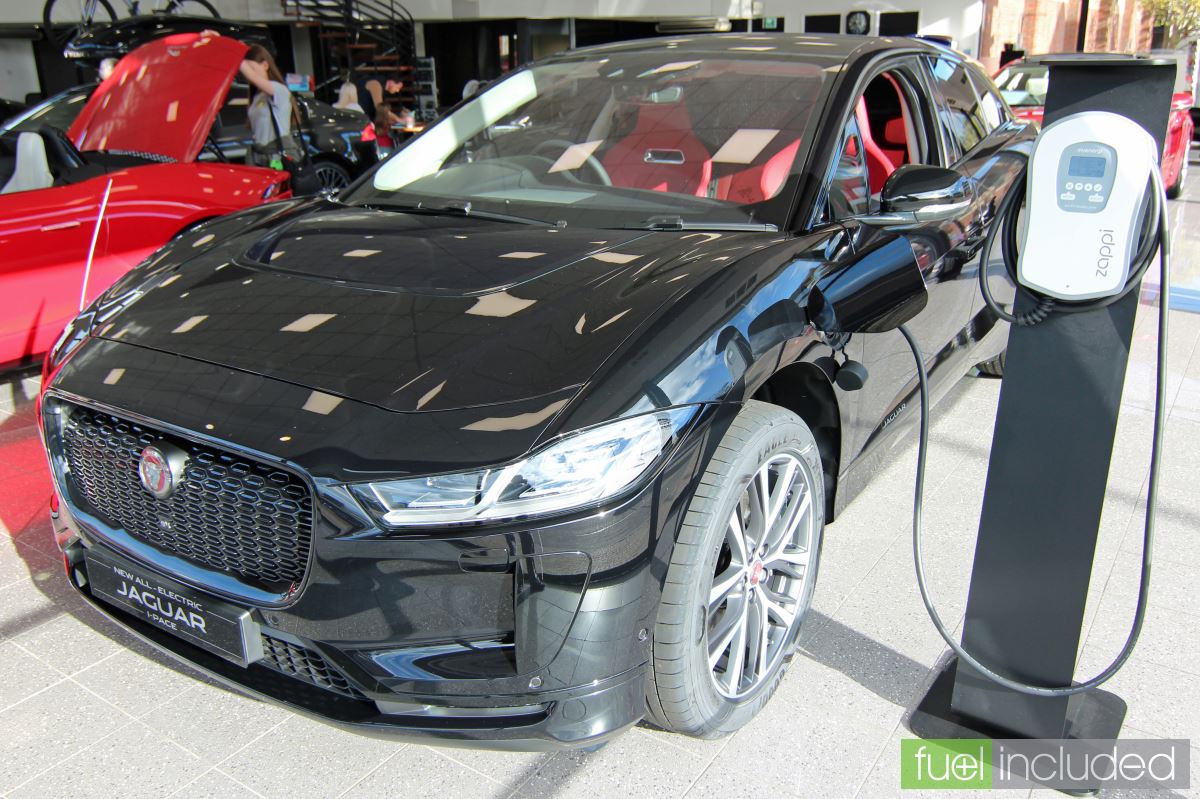
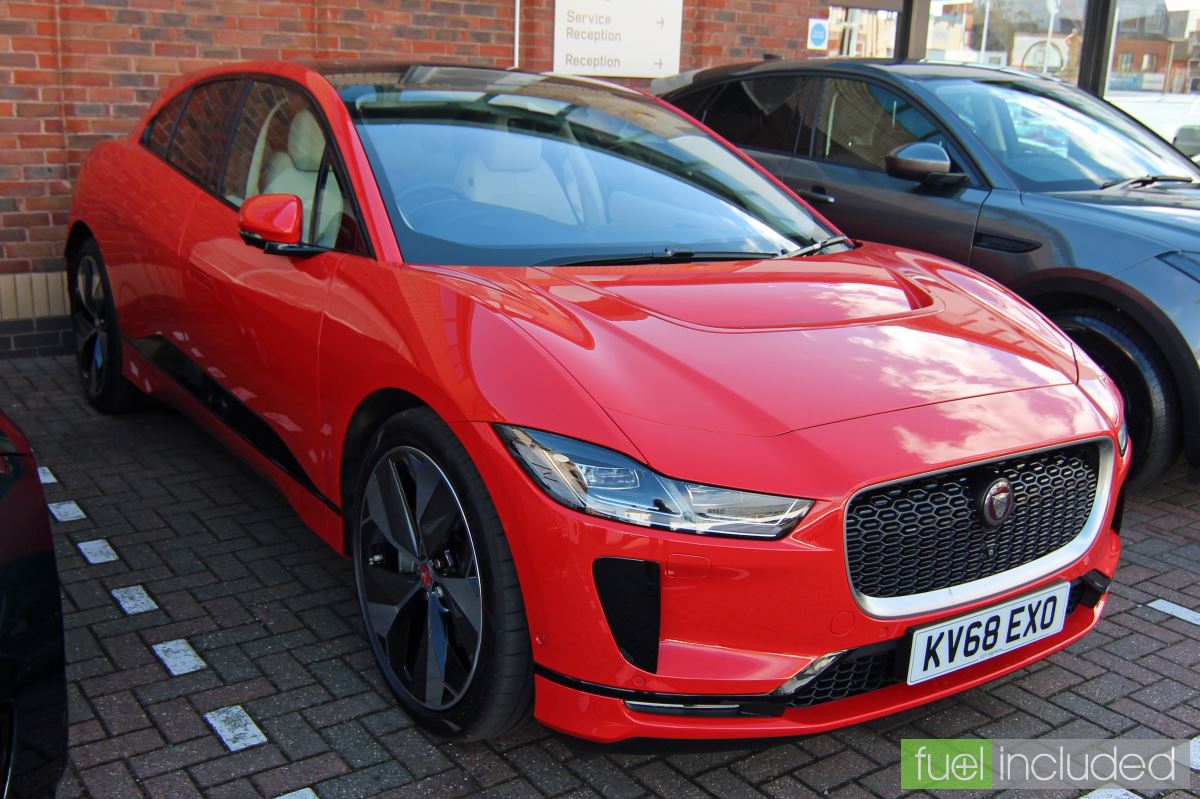
My First Jaguar I-PACE Experience

On Friday I had my first taste of the new Jaguar I-PACE as I took my family for a test drive.

I was intrigued to see what it’s like as I think it would be fair to say that the motoring press have been raving about it, the first all-electric production car from the Jaguar Land Rover group.

Jaguar I-PACE Electric Car (Image: T. Larkum)

It turns out it is a nice car to sit in and drive; it’s very comfortable, has a decent (though not huge) boot and lots of features. My family particularly liked the rear seat heaters, air conditioning and USB ports.

It accelerates nicely and pretty quietly, and has a decent range – somewhere between 250 and 300 miles (with the usual caveats over driving style, ambient temperature, etc). Overall a pretty good car.

However, I couldn’t help but feel a bit disappointed as I was expecting something a little more special. I guess I’m a bit spoilt, driving a BMW i3 and having driven the Tesla Model S a number of times. But it pretty much seemed like just another Jaguar but this time with an electric powertrain.

Jaguar I-PACE Electric Car (Image: T. Larkum)

While almost any car can be improved by going electric, I had hoped for a more ‘clean sheet’ design. For example, it had a huge console between the driver and passenger as though it had a gearbox and transmission tunnel, where on the i3 there is space, and a flat floor.

Anyway, if you are in the market for a Jaguar then do consider the I-PACE as it’s certainly the best Jaguar available. It has good looks, electric performance and a decent range so it’s well worth a look.

My thanks to David at Guy Salmon Jaguar Northampton for giving us the test drive.