All posts by Repost

Sales of used electric vehicles reach record highs – but rest of the market feels full impact of stock shortage

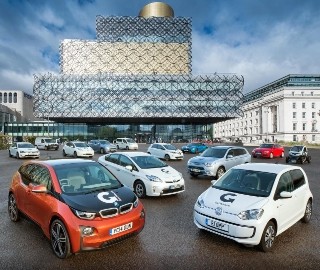
According to a new report published by the Society of Motor Manufacturers and Traders (SMMT), used battery electric vehicle (BEV) demand reached record levels in Q3, as sales grew by 44.1% to 16,775 vehicles.
However, the UK used car market saw transactions fall 12.2% in Q3, with only 1,785,447 vehicles changing hands.

This is the second consecutive quarter of decline as new car supply shortages are being blamed for the drop in sales.


This is the first time that Q3 transactions have fallen below two million since 2015.

The SMMT believe that semiconductor shortages that are impacting a healthy supply of stock is the core issue.

This is further shown in the year to date information, as sales are now down 9.7% to 5,319,482 compared to the previous year.

Electric car charging – how it works and how much it costs
The road to electric – in charts and data
Electric cars – a definitive guide and tips for buyers

Despite the challenges facing the wider industry, there is positive news for the electric vehicle market.

Used BEV sales have now reached 48,032 in the year to date (January to September 2022).

The market for used hybrid electric vehicles (HEVs) also grew, up 2.5% in the quarter with 41,479 transactions.

Read more: RAC

It’s Time to Go Green!

If you would like to know more about Solar Panels and the PowerBanx range of home battery systems, and get a free instant quote, please complete our online form:

Shift to electric cars happening too slowly to avoid “climate catastrophe,” report finds

Major automakers and governments have avowed that the future of cars is electric. And with transportation making up about a quarter of the carbon pollution emitted by humanity, scientists say phasing out gas- and diesel-powered cars is imperative for there to be any hope of avoiding the worst effects of global warming.

But the shift away from fossil-fuel burning cars is happening too slowly to stave off climate catastrophe, according to a report released by Greenpeace this week.

“Leading auto manufacturers, including Toyota, Volkswagen, and Hyundai, are transitioning far too slowly to zero-emission vehicles, which has dangerous consequences for our planet,” Benjamin Stephan, climate campaigner at Greenpeace Germany, said in a statement. “Toyota, Volkswagen and other leading automakers are on a collision course with the climate.”

The researchers calculated how many new gas-guzzlers humanity can afford to put on the roads, assuming that global temperatures are on track to rise 1.5 degrees Celsius above pre-industrial levels. Keeping global heating below that level is essential to avoid catastrophic effects, including runaway ice melt and sea-level rise, scientists say.


Under that limit, the world’s carmakers can build and sell 315 million gas-burning cars between now and 2050, Greenpeace calculated. However, carmakers have already planned to produce and sell nearly twice that number of gas-burning cars, the group’s analysis found — 645 million to 778 million light-duty vehicles over the next 25 years.

Read more: CBSNews

It’s Time to Go Green!

If you would like to know more about Solar Panels and the PowerBanx range of home battery systems, and get a free instant quote, please complete our online form:

Fastned and MFG EV Power rated the best UK charging networks

Fastned and Motor Fuel Group (MFG) EV Power have been announced as the joint highest ranked EV charging networks in the UK, according to a Zap-Map survey.

The chargepoint mapping service conducted a survey in which 4,300 EV drivers specified which charging network they believe is the best. This has been released as part of the annual public charging network satisfaction rankings.

Respondents rated their overall satisfaction for the networks they use regularly, which was then used to rank each network out of a maximum of five stars.


Rapid Charging Step 1: Access the Rapid Charger (Image: T. Larkum)

The respondents also rated their level of satisfaction with the networks in five key areas including reliability, ease of use, customer support, value for money and payment options.

Taking the top spot in joint first place are two ultra-rapid networks in Fastned and MFG EV Power, who each scored 4.0 in the overall ratings. Zap-Map said the two networks scored particularly high for reliability and ease of use.

A recent survey led by Paythru indicated that 80% of UK drivers may be deterred from driving an EV due to poor experience at the chargepoint. One of the primary issues with the poor charging experience comes with difficulties in finding an EV chargepoint when it is required.

Read more: Current+

It’s Time to Go Green!

If you would like to know more about Solar Panels and the PowerBanx range of home battery systems, and get a free instant quote, please complete our online form:

ZS EV (Image: MG)

First Drive: Is the MG4 EV the car to tempt buyers away from well-established brands?

MG is broadening its EV line-up with the new MG4. Ted Welford gets behind the wheel.

The modern-day MG is a far cry from the one that produced classic British sports cars, but it’s proving no less successful. Owned by Chinese automotive giant SAIC Motor, MG is the fastest-growing car brand in the UK and sales have grown by 70 per cent in 2022 alone (up to the end of October).

It now sells more cars here than the likes of Land Rover, Mini and Skoda, and much of its success has come from its electric models – the ZS EV crossover and MG5 estate. The brand is now expanding further with the new MG4, its first electric hatchback and one that’s set to grow this brand even further. But is it set to succeed?

What’s new?

The MG4 is the first model to be based on a new electric car platform. (MG)

The MG4 is the first model from the firm to use a bespoke EV platform that will go on to be used in a number of electric MGs in future years – the key advantage to this being that it’s rear-wheel-drive and uses a thin battery that takes up minimal space.

ZS EV (Image: MG)
ZS EV (Image: MG)

The MG4 also shows a more adventurous design direction for MG, though more on that later. But crucial to the appeal of the MG4 is its price, which starts from £25,995, and undercuts rivals by a significant chunk of money.

Volkswagen ID.3 electric car (Image: Volkswagen.com)

Norway’s BEVs Still Growing Well, Even While PHEVs Fall Away

Norway’s auto market saw 86.4% plugin electric vehicle share in October, down year on year, from 89.3%. Full electrics grew share by 7.5% YoY, but were outweighed by a drop in plugin hybrids. Overall auto volumes were 12,558 units, up 8.5% YoY, and above the pre-2020 seasonal norm of 11,635 units. October’s bestseller was the Volkswagen ID.4

October’s overall plugin result of 86.4% comprised a near record 77.5% full electrics (BEVs), and 9.0% plugin hybrids (PHEVs). These compare with shares of 70.1% and 19.2%, YoY.

Only in March 2022, and December 2021, have BEVs seen substantially higher share, but the overall result was let down by the downward trend in PHEV share.


Volkswagen ID.3 electric car (Image: Volkswagen.com)

Read more: cleantechnica

It’s Time to Go Green!

If you would like to know more about Solar Panels and the PowerBanx range of home battery systems, and get a free instant quote, please complete our online form:

How pop band A-ha inspired Norway’s electric car revolution

Norway is miles ahead of the UK when it comes to electric cars and much of its early lead is thanks to an unlikely collaboration between environmental activists and the pop group A-ha.

Back in the 1980s, two leading lights in the Nordic environmental movement were pushing for electric vehicle (EV) technology but it just wasn’t being noticed.

But then they recruited the country’s biggest pop group to help push the issue into the mainstream.

A-ha were one of the most popular bands in the world after international hits such as Take on Me and the Sun Always Shines on TV.

They even recorded the theme tune to the 1987 James Bond movie The Living Daylights.

Charging points will be upgraded and up to 20 new outlets will be installed

Together, the campaigners and the group went to Bern in Switzerland to attend the Tour de Sol exhibition in 1989.

Here they saw a Fiat Panda which had been converted from petrol to electricity.

They imported a similar car into Norway and used the first modern-day EV on the country’s roads to launch a campaign of civil disobedience, making a point about how it needed to embrace an alternative to polluting fossil fuel vehicles.

They racked up fines as they drove the car through toll booths, parked illegally and refused to pay vehicle taxes, arguing that this new form of sustainable transport should be free of these levies in order to make it more attractive.

Read more: BBC

It’s Time to Go Green!

If you would like to know more about Solar Panels and the PowerBanx range of home battery systems, and get a free instant quote, please complete our online form:

Does It Cost More To Run An EV Or An ICE?

Along with the environmental benefits, one of the main advantages of owning an electric vehicle (EV) is their relatively low running costs.

Charging a battery is much more affordable than filling a tank, and EVs are often more reliable than petrol and diesel cars since they have fewer moving parts that can fail.

However, a single tank of fuel will take you much further than even the most efficient EV battery. Add to that the jump in electricity prices that took place on 1 October, and you may need to consider the cost of owning an EV more carefully.

How much does it cost to charge an EV?

The price of charging an EV depends on where you do it.

At home 

Charging an EV at home is usually the most cost effective option. You can charge the car using a domestic three-pin socket, but installing a dedicated EV charger will deliver power much more quickly.

Installing an at-home EV charging point typically costs around £1,000.

With the government’s Energy Price Guarantee capping the cost of electricity at 34 pence per KWh in October 2022 (until April 2023), fully charging an EV at home will cost:

  • £12.51 to fully charge a small EV (VW e-Up!)
  • £13.60 to fully charge a medium sized EV (Nissan Leaf)
  • £24.14 to fully charge a large EV (Audi e-tron)

Read more: Forbes

It’s Time to Go Green!

If you would like to know more about Solar Panels and the PowerBanx range of home battery systems, and get a free instant quote, please complete our online form:

Electric car terms: What do I need to know?

There are all manner of terms and acronyms in the EV segment – we’re explaining the ones to keep in mind.

If you’re in the market for an electric car, you may have already encountered the sometimes bewildering number of terms and acronyms that are strewn across the segment. Knowing what they all mean – and which ones are important – can feel quite daunting, to begin with.


Drive Energi 50kW Tritium Veefil-RT chargers (Image: Drive Energi)

However, we’re going to be taking a look through some of the key EV terms that you really need to know. So let’s dive in.

Battery

A battery is the core of an electric vehicle. After all, without a battery, an EV has nowhere to store energy which wouldn’t allow it to travel.

You’ll see batteries measured in kilowatt hours – or kWh – and the higher the number that precedes it, the larger the battery, and likely the more range it’ll offer. For instance, the Mercedes EQS has a 107.8kWh battery, which is capable of delivering up to 453 miles of range.

Charging

Charging is how you’ll keep your electric vehicle topped up. Compared with filling up a petrol or diesel car, there are a number of options, however. Everything is measured in kilowatts – or kW – too, with a higher number of kilowatts meaning a quicker charge.

Slow charger

A slow charger, predictably, is one that’ll give a more modest supply of energy to an electric car. They’re usually rated around 3.6kW and might include charging locations such as those located in streetlamps and kerbs in urban areas. These are best for overnight charges, as they’ll need more time to fully charge an EV.

Read more: ExpressandStar

It’s Time to Go Green!

If you would like to know more about Solar Panels and the PowerBanx range of home battery systems, and get a free instant quote, please complete our online form:

GRIDSERVE installs the ‘UK’s fastest EV charger’ at the Braintree Electric Forecourt

GRIDSERVE has installed the UK’s “fastest EV charger” at the Braintree Electric Forecourt to optimise charging technologies.

The ABB Terra 360kW charger is capable of adding 100 miles of range in less than five minutes, the company said, dramatically increasing charging times whilst on the go around the UK.

The public charger is equipped with two combined charging system (CCS) connectors with long cables, contactless payment, easy access for wheelchair users and is positioned to allow heavy goods vehicles (HGVs) and cars towing caravans an area to charge with ease.

This could be a move that leads to the further adoption of EVs with research led by payments technology company Paythru having indicated that 80% of UK drivers may be deterred from driving an EV due to poor experience at the chargepoint.

One of the primary issues with the poor charging experience comes with difficulties in finding an EV chargepoint when it is required. This is an area that has been impacting the sector over recent months.

Over half of the respondents (54%) said not being able to find a chargepoint when it is required would put them off getting an EV and a further 26% said it might. A total of 80% highlighted it as a concern.

Read more: Current+

It’s Time to Go Green!

If you would like to know more about Solar Panels and the PowerBanx range of home battery systems, and get a free instant quote, please complete our online form:

E.U. plans for only electric new vehicles by 2035 ‘without precedent’

After months of negotiations, the European Union reached a political agreement this week to effectively ban new nonelectric cars from 2035 onward.

The agreement, reached at 9 p.m. on Thursday in Brussels and announced by the Council of the European Union and the European Parliament, amounts to a 100 percent carbon dioxide emission reduction target for new cars and vans by 2035.

“This agreement will pave the way for the modern and competitive automotive industry in the EU. The world is changing, and we must remain at the forefront of innovation,” Jozef Sikela — the minister of industry and trade in the Czech Republic, which holds the rotating council presidency — said in a statement.


The legislation still needs to be approved formally to become law in the E.U., one of the largest automobile markets and home to some of the biggest manufacturers. However, approval by the Council and European Parliament is expected, with only minor changes.

Many climate change campaigners, who hoped other governments would follow in the E.U.’s footsteps in effectively banning new gas and diesel vehicles, welcomed the news.

Read more: WashingtonPost

It’s Time to Go Green!

If you would like to know more about Solar Panels and the PowerBanx range of home battery systems, and get a free instant quote, please complete our online form: