Monthly Archives: February 2023

6 reasons to drive an EV

Sometimes, picking a new car is as simple as seeing a vehicle you just know you want. More often, it’s a complicated decision where you weigh up a range of factors before selecting the best option for you. If you’re in this position, here are six electric car advantages to make you think EV.

  1. You’re helping the environment

One of the main EV benefits is the reduced environmental impact they have on our world. Electric cars aren’t completely free of CO2, though. A lot of the electricity they use comes from non-renewable sources. Plus, they have to be built and transported, which is likely to involve emissions as well.

However, it seems safe to say that they are still a lot better for the environment than petrol or diesel engines. It generally produces less CO2 to create energy in a power station than it does to do it in a car engine. And some of your electricity will likely come from renewable sources as well.


“The response from police drivers to the BMW i3 has been very positive. It’s actually a very quick car.”

On top of that, an electric engine is around **three times for efficient** than a petrol engine in terms of how it uses its. All in all, you can be confident you’re making a difference.

Read more: FleetPoint

It’s Time to Go Green!

If you would like to know more about Solar Panels and the PowerBanx range of home battery systems, and get a free instant quote, please complete our online form:

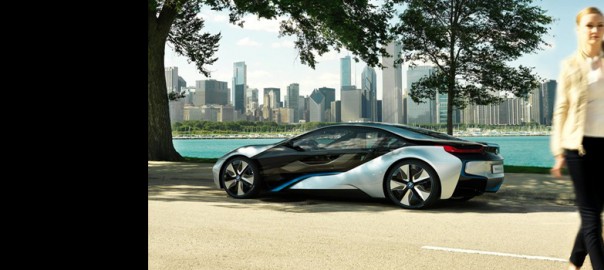
BMW i8 Concept (Image: BMW)

Surprise! Electric cars are already making California healthier

From the “duh” department, California is already becoming more healthy because of electric car penetration, which has resulted in cleaner air in areas where electric cars are more prevalent, according to a new study.

The study was published last week by the Keck School of Medicine at the University of Southern California. It tracked real-world pollution levels, electric car penetration, and emergency room visits across California between 2013 and 2019, and controlled against overall improvements in California air quality during the study period.

Completely unsurprisingly, the study found that clean air vehicles actually resulted in clean air, with the benefits being stronger in areas where there were more of them. Amazing. Who knew.

Each increase of 20 cars per 1,000 people (which is roughly equivalent to 2% of cars – since CA has 840 cars per 1,000 people) was associated with a .41ppb (parts per billion) drop in nitrogen dioxide concentrations in the atmosphere. California law sets average NOx standards at 30ppb, so a drop of .41 is a pretty big chunk, especially when compared to just 2% of EV penetration.

It stands to reason that taking gas cars off the road would reduce NOx, because nitrogen dioxide is a form of pollution particularly associated with vehicle tailpipes, and is the major contributor to the formation of smog, with a variety of negative health effects.

Read more: Electrek

It’s Time to Go Green!

If you would like to know more about Solar Panels and the PowerBanx range of home battery systems, and get a free instant quote, please complete our online form:

I’ve driven 20 electric cars — here are the 7 most important things I’ve learned about charging, range, and why Tesla still dominates

As electric vehicles have taken the world by storm in recent years, I’ve gotten to drive heaps of clean cars from Tesla, Audi, Mercedes-Benz, BMW, Rivian, and more.

  • I’ve tested 20 electric cars, SUVs, and pickup trucks from Tesla, Ford, Porsche, Polestar, and more.
  • I learned that their advertised range isn’t always accurate and charging can be a major pain.
  • But electric cars are quick, convenient, fun to drive, and quiet.

Hours behind the wheel taught me some important lessons about range, charging, and our electric future.

The range you see isn’t always the range you get

I learned this one the hard way. During my first long trip in an EV, I put a little too much trust in the range estimates that the Ford Mustang Mach-E I was driving provided. I watched anxiously as the SUV’s battery level drained lower and lower until I was left with just a 6% charge at my destination, which was miles away from the nearest fast-charging station. (When I set out, the Mach-E claimed I’d arrive with plenty of mileage to spare.)


Long story short, an electric car’s advertised range — on paper or from its software — isn’t always what you experience in the real world. Sometimes it exceeds expectations, and sometimes it falls short due to factors like frigid temperatures, speedier driving, a heavy payload, or hilly roads.

Read more: BusinessInsider

It’s Time to Go Green!

If you would like to know more about Solar Panels and the PowerBanx range of home battery systems, and get a free instant quote, please complete our online form:

Solar EV Charging Hub on Princes Street, Dundee (Image: eVolt)

InstaVolt announces ‘extensive upgrade programme’ to its charging network

InstaVolt has confirmed that over 200 of its existing ChargePoint CPE250 electric vehicle (EV) chargers will benefit from an “extensive upgrade programme”.

Over the next six weeks, the 50kW chargers will be upgraded to become capable of outputting up to 125kW, significantly reducing charging times for EV drivers.

The newly optimised chargers will form part of InstaVolt’s established network of high-speed chargers, capable of delivering charging speeds of more than 100kW.

Solar EV Charging Hub on Princes Street, Dundee (Image: eVolt)

EV digital platforms such as Zap-Map, as well as InstaVolt’s charger map and app will display each newly upgraded chargepoint in real time.

“With this round of upgrades, drivers will experience faster rates of charging on our popular CPE250 chargers, subject to their car being able to accept greater than 50kW. This will reduce charging times and allow drivers to get back on the road sooner,” said Adrian Keen, CEO at InstaVolt.

“The majority of EVs on the road will benefit from this upgrade. With most of our CPE250s located next to convenience retail, and roadside food and drinks outlets including operators such as Costa Coffee and McDonald’s, this is another example of InstaVolt perfectly matching charging speeds to dwell time and providing an even better experience for its drivers.”

Read more: Current+

It’s Time to Go Green!

If you would like to know more about Solar Panels and the PowerBanx range of home battery systems, and get a free instant quote, please complete our online form:

Scottish Fire & Rescue ZOE (Image: Renault)

Fact or fiction: the truth about EVs and fleets

When it comes to battery electric vehicles (BEVs), fleet decision-makers tend to be among the best-informed people in the country.

And they need to be: fleets are setting the pace when it comes to electrification as organisations strive to lower emissions and costs and be ahead of the game when it comes to the 2030 ban on the sale of conventional petrol and diesel cars and vans.

However, not all fleets and company car drivers are enthusiastically embracing the technology.

BMW i3

Some of their opposition is rooted in traditional arguments against BEVs, such as cost, insufficient driving range and confusion over types of charging cables and the number of apps needed to charge a vehicle on the public network.

In this feature, we look at six of the most common concerns, in a bid to examine what the truth is and help fleet decisionmakers accelerate their transition to BEVs.

1 EVs are too expensive

When considered purely from the point of the vehicle purchase price, this would be a borderline open and shut case: as a general rule, BEVs typically have a retail price several thousand pounds higher than their petrol or diesel counterpart.

These increased prices are also reflected in their lease rates, making an electric car seemingly more expensive to add to a fleet than an ICE (internal combustion engine) model. The difference in cost for a zero-emission van is even higher.

Read more: FleetNews

It’s Time to Go Green!

If you would like to know more about Solar Panels and the PowerBanx range of home battery systems, and get a free instant quote, please complete our online form:

ZS EV (Image: MG)

A hybrid MG is Britain’s biggest selling motor! Car sales grow for sixth month in a row as supply chain woes ease and EV registrations dwarf diesels

  • January car sales grew 14.7% year-on-year  – some 131,994 motors registered
  • Demand for ‘electrified’ cars pushed registrations higher, with hybrids up 40%
  • Electric vehicles easily outsold diesels again, but experts warn demand for EVs could slip due to cost-of-living squeeze and behind-schedule charging network

The UK’s new car market grew for a six consecutive month in January as supply chain issues plagueing the sector continue to ease, new industry figures issued on Monday morning show.

Some 131,994 new cars were registered last month, up 14.7 per cent on January 2022, the Society of Motor Manufacturers and Traders (SMMT) said.

Topping the sales chart in January was Chinese-backed MG, with its £31,095 HS plug-in hybrid SUV the most-bought model.


ZS EV (Image: MG)
ZS EV (Image: MG)

Electrified vehicles drove the sales increase, particularly hybrids. And 100 per cent battery models are easily outselling diesels in the first month of the year.

However, experts remain ‘cautiously optimistic’, warning that the cost-of-living squeeze and slow installation of charging points could soon hit demand for plug-in models

Registrations of hybrid electric vehicles were the big riser in January, up 40.6 per cent on the same month in 2022.

With 18,975 conventional hybrids entering the road last month, only petrols (76,216 registrations) were sold in greater numbers in terms of fuel type.

Plug-in hybrids remained relatively static, up just 0.7 per cent – though the best-selling MG HS model (3,481 registrations) is among the 9.109 PHEVs bought last month.

Read more: ThisMoney

It’s Time to Go Green!

If you would like to know more about Solar Panels and the PowerBanx range of home battery systems, and get a free instant quote, please complete our online form:

Electric car drivers can make use of ‘magic’ feature to avoid windscreen frost and fines

Electric car owners could potentially be saving more time than petrol and diesel drivers clearing frost and ice from their windscreens, in addition to avoiding fines.

With temperatures dropping below zero once again, drivers are being warned to ensure they are not breaking the law. On top of that, experts have claimed that pre-conditioning an electric car could save drivers a staggering 15 hours worth of defrosting time through the winter.

Pre-conditioning an electric vehicle allows EV drivers to schedule their departure time in advance and warm the temperature of the cabin.


ZOE Winter Testing
ZOE Winter Testing

The useful feature brings the cabin up to the desired temperature, defrosts and de-mists the driver’s windows.

It also warms the battery, ensuring that it is operating at peak performance, a feature they described as “magic”.

A spokesperson for GRIDSERVE said: “Not only does pre-conditioning an electric vehicle save time, it also stops drivers from making common mistakes when attempting to defrost their car in a hurry.

“Time-saving mistakes like using boiling water to clear ice and snow risks cracking the glass and using wiper blades to clear the windscreen only damages them when they’re frozen.”

GRIDSERVE used the estimated 15 minutes it takes to defrost an average car and calculated the cumulative hours that could be wasted during freezing temperatures.

Read more: Express

It’s Time to Go Green!

If you would like to know more about Solar Panels and the PowerBanx range of home battery systems, and get a free instant quote, please complete our online form:

Cheap cars for sale

Calls for VAT relief on electric car ‘street charging’

Electric car owners with driveways are paying less to power their vehicles at home than those forced to rely on on-street charging points.

The disparity risks “undermining the Government’s net-zero transport strategy”, claim critics. Campaigners are now calling for VAT on public charging points to be slashed from 20 per cent to the domestic rate of five per cent.

The Government plans to ban the sale of new diesel and petrol cars from 2030.


But Bath MP Wera Hobhouse said: “Not everyone has access to home EV charging. In dense urban areas many do not have a driveway, so charging a vehicle at home is not an option.”

The RAC is calling for VAT on public charge-points to be cut to five per cent. Spokesman Simon Williams said: “A quality charging infrastructure will be key to helping people switch from conventional vehicles to electric ones.

“We must ensure those without driveways are not penalised with higher costs, otherwise there’s a risk the Government’s net-zero transport strategy will be undermined.”

But treasury minister Victoria Atkins said: “VAT relief for public EV charging would impose additional pressure on the public finances, to which VAT makes a significant contribution. VAT is the UK’s third largest tax, forecast to raise £157billion in 2022-23, helping to fund key spending priorities such as the NHS, education and defence.”

Read more: Express

It’s Time to Go Green!

If you would like to know more about Solar Panels and the PowerBanx range of home battery systems, and get a free instant quote, please complete our online form:

Electric Vehicles Might Save the Derestricted Areas of the Autobahn

Over the past few years, there’s been some talk from German government officials about potentially removing the derestricted areas of the Autobahn. Adding speed limits (albeit likely high ones) to all sections of the Autobahn was proposed to reduce emissions and reduce nationwide fuel consumption. There’s also a question of safety, as cars have become far faster than ever before. However, the increase in electric vehicle usage might actually save the Autobahn’s derestricted zones.

Germany’s Federal Transport Minister Volker Wissing told Bild am Sonntag (h/t to Car Throttle) that EVs are slowing down the way people drive, so as to conserve batteries. So not only do EVs tend to reduce the number of people driving at incredible speeds but those that do drive quickly in EVs are producing no emissions doing so. Even highly efficient internal combustion cars produce more emissions at the top end of their rev ranges while trying to hit top speed. EVs do not.


Two on-demand Renault Zoe autonomous taxis will be deployed in Rouen, Normandy. Pictured is the standard version of the 2016 Renault Zoe. (Renault)

The great irony of this is that EVs are often look at as the death of fun in performance cars by many car enthusiasts. Those same enthusiasts also hate the idea of Germany speed-restricting all of the Autobahn. However, it’s EVs that might actually save those unrestricted areas for the very enthusiasts that hate them.

Read more: BMWBlog

It’s Time to Go Green!

If you would like to know more about Solar Panels and the PowerBanx range of home battery systems, and get a free instant quote, please complete our online form:

Which cars are Ulez compliant as London zone is set to be expanded? From Nissan Leaf to Honda Jazz

Cars that meet certain emission standards are exempt from the £12.50-a-day levy

The Ultra Low Emission Zone (Ulez) will be extended to all of London’s boroughs in an effort to promote public health and clean up the city’s air from August 29, 2023.

The Ulez was launched in 2019 and expanded to cover the inner boroughs in October 2021.

Mayor of London Sadiq Khan’s decision to expand it further has provoked mass opposition, but he has vowed to press ahead with his plans. “I don’t want anyone to come to our city and breathe in poison.” he said on Monday.

The initiative means that 15 per cent of vehicles registered in the new outer London zone, about 200,000 at present, will be liable for a £12.50-a-day levy.


But an estimated five million Londoners will breathe cleaner air, according to City Hall. This is due to the likely impact of a city-wide zone further accelerating the switch to cleaner vehicles in the suburbs.

More than 96 per cent of cars in the existing zone, which extends to the inner boundaries of the North and South Circular Roads, comply with the exhaust-emission rules and do not have to pay the 24/7 charge.

But which cars are Ulez compliant and what does the acronym mean?

Read more: EveningStandard

It’s Time to Go Green!

If you would like to know more about Solar Panels and the PowerBanx range of home battery systems, and get a free instant quote, please complete our online form: