Monthly Archives: August 2019

Solar-plus-EVs economics to trigger a ‘relentless and irreversible decline’ for oil, report states

The economics of combining solar and other renewables with electric vehicles is becoming so compelling that the oil sector faces a “relentless and irreversible decline”, a new report from BNP Paribas has concluded.

The report, dubbed ‘Wells, wires and wheels’, examines the link between mobility, energy and capital investments, introducing the concept of ‘energy return on capital invested’ (EROCI).

That metric focuses on how much useful energy or mobility would be returned from a specific capital outlay in competing technologies, with the report squarely focusing on oil’s return for petrol and diesel-fuelled vehicles and renewables alongside battery electric vehicles.

The bank’s analysis concludes that for the same capital outlay, wind, solar and battery EVs can deliver between 6.2 and 7-times more useful energy than oil if it’s priced at US$60 per barrel, roughly the same price as Brent Crude is today.

As a result, BNP Paribas has said that the economic and environmental benefits of combining solar and electric vehicles as “irresistible”.

Furthermore, the report argues that the economics are so compelling that the oil sector has “never before in its history” faced the kind of threat that renewables and EVs now pose, and stressed the need for oil and gas companies to ramp up their investments in renewables and battery storage if they are to survive.

Read more: Solar Power Portal

Demand for pure electric vehicles soars in ‘worst July’ for new car sales since 2012

New car registrations were down 4.1 per cent last month, making it the worst July for new car sales since 2012, figures show.

In total, 157,198 new cars were registered in July, 6,700 fewer than the same month last year, according to data from the Society of Motor Manufacturers and Traders (SMMT).

The motor industry trade association said political and economic uncertainty, and confusion over future government policy on different fuel types, continued to knock consumer confidence.

Registrations of diesel vehicles fell for the 28th month, from 52,157 in July 2018 to 40,651 in July 2019.

Petrol registrations remained pretty much stable, with 2,646 more registrations than in July last year.

Sales of pure electric vehicles – those powered by battery – almost tripled, with 2,271 last month compared to 880 in July 2018.

Demand for hybrid electric cars also increased by 34 per cent, with 7,758 joining UK roads.

However, registrations of plug-in hybrid electric vehicles continued their recent decline, falling almost 50 per cent year-on-year, after the government grant for these cars was axed late last year.

Mike Hawes, chief executive of the SMMT, said: “Despite yet another month of decline in the new car market, it’s encouraging to see substantial growth in zero emission vehicles. Thanks to manufacturers’ investment in these new technologies over many years, these cars are coming to market in greater numbers than ever before.

“If the UK is to meet its environmental ambitions, however, government must create the right conditions to drive uptake, including long-term incentives and investment in infrastructure.”

Read more: YourMoney

Electric cars ready for free test drives in Milton Keynes (Image: T. Larkum)

Luton Airport trials reduced drop-off charge for electric vehicles

Electric car drivers will get a 75 per cent reduction in drop-off charges at London’s Luton Airport as part of a new trial.

Until September 30, drivers will pay £2 for 30-minute drop-offs and pick-ups (stays over that length will not be discounted).

Electric vehicles won’t use the normal drop-off zone, instead being directed to the nearby multi-storey car park (not the further away mid- and long-term car parks) which normally costs £8 for 30 minutes’ parking.

Electric cars ready for free test drives in Milton Keynes (Image: T. Larkum)
Electric cars charging (Image: T. Larkum)

Drivers will also be able to use the charging points on level 2 for free while they wait.

The usual price in the drop-off zone is £4 for 13 minutes and £1 a minute after.

The airport says that if the trial is “successful” the reduced rate will be brought in on a permanent basis.

Read more: Business Traveller

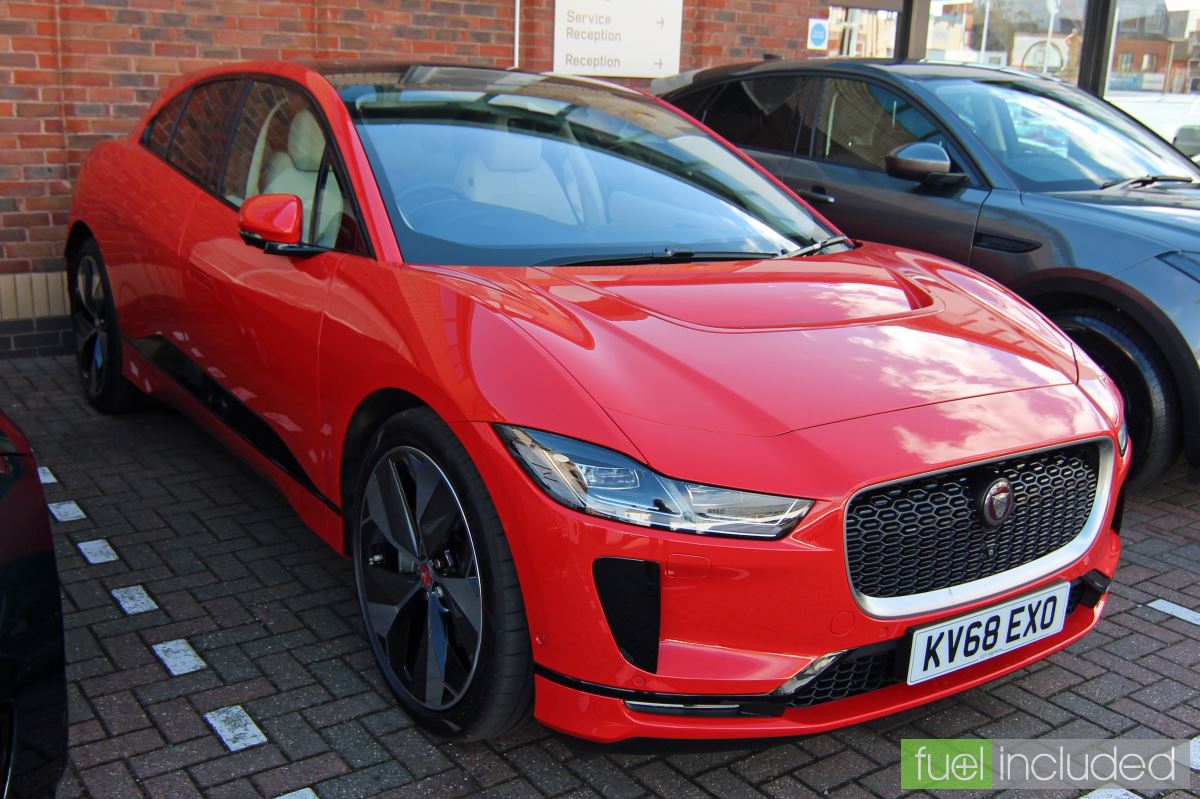
Jaguar I-PACE Electric Car (Image: T. Larkum)

Could the UK really lead the world in electric vehicles?

Amidst a gloomy series of announcements pointing to car manufacturers pulling out of the UK, there are still some signs that the future could be bright for the UK’s automotive industry.

Jaguar Land Rover (JLR) has announced it will invest hundreds of millions of pounds in electric vehicle (EV) production at its Castle Bromwich plant in the Midlands, helping to secure 2,700 jobs. The previous government had been eager to show its support, handing a £500m loan guarantee to JLR, announcing it will make charging points mandatory in new homes and cutting company car tax for EVs from 2020. In his first address to Parliament as new prime minister, Boris Johnson emphasised his vision for the UK as “the home of electric vehicles”.

Jaguar I-PACE Electric Car (Image: T. Larkum)

But how realistic is this grand ambition? The UK still only attracts a small fraction of the new global investment in electric car manufacturing. China, Germany and the US are getting the lion’s share, with car makers’ planned investments in these countries reaching a total of over $240bn. The domestic EV market lags behind other EU countries. And, while Johnson also claims that the UK is “leading the world in battery technology”, there are no plans for large scale domestic battery manufacturing facilities, with production capacity in Europe instead expected to reach 130 GWh by 2025.

Unless this changes, the global auto industry will continue to invest elsewhere and the UK will miss its chance to claim a major stake in this industry – not to mention the benefits of cleaner air and real progress in cutting carbon from the largest emitting sector in the UK.

Read more: CityMetric

Zappi 2018 EV Charge Point (Image: myEnergi)

“Electric Nation” smart charging research: grid is fine

The Electric Nation project ran from 2016 to 2019 in the UK, describing itself as “the largest smart charging project in the world”. GreenFlux has now published the results.

A total of 673 “smart” chargers were installed in participants’ homes as part of the project researching the controlled charging of electric vehicles. More than 40 different electric vehicles were involved in the project – from plug-in hybrids to vehicles with range extenders, as well as purely electric cars.

Zappi 2018 EV Charge Point (Image: myEnergi)
EV Charge Point (Image: myEnergi)

GreenFlux’s intelligent charging system was used to collect charging data and control charging sessions. Among other things, the project recorded the times of plugging in and unplugging, the duration of the actual charging process and the amount of electricity consumed. In this way, the system monitored the overall demand and was able to instruct individuals charging that they should reduce their charging capacity if necessary.

GreenFlux concludes, according to a company statement, that thanks to controlled charging, there is no need to upgrade the existing grid capacity. This will eliminate the need for costly investments in the electricity grid. In Germany, EnBW also came to similar conclusions when they conducted field tests near Stuttgart.

In the Electric Nation project, most vehicles were connected to the home charging station between 5 pm and 7 pm as one would expect. While PHEV drivers had an average of 0.76 charging sessions per day, BEVs were generally only plugged into the wallbox every third day. In January and February in particular, however, there were more charging operations than in August – due to the shorter range in the winter months.

Read more: Electrive

Drive Energi 50kW Tritium Veefil-RT chargers (Image: Drive Energi)

Proposals unveiled for a new network of 2,500 EV chargers

A new charge point operator, Drive Energi, is pledging to install 2,500 chargers in the UK by 2025.

Each site on the proposed network is to have two 50kW Tritium Veefil-RT chargers and a number of 22kW chargers, according to plans put forward by Drive Energi yesterday.

Drive Energi is planning on having 100 chargers installed by the end of the year and between 300 and 500 by the end of 2020.

Tritium would provide 24 hour support to the network, which Drive Energi said will be a mix of public and private charging.

Drive Energi 50kW Tritium Veefil-RT chargers (Image: Drive Energi)

Drive Energi has been in development for the last 12 months by Box Energi, which also provides energy storage and computing services, CEO James Moat said.

Moat claimed the company has 5,000 locations secured in the UK which have been undergoing assessment and said it chose Tritium’s chargers as they are “reliable, robust and trustworthy”.

“These chargers are not only the fastest and most advanced in their class, but incredibly easy to use and, with the world’s smallest physical footprint, to deploy as well – particularly in our cities and high-density areas where space is increasingly limited.”

Read more: Current News

Electric vehicle sales to surge across Europe, with 2020 seen as new tipping point

A new report predicts that within the next two years, the penetration of electric cars on the European auto market is likely to reach a point of no return as zero emissions vehicles become the mainstream item for consumers.

A new report from NGO T&E predicts production of electric vehicles in Europe will surge six-fold from around 750,000 in 2019 to more than million by 2025. It sees a 60/40 split between battery electric vehicles (BEVs) and plug-in hybrids (PHEVs) and more than 330 different models available.

In certain parts of Europe – most notably Norway, where more than 50% of new car sales are electric – EVs are becoming a common sight on roads, but overall it is still regarded as an early adopter market.

But new rules for EU carmakers – setting a mandatory CO2 target of 95g/km, and carbon emissions reduction targets set by the EU that will require CO2 from all new cars to be lowered 15% by 2025, and 37.5% by 2030 compared to 2021 levels – mean that the shift to EV production is inevitable.

It has been previously estimated by Transport and Environment (T&E) that to reach the new 2020/21 CO2 targets, carmakers will need to achieve a 7% market share of plug-in electric vehicles.

The new report, indicates that with a rush of new PHEV and BEV offerings planned by automakers in Europe, by 2021 this figure will be more like 10%.

Read more: The Driven

Electric vehicles essential for London’s clean air future: Breathe London studies make dire reading

Breathe London – a collaborative project led by Environmental Defense Fund Europe in partnership with the Mayor’s office to monitor London’s air quality – has revealed data that shows some areas in and around London exceed legal air quality limits.

“What’s that got to do with tech?” we hear you ask. Well, rather lot really. London is a vehicle hub and what it needs is fewer vehicle emissions. The solution to that, in part, is an increase electric vehicles (EVs), therefore emitting fewer toxic emissions and helping to bring down the levels of pollution.

You only need to look at Breathe London’s website and click on one of its 100 fixed pollution monitors to track 24-hour data and it’s easy to see that during times when it’s less busy – i.e. from midnight to 6am – the levels of pollution often halve, before rising again due to traffic on the roads.

Mayor of London, Sadiq Khan, has already implemented some schemes to help lower pollution. In April 2019 the Ultra Low Emission Zone (ULEZ) was introduced to deter drivers from entering a given zone. However, the £12.50 daily charge – which is in operation 24/7 – doesn’t mean drivers cannot access the capital. By 2021 the ULEZ will be expanded to cover a wider region (to the North and South Circular roads, also known as the A406).

Read more: Pocket Lint

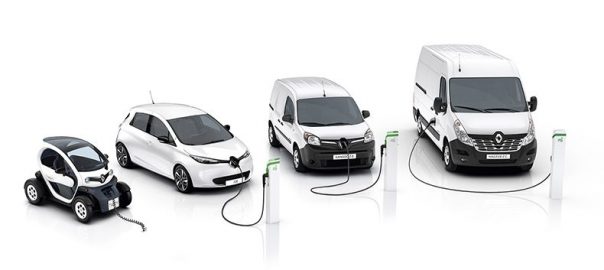
The Renault Electric Z.E. Range (Image: Renault)

Renault Z.E. Carries Off Honours in 2019 Company Van Today Awards

  • Renault’s Z.E. range of commercial vehicles win the coveted Green Award in the 2019 Company Van Today Awards
  • Prestigious title awarded by the expert panel of Company Van Today magazine
  • Award recognises Renault’s commitment to electric vehicle technology
  • Master Z.E., Kangoo Z.E. 33 and Twizy Cargo form the UK’s most comprehensive electric van line-up

Renault Z.E. commercial vehicles have scooped the Green Award at the 2019 Company Van Today Awards. Recognising the very best in light commercial vehicles, these awards are decided by the Company Van Today expert editorial panel, which has decades of experience to draw upon. With a focus on the low running costs, high quality, efficiency and great features that fleets look out for, the awards are some of the most prestigious in the business.

Reflecting on the success of the Renault Z.E. range, Tom Webster, Company Van Today editor said: ‘Renault’s pioneering position with electric light commercial vehicles has been enhanced in the past few months with the arrival of the Master van, which sees the brand again break new ground for fleets looking to cut their fleet emissions. No other manufacturer can match the breadth and ability of Renault’s Z.E. powertrains, and the vehicles offer a genuine zero emission alternative for an increasingly wide user base, which is why the brand is a worthy winner of the Green Award for 2019.”

The Renault Electric Z.E. Range (Image: Renault)

On receiving the award Steve Wilson, Range Manager Renault Pro+ and LCV, remarked: “We’re delighted the Renault Z.E. commercial range has been recognised by the judges at Company Van Today. This award both highlights Renault’s commitment to cutting edge E.V. technology and the impressively wide offering of the firm’s commercial vehicle range.”

The Renault Z.E range of electric commercial vehicles is one of the most comprehensive in the UK. At the large end of the scale is the Master Z.E, which is available in three lengths, two heights and two body styles (panel van and versatile platform cab). The powerful 57kW motor gives ample pulling power, even when making use of the 1,128kg payload, while a potential range of up to 124 miles and an 80 percent charge in a touch over four hours, the Master Z.E. delivers class-leading flexibility.

For businesses looking for a more compact zero emissions solution, the Kangoo Z.E. fits the bill to perfection. Available in three body styles (Panel Van, Maxi and Crew Cab) the Kangoo’s load area stretches up to 4.6 cubic metres, depending on the model. Powered by a 44kW motor with a muscular 225Nm of torque and mated to a smooth single speed transmission it’s a top choice for urban and open road deliveries, helped in no small part by a potential range of up to 162 miles.

Completing Renault’s range of Z.E. commercial vehicles is the Twizy Cargo. Ideal for last mile deliveries, inner city couriers and food delivery services, the Cargo gets a useful lockable 180-litre storage area. Powered by a zippy 8kW motor and with a range of up to 56 miles, the Twizy Cargo is the perfect choice for businesses wanting to conquer congested city delivery routes.

Source: Renault Press

SWARCO eVolt is supplying 45 charging units, including 11 of its Rapid Chargers capable of charging two vehicles simultaneously in 30 minutes, across 28 sites in East Lothian (Image: eVolt)

SWARCO eVolt Supports East Lothian Council Roll Out of New EV Charging Hubs

East Lothian Council has selected SWARCO eVolt to supply electric vehicle (EV) charging units for its current project to introduce a number of charging hubs across the county to provide essential infrastructure for EV drivers and lower emissions in the area.

In total, SWARCO eVolt is supplying 45 charging units, including 11 of its Rapid Chargers capable of charging two vehicles simultaneously in 30 minutes, across 28 sites in the county.

A new central charging hub is being introduced in each of East Lothian’s six largest towns – Musselburgh, Tranent, Haddington, Dunbar, North Berwick and Prestonpans – and will feature multiple charging units, including Rapid Chargers.

SWARCO eVolt is supplying 45 charging units, including 11 of its Rapid Chargers capable of charging two vehicles simultaneously in 30 minutes, across 28 sites in East Lothian (Image: eVolt)

As well as the central town hubs, charging units are also being installed at car parks and on-street in a number of the county’s smaller towns and villages. In some cases, these installations include the replacement of older units to offer the latest available technology to local residents and other drivers.

Ryan Robertson, Roads Officer at East Lothian Council, says SWARCO eVolt’s positive reputation in Scotland made them an obvious choice:

“Our aim is to promote the use of EV’s to the residents of East Lothian and provide them with the essential infrastructure they need to use and charge their EV’s, including in some of the most rural areas in the county. And that requires a reliable supplier, capable of fulfilling our plans.

“SWARCO eVolt came well recommended and were selected after a thorough due diligence process. So far they’ve been fantastic. We have a local maintenance engineer who is always available to provide support and first-class customer service.”

Justin Meyer, General Manager at SWARCO eVolt, says:

“Scotland is leading the way for EV’s and EV infrastructure, so we are pleased to be supporting East Lothian Council and its project to promote the use and uptake of EV’s. We are pleased to see our proven and reliable charging units making a real difference to the local residents and visitors.”

Source: SWARCO eVolt PR