Monthly Archives: July 2019

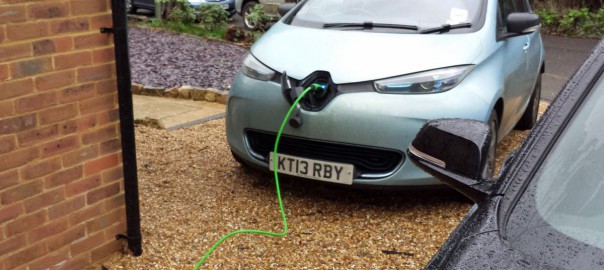
POD Point installed (Image: T. Heale)

Electric car charge points to be installed in every new home

England will be the first country in the world to introduce mandatory electric car charging points for new-build homes

All new homes in England will have to be fitted with charge points for electric vehicles, as the government seeks to facilitate the infrastructure improvements necessary for the planned mass-adoption of electric vehicles.

POD Point installed (Image: T. Heale)

The news comes as Department for Transport has announced a public consultation on the subject. If the planned changes to building regulations go through, it would force homebuilders to install charge points so potential owners could easily charge their plug-in hybrids and electric cars at home. The move would mean buyers of new-build homes would not need to make use of the Government’s home charger subsidy scheme, which has seen almost 100,000 wallboxes installed.

No mention has been made of how new-build houses without off-street parking would be fitted with charge points, but last week the Government invested nearly £40 million into research projects that included wireless charge points, and charge points that rise up from the pavement.

Read more: Auto Express

BP Chargemaster Rapid Charger at Milton Keynes Charging Hub (Image: T. Larkum)

BP Chargemaster to install 200 rapid chargers at UK pubs

BP Chargemaster is to roll out up to 200 rapid chargers at pubs and restaurants run by Mitchells & Butlers across the UK.

The decision to roll out the chargers comes after trials at several of Mitchells & Butlers’ locations. Up to 50 chargers are expected to be installed by October 2019.

The 50kW Ultracharge chargers are to be installed with investment from BP Chargemaster and will be part of its Polar network. They will be available to be used on a pay-as-you-go or subscription basis.

BP Chargemaster Rapid Charger at Milton Keynes Charging Hub (Image: T. Larkum)

In 2018, Marston’s Inns and Taverns partnered with Engenie to become the first UK pub company to roll out rapid chargers across its sites. This new announcement marks increased interest in rapid charging from UK pub companies.

David Newton, chief operating officer at BP Chargemaster, said the chargers will make driving across the country “even easier” and allow drivers to enjoy a break on a long journey.

“At this stage in the market, we are seeing electric vehicle drivers actively seek out locations that offer convenient charging, so we also expect to deliver additional footfall to sites that host our rapid chargers.”

Read more: Current News

2020 Renault Zoe (Image: Renault)

Renault Zoe EV getting ready to plow snow at the Andros Trophy racing series

These are interesting times we live in. Electric cars walk the world, and some even make advances in professional motorsports.

The Renault Zoe has new ice to break in this field, though.

The Andros Trophy is an off-season racing series held in France and so far attended exclusively by traditional, fossil fuel-burning cars. The DA Racing team intends to break from that tradition, however. Their experienced driver, Jean-Baptiste Dubourg, will join the next championship behind the wheel of a modded Renault Zoe.

2020 Renault Zoe (Image: Renault)

Modded how exactly? We don’t have the answers yet, but the production car is obviously looking forward to major tweaks and design alterations, especially since freezing weather is known to have an utterly devastating effect on traction battery capacity and performance. So far, finding a workaround is at the top of the priority list.

Read more: FormaCar

Government unveils proposals for new build housing to have EV chargers as standard

The government has unveiled proposals for new build houses to be fitted with chargepoints and pledged to ensure new rapid chargers will provide ‘pay as you go’ payment options.

In a public consultation, the government is proposing that every new residential building with an associated car parking space is fitted with a chargepoint. This would also apply to any buildings undergoing renovation to residential use.

Every residential building undergoing major works with more than 10 parking spaces would also be required to have a chargepoint and the cable routes for a chargepoint for one in five spaces. This would also be true for every non-residential new build and non-residential building undergoing major renovation.

Existing non-residential buildings with over 20 parking spaces will also be required to have a chargepoint, which would be applicable from 2025.

In its second EV announcement, the government revealed plans to ensure all new rapid chargers provide ‘pay as you go’ credit or debit card payment options from spring 2020. It says it is prepared to use powers in the Automated and Electric Vehicles act to ensure ‘a good deal’ for consumers.

Read more: Current News

Milton Keynes 'Mushrooms' Charging Hub (Image: T. Larkum)

‘How do I charge an electric car without a driveway?’ And more of your questions answered

How much does it cost to run an electric car? How can I get a charging point when I don’t have a driveway? Are they really better for the environment?

These are just some of the many questions you have been sending us about electric cars, and with more and more manufacturers investing in and developing these vehicles, more questions are being raised.

This week the government announced it is pumping nearly £40m into improving the infrastructure for electric vehicles.

Milton Keynes 'Mushrooms' Charging Hub (Image: T. Larkum)
Milton Keynes ‘Mushrooms’ Charging Hub (Image: T. Larkum)

Business correspondent Theo Leggett and transport correspondent Tom Burridge have been answering some of the questions sent to us by BBC News online readers.

Phil: How much does it cost to put an electric charging point in your home?

Tom: The first thing to note is that the government provides a grant of £500. A basic charging unit can cost around the £700 mark so in that case you would have to pay the remaining £200.

However the price of installation can vary depending on how far the charging point is from the mains supply.

Faster charging units can cost around £1,500 (minus the £500 grant).

If you don’t buy a charging unit you can still charge your car from your mains supply using a simple bit of kit provided by the car manufacturer, but it will charge more slowly.

Read more: BBC

OVO Vehicle-to-Grid (V2G) charging (Image: T. Larkum/Fuel Included)

Pricing dilemma pivotal to unlocking V2G potential

There is “brilliant” potential for vehicle-to-grid charging technologies to sweep the UK, but only if the industry can bring prices down.

That’s the view of Tom Pakenham, director of electric vehicles at OVO and Kaluza, who said that V2G technologies could “unlock the potential of the car in ways smart charging just doesn’t”.

Kaluza parent company OVO is one of a select few energy companies in the UK currently installing domestic V2G chargers in the UK and currently has around 30 installed, forming part of a major government-backed competition to help boost the technology.

OVO Vehicle-to-Grid (V2G) charging (Image: T. Larkum/Fuel Included)

Pakenham says that expanding these technologies to a mass market of a million cars had the potential to be brilliant but, on top of ensuring that customers had the “right habits” and the right relationship with their supplier, technology costs would have to come down.

Read more: Current News

MINI Electric

New Mini Electric revealed as affordable Brit-built EV

Mini’s first mass-production electric car will start from under £25k and will arrive in UK dealers in early 2020

Mini’s long-awaited first attempt at a mass production electric car has been revealed, mating the brand’s classic three-door hatchback with an electric powertrain offering Cooper S performance in a package claimed to be more affordable than every rival.

It has been dubbed the Mini Cooper S E in markets outside the UK, but the brand has chosen to retain the Mini Electric name in Britain to avoid confusion and clearly differentiate it from the standard range. However, the Cooper S badges will remain (alongside new E badging) to denote the performance level.

The most significant development, however, is the car’s relatively low price point: including the government grant for electric vehicles, it will start from around £24,400 – said to be less than an ‘equivalent spec level’ petrol Cooper S.

MINI Electric
MINI Electric

Mini claims development of the Electric involved balancing the car’s ability to travel an acceptable distance on a charge for a car aimed at cities with the desired performance level and aggressive price point.

The compromise that results is a WLTP-certified range of 124-144 miles – about the same as the Honda E, but less than more mainstream rivals such as the Peugeot e-208 and Vauxhall Corsa-e. It achieves this through a powertrain taken from the BMW i3s, making 181bhp and 199lb ft of torque.

That’s mated to a 32.6kWh battery mounted beneath the passenger seat in a T-shape. Unlike the i3, the motor powers the front wheels only. Resulting performance is strong for the class: 0-62mph takes 7.3sec, with the top speed limited to 93mph. Mini says it is also capable of charging from flat to 80% in 35 minutes via a 50kW charge point through a standard public charging cable. Via an 11kW wall box, 0-80% charge can be achieved in 150 minutes, or 210 minutes to full.

Read more: Autocar

MINI Cooper Concept (Image: MINI)

BMW unveils electric Mini as it charges into new era

New model will have list price of £24,400, with first deliveries expected in early 2020

Six decades after the original Mini first rolled off the production line in Oxford, its owner BMW has unveiled a new electric version it hopes will herald a new era – and help the German carmaker meet looming EU emissions targets.

BMW said it had 15,000 expressions of interest before order books open on Tuesday. The first deliveries to customers are expected in the first quarter of 2020, with a list price of £24,400, after the government’s plug-in car grant of £3,500 has been applied.

MINI Cooper Concept (Image: MINI)

The investment in the new Mini will preserve the jobs of about 5,000 workers at the Oxford plant at an uncertain time for an industry awaiting Brexit clarity. The plant produced 234,501 Mini and Mini Clubman cars in 2018, an increase of 4.8% year on year.

While the original Mini was built by the British Motor Corporation in response to fuel rationing following the Suez crisis of 1956, the latest version will help BMW, which relaunched the Mini brand in 2000, reduce the average emissions of the cars it sells to meet EU carbon dioxide emissions limits.

Oliver Zipse, the BMW board member in charge of production, said: “We are entering an era in which electric cars will become a normal choice for our customers.

“The Mini Electric will kick off our new model offensive for fully electric vehicles.”

Read more: The Guardian

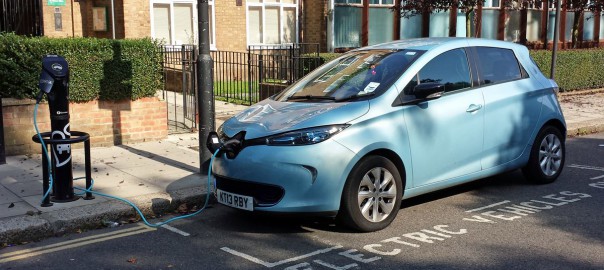
Slow Charging the ZOE at Highgate (Image: T. Larkum)

On-street charging gets £37m boost from Government

Department for Transport announces funding for 12 projects to help drivers charge on streets

The Government is to invest £37 million in a series of schemes designed to help drivers with no off-street parking charge their electric vehicles.

It’s thought that up to 45% of people in the UK don’t have access to their own driveway or private parking, but 90% of ‘charging events’ are estimated to take place at home.

Meanwhile, only households with private parking currently qualify for the Office for Low Emissions Vehicles’ wallbox grant, which contributes up to £500 towards the total cost of installation.

Slow Charging the ZOE at Highgate (Image: T. Larkum)

A dozen projects will share the £37 million fund, with each having passed a three-month feasibility study as part of the Government’s Future of Mobility Grand Challenge.

Char.gy – which opened the first lamp post chargers in London last year – has been given £2.3 million to develop wireless chargers for residential streets.

Consultants Urban Foresight secured £3 million to deploy pop-up chargers that rise up from the kerbside, a project that’ll see Virgin Media helping to monitor usage.

Other projects include the installation of multiple chargers in car parks in order to enable “mass charging” of electric cars at night, while “solar forecourts” – which use solar panels to power charging facilities – will also benefit from funding.

Read more: Driving Electric

Figure 4: Charging on Christmas Day (Image: T. Larkum)

More than 1.5 million UK households could go electric without compromise

Millions of buyers are in the perfect position to buy an electric car, research by What Car? has found…

Electric car ownership is the right choice for at least 1.5 million UK households today, according to new research by What Car?. That’s the number of multi-car homes in the UK with a sweet-spot combination of off-street parking for home-charging and at least one vehicle that never does more than 100 miles in a single journey.

What Car? approached 2310 current electric vehicle owners and a further 23,500 non-EV owners to understand how they used their cars on an everyday basis.

The research found that 17% of multi-car households have at least one vehicle that never makes a journey of more than 100 miles. Overlaying these numbers with the percentage that have a driveway for home-charging (88%), What Car? calculated that 1.56m households – of the 27m in the UK – could convert to a pure electric vehicle without any compromises today. This figure is set to increase as charging infrastructure and electric vehicle range increases in future years.

Figure 4: Charging on Christmas Day (Image: T. Larkum)

To further support the arguments for purchasing an electric car, a surprising two-thirds of households that already have one, as well as a traditional petrol or diesel vehicle, say they now use the EV as their main vehicle.

2019 has been labelled the year of the electric vehicle, with no fewer than 19 different pure battery powered cars hitting the showrooms. The latest is the Oxford-built all-electric Mini Electric, which launches this week. It is being revealed just months after What Car? awarded its coveted Car of the Year accolade to the all-electric Kia e-Niro – the first time that an electric car has won the award.

Read more: What Car