Monthly Archives: September 2018

Ubitricity charging post demonstrator at CENEX show (Image: T. Larkum)

Portsmouth City Council to roll out street light charging for electric vehicles

Portsmouth City Council has become the latest local authority to take up street light charging as part of its electric vehicle infrastructure plans, which will see around 50 new charge points installed over the next few months.

Working with German firm ubitricity, the council has plans to roll-out the technology on 34 roads identified via resident requests, which determined where the chargers were needed most in residential areas across the city.

Ubitricity charging post demonstrator at CENEX show (Image: T. Larkum)

Those who requested a charge point will now be contacted by the council so the installation process can begin, although the initially selected locations may change subject to further consultation.

The three year trial will see ubitricity utilise the electricity provided by street light columns to charge EVs on a pay-as-you-go basis. Charging areas will be identifiable by a shared-use socket and a marked ‘electric vehicle charging’ bay.

Like London where street light chargers are also being installed, the solution has been selected to overcome the challenges presented by the lack of off-street parking for residents in the built-up city.

Read more: Current News

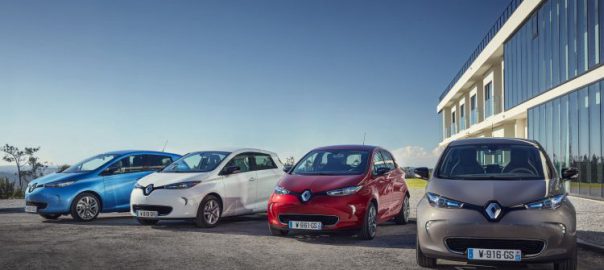
Electric Car Line-up (Image: Go Ultra Low)

Electric cars exceed 1m in Europe as sales soar by more than 40%

Milestone reached nearly a year after China but ahead of the US

There are now more than a million electric cars in Europe after sales soared by more than 40% in the first half of the year, new figures reveal.

Europe hit the milestone nearly a year after China, which has a much larger car market, but ahead of the US, which is expected to reach the landmark later this year driven by the appetite for Tesla’s latest model.

Between January and June around 195,000 plug-in cars were sold across the EU, Iceland, Liechtenstein, Norway and Switzerland, a 42% increase on the same period a year before.

Electric Car Line-up (Image: Go Ultra Low)

With growth speeding up, the cumulative total is expected to hit 1.35m by the end of the year, according to industry analysts EV-Volumes.

Viktor Irle, a market analyst at the group, said: “A stock of one million electric vehicles is an important milestone on the road to electrification and meeting emission targets but it is of course not enough.”

Read more: The Guardian

Cheapest electric car uk

Renault Zoe EV is the fastest selling used car in the UK

Auto Trader has revealed the Renault Zoe as the UK’s fastest selling used vehicle in July, taking just 18 days to shift off forecourts.

It is the first time a fully electric vehicle has topped Auto Trader’s national top 10 list of fastest selling used cars.

Cheapest electric car uk

An electric hybrid variation of the Mitsubishi Outlander MPV beat petrol and diesel-powered counterparts to become the fastest selling used car in London last month, taking just 12 days to sell.

Read more: Motor Trader

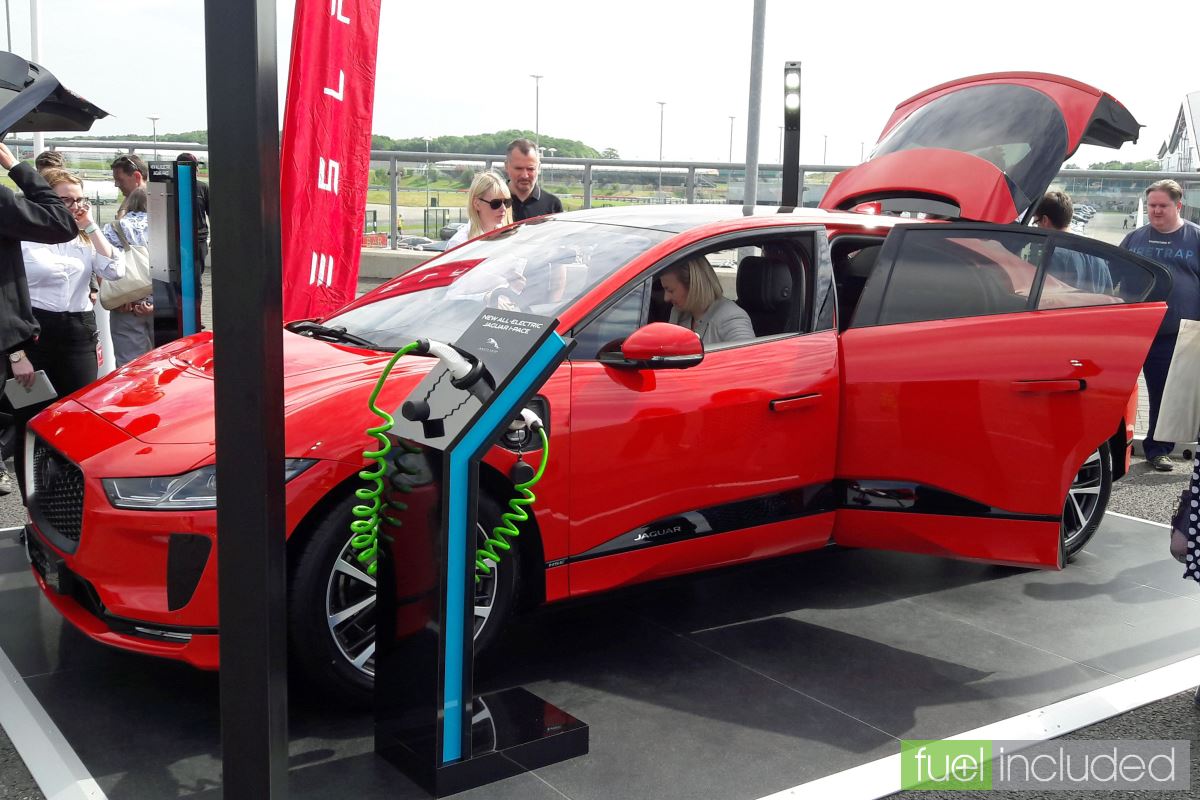
Jaguar I-PACE at Fully Charged Live show (Image: T. Larkum)

Jaguar I-Pace Sets a Laguna Seca Electric Car Lap Record

The Jaguar I-Pace has set the best time around Laguna Seca for an unmodified electric car.

Jaguar announced Thursday that its electric I-Pace crossover has set the lap record for unmodified electric vehicles at Laguna Seca.

Jaguar I-PACE at Fully Charged Live show (Image: T. Larkum)

A 2019 I-Pace HSE First Edition was piloted by professional racing driver Randy Pobst, who achieved a lap time of 1:48.18 in the I-Pace, the fastest known time for a stock four-door electric vehicle around the circuit. The best known time for a similar vehicle prior to this was a 1:57.5 set by a Tesla Model 3 in March. The base Model 3 was easy prey for the I-Pace, though, as its 400 horsepower, 512 pound-feet of torque, and all-wheel-drive give it a rapid zero-to-60 time of 4.5 seconds, and its near 50/50 weight distribution keeps it tidy in corners.

Base Tesla Model 3s come with 50 kilowatt-hour batteries with 210 miles of range, which can be upgraded to 75 kilowatt-hours for 310 miles of range. The I-Pace, however, has 90 kilowatt-hour battery that offers just 240 miles per charge. It is unclear how quickly the Tesla Model 3 Performance can lap Laguna Seca, and though it’d have to slash more than ten seconds from its best known time to beat the I-Pace, that shouldn’t be too hard with its added performance and the right driver.

Read more: The Drive

Vintage cars converted to electric power shown at Fully Charged Live (Image: T. Larkum)

Automakers are tapping nostalgia to promote electric cars — and it’s working

Reaching into the past to promote the future

Automakers around the world have spent the last few years promoting hybrid and electric drivetrain technology in order to show how they’re thinking about the future. But lately, some of them are looking back to the past to promote these new technologies.

Friday was the first day of the annual Pebble Beach Concours d’Elegance, one of the ritziest car shows in the world. Staged along the California coast, the opening ceremonies featured appropriately outlandish announcements (like the $5.78 million 1,500-horsepower Bugatti Divo). But a few companies also went right for the nostalgia jugular.

Vintage cars converted to electric power shown at Fully Charged Live (Image: T. Larkum)

Infiniti kicked off the show with its new Prototype 10, an all-electric racer that the company says “recaptures the spirit of early speedsters for an era of electrified performance.” The single-seater arrow of a car is equal parts retro and neofuturistic, and is Infiniti’s way of doubling down on the early 20th-century vibes it tapped for the Prototype 9, which the company unveiled at Pebble Beach last year. While both cars look like something out of the 1930s, they exist as a reminder that Infiniti has plans to switch its entire lineup to electric power of some kind by 2021.

Mercedes-Benz followed Infiniti with an early-1900s grand prix style car of its own, named the EQ Silver Arrow. Meant to promote Mercedes-Benz’s upcoming all-electric EQ sub-brand of cars, the concept employs an 80kWh battery, which the company imagines would get about 250 miles of range, all with about 738 horsepower.

Far away from the breezy cliffs of Pebble Beach, Kalashnikov — yes, the company behind the AK-47 — unveiled this week a tiny all-electric retro car of its own. The CV-1, as it’s called, supposedly makes almost 300 horsepower and has over 200 miles of range thanks to a 90kWh battery. Those are respectable enough specs (provided Kalashnikov is able to get the car into production) that are made even more palatable by the throwback exterior, which Jalopnik says was borrowed from the 1970s Moskovitch Kombi.

These companies are hardly alone in trying to mix the new with the old. Honda wowed attendees of the 2017 Frankfurt Motor Show with an adorable EV concept car that paid homage to some of the earliest Civics, and then followed that up with a sportier (but still decidedly retro) version at the Tokyo Motor Show a month later.

Read more: The Verge

Electric shock! Diesel cars to be overtaken by electrics by July 2020

New forecasting research, based on analysis of trends revealed in Society of Motor Manufacturers and Traders (SMMT) sales data, predicts that electric car sales will surpass those of diesel in July 2020.

Diesel cars have continuously slumped following the VW emission scandal last year and the government announcement that they will be banned by 2040. With Nissan and Toyota stating that they will begin phasing out diesel cars from 2021and latest data showing that sales have fallen by 37.2% over the last year, it appears the end could be near for the fuel type.

Meanwhile the Government is introducing policies to support the growth of the Alternative Fuel Vehicles (AFV’s) market and sales of electric cars increased by 5.7% last year.

Read more: London Loves Business

Cheapest electric car uk

New Renault ZOE R110 2018 review

The all-electric Renault ZOE has been updated for 2018, and with it comes a new more powerful 106bhp motor

Verdict: 4 stars – The updates to the Renault ZOE bring a welcome dose of power, while keeping the old car’s usable range. Otherwise, it remains the same spacious, relaxing, all-electric supermini it was before. It’s worth sitting down to do some sums; the ZOE could save you money relative to established petrol or diesel-powered alternatives. Cars it’s more than good enough to be judged against.

There’s definitely more ostentatious electric cars than the Renault ZOE, but few are as successful. The ZOE has been the best-selling EV in Europe three years in a row, and only in 2018 did it slip behind the latest Nissan Leaf. It’s a car that is – quite literally – going quietly about its business.

Cheapest electric car uk

To keep it fresh, the ZOE gains a range of updates for 2018. The infotainment system gets Android Auto for the first time and there’s a new purple paint finish on the options list. The range has been simplified, as well, with just two trim levels to choose from.

This Dynamique S Nav we’re testing here has all the kit you’d ever need; a seven-inch touchscreen with sat nav, auto headlights and wipers, climate control and rear parking sensors are all standard. The top spec Signature Nav adds leather seats, a Bose hi-fi (a £350 option on the Dynamique S Nav), and a rear parking camera.

The most significant upgrade comes to the motor, which produces 16bhp more than the old one. It’s an increase that is welcome on the move. While Renault quotes a 0-62mph time of 11.9 seconds (an improvement of 1.3 seconds over the old car) – at low speeds it feels much faster than those numbers suggest. The electric motor gives instant throttle response, letting the ZOE launch away from junctions and dart into gaps in traffic.

Read more: AutoExpress

Red Tesla Model S (Image: T. Larkum)

Should you buy an electric car?

Sitting in an electric car on the start line at Silverstone, about to go head to head with the latest Aston Martin, I quietly wonder what on earth I am doing.

While the guttural rumbling from the Aston’s V8 engine seeps into my right ear, the Tesla S I am in (£130,000 on the road) is totally silent. You would not even know it was switched on. But while the Aston has thunder, the Tesla produces lightning — accelerating from 0 to 60mph in under three seconds with a g-force that puts roller coasters to shame.

As the British supercar shrinks in my wing mirror, I can attest that driving an electric car is undoubtedly fun. But for everyday driving, could you really live with a battery-powered vehicle?

Red Tesla Model S (Image: T. Larkum)

It is a question more car buyers are asking. Electric vehicles have graduated from a niche environmental concern to a serious proposition for mainstream motorists, as the technology comes of age and major manufacturers prepare to flood forecourts with battery-driven alternatives.

However, sales remain tiny. The majority of buyers are daunted by the high prices of electric cars, plus the limited mileage range, not to mention how — and where — they can recharge their vehicles. About 6 per cent of vehicles sold between January and June this year had a plug, while a mere 0.5 per cent were fully electric, meaning they have no traditional engine whatsoever.

As we enter September, traditionally Britain’s second-biggest month for forecourt sales, here are all the financial points you need to consider before buying an electric car.

Read more: FT

Myths And Shibboleths About Electric Vehicles: The Long Tailpipe Theory

One of the most frequent comments spouted by critics of electric vehicles is “the electricity they use is produced by fossil fuels, so actually they’re more polluting than petrol or diesel vehicles.” The long tailpipe theory, repeatedly trashed by science, is still the fallback argument for the ill-informed.

Where does it come from? The two main sources of air pollution are vehicles with diesel or gasoline engines and electricity generated by coal or diesel oil. Since many countries still generate electricity in this way, the argument goes that electric vehicles are simply transferring the pollution from our exhaust pipe to the chimney of a power station.

Is that true? No. The first reason is obvious: not all electricity is produced by coal and diesel power plants. More and more countries are using sustainable generation such as hydroelectric, wind, solar or other renewables, while at the same time, we are seeing an increase in distributed generation infrastructures such as solar panels in homes. Therefore, even if all we were doing was transferring pollution from one point to another, in the vast majority of countries a certain part of that electricity would come from clean sources.

In fossil fuel vehicles, this is not the case: everything it produces comes from where it comes from, and anybody with a minimum of environmental awareness should be ashamed every time they get behind the wheel.

Read more: Forbes

Grid storage batteries help electric vehicles go truly green

Lower costs and wider take-up promise future where cars supply power to grids

In October 2015 a ruptured well in a natural gas storage facility in Aliso Canyon north of Los Angeles leaked 97,100 tonnes of methane into the atmosphere — making it one of the worst environmental disasters in the US since the Deepwater Horizon oil spill five years earlier. Thousands of people were displaced.

The following year utility Southern California Edison decided to invest in batteries to reduce the region’s reliance on gas for electricity — a contract that was won by Tesla. It was a turning point for electric utilities, which have relied on natural gas plants to provide power for over half a century.

Their greater use of batteries by utilities could help grids better integrate renewable sources of energy that are often intermittent. This in turn would help make electric cars truly green, by reducing their reliance on electricity supplied over the grid that is still often generated from fossil fuels.
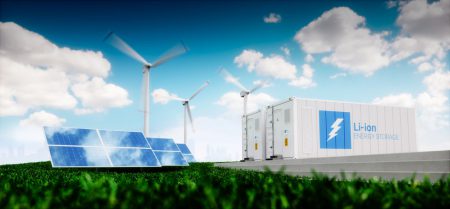
Energy storage is set to see rapid growth as the plummeting cost of batteries has made them increasingly competitive with gas plants, providing power at periods of peak demand or when the sun does not shine and the wind does not blow.

“It’s cost-competitive right now,” says Praveen Kathpal, who heads the market applications team at Fluence, a joint venture between AES of the US and Germany’s Siemens. “The declining cost of energy storage is increasing the pace at which those needs will be met by storage. We believe storage is competitive with gas peaking plants almost anywhere.”

The need for energy storage is increasingly critical for states such as California, which has set a target of getting half of its energy from renewable sources by 2030.

Utilities have started to invest in ever larger battery projects over the past two years. Last year Tesla installed a 129 megawatt hours battery in South Australia, to store wind energy from the Hornsdale wind farm. Drax Power in the UK said in September it wanted to build 200MW of battery storage at its power station in Yorkshire.

The case for wider deployment of storage batteries on the grid has been helped by the rapidly declining costs of lithium-ion technology that is also used in electric cars. Invented in 1991 and commercialised by Sony for use in its camcorders, the cost of lithium-ion battery packs has fallen by 79 per cent over the past eight years, according to Bloomberg New Energy Finance.

Analysts at McKinsey estimate that the total costs for energy storage systems should fall by a further 50 to 70 per cent by 2025 due to economies of scale as well as design improvements.

As a result, consultancy IHS forecasts that the grid-connected storage market will grow tenfold to 52GW globally between now and 2025. The International Renewable Energy Agency predicts the market could hit 175GW by 2030.

Getting there may not even require factories to churn out ever more batteries. As the uptake of electric cars grows, their individual batteries could be linked up to provide a source of energy storage for electric grids, according to Chris Wright, co-founder of London-based battery start-up Moixa.

Read more: FT