Monthly Archives: January 2017

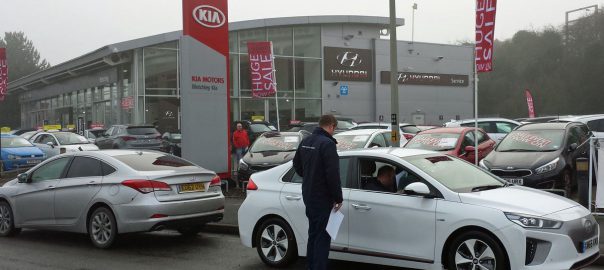
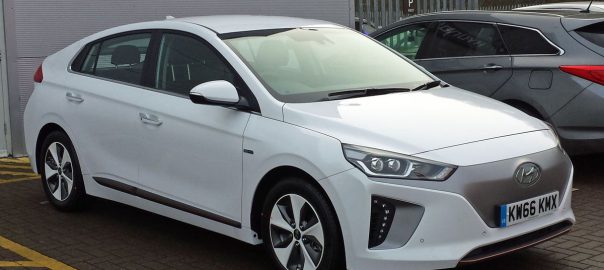
Trevor Heale's new Hyundai Ioniq Electric (Image: T. Larkum)

An Introduction to the Hyundai Ioniq Electric

Hi, I am Trevor Heale. This is an introduction/taster to the Ioniq EV. Look online for in depth reviews/specs etc. Robert Llewellyn’s “Fully Charged” YouTube program was my introduction to the Ioniq. So I have to thank him for this adventure.

I have finally managed to go electric and here’s my first thoughts on my Hyundai Ioniq Premium SE.

Trevor Heale's new Hyundai Ioniq Electric (Image: T. Larkum)
Trevor Heale’s new Hyundai Ioniq Electric (Image: T. Larkum)

It is a fantastic machine. Pure pleasure to drive. I was not expecting to ever feel like this about motoring again.

Driving the Ioniq EV is simple:

  • Walk up to the car with the key in your pocket, press the button on the drivers door and pull the handle.
  • Once the driver’s door closes the driver’s seat moves to its designated position (nice).
  • There is no ignition switch.
  • Push and hold the foot brake pedal and press the start button to activate the car. The dash board display is lovely as it runs through its start up checks. Hold the foot brake, press ‘D’ on the centre console and the car is ready.
  • Press the right pedal and enjoy.


Pros

  • Fantastic machine. Pure pleasure to drive. Did I say that yet?
  • Regenerative Braking – I love this. I have it set to the highest level and 95% of the time I only use the right pedal (can’t very well call it the gas pedal) to go faster or slower.
  • Roomy – Five adults with no bother (No noticeable loss of performance :o)
  • Comfy – Heated and vented front seats.
  • Super safety features (inc all round air bags and sensors).
  • Cheap servicing – Five years up front cost £290.83
  • An incredible amount of electronic features.
  • Three driving modes. Eco, Normal and Sport.
  • Range. I am mainly using Normal (and occasionally Sport mode :o). The more it learns about my driving style the more I’m getting from each charge. After four cold frosty days and two charges my initial range has increased from 91 miles (at delivery) to 135 miles. I expect that to increase with warmer weather and Eco mode.


Cons

None for the Ioniq itself. It’s a fantastic machine… Sorry off topic for a moment.

The problems I’ve had were due to Hyundai’s launch team.

  • No EV manuals (for staff or customer) were available!
  • There are an incredible amount of electronic features, most of which I have had to work out for myself. I have a copy of the Hybrid manual but it doesn’t address my EV specific questions.
  • No service manual available at delivery.
  • The delivery Check list that we worked through prior to my acceptance of the car didn’t include unplugging it from a charge point (Double clicking the unlock button seems to be the answer). Having a manual would have helped. A lot.


Overcoming Range Anxiety

I’m currently running the battery down to reset my anxiety level.

Previously if my diesel was down to 30 miles I became anxious because it gave no further indication of range and I’d top it up pronto. With the far more accurate range indicator of my Ioniq I am comfortable driving towards ’empty’ confident in what it’s telling me.


Being an EV owner

What can I say? I am very, very pleased. Almost smug.

Compared to my Kia Cee’d (£60 per fill and rising) it’s wonderful getting my fuel from home and it only costing £8 in instalments* to travel the same distance.

We are planning to tour the UK soon and hope to take full advantage of being an Ecotricity customer (Rapid free charging at motorway service stations). I’ll let you know.

My thanks to Trevor Larkum for guiding me through the transition to EV driving. I think everyone should have a knowledgeable friend when going electric. His help has taken the fear out of this.

Thanks also to Bletchley Hyundai for supplying the car so quickly and their unwavering support for the lack of manuals.

*Three charges 🙂

[The next part is here.]
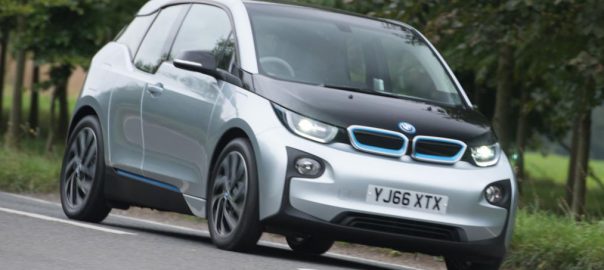
BMW i3 REx range extender 94AH 2016 (Image: AutoExpress)

BMW i3 94Ah Range Extender 2016 review

The updated BMW i3 is better than ever and this Range Extender makes range anxiety a thing of the past

BMW i3 REx range extender 94AH 2016 (Image: AutoExpress)

Verdict: 4 stars

The BMW i3 is a more compelling proposition than ever thanks to its bigger battery pack and improved range. The pure EV version will cost pennies to run, but it’s this REx model that steals the show. Unlike conventional plug-in rivals like the VW Golf GTE, the i3 offers a truly usable electric-only range, allowing you to feasibly avoid using the petrol engine at all. Added kit like DC charging should make it even easier to live with, too.

In a world of increasingly stringent emissions regulations, more and more buyers are considering the purchase of an electric vehicle. Range anxiety remains a problem, however, with many worried about simply running out of juice.

BMW thinks it has the answer. By fitting a denser 94Ah battery pack to its funky looking i3, engineers have almost doubled the car’s all-electric range. Now capable of up to 195 miles, the BMW i3 is more than suitable for the average daily commute.

But what if that’s not enough? What if the thought of being stranded at a motorway service station without access to a plug still terrifies you? Handily, bosses have seen fit to add the bigger battery to the Range Extender model, too.

The thing is, it’s not actually any bigger. The 94Ah battery slots into the same space as the old unit – meaning this new model is only marginally heavier than the outgoing car. BMW says it’ll do 288 miles on a single charge and full tank of fuel, charging from empty to 80 per cent full in only 40 minutes.

That super-fast charge time is thanks to the fact that all i3s now get DC Rapid Charge as standard. It’ll still allow you to top up from a standard three-pin wall socket, although that’ll take around 10 hours.

On the road, the i3 drives just as it did before. It has the same playful handling as we’ve grown to expect from a BMW, while the rear-wheel propulsion gives it a sporting edge often missing on competitor cars. The two-cylinder engine feeds the batteries rather than being directly connected to the wheels, meaning you’re never driving solely on petrol power. It’s whisper quiet, too, ticking away in the background without you even noticing.

As a result, the BMW i3 always benefits from the electric motor’s instant torque. It offers pleasing acceleration (0-62mph takes 8.1 seconds) – with the ability to surprise some supercars off the line. It tails off at motorway speeds, but still feels comfortable at 70mph.

Read more: AutoExpress

Hyundai Ioniq Electric Handover (Image: T. Larkum)

Hyundai IONIQ Electric Delivery

I had the pleasure last Friday to attend the delivery of one of the UK’s first Hyundai Ioniq Electric’s to my friend and colleague Trevor Heale. I have to say I was impressed with the Ioniq Electric in the flesh.

Hyundai Ioniq Electric Handover (Image: T. Larkum)

Not only did it look good, but it had an impressive list of equipment including automatic cruise control, blind spot warning, electrically positioned driver’s seat, and so on.

Hyundai Ioniq Electrc (Image: T. Larkum)

The handover was lengthy but thorough and Patrick at Bletchley Hyundai did a good job of explaining most of the car’s features despite a lack of documentation from Hyundai HQ.

A Happy Trevor and his Hyundai Ioniq (Image: T. Larkum)

I have no doubt that Trevor will enjoy his Ioniq. He has promised to tell us about his experiences with it and we look forward to publishing his blog posts here soon.

[Update: Trevor’s first post is here]

[Update 2: We have uploaded a video here: https://www.youtube.com/watch?v=oZevl6nzimk]

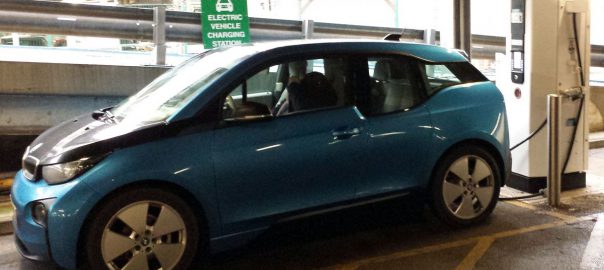
i3 charging at Frimley Hospital (Image: T. Larkum)

Rapid Charging at Frimley Park Hospital

[Part 1 is here]

As expected we got most of the way to our destination in Surrey without having had a chance for a proper rapid charge. The plan was to charge at Frimley Park Hospital, and if that failed to go to Church Street car park in Fleet. Driving an EV long distance is all about having a plan and a backup plan!

i3 charging at Frimley Hospital (Image: T. Larkum)

We needn’t have worried – Frimley turned out fine, eventually. We knew the charge point was in the covered part of the (very large) car park and found it pretty easily. However, things did then get a bit tricky. Zap-map indicated that there were two CCS-capable charge points there, with one of them offline. In fact there was only one (the other charge point could only do AC and Chademo) and it was showing an error on the screen; naturally I was worried that this was actually the offline unit.

I cancelled the apparent charge session and re-initialised it (just following instructions on the screen) and it seemed to clear. I started a new session using my Polar RFID card (it’s a CYC charge point, but CYC is now part of Polar). When I first connected the i3 and began a charge, however, it only lasted about a minute, and then stopped with an error on the dash. Anyway, I persisted and the second time it worked fine.

We were fully charged about 45 minutes later – that was longer than I expected, particularly as we plugged in with 32% charge, so that implies to me that the charge point may not have been giving its full 50kW power (perhaps as a result of the initial failed charge?). Nonetheless, it’s hard to complain when the charge was free, and even £3 for the parking seemed reasonable as we were able to pass the time sitting in the nearby hospital cafe with a cup of tea and a slice of cake.

The charge issues and long charge time notwithstanding, it was a pretty good experience and I’m sure we’ll use Frimley again. We left with 99% charge and had enough not just to get to Surrey but to show off the i3’s acceleration a few times while there, and then return all the way back to Northampton without a further charge. Hats off to the i3 once again!

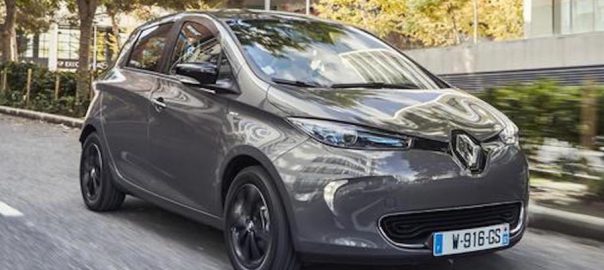
RENAULT ZOE Z.E. 40 DRIVE TESTS IN PORTUGAL (Image: Autocar)

2016 Renault Zoe R90 Z.E.40 Signature review

Much-improved range and same suite of strengths make the Zoe an EV that more people than ever before can now consider

RENAULT ZOE Z.E. 40 DRIVE TESTS IN PORTUGAL (Image: Autocar)

What is it?

When the groundbreaking Nissan Leaf appeared in 2010, we were fed statistics that should, on paper at least, have alleviated a number of common fears and misconceptions that surrounded all-electric motoring. For example, the claim that a 100-mile range is enough for more than 75% of all journeys undertaken made the Leaf, with its 124-mile range, look positively practical.

However, what these statistics failed – and still fail – to take into account is that the car as a concept has been such a success over the past century thanks to its unparalleled flexibility. Having the freedom to go where you like, when you like and with a minimum of inconvenience is something the public simply don’t want to give up. In short, people care about that extra 25% of journeys.

Over the years a number of manufacturers have responded to the public’s fear of range anxiety, with BMW and Nissan recently taking steps to increase the performance of their pure EVs. However, as of yet, only Tesla offers an ‘entry-level’ EV capable of true long-distance motoring, in the form of the Model S P60D with its 267-mile range.

Thankfully, Renault now claims to have rectified this situation, with its new mass-market Zoe R90. Despite costing a whopping £34,345 less than the Tesla, the R90 is theoretically capable of travelling up to 250 miles on a charge – only 17 miles short of the premium US saloon. Granted, in real-world driving conditions that astonishing figure is predicted to fall to just 186 miles, but that’s still 80 miles more than the entry-level 20kWh Zoe and, according to Renault, is “the greatest range of any mainstream electric vehicle”.

This extra range comes courtesy of a new battery which has almost double the storage capacity of the current Zoe’s (at 41kWh) but, crucially, is no larger or heavier. This has been achieved by increasing the energy density of individual cells rather than adding more battery modules, thus Renault has been able to pack the battery into the same compact space as before.

Combined with a free home 7kW fast-charger, which takes just three to four hours to charge a Zoe to full capacity from empty, and new satellite navigation software that allows drivers to access paid charging points regardless of the operator, Renault says range anxiety is a thing of the past.

Read more: Autocar