Category Archives: Electric Cars

News and reviews of the latest electric cars (full electrics and plug-in hybrids).

Charging with an Ohme smart charging cable

Electric vehicle drivers got paid to fill up this weekend

  • Electricity prices went negative for long periods on Octopus Energy’s Agile tariff on the bank holiday weekend
  • Drivers with the Ohme charger automatically charged their cars when prices were cheap/negative
  • Ohme drivers got paid around £5 as they charged over 600 miles worth of electricity, enough to drive London to County Durham and back, and would typically cost around £100 in petrol

UK, Thursday 28th May 2020: Over the bank holiday weekend, there were long periods during the day and the night where electric vehicle drivers, using Octopus Agile’s green electricity tariff and an Ohme cable or home charger, were actually paid to charge their car.

One driver, for instance, was paid £4.51 to charge up his Tesla Model 3 with enough electricity to drive over 650 miles – which would have cost over £100 in an equivalent petrol car, a BMW 3 series. That is enough energy to drive from London to County Durham and back.

Charging with an Ohme smart charging cable

Another driver, on Twitter, quipped “I drive from Bath to Edinburgh…and Octopus PAY ME enough to buy 2 pints of cask ale and a bag of crisps”, as other drivers were posting energy prices and declaring what they were planning to do, as you can see here.

Wholesale electricity prices were negative because of lower electricity demand, coupled with the weather which was both windy and sunny causing there to be lots of renewable energy available. Octopus Agile charges customers based on wholesale prices which allows people on this tariff to benefit from lower prices when excess power is available. Periods of negative prices are occurring more frequently. For example, on Saturday 23rd May, prices were negative for more than 12 hrs, from early morning to the middle of the day, and drivers were paid up to 11p per kWh used.

Ohme’s smart charging technology enables drivers to optimise each charge according to what they want and what the predicted power prices will be over the next 24 hours. Ohme will turn the charging on-and-off throughout the day-or-night to minimise the costs and take advantage of the lower energy prices. Ohme does all the hard work. This also uses surplus renewable energy which could, otherwise, be wasted if wind turbines are curtailed to balance supply and demand.

Read more: News Anyway

It’s Time to Go Green!

If you would like to know more about Solar Panels and the PowerBanx range of home battery systems, and get a free instant quote, please complete our online form:

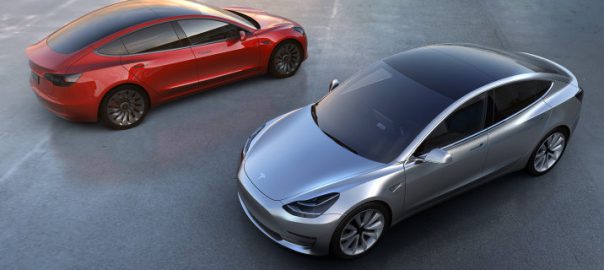
Tesla Model 3 Unveil (Image: Tesla)

Why fleets are (still) making the switch to electric vehicles

With oil prices at multi-year lows, conventional wisdom suggests an interest in electric vehicles (EVs) will wane. Perhaps surprisingly, the opposite is happening.

Whilst registrations for diesel and petrol vehicles have plunged in the UK year on year, registrations for electric vehicles have more than doubled in the midst of the global pandemic. Analysts don’t see the long-term trend toward the electrification of transport reversing. It isn’t only consumer demand driving EV sales.

Tesla Model 3 Unveil (Image: Tesla)
Tesla Model 3 (Image: Tesla)

One of the main reasons fossil fuel vehicles may have finally reached the end of the road is that the electrification of fleets is accelerating.

Why Now?

According to Bloomberg, “now we know that clear skies and silent streets can come about with shocking speed.” Up to 2.6 billion metric tons of carbon dioxide emissions have been prevented due to recent lockdowns—a historic record—that has caused many people to envision a world without air and noise pollution. It’s also inspired many companies to push for a green recovery and spurred the UN to call on Governments to “Build Back Better.” Even before the current crisis, some of the biggest delivery fleets in the world were already thinking green. Last September, online retailing giant Amazon ordered 100,000 electric delivery vans from EV-maker Rivian, while UPS recently announced plans to invest in 20,000 electric trucks from UK’s Arrival. According to BloombergNEF (BNEF), by 2040, 56 per cent of light commercial and 31 per cent of medium commercial vehicle sales will be electric.

Read more: Fleet Point

It’s Time to Go Green!

If you would like to know more about Solar Panels and the PowerBanx range of home battery systems, and get a free instant quote, please complete our online form:

Figure 4: Charging on Christmas Day (Image: T. Larkum)

Electric cars may be the safest way to travel with ‘contact free’ trips guaranteed

Electric cars may be the safest way to travel with ‘contact free’ trips guaranteed

Electric cars can be charged for over 300 miles from the comfort of your own driveway meaning road users do not need to visit packed petrol stations. The contact free trips mean road users can top up their car without any risk of picking up any germs from fuel pumps or other motorists.

Figure 4: Charging on Christmas Day (Image: T. Larkum)
Charging at home (Image: T. Larkum)

Speaking to Express.co.uk, Fiona Howarth, CEO of Octopus Electric Vehicles said motorists would also be able to charge at numerous other areas away from traditional petrol stations.

She said the growing infrastructure has meant motorists can top up while staying in hotels and even at parks.

Ms Howarth told Express.co.uk:

“With the ability to safely charge at home and complete up to a 310 mile trip on one charge, electric vehicles make contact free trips possible this summer.

“If you do need to charge while you’re out, the growing UK charging infrastructure means you can charge at National Trust properties or even stay in numerous hotels and apartments where charging is available on site, avoiding more crowded traditional stops.”

Read more: Express

It’s Time to Go Green!

If you would like to know more about Solar Panels and the PowerBanx range of home battery systems, and get a free instant quote, please complete our online form:
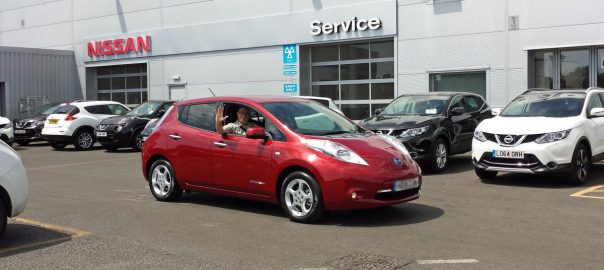
Nissan Leaf collection in St Albans (Image: T. Larkum)

10 things we love about electric cars in lockdown

Erin Baker explains why she’s lucky to own a Nissan Leaf in lockdown, and shares what potential electric car buyers should look for.

We’re running a Nissan Leaf for six months and we’ve been so grateful for it since lockdown began. Here’s why electric cars make perfect sense right now.

Nissan Leaf collection in St Albans (Image: T. Larkum)

1 – Easier to social distance

You don’t need to go near a fuel pump with an electric car, which means we haven’t had to worry about visiting fuel stations, and how to touch fuel pumps or interact with the public without risking contamination since lockdown began. Instead, the only charging we’ve done for two months has been at home, which feels much safer.

2 – Cheaper to refuel

Like many other households, we’ve lost a lot of our income since lockdown began. It’s been a relief, therefore, to know that we’re paying something like £12 for every 200 miles we drive, thanks to our electric-car domestic energy tariff, instead of about £30.

3 – Kinder to nature

The pandemic has brought us all a little closer to nature, whether we like it or not, and it seems to compliment the zeitgeist to be driving something with no nasty tailpipe emissions.

4 – No noise pollution

See above. With no loud rumble from the engine and exhaust, the only noise pollution comes from the whispering of the tyres and air. So we, and our neighbours, can still hear the enhanced birdsong when we start up in the morning.

5 – No range anxiety

Lockdown means fewer, more local journeys, so we’ve completely forgotten what range anxiety feels like, which is definitely the way forward. Not that we’ve had it very often – the Leaf is good for about 230 miles.

Read more: Autotrader

It’s Time to Go Green!

If you would like to know more about Solar Panels and the PowerBanx range of home battery systems, and get a free instant quote, please complete our online form:

Hyundai Kona Electric (Image: Hyundai)

Hyundai Kon Electric: The New Favored Police Patrol Car For Europe?

As cities look to reduce air pollution, some are equipping their police forces with electric cars. The Hyundai Kona Electric is proving to be a popular choice, in Europe at least.

Police forces in Spain, Switzerland, and the United Kingdom currently use Kona Electric patrol cars, Hyundai said earlier this month in a press release. The Ioniq and hydrogen fuel-cell Nexo are also used by police in Europe, the automaker said.

Hyundai Kona Electric (Image: Hyundai)

The Swiss canton of St. Gallen added Kona Electric police cars to its fleet last year. The crossover was the only electric vehicle that met the canton’s requirements for power, range, and cost, Hyundai said.

Kona Electric are also used by police in Valencia, Spain, according to Hyundai. In the U.K., Sussex Police and North Wales Police have one Kona Electric each in their fleets, while Hampshire Police has ordered nine, for delivery next month.

Additionally, three Netherlands police forces—in Amsterdam, East Netherlands, and Central Netherlands—are testing Kona Electrics for police use.

Dutch police officers have found the Kona Electric to be a great surveillance car, since suspects can’t hear it coming, according to Hyundai. The cars are certainly quieter than the diesel Opel Astra hatchbacks that have been the default choice for most European police forces over the last decade.

Read more: Green Car Reports

It’s Time to Go Green!

If you would like to know more about Solar Panels and the PowerBanx range of home battery systems, and get a free instant quote, please complete our online form:
2020 Renault Zoe (Image: Renault)

France warns Renault could disappear; Nissan plans job cuts

PARIS/TOKYO (Reuters) – Europe’s car industry was put on alert for more job losses on Friday as a French minister warned Renault could disappear if it didn’t get help soon and a Japanese news report said partner Nissan was considering 20,000 layoffs, with many in Europe.

Renault (RENA.PA) and Nissan (7201.T) have been in a carmaking alliance for the past two decades and are due to announce a strategy update next Wednesday.

The plan was originally billed as a reset of their relationship, which was rocked by the November 2018 arrest in Japan of the alliance’s architect and long-time boss Carlos Ghosn on charges of financial misconduct, which he denies.

2020 Renault Zoe (Image: Renault)

However, the update has taken on greater significance since the coronavirus pandemic hammered demand for vehicles and threw production into disarray.

French finance minister Bruno Le Maire, who is considering a 5 billion euro ($5.5 billion) loan for Renault to help it through the crisis, warned on Friday the company’s future was at stake.

“Yes, Renault could disappear,” he told Europe 1 radio.

Read more: Reuters

It’s Time to Go Green!

If you would like to know more about Solar Panels and the PowerBanx range of home battery systems, and get a free instant quote, please complete our online form:

The future of transport – building EV growth into the energy network

Climate change has raced up the list of priorities for the public during the last year or so.

MORI polls have shown that this is now at the top of the public’s concerns, sharing importance levels only achieved by Brexit, social care and the NHS

But there is much to do in order to meet the government’s legally binding targets of the UK being net-zero carbon by 2050. Of the key areas of electricity supply, heating and transport, progress in the latter is slower by some margin.

So, what are the answers?

Government policy is lagging behind where it should be and attracting criticism from the independent Committee on Climate Change. The automobile industry is moving ahead regardless, perhaps seeing the way the wind is blowing. Local authorities are declaring climate emergencies and introducing wide ranging local plans to achieve even more stringent targets.

More infrastructure is being delivered to facilitate EV charging but, more importantly, this is being linked to wider green agenda aims via vehicle to grid chargers. These fit EV ownership nicely into the thread of ‘homes / buildings as power stations’ in their own regard and the very definition of decentralisation. All of these will play a role in the future. Government policy looks forward to 2035 but perhaps by then the deep seated and intractable desire of the British individual to own a car at all might be starting to fade, with car clubs and shared transportation becoming the norm.

Climate Change

There is a whole international infrastructure which oversees climate change across the globe. The UNFCCC and IPCC have been saying for years that global warming is worsening and that urgent action needs to be taken. However, the IPCC report of October 2018 touched a particular nerve with the public.

This was the most hard-hitting report to date and effectively said that the world has 12 years to get a grip on global warming, or there will be irreparable damage to the world’s ecosystems and environment. From this report sprung a new vigour of climate action. Greta Thunberg and Extinction Rebellion were but two indicators of this.

Read more: Air Quality News

It’s Time to Go Green!

If you would like to know more about Solar Panels and the PowerBanx range of home battery systems, and get a free instant quote, please complete our online form:

Lambeth cracks down on harmful car idling

Lambeth Council is introducing £20 fines for drivers who leave their engine running whilst stationary and will run a new awareness campaign as part of the ongoing battle to improve air quality in the London borough.

Drivers who allow their vehicle engines to run unnecessarily when parked in the borough will be asked to turn off their engines, and if they fail to cooperate, will be issued with a fine under the new policy adopted in May. The move builds on previous anti-idling events in the borough to raise awareness and educate drivers on the effects of idling.

Councillor Claire Holland, Lambeth’s Deputy Leader (Sustainable Transport, Environment & Clean Air), said: “Cleaning up toxic air is an absolute priority for this council.

“Poor air quality is a huge health risk to our residents, and engine idling is a major contributor. We are determined to tackle the issue and are confident these new measures will help encourage people to change their behaviour so that everyone in Lambeth – particularly young children due to the effects on their development – is able to breathe clean air.”

Read more: Smart Transport

It’s Time to Go Green!

If you would like to know more about Solar Panels and the PowerBanx range of home battery systems, and get a free instant quote, please complete our online form:

Brits predicted to surge to electric vehicles post-lockdown

Improved air pollution levels during lockdown could result in a surge towards electric vehicles (EVs), a new study has found.

The latest research by online parking portal YourParkingSpace.co.uk discovered that 4-in-10 people are more likely to purchase an EV in the future as a direct result of the lockdown which has seen fewer vehicles on the road, resulting in less pollution.

Indeed, the findings correspond to April’s car sales, which although dramatically down due to the government restrictions, saw the electric Tesla Model 3 as the UK’s best-selling car and EVs take a record market share of 32 per cent.

Harrison Woods, managing director at YourParkingSpace.co.uk, commented: “The lockdown has changed nearly every aspect of life, including less vehicles and traffic fumes, and our study would indicate that this will result in a surge in popularity towards electric vehicles.

“While plug-in cars have been growing in popularity over the last few years, seeing and feeling the benefits of less pollution means we will probably see many more EVs on the roads of Britain sooner rather than later.”

Read more: Fleet Point

It’s Time to Go Green!

If you would like to know more about Solar Panels and the PowerBanx range of home battery systems, and get a free instant quote, please complete our online form:

Nissan NV-400 (Renault Master ZE) Ambulance

Nissan NV400 becomes Japan’s first electric ambulance

It will be used by the Tokyo Fire Department

Consumer passenger cars aren’t the only vehicles undergoing electric transformations. We’ve seen the introduction of early electric fire trucks, and now Japan is getting its first electric ambulance. It’s a Nissan NV400, and it will be used by the Tokyo Fire Department at the Ikebukuro station.

Nissan NV-400 (Renault Master ZE) Ambulance

Though badged as a Nissan, the NV400 is at its heart a Renault Master Z.E. electric van. The powertrain is the same as the French van with a 33-kilowatt-hour battery (7 kWhs less than the base Nissan Leaf) and a 55-kW motor driving the front wheels. That translates to 74 horsepower and 162 pound-feet of torque. That doesn’t sound like much, but in as dense a city as Tokyo, it’s not likely the NV400 will be able to reach high speeds at all, even if it had a Hellcat engine.

There are a couple of unique additions to the van to enhance its ambulance capability. One is the inclusion of a separate 8-kWh lithium-ion battery that can operate all the equipment on board for long periods of time without eating into the ambulance’s range. It can even be used like a generator to provide power to external emergency equipment. Then there’s the stretcher, which Nissan vaguely says is electrified to make it easier to use by the medical personnel. We presume the stretcher has an electric motor to make it easier to push around.

Read more: Autoblog

It’s Time to Go Green!

If you would like to know more about Solar Panels and the PowerBanx range of home battery systems, and get a free instant quote, please complete our online form: