Category Archives: Electric Cars

News and reviews of the latest electric cars (full electrics and plug-in hybrids).

Majority of drivers would consider EV purchase after lockdown

The majority of drivers have noticed a decline in air pollution during lockdown and would be willing to purchase an electric vehicle (EV) to help keep it this way, according to a survey carried out Smart Home Charge.

According to the survey, which was conducted on 291 people, 72.5% of respondents said good air quality was ‘very important’ to them with 97% saying they have noticed the positive effect that lockdown has had on local air quality.

68.4% of respondents acknowledged that having too many petrol/diesel vehicles on the road is having the biggest impact on air pollution and consequently 66% said they would be willing to purchase a fully electric car to help keep air pollution levels down.

14.4% said they would be willing to cycle and walk more, 2.1% said they would consider car-sharing, and 3.1% said they would avoid driving into town altogether.

Over 50% of respondents also said they would be more likely to buy a new or used EV in the next year if the government introduced a scrappage scheme for petrol and diesel cars.

Read more: Air Quality News

It’s Time to Go Green!

If you would like to know more about Solar Panels and the PowerBanx range of home battery systems, and get a free instant quote, please complete our online form:

Electric vehicles critical to post-pandemic UK economy claims report

Electric cars could benefit the UK economy by £24bn provided suppliers can rapidly ramp up their capacity to ten times current levels, according to new research published by the Advanced Propulsion Centre (APC).

The ‘Strategic UK opportunities in passenger car electrification’ report argues that with passenger cars requiring some form of electrification by 2030, the technology to achieve this will be crucial to the UK economy post COVID-19.

£50m clean mobility centre launched in Coventry

The report highlights market growth opportunities of £12bn for batteries, £10bn for power electronics and £2bn for electric machines (i.e. electric motors) but claims that delivering on these opportunities will require suppliers to ramp up their capacity to 10 times current levels.

“The electrification of vehicles is happening at pace,” said APC CEO Ian Constance, “but if we are to deliver on our 2035 goals, and take our place as world-leaders, the supply chain will need to expand more rapidly – our research predicts up to ten-fold in the next five years.”

Read more: The Engineer

It’s Time to Go Green!

If you would like to know more about Solar Panels and the PowerBanx range of home battery systems, and get a free instant quote, please complete our online form:
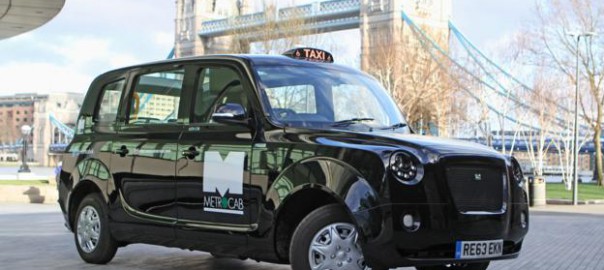
The release of the Metrocab, a battery-powered taxi capable of zero emissions, is one of the efforts to clean up the city’s transport (Image: Metrocab)

High-mileage EVs ‘cheaper to run’ than latest diesels

Electric vehicles (EVs) are becoming an attractive business proposition for high-mileage vehicle operators like Uber in some EU capitals, a new study suggests.

The new study, from Transport and Environment (T&E), does not include London in its analysis, but highlights the cost advantages of EVs in cities such as Paris, Berlin, Madrid and Lisbon.

Medium-sized battery EVs, such as the Nissan Leaf, are on average 14% cheaper to run than equivalent diesels today, if slow charging overnight near home and/or fast charging at preferential rates are available, it says.

The release of the Metrocab, a battery-powered taxi capable of zero emissions, is one of the efforts to clean up the city’s transport (Image: Metrocab)

The savings can be even higher (24%) in the case of Parisian drivers.

In monetary terms, these savings amount to €3,000 (£2,700) every year, because of cheaper electricity, lower EV retail prices and higher purchase incentives in France.

T&E says that the taxi and ride-hailing markets are best positioned to go fully electric first.

The economics of EVs – more expensive to buy but a lot cheaper to run – match perfectly with high-mileage, low-margin businesses like ride-hailing and taxis, the research suggests.

Uber-type drivers can travel up to five times the mileage of an average motorist.

Yoann Le Petit, new mobility expert with T&E, said: “This is a win-win-win situation for drivers, citizens and the planet.

“The sooner Uber and taxis go 100% electric, the sooner citizens will enjoy cleaner air.”

In London, the Mayor’s EV infrastructure taskforce estimates that 70% of the demand for slow and normal chargers in residential areas will come from Uber drivers alone.

Read more: Fleet News

It’s Time to Go Green!

If you would like to know more about Solar Panels and the PowerBanx range of home battery systems, and get a free instant quote, please complete our online form:

SWARCO eVolt is supplying 45 charging units, including 11 of its Rapid Chargers capable of charging two vehicles simultaneously in 30 minutes, across 28 sites in East Lothian (Image: eVolt)

Electric car charging points surge in the UK amid projected boom in EV ownership

Sales of electric cars are expected to hold steady despite the coronavirus pandemic, as the rest of the automotive industry suffers

The number of publicly-accessible charging points for electric vehicles (EVs) grew by 60 per cent in 2019, the biggest increase in three years and outpacing sales of battery-powered cars, a new report has found.

SWARCO eVolt is supplying 45 charging units, including 11 of its Rapid Chargers capable of charging two vehicles simultaneously in 30 minutes, across 28 sites in East Lothian (Image: eVolt)
SWARCO eVolt Rapid Chargers (Image: eVolt)

The International Energy Agency (IEA)’s annual Global EV Outlook study, the IEA reported the number of public slow and fast charging spots as having reached 862,118 globally – 60 per cent of which are in China, the world’s largest car market.

Fast charging points, including those used by Elon Musk’s Tesla electric cars, accounted for 31 per cent of the charger total. These points can charge vehicles’ batteries within minutes, with Supercharger stations charging Tesla batteries to around 80 per cent capacity within half an hour.

EV adoption rates to grow

The IEA defines slow charging as providing power of up to 22 kilowatts (kW), taking hours to charge a vehicle battery.

“China continues to lead in the rollout of publicly accessible chargers, particularly fast chargers, which are suited to its dense urban areas with less opportunity for private charging at home,” the report said.

The IEA expects global EV sales to match or slightly exceed last year’s in 2020 despite the coronavirus outbreak, meaning EVs will account for around 3 per cent of total global vehicle sales. In comparison, the wider automotive market is expected to drop by 15 per cent.

It projects that EVs will make up around 7 per cent of total global vehicles by 2030 if existing policies remain in place in the majority of countries.

Read more: iNews

It’s Time to Go Green!

If you would like to know more about Solar Panels and the PowerBanx range of home battery systems, and get a free instant quote, please complete our online form:

TfL to increase scope and cost of Congestion Charge from June 22

Transport for London (TfL) has confirmed it will introduce temporary measures to increase the cost and scope of the London Congestion Charge from June 22.

From June 22 the CC, which covers around 1% of Greater London, will temporarily increase to £15, operate 07:00-22:00 seven days a week and the residents’ discount will be closed to new applicants on August 1.

Previously the CC did not operate on evenings and weekends and vehicles were charged £11.50 to enter.

It has not made it clear how long these temporary measures will be in place.

TfL said traffic levels in London are already back to pre-lockdown levels and that without widening the scope of the CC, traffic could double as many avoid public transport to commute.

TfL said these temporary changes will reduce traffic in central London and enable more journeys to be made safely by foot or by bike while keeping the bus network reliable for those making essential journeys.

Alex Williams, TfL’s director of city planning, said it will not be sustainable for London’s recovery from Covid-19 to be dominated by cars.

He said:

“We are already seeing a surge in traffic and need to act now to stop the city grinding to a halt.

“The temporary Congestion Charge changes are supporting our Streetspace programme, which will make it easier and safer for people to walk and cycle and keep the bus network reliable for those who need to use it.

“Our new reimbursement schemes will also ensure that those at the heart of the battle against coronavirus or who could be most affected by it can still make essential journeys by car.

“These temporary changes will also help ensure that those who can’t work from home can travel safely and make the city’s recovery from the pandemic sustainable and healthy.”

Read more: Smart Transport

It’s Time to Go Green!

If you would like to know more about Solar Panels and the PowerBanx range of home battery systems, and get a free instant quote, please complete our online form:

Renault Captur Plug-in and Renault Clio Hybrid (Image: Renault)

RENAULT DETAILS ALL-NEW CAPTUR PLUG-IN AND ALL-NEW CLIO HYBRID

  • Efficient new E-TECH variants added to two popular Renault models
  • All-New Captur Plug-in Hybrid brings benefits of PHEV powertrain to best-selling crossover
  • Renault’s first PHEV boasts up to 30 miles all-electric driving range with CO2 emissions of 33g/km and 188.3mpg
  • Free BP Chargemaster Wallbox to customers of the All-New Captur Plug-in Hybrid
  • All-New Clio Hybrid is first hybrid version of the popular supermini, offering performance and efficiency
  • Available across All-New Clio trim levels, including new range-topping Launch Edition
  • All-New Clio Hybrid capable of driving on electric power for 80 per cent of urban journeys
  • All-New Captur customer deliveries starting from September and All-New Clio deliveries beginning in September
  • Attractive Benefit In Kind (BIK) rates for 2020/2021 with 22 per cent for All-New Clio Hybrid and 10 per cent for All-New Captur Plug-in Hybrid
  • Prices start OTR from £19,595 for the Clio Hybrid and £30,495 for the Captur Plug-in Hybrid
  • Available to order now

Renault UK has confirmed full specifications of new E-TECH versions of the two most popular model line-ups: All-New Captur Plug-in Hybrid and All-New Clio Hybrid.

Renault Captur Plug-in and Renault Clio Hybrid (Image: Renault)

Already offered with a wide range of powertrain options giving customers more choice than ever before, these electrified versions enhance the Captur and Clio’s appeal further for those looking for strong performance and low running costs.

The All-New Captur Plug-in Hybrid (PHEV) benefits from a new petrol-electric powertrain, making it the most efficient and economical in the range as well as the most powerful. Meanwhile, All-New Clio Hybrid gets a petrol hybrid setup offering a smooth and responsive drive with all the benefits of an economical hybrid drivetrain capable of completing most urban journeys in zero-emissions electric mode.

The new Plug-in Hybrid and Hybrid variants benefit from technology shared across the Alliance (the 1.6-litre engine and two electric motors, plus clutchless gearbox), while technology influenced by the Renault Formula One Team also features. Energy management and braking system knowledge has been shared, allowing both All-New Captur and All-New Clio E-TECH models to recuperate energy lost during braking and deceleration.

Both All-New Captur and All-New Clio models get unique E-TECH design details on the exterior and interior to differentiate from the rest of the line-up, complementing the eye-catching and sophisticated look of both model ranges.

All-New Renault Captur Plug-in Hybrid
A favourite in the Renault range, the All-New Captur is more athletic and dynamic than ever, and with an even stronger SUV identity. An unmistakable presence on the road the totally redesigned exterior is more modern, distinctive and expressive, yet remains true to Renault’s core design values.

The introduction of this powertrain means that it is unique in offering an appealing plug-in hybrid drivetrain in the compact crossover segment, delivering excellent performance and class-leading low running costs. It makes plug-in hybrid mobility available to a wider spectrum of buyers than ever before, and with attractive BIK rates of just 10 per cent for company car drivers for 2020/2021, the Captur Plug-in Hybrid is a tempting and affordable option for business users too.

Read more: Renault Press

It’s Time to Go Green!

If you would like to know more about Solar Panels and the PowerBanx range of home battery systems, and get a free instant quote, please complete our online form:

Businesses surpass Government target in race towards EV adoption

Most fleets will have gone electric, well ahead of the 2035 target banning the sale of petrol, diesel or hybrid cars, a survey by Survation on behalf of London First, has found.

The survey, of more than 500 business leaders from across the UK, revealed that 30% of those with a fleet of company-owned vehicles, have already started using EVs, while 46% have active plans to make the transition and a further 16% have begun to discuss it.

For those who have not yet made the switch, 50% think they will have transitioned within five years, and third a (35%) think the change will occur within two years, ahead of the ban on sale of petrol, diesel or hybrid cars in 2035.

Adam Tyndall, programme director for Transport for London, said: “Businesses are looking to the future and are ready to play their part in transforming how the nation’s vehicles run. The Government needs to set out an ambitious and targeted plan to make sure firms considering building electric vehicle infrastructure can do so with confidence.

“Getting more fleet vehicles to go green will play a key role in improving air quality and reducing carbon emissions. It’s critical that the people managing those vehicles get clarity about the rules, charge point network and support available to them as they make the jump to greener vehicles.”

Read more: Smart Transport

It’s Time to Go Green!

If you would like to know more about Solar Panels and the PowerBanx range of home battery systems, and get a free instant quote, please complete our online form:

Red Tesla Model S (Image: T. Larkum)

Tesla upgrades Model S with 402-mile range

Tesla has upgraded the Model S, its flagship electric sedan, with a new range of 402 miles — thanks to several improvements, including new wheels.

Earlier this year, Tesla released a new “Long Range Plus” version of the Model S with an EPA-rated range that was later updated to 391 miles on a single charge.

Red Tesla Model S (Image: T. Larkum)

The new version of the vehicle was achieved through several small changes over the last year, and Tesla needed to change the name in order for the EPA to give it new rating.

Around the same time, CEO Elon Musk claimed that Tesla is close to having a 400-mile electric car.

During Tesla’s Q1 2020 results, Musk claimed that they already achieved it because the EPA made a mistake when testing the new Model S Long Range Plus.

The CEO claimed that the Environmental Protection Agency (EPA) left a door open with the key inside the vehicle during their cycle test — resulting in the electric car not going to “sleep” and draining the battery a little too much.

The EPA has denied that.

Now a few months later, Tesla is announcing that it achieved an official EPA range of 402 miles:

This significant achievement reflects Tesla’s obsession with efficiency and energy frugality, and is realized through several changes, both iterative and transformational, in core hardware and system architecture development by the Tesla engineering, design, and production teams. These changes went into production earlier this year when we first started manufacturing Model S Long Range Plus at our factory in Fremont, California. All Model S Long Range Plus vehicles will receive the new 402-mile rating.

It should mean that all Model S Long-Range vehicles produced since February should achieve this range.

Read more: Electrek

It’s Time to Go Green!

If you would like to know more about Solar Panels and the PowerBanx range of home battery systems, and get a free instant quote, please complete our online form:

Green ‘flash’ number plates to encourage the switching to electric cars and avoid congestion charges

The transport secretary has also announced millions in funding for battery and hydrogen vehicle research.

Drivers of zero-emission cars are to have a green “flash” added to the left hand side of their number plates to show they are eligible to by-pass congestion zone charges or secure cheaper parking.

The change, which will be introduced in the Autumn, is aimed at making the switch to electric vehicles more appealing.

Announcing the decision the Transport Secretary Grant Shapps said:

“A green recovery is key to helping us achieve our net zero carbon commitments while also promoting economic growth.

“Green number plates could unlock a number of incentives for drivers and increase awareness of cleaner vehicles on our roads, showing people that a greener transport future is within our grasp.

“We’re supporting small businesses to develop the transport tech of the future through a mult-imillion pound investment, ensuring that UK businesses remain at the forefront of low-carbon innovation and research.”

Read more: Sky

It’s Time to Go Green!

If you would like to know more about Solar Panels and the PowerBanx range of home battery systems, and get a free instant quote, please complete our online form:

2020 Renault Zoe (Image: Renault)

Renault UK offer Zoe with cash and wallbox

Renault UK is offering new car buyers money off its range of electrified models, with up to £1,000 to switch to an all-electric New Zoe, or £500 towards the deposit on All-New Clio Hybrid and All-New Captur Plug-in models.

As countries across the European region introduce stricter emissions targets as well as higher premiums and subsidies for electric vehicles, Renault has added in its own offers to bring more drivers onto emission-free vehicles.

2020 Renault Zoe (Image: Renault)

In Germany, Renault is offering an extra subsidy on top of those recently decided-upon by the German government. In the UK, Renault is offering the £1,000 for an all-electric New Zoe, or £500 towards the deposit on All-New Clio Hybrid and All-New Captur Plug-in models only until 30 September this year.

Read more: Electrive

It’s Time to Go Green!

If you would like to know more about Solar Panels and the PowerBanx range of home battery systems, and get a free instant quote, please complete our online form: