Category Archives: Electric Cars

News and reviews of the latest electric cars (full electrics and plug-in hybrids).

EV sales set to reach 45m globally by 2040 as high price barrier falls away

Globally the number of electric vehicles (EVs) on the roads is expected to jump to 323 million by 2040 according to new research by Wood Mackenzie.

Sales are expected to reach 45 million units per year over the next 20 years, leading to this surge in numbers. In the UK, a surge in EV sales is already underway, with battery electric vehicles sales increasing 261.8% in June compared to the same month in 2019.

However, these figures have been revised down due to the impact of COVID-19 worldwide, which will delay total vehicle sales by as much as two years.

In markets like Europe and China, the strong focus on a green recovery will likely help drive forwards EV adoption, however the US response has not been favourable for electrification of transport.

“Despite EV stock growing to 35 times its current size, the transport emissions curve will flatten and not fall. The global CO2 emissions contribution of transport will increase by 1.3 megatons between now and 2040,” said Ram Chandrasekaran, Wood Mackenzie’s principal analyst.

Adoption of EVs is being driven by strict regulatory targets around the world, in the UK this includes the impending ban on the sale of internal combustion engine (ICE) vehicles. This is currently set for 2035, but there have been many calls to bring forwards this date.

There are few barriers left for commercial EV adoption, continued Wood Mackenzie, meaning we are likely to see a step change in the coming years. It has projected commercial EV sales to top 5.5 million a year by 2040, with global stock hitting 40 million.

Read more: Current

It’s Time to Go Green!

If you would like to know more about Solar Panels and the PowerBanx range of home battery systems, and get a free instant quote, please complete our online form:

Ubitricity Electric Avenue project lamppost charging (Image: Siemens)

Car tax changes branded a success as updates lead to ‘resilient demand’ for these models

CAR TAX changes introduced in March 2020 have had a positive effect on electric car sales as uptake has soared, according to experts at analysts Cornwall Insight.

Car tax benefit in kind changes saw extra tax fees scrapped on models purchased under salary sacrifice schemes. Tax charges were cut from 16 percent to zero percent on electric vehicles purchased under the scheme which ensured drivers could secure top of the range models for less.

A recent survey of more than 500 businesses across the UK found that 30 percent were already using electric vehicles in their fleets.

Ubitricity Electric Avenue project lamppost charging (Image: Siemens)

A further 46 percent said they had plans to make the transition while 16 percent said they have had initial discussions.

Experts at Cornwall Insight said the car tax changes provided an “incentive for businesses” to offer electric vehicles to staff.

Katie Hickford, an analyst at Cornwall Insigh also revealed that changes to the plug-in grant had also had an impact on a slight rise in sales.

She revealed improvement in models and extra availability had led to “greater choice” for those looking to make a switch.

She said models were “more of an attractive proposition” now than before due to increased vehicle ranges.

Ms Hickford said: “Resilient demand for BEVs appears to be driven by four key factors.

“From April 6, changes to the benefit-in-kind company car tax means zero emission vehicles pay no tax in 2020-21, providing an incentive for businesses to transition their fleets.
“Also, there have been changes to the plug-in grant in the March 2020 Budget, meaning that hybrid cars with fewer than 70 zero emission miles are no longer eligible for funding.

Read more: Express

It’s Time to Go Green!

If you would like to know more about Solar Panels and the PowerBanx range of home battery systems, and get a free instant quote, please complete our online form:

2020 Renault Zoe (Image: Renault)

UK fleets call for ban on new petrol and diesel vehicles by 2030

A coalition of UK fleets representing more than 400,000 cars and vans has urged the Government to bring forward the ban on new diesel and petrol vehicles.

The Department for Transport (DfT) has finished consulting on bringing forward the end to the sale of new petrol and diesel cars and vans from 2040 to 2035, or earlier, and including hybrid vehicles for the first time. It is currently collating feedback before revealing its decision later this year.

The UK Electric Fleets Coalition, run by The Climate Group in partnership with BT Group, wants a Government target of 100% electric new car and van sales by 2030.

The Climate Group’s CEO, Helen Clarkson, said: “We need to build back better from the Covid-19 crisis as we look ahead to next year’s COP26 climate summit.

“Scaling up EV (electric vehicle) manufacturing and the nationwide charge point network are both huge opportunities for jobs and growth in the UK.

2020 Renault Zoe (Image: Renault)

“Businesses are making the switch themselves through our EV100 initiative and now they are coming together with a clear message to Government: match our ambition and help us move to clean electric transport.”

The UK Electric Fleets Coalition – Anglian Water, BT, Centrica, DPD UK, ENGIE, Fleet Alliance, Foxtons, Hitachi Capital UK, Iberdrola (Scottish Power), Ingka Group (IKEA), LeasePlan, Mawdsleys, Mitie, Natwest Group, Octopus, Openreach, Orsted, OVO Energy, Severn Trent, Tusker and Unilever – want a package of measures to boost the EV business case, stimulate EV manufacturing and strengthen the charging network.

In a policy paper, the UK Electric Fleets Coalition is arguing for Government to set a target for 100% of new car and van sales to be fully electric by 2030 (with exceptions for the small number of vehicles where this may not be possible).

It is also calling for ministers to introduce a zero-emission vehicle mandate to require vehicle manufacturers to produce an annually increasing percentage of zero-emission vehicles and extend grants for EVs and charging points through to at least 2022.

Read more: Smart Transport

It’s Time to Go Green!

If you would like to know more about Solar Panels and the PowerBanx range of home battery systems, and get a free instant quote, please complete our online form:
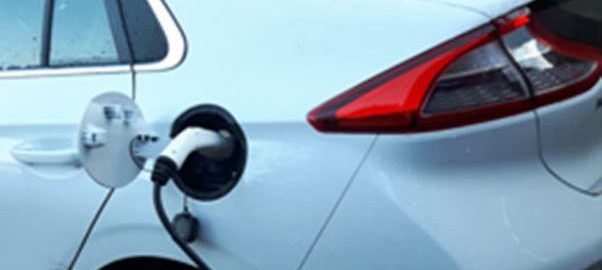
eMotor feeding (Image: T. Heale)

Government should enforce new laws requiring more cars sold to be ELECTRIC, say campaigners: These are the cheapest to drive 100 miles

  • Global Action Plan says 15% of all new cars sold by manufacturers should be EVsIt says 5.7m cars on UK roads are second vehicles in households, which based on their shorter driving distances should be electrified to cut emissions
  • It wants tougher targets for electric vehicle quotas for brands, despite proposed ban on the sale of new petrol and diesel cars in 2035
  • Study has calculated which new – and forthcoming – EVs are cheapest to run

The Government should enforce new rules that require 15 per cent of all new cars sold by manufacturers to be fully electric vehicles, according to a campaign group.

With the latest pure electric models becoming more affordable and offering longer driving ranges between charges, charity Global Action Plan says ministers should force the hand of car firms to do more to promote plug-in vehicles.

eMotor feeding (Image: T. Heale)

It said the Government has allowed ‘corporate failure’ in recent years, with auto firms permitted to market gas-guzzling SUVs when cleaner vehicles should be promoted.

A calculation has revealed which on-sale electric models cost the least to drive 100 miles – find out which cars top the charts below.

Lat year, just 1.6 per cent of all new cars bought in the UK were Battery Electric Vehicles (BEVs).

They accounted for 37,850 of the 2.3million new motors that entered our road network in 2019.

However, the market share of BEVs is much higher so far this term, with more drivers making the switch to zero-emission cars already in 2020 than they did in 2019 as a whole.

By the end of July, a total of 39,119 new BEVs have been purchased by drivers, which account for 4.7 per cent of the 828,400 vehicle registrations in 2020.

Read more: This Is Money

2020 Renault Zoe (Image: Renault)

Renault Samsung Launches ZOE All-electric Car in S. Korea

SEOUL, Aug. 18 (Korea Bizwire) — Renault Samsung Motors Corp., the South Korean unit of Renault S.A., on Tuesday launched the Renault ZOE all-electric car to boost its lackluster sales.

The company began to receive orders for the Renault ZOE on Tuesday, with a plan to begin delivering ordered vehicles in September, a company spokesman said.

The pure electric subcompact will be imported from France after being assembled at the French carmaker’s Flins plant outside Paris, he said.

2020 Renault Zoe (Image: Renault)
The improved Renault Zoe has a longer range and posher interior (Image: Renault)

The Renault ZOE is priced at 39.95 million won-44.95 million won (US$33,600-$37,800), but it will be available for 27.59 million-32.59 million won with state subsidies, the company said.

Renault Samsung has one all-electric model in its lineup — the SM3 Z.E. compact sedan. Its three other models are the SM6 sedan, the XM3 SUV and the QM6 SUV.

The company has struggled with weak sales in Korea due to a lack of new models. Its sales fell 25 percent to 76,588 units in the January-July period from 101,718 a year earlier.

Renault holds an 81 percent stake in Renault Samsung.

Source: The Korea Bizwire

It’s Time to Go Green!

If you would like to know more about Solar Panels and the PowerBanx range of home battery systems, and get a free instant quote, please complete our online form:

World’s largest V2G project dubbed Bus2Grid launched in London

The world’s largest vehicle-to-grid (V2G) project has been launched at a north London bus garage.

Nearly 100 new zero-emission electric buses will be run from the Northumberland Park garage, which has been transformed with chargers that will be used for the Bus2Grid project.

Initially, it will use batteries from 28 of the state-of-the-art double decker buses to trial V2G systems, which are capable of returning 1.1MW energy to the grid to provide balancing services. The buses are adapted BYD ADL Enviro400EV, double deckers, each with a 382kWh BYD lithium iron phosphate batteries.

The buses are AC charged with 2 x 40kW on-board-chargers, which means that it’s a mobile discharge facility. From a technical standpoint, this therefore has implications for satisfying G99 requirements – within which generators must have a voltage control system to inject or absorb reactive power into the grid so that it can control voltage – and is a specific project challenge. It should result in the first ever G99 certification for such a large scale mobile energy generation type, according to SSE.

Most other V2G projects use DC (CHAdeMO) charging, therefore requiring only the ChargePoint and associated inverter – which does not move – to be certified rather than the vehicle.

It is being led by SSE Enterprise in partnership with the Mayor of London, Transport for London (TfL) and Go-Ahead London. The project has received funding from the Department for Business, Energy and Industrial Strategy (BEIS) and the Office for Low Emission Vehicles (OLEV) with support from Innovate UK, and will run for three years.

Read more: Current

It’s Time to Go Green!

If you would like to know more about Solar Panels and the PowerBanx range of home battery systems, and get a free instant quote, please complete our online form:

Peugeot e-2008 electric SUV (Image: Peugeot)

Peugeot e-2008 review: EV crossover driven in the UK

Looks like a normal 2008 to me…

That’s because it is. PSA doesn’t do a special, electric-only model like the Renault Zoe or Honda e. Rather than spend a vast amount of time and money designing and building a bespoke EV platform, it engineered its so-called ‘CMP’ architecture to accept both petrol/diesel and electrified powertrains. Every car that’s based on it (the 208, 2008, DS3 Crossback, Vauxhall Corsa and soon, Vauxhall Mokka and Citroen C4) gets the option of electric propulsion.

And these cars are not for zero-emission virtue signallers. PSA’s electric cars look and feel almost exactly like their petrol-powered counterparts. That’s the point – to normalise what is for many still a scary, new technology. You just fill them with electrons instead of inflammable liquid.

Surely the electric ones are more expensive?

Peugeot e-2008 electric SUV (Image: Peugeot)

They are. The e-2008 is available in all the same trim levels as the regular 2008, with prices (including the Government’s £3,000 grant) coming in at around £5,600 more than the equivalent petrol auto if you’re buying outright.
But you’re not buying outright, are you? Lease direct from Peugeot, and you’ll pay around £60 more per month for the electric-powered car. Remember, though, that the EV is exempt from road tax and BIK (potentially saving company car drivers thousands) and a full charge should only cost a little over £7 if you do it at home, while a full tank of petrol costs £50.

Yes a tank of fuel will get you further than a fully-charged battery, but not that much further.

How far can the e-2008 go on a charge, then?

Far enough. Peugeot claims between 191 and 206 miles, which is a smidge less than the mechanically largely identical e-208 because of the e-2008’s increased size and weight. We think 160 miles is a fair estimate of what most people will see, but pop it into Eco mode, amp up the regen and switch off the air conditioning and obviously you’ll go further.
In a 65-mile test the e-2008 managed 3.9 miles/kWh, which is actually very good. Its range computer is annoying though. Rather than counting down progressively as you cover distance, like other EVs, it tends to stick at one reading for miles, then loses a load of range in one big lump when you gently accelerate up a slip road. This is annoying and not massively confidence-inspiring.

A three-pin plug takes 24 hours to fully charge the e-2008, so if you’re got a driveway definitely get yourself a 7kW wallbox. It does the same in less than eight hours – a good night’s sleep. Find one of the relatively few 100kWh chargers out in the wild, and your e-2008’s 50kWh battery will charge to 80 per cent of its capacity in just 30 minutes.

Read more: Top Gear

It’s Time to Go Green!

If you would like to know more about Solar Panels and the PowerBanx range of home battery systems, and get a free instant quote, please complete our online form:

BP Chargemaster to trial EV charging at M&S sites as first 50kW chargers installed

The three new 50kW chargers, located at Maidstone Eclipse Park in Kent, are the first of a five-store trial. They are backed by 100% renewable electricity and feature contactless payment terminals and connectors for all capable EVs.

They form part of BP Chargemaster’s Polar network of public chargers, and are therefore also accessible with a Polar Plus membership RFID card or the Polar Instant PAYG app.

Matteo de Renzi, CEO of BP Chargemaster, said that the company expects the rapid chargers will bring new customers to the stores “as they are in the right locations to support those driving along the Strategic Road Network and provide a great opportunity a brief stop”.

The site of the first three chargers is just off junction 7 of the M20, with the installation funded by investment from BP Chargemaster.

Helen Milford, director of stores for M&S, said: “As we create a store estate for the new world it’s critical our shops are in the right locations, digitally connected and offer trusted value products and services such as the rapid chargers – we’re looking forward to seeing the customer response to our trial in Maidstone.”

Read more: Current

It’s Time to Go Green!

If you would like to know more about Solar Panels and the PowerBanx range of home battery systems, and get a free instant quote, please complete our online form:

IONITY rapid charge points at Leeds Skelton Lake Services (Image: IONITY)

Over 18k EV chargers installed across UK as London continues to take the lead

The number of electric vehicle (EV) chargers installed across the UK has risen to 18,265 according to figures released by the Department for Transport (DfT).

The figures – which are released quarterly – are sourced from Zap-Map data and show the number of chargers in the UK excluding domestic and workplace charging.

Of the 18,265 chargers installed 3,206 are rapids (43kW+), with the number of chargers jumping up since the October 2019 figures, which showed there were 15,116 chargers and 2,495 rapids, as well as increasing since the April 2020 figures, where there were 17,947 chargers and 3,107 rapids.

IONITY rapid charge points at Leeds Skelton Lake Services (Image: IONITY)

However, whilst there has been an increase in the previous quarter, it is clear that the rate of deployment has slowed, likely due to the impacts of the COVID-19 pandemic which saw EV charger installations halt in March.

London has continued to maintain its lead, with the region having the highest level of charging device provision per 100,000 of population. It is also slightly ahead in rapid charging device provision, according to the statistics, although Scotland wins out on rapids with the highest level of provision.

Read more: Current

It’s Time to Go Green!

If you would like to know more about Solar Panels and the PowerBanx range of home battery systems, and get a free instant quote, please complete our online form:

Another sustainability milestone for Ecocabs

Sustainability pioneer Ecocabs, a taxi operator in Hexham in the North East of England, are proud to announce the arrival of the first Ford Tourneo Custom Plug-In Hybrid Vehicle (PHEV) to be operated anywhere in the UK.

Technology is developing all the time, but currently all-electric vehicles cannot fulfil the operational demands of a rural taxi service in terms of practicality due to the limited range and lack of fast charging points. This is where the hybrid vehicle makes much more sense for a rural operator currently.
The vehicle is purpose-built to help transport passengers more efficiently than ever. Smart, hybrid technology helps keep emissions to a minimum, whilst intelligent design creates a refined and sophisticated interior for passengers.
Commenting on the purchase of the eco-friendly 9-seater vehicle, Matthew Kirkby, founder and Managing Director of Ecocabs, said, “Sustainability remains top of our agenda at Ecocabs, and the introduction of the new Ford Tourneo continues our commitment to cutting the CO2 emissions of our fleet, and reducing our overall impact on the environment.”

About Ecocabs
Ecocabs — the sustainable taxi, travel and tourism support company, based in Hexham — provides community taxi services in Tynedale and surrounding areas, and supports sustainable travel and tourism across much of Britain.
Ecocabs offers guided tours and support to increasing numbers of health-conscious, eco-aware travellers and tourists seeking more sustainable holidays and pastimes. Based in Hexham — close to the Hadrian’s Wall Path and Hadrian’s Cycleway — Ecocabs is ideally situated to support walkers and cyclists wishing to experience the history, countryside, sites and attractions along the Roman Wall.

Ecocabs also supports cyclists tackling the various coast-to-coast cycle routes, as well as the Sandstone Way — the 120-mile mountain biking route between Berwick upon Tweed and Hexham. Further afield, Ecocabs supports nationally known activities, including the 3-Peaks Challenge, during which walkers scale the three highest mountains of Scotland, England and Wales — Ben Nevis, Scafell Pike and Snowdon — all in 24 hours.

About the Ford Tourneo PHEV
The new Ford Tourneo Custom Plug-in Hybrid (PHEV) uses two sources of power to get passengers where they need to be more efficiently than ever. An advanced electric powertrain, with zero emissions, can be used for shorter trips, while on longer journeys the multi award-winning 1.0 litre EcoBoost engine kicks in to extend the Tourneo’s range. The vehicle uses technology designed to maximise efficiency without compromising on the reliability and flexibility customers expect in a Tourneo.

Source: Ecocabs

It’s Time to Go Green!

If you would like to know more about Solar Panels and the PowerBanx range of home battery systems, and get a free instant quote, please complete our online form: