Category Archives: Electric Cars

News and reviews of the latest electric cars (full electrics and plug-in hybrids).

BMW i3 and i3S 120Ah (Image: BMW Group)

Electric cars will put design in the driving seat

In a victory for sustainability, UK restrictions on the use of electric car chargers are to be lifted under plans to increase the use of green vehicles in the UK.

Practically, this means only one subscription will be required to use charging points. Additionally, the transport secretary is allocating £2.5 million of funding for more than 1,000 new electric car charging points.

All signs point to the British government readying itself for the next wave of innovation in the auto-industry. Just as our streets were once emptied of the horse and cart, in the not-so-distant future our roads could be free of petrol and diesel powered vehicles – transforming how we drive in the process.

I recently bought an electric car, a BMW i3s. I did so for environmental reasons but I didn’t fully appreciate just how radically different the driving experience would be. Among many innovations, the experience embraces connected technology, reduced running costs, outstandingly fast performance and virtual silence. A measure of moral smugness is thrown in as an emotional extra.

BMW i3 and i3S 120Ah (Image: BMW Group)

Driving experience aside, we are on the brink of a design revolution for the auto industry thanks to e-cars. In a way, the clock is being turned back so auto designers can free their imagination.

There is evidence that the classic car market is heading for fast decline: the value of such cars at auction dropped dramatically over the summer, driven by concerns over the availability of fuel. Yet many of the vehicles of the 1950s, 60s and 70s remain iconic symbols of design at its wonderful best. They were symbols of freedom, opportunity and progress, and they were magnificent to behold.

But as competition and market demand increased, the distinctive beauty of car design eroded away. The dominant voices around the automotive industry table became those of engineers and economists who sought to compromise the work of the designer in the name of efficient manufacturing process and, ultimately, lower prices. The democratisation of the automobile happened at the expense of elite design.

But now, the possibilities for a design-led approach are once again coming to the fore and are endless. Electric vehicles do not require a cooling system, oil, a transmission, nor so much else of the mechanics of a fossil-fuelled car. As battery and electric motor technology improves, the design challenge shifts from “how do I fit it all in?”, to, “what on earth am I going to do with all this space?”. As a consequence, we are about to witness a transformation on the scale of how Apple transformed the PC or the mobile phone.

Read more: Shots

Kia e-Niro EV (Image: Kia)

You can now compare running costs for electric and petrol cars

The figure – dubbed ‘miles per pound’ (mpp) – reveals how much a car can travel for £1 of petrol, diesel or electricity.

Electric cars travel up to three times the distance of their petrol or diesel rivals for the same amount of money, according to research.

With interest in electric cars rising, many potential buyers are left confused by the way running costs are explained, with ‘miles per kWh’ difficult to compare to ‘miles per gallon’.

Kia e-Niro EV (Image: Kia)

To help consumers, car reviews and advice website Parkers.co.uk has developed a way of showing how far your car will go on a single pound – regardless of what fuel it runs on.

The figure – dubbed ‘miles per pound’ (mpp) – reveals how much a car can travel for £1 of petrol, diesel or electricity.

The study found the Kia e-Niro First Edition and the Renault Zoe 65kW are the most efficient models on sale in the UK today, with the cars capable of travelling 33.1 miles per pound (mpp) of electricity.

This is more than three times as far as the most economical version of the Ford Fiesta (9.3mpp), the UK’s best-selling vehicle, when using official testing figures.

With the average UK motorist driving around 7,150 miles per year, they would spend just £216 over a 12 month period if they charged their Kia e-Niro or Renault Zoe from home.

The Tesla Model 3 Standard Range was the third most economical, covering 32.3mpp, while the Volkswagen e-Golf was fourth on 30.8mpp.

Read more: Daily Post

Labour party pledges to ban sale of non-electric cars by 2030

Outlawing the sale of internal combustion engine vehicles will help tackle the climate emergency, says shadow business secretary

A Labour government will aim to end the sale of cars with internal combustion engines by 2030, as part of its plans to tackle the climate emergency.

The party is to begin talks with the car industry and trade unions to explore the policies needed to achieve the goal. It says it wants to help an “under siege” industry switch to electric car production.

It comes as measures to phase out the internal combustion engine gathering pace across Europe. Earlier this month, Denmark called for a plan to phase out diesel and petrol cars and allow a ban on their sale by 2030. It was backed by 10 other EU countries.

Labour has already pledged to provide £3bn to invest in electric car models and technology. It will exempt new investment in plant and machinery from business rates. Another £2bn will go towards the construction of three battery plants.

Read more: The Guardian

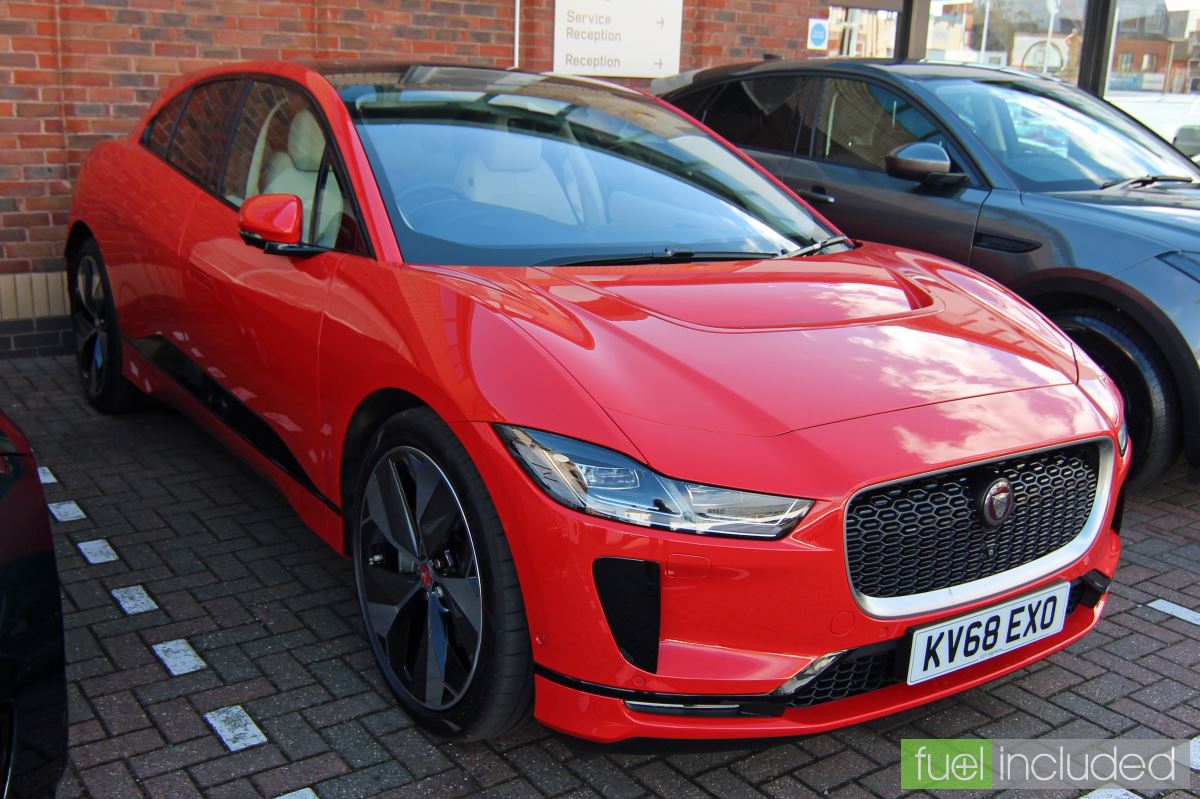
Jaguar I-PACE Electric Car (Image: T. Larkum)

The best electric cars you can buy in 2019

Turn on, plug in and drop out of the fossil fuel race with the finest zero emissions passenger cars currently on offer

Traipse around one of the recent European motor shows and you’d be forgiven for thinking that most of the world’s most famous manufacturers don’t produce or sell an internal combustion engine any more.

The major players have spoken and the future of personal transportation looks distinctly battery powered, with Deloitte predicting worldwide sales of Battery Electric Vehicles (BEVs) will rocket from 4 million in 2020 to 21 million by 2030, whereas sales of traditional internal combustion engines will fall off a cliff.

There are political and ethical arguments around for instance, lithium mining for EV batteries but this isn’t quite the right place to get into it.

Jaguar I-PACE Electric Car (Image: T. Larkum)

Zero emissions vehicles boast a number of benefits that can be enjoyed today. There are fewer moving parts, meaning lower maintenance costs, the tax breaks and Congestion Charge benefits are extremely generous, while those with regular short journeys could save bucket-loads of cash by turning their backs on the humble petrol station. And don’t be misled by those bemoaning the public charging network, because a quick scan of Zap Map reveals an abundance of locations to charge a vehicle – a number that is growing by the day.

On top of this, those who have already made the switch to electric often attest to the fact that installing a charging point at home often negates the need to use the public charging network. After all, when was the last time you drove more than 200-miles several times in a week?

Read more: Wired

My MG ZS EV Test Drive

On Saturday I had the chance to take my family for a test drive in the new electric version of MG’s ZS.

While the name MG (‘Morris Garages’) has a lot of history, particularly in connection with sports cars, the current MG Motors is a Chinese brand. They have had some success in the budget end of the UK market, but have made waves with the new EV version of their ZS crossover. It has a good enough range (about 160 miles) at a low enough price (in the £21k to £28k range) to make people sit up and take notice.

MG ZS EV (Image: T. Larkum)

I’m not going to go into great detail on the car specs, how it handles, etc. (for some of that, see our MG ZS news and reviews page). Instead I’ll give a summary of our impressions:

  1. It looks good close-up, in a typical SUV way. That’s to say, if you take the badge off one SUV it could be almost any other SUV on the road. But in this context, with a low price example of the breed, that’s a great result. We’d be happy to have one on our drive.
  2. It drives well enough, absorbing most though not all of the roads’ bumps. It accelerates well, though it was very quick to wheelspin when I tried it a couple of times in Sport mode (though, to be fair, it was raining the whole time).
  3. It felt spacious, particularly in the back. There was a noticeable gap between the knees of the rear passengers and the backs of the front seats. Conversely, the middle rear seat was very narrow – it would only suffice for a child, and then only without a car seat.
  4. The multimedia console was pretty good – a touchscreen with satnav, handsfree phone, music, etc. The satnav had a noticeable lag the first time it loads but after that it seemed pretty responsive. It is compatible with both Apple CarPlay and Android Auto.
  5. The boot was a decent size (something lacking in my current BMW i3!) even with the charging cables stored underneath. It had quite a big lip, but this could be reduced by raising the boot floor to a higher point when it was also nearly level with the back seats when folded forward and so giving a very large usable space overall. The seats don’t fold completely flat though.
  6. We test drove the top-of-the-range Exclusive version which had lots of nice extras that we appreciated such as a panoramic sunroof, electrically adjustable seats, roof rails, leather seats and rear parking camera.
MG ZS EV (Image: T. Larkum)

Overall we were impressed with the car, particularly at the suggested price (equivalent to about £360 per month for the Exclusive with a £1500 trade in). Definitely one to consider if you’re in the market for a medium range EV at at good price.

It’s Time to Go Green!

If you would like to know more about Solar Panels and the PowerBanx range of home battery systems, and get a free instant quote, please complete our online form:

Vauxhall Corsa-e (Image: Vauxhall.co.uk)

Think electric cars take too long to charge? Vauxhall wants to change your mind

A supermini where 100kW recharging comes as standard

Vauxhall’s new Corsa-e will likely make a lot of friends with impatient types who are open to the idea of an all-electric car, but lack the time or inclination to get its battery charged.

Why? It’s going to arrive in April next year with the capacity for fast DC 100kW charging to replenish the 50kW battery. The feature isn’t an extra either, and it could pull in a lot of people who would otherwise pass on the chore of having to charge a battery over popping into a filling station for fuel.

Vauxhall Corsa-e (Image: Vauxhall.co.uk)

A five-minute pit stop or, potentially, many, many minutes as you wait for those battery bars to replenish is perhaps why so many of us have decided to hang fire on moving over to an electric vehicle. This is still the most frustrating aspect of electric car ownership and it’s mainly about the infrastructure.

Having a car that can be recharged promptly is therefore a definite bonus. And, with its perky recharging potential that could mean the Corsa-e could really hit the right note, assuming you can find a vacant 100kW charging station that is.

In real terms that means you’ll be able to get another 160 miles or so in around half an hour, which is admittedly very handy. Vauxhall also underlines that the Corsa-e boasts a 205 mile range, which has been ticked off via WLTP certification. The car will also come with a rather more sedate 11kW charger, which will get you charged at home in around 7.5 hours using a domestic wallbox.

Read more: Tech Radar

ZS EV (Image: MG)

MG ZS EV vs Nissan Leaf

Is MG’s first electric car a convincing challenger? We compare the new ZS EV to the big-selling Nissan Leaf

As more manufacturers explore electric tech, the trickle-down continues to penetrate the lower car classes, democratising zero-emissions motoring for many.

The latest affordable EV model to emerge comes from MG. The Chinese-owned, reborn British brand is offering quite a strong proposition with its ZS EV SUV, as a simple look at the numbers shows: £26,995 for the top-spec Exclusive model and a claimed WLTP range of 163 miles.

This means the MG faces a key rival the Nissan Leaf, a car that pioneered affordable electric motoring. At this price it’s the top-spec MG versus the entry-level Nissan – but when it comes to power, range and charging, the two are close.

MG ZS EV

ZS EV (Image: MG)
ZS EV (Image: MG)

For: Range and affordability, stronger, more flexible recharging capability, decent practicality and kit.
Against: Ride and handling could be more controlled, infotainment lacks EV-specific functionality.

Key to any EV is its battery. This determines the usable range on offer, as well as the car’s performance, and in the ZS EV the engineering and tech are pretty good given the price. The 44.5kWh battery total means around 40kWh of usable capacity, and MG claims 163 miles on a full charge.

The battery supplies a 141bhp electric motor that drives the front wheels. This is 7bhp down on the Leaf, but then the MG is 41kg lighter. The ZS EV’s performance on test was more than adequate, with the 353Nm of torque (33Nm more than the Leaf) delivered instantly for strong and smooth acceleration.

It sprinted from 0-60mph in 7.4 seconds, 0.4 seconds faster than the Leaf, but by 60mph the MG’s urgency tails off (its top speed is only 87mph). Acceleration from lower speeds is more important to more people, and in this instance, the ZS managed 30-50mph in 2.7 seconds, compared to 2.8 seconds in the Leaf, so there’s little to split them. This acceleration is what makes smaller EVs like these easy and fun to drive in urban areas.

Read more: Auto Express

BP Chargemaster Rapid Charger at Milton Keynes Charging Hub (Image: T. Larkum)

BP Chargemaster lauds first 150kW ultra rapid charging hub in London

BP Chargemaster is laying claim to the first 150kW ultra-rapid charging hub in London as its nationwide roll out continues.

Four 150kW chargers have been installed at BP’s retail site in Hammersmith in London, making the site the first ultra-rapid charging hub in London.

The chargers join the rest of BP Chargemaster’s Polar network and are currently available on Free Vend for a limited time.

The chargers have both CHAedMO and CCS connectors.

BP Chargemaster Rapid Charger at Milton Keynes Charging Hub (Image: T. Larkum)
BP Chargemaster Rapid Charger (Image: T. Larkum)

The installs come as part of a wider roll out of ultra-rapid chargers, with a goal of 400 to be installed across the UK by 2021. The project was first announced at an industry event in May by Tufan Erginbilgic, CEO of downstream at BP.

The first two chargers were installed at a BP retail site, BP Cranford in Hounslow, in August.

BP Chargemaster’s Tom Callow said ultra-rapid charging will become “increasingly important” as EV adoption accelerates, particularly in urban areas due to fleets and private motorists without access to off-street parking at home.

“While our first two ultra-fast charging locations are within the M25, by the end of the year, we expect to have started to establish a nationwide network, with sites in England, Scotland and Wales.”

Read more: Current News

Nissan Leaf 3.Zero e+ (Image: Nissan)

Free fuel for life: Nissan and CSIRO launch solar-powered EV charging station trial

Nissan is conducting a 200-day trial to find out if you can run an electric car on the power of the sun.

It’s the dream of any motorist: free fuel for life – and Nissan Australia is poised to find out if it’s possible and practical.

Nissan has unveiled three electric-car charging stations at its head office in Melbourne powered by solar panels on its roof.

They are part of a 200-day trial to find out if solar-powered charging stations can provide truly emissions-free motoring.

Nissan Leaf 3.Zero e+ (Image: Nissan)
Nissan Leaf (Image: Nissan)

The charging station is the first of its type in Australia because it can be programmed to draw energy from a range of sources at certain times.

The charging stations can source energy from solar panels or the traditional coal-powered electricity grid.

Those sources of energy can then be used to charge the station’s built-in 6kWh battery pack – or send energy directly to an electric vehicle.

It means that depending on weather conditions, an electric car can be recharged using solar power only – or energy in the battery can be generated purely by solar power.

Read more: Car Advice

Tesla showroom in Milton Keynes (Image: T. Larkum)

Tesla owners weather PG&E’s power outage as gas stations across CA shut down

Tensions are rising in up to 34 counties in California as residents begin feeling the effects of Pacific Gas and Electric Co’s decision to cut power to around 800,000 customers as a way to avoid potential wildfires in the area.

Amidst the chaos, Tesla owners who have installed rooftop solar and Powerwall 2 batteries are reporting that they are weathering the widespread power outage with no problems.

PG&E’s shutdown has received widespread criticism among CA residents and officials alike. In a statement to The San Francisco Chronicle, Rep. Jared Huffman described the power provider’s strategy as a “lousy set of choices.” Michael Wara, director of the climate and energy policy program at Stanford University, added that the widespread outage shows that the company cannot operate their system safely during challenging times. CHP officers have even started looking into an incident involving a PG&E vehicle in Colusa County that appeared to have been shot at by a disgruntled resident on Wednesday morning.

Tesla showroom in Milton Keynes (Image: T. Larkum)
Tesla showroom (Image: T. Larkum)

This is particularly prominent among gas stations in the state, many of which require power to function. Only a few gas stations remain operational in CA amid the power outage, resulting in long lines of vehicles as owners attempt to acquire fuel. Ali Alezzani, a manager of an Exxon station on San Pablo Avenue in El Cerrito, noted to the Chronicle that tensions are currently so high, some gas car owners almost got into fights while they were waiting for their turn at the pump. Videos taken of gas stations across the state hint at extremely long wait times as large numbers of car owners line up for a chance to acquire fuel.

Read more: Teslarati