Category Archives: Pollution

Automakers fight to rescue small cars from extinction as EU rules bite

The U.S. buys big but relatively unsophisticated cars, while Europe prefers sophisticated small cars.

That truism is about to be rewritten in Europe, however, as automakers start to question their small-car strategy in response to costly new European Union legislation covering safety and tailpipe emissions, in particular the output of CO2.

“New CO2 rules will require automakers to fit thousands of euros of tech to each car,” Max Warburton, an analyst at research and brokerage firm Sanford C. Bernstein wrote in an April report. “Big cars have the price points and margins to cover these costs. Small cars simply do not. These segments may soon be abandoned by many manufacturers.”

Automakers across Europe are axing their smallest cars or preparing to do so.

  • Opel will drop its Karl and Adam minicars, while fellow PSA Group brands Peugeot and Citroen said their 108 and C1 minicars are unlikely to survive. A source at Ford confirmed that it will stop exporting the Indian-built Ka+ small car to Europe.
  • Volkswagen executives have said privately that the automaker is preparing to drop combustion-engine versions of the Up minicar, which would almost certainly mean the fuel-powered Seat Mii and Skoda Citigo would also disappear.
  • Daimler, meanwhile, has begun the process of shifting production and development of its Smart brand to China, where the small cars will be built exclusively starting in 2022 as part of a joint venture with Zhejiang Geely Holding. That decision raises a question mark over Renault’s Twingo minicar, which was developed alongside the current Smart model range.

It won’t just be minicars affected, Warburton said. VW Group could be forced to axe the Polo small car as well as the related Audi A1, Skoda Fabia and Seat Ibiza, he said. ”

This is a very big volume platform, but it will face an increasingly tough economic challenge,” Warburton said. He also flagged up the size of BMW’s task with Mini. “BMW will need to rethink or reduce the size of the Mini business. We are not convinced it’s ever made proper money,” he said.

These cars are at risk because tougher EU rules for CO2 start to take effect next year. The industry has to reduce its fleet average to 95 grams per kilometer, down from an average of 120.5g/km last year, according to JATO Dynamics. The problem is that most current minicars cannot get to below the 95g/km average without including some form of electrification (for example, the Citroen C1 achieves 95g/km).

Read more: Automotive News
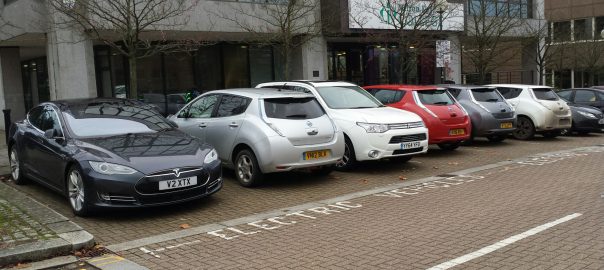
Are Electric Vehicles Really Better For The Environment?

Since the first modern electric vehicles (EV) took to the roads in the 2000s, critics have been quick to question the ‘clean’ label attached to them

From manufacturing concerns to battery power sources as well as overall autonomy, EVs have been under scrutiny from sceptics. With the amount of debate and misinformation troubling the waters, the facts behind the efficiency of electric vehicles have become somewhat clouded – so just how clean are these vehicles?

Battery Production

An argument that is routinely put forward to contrast the clean image of electric cars is the pollution behind the manufacturing process of their batteries. There is indeed a range of rare earth metals that make up the composition of the battery, and their extraction and manipulation can contribute to carbon emissions. However, as a 2018 International Council on Clean Transportation (ICTT) report illustrates, the country in which the batteries are being produced as well as the battery composition has a much higher level of impact on emissions.

A comparative study between EVs and internal combustion engine vehicle (ICEV) in China corroborates the ICTT report, indicating that infrastructure and efficient manufacturing techniques are the keys to reducing emissions during production. Chinese EV battery manufacturers produce up to 60% more CO2 during fabrication than ICEV engine production, but could cut their emissions by up to 66% if they adopted American or European manufacturing techniques. As such, the pollution created through the extraction process and production of batteries remains on par or slightly higher than the manufacturing process of petrol or diesel-based engines.

Read more: Forbes

The urgency of the shift to electric cars isn’t just about climate change

Vehicle emissions regulations are meant to promote clean air and reduce carbon dioxide in order to combat climate change.

In Europe, aggressive new rules are also a direct response to a massive diesel-emissions scandal, accelerating the shift to electric vehicles, said Renault CEO Thierry Bolloré.

The tightening of emissions limits has created huge tension in the automotive industry, Bolloré said in Paris at Viva Technology, a flagship European tech conference this week. In 2017, the European Commission proposed reducing CO2 emissions for new cars and vans by 30% in 2030, compared with levels in 2021. The aggressive rules are seen, in part, as an attempt to regain credibility after regulators failed to prevent Volkswagen and other automakers from cheating existing standards.

Bolloré said he was surprised by the backlash on emissions rules following the “dieselgate” scandal: Volkswagen admitted in 2015 that software was used to cheat on pollution tests for as many as 11 million of its diesel vehicles. Later, a host of other automakers, including Renault, were reported to have made diesel vehicles that produced more pollution than tests seemed to indicate.

“It’s not fully rational,” Bolloré said of the regulatory response, which is reshaping the industry. He added that it’s giving a boost to electric vehicle development, and that the French car giant he runs is already making a “modest” amount of money from its electric-vehicle business. (Bolloré also credited Tesla’s efforts to build mass-market electric cars as a kind of revolution for the industry, but noted that the company is having a hard time making money.)

Read more: Qz

Electric cars can help you live longer

Migration from polluting vehicles that burn fossil fuels to electric vehicles, ideally using electricity generated sustainably could significantly reduce the incidence of cardiopulmonary illness due to air pollution, says a study.

This could lead not only to less employee absence from work through illness but also lead to broad improvements in the quality and length of life.

The researchers, Mitchell House and David Wright from the University of Ottawa in Canada, analysed the health benefits associated with driving an electric vehicle, and compared them with the cost of expanding the electric vehicle-charging infrastructure between 2016 and 2021.

The study, published in the International Journal of Electric and Hybrid Vehicles, found that in the majority of plausible scenarios of balanced growth, when the number of vehicles rises so does the number of charging stations, and there is a positive net benefit to society.

Read more: Business Standard

Big Oil wants to kill electric vehicles

Big Oil and its front groups want to kill electric vehicles (EVs) under the pretense of fairness.

It’s no secret why. The industry sees that the electric transportation future is coming fast, threatening their polluting profits, and they’re scared. We should double down on electrifying transportation and support an expansion of EV tax credits so we can stop pollution that is driving the climate crisis and making our air healthier for everyone.

Let’s get real about Big Oil: The industry receives over $26 billion in subsidies from American taxpayers and pays nothing for polluting the air we breathe and exacerbating the climate crisis. If there’s any group doesn’t need help from the government, it’s this industry.

Let’s also get real about who suffers the most from air pollution and climate: low-income families and communities of color. Pollution from fossil-fueled transportation is the largest single source of climate pollution in the United States. As we saw when Hurricane Harvey dumped 60 inches of rain on Houston or when Hurricane Maria pummeled Puerto Rico, it’s frontline communities who suffer the greatest losses and are left without the help they need.

The threat and disparate impacts go beyond climate. Transportation pollution is also making us sick. According to new research published in The Lancet Planetary Health, exhaust from cars is responsible for up to 4 million new cases of pediatric asthma each year. Another recent study by the Union of Concerned Scientists shows that African Americans and Latinos are exposed to roughly 40 percent more air pollution from vehicles than white people in California. The same study found that California households earning less than $20,000 per year are exposed to 25 percent more particulate matter pollution (PM 2.5) than California households earning more than $200,000 per year.

There’s a straightforward fix for a good part of this dangerous pollution: electrify the transportation sector. And thankfully, the sector is heading that way fast. For instance, electric vehicle (EV) and electric bus sales, while still a small percentage of overall sales, are growing precipitously. Between 2017 and 2018, EV sales almost doubled, and, in the latter half of last year, a zero-emissions vehicle was the fifth-best-selling passenger car in the United States. Bloomberg New Energy Finance projects that over 80 percent of all new bus sales globally will be electric buses by 2030. These increased sales are driving down costs and making electric transportation affordable for all.

Read more: The Hill

Nearly three million British children face pollution risk with 6,000 UK schools in areas ruled to have high toxicity

  • Every school in capital is over WHO limit of 10mg of PM2.5 per cubic metre
  • Air pollution is thought to contribute to around 40,000 early deaths a year
  • Comes as Rosamund Kissi-Debrah won right for new inquest into Ella’s death
  • Asthma-suffering daughter lived near busy road in Hither Green, south London

Millions of schoolchildren are being poisoned by pollution every day, analysis has shown.

About 6,500 nursery, primary and secondary schools with a total of 2.6million children are in areas where levels of toxic particles exceed the World Health Organisation’s recommended limit.

The fine particles tested, known as PM2.5, are the most dangerous form of air pollution and can get into the lungs and into the blood stream.

Research by The Times using data from the London Atmospheric Emissions Inventory found that every school in the capital is over the WHO limit of 10mg per cubic metre, along with 234 in Birmingham. Leicester and Nottingham each have dangerous levels affecting more than 100 schools.

The revelations come days after Rosamund Kissi-Debrah from south London won her fight for a new inquest into the death of her daughter, Ella.

She says the nine-year-old asthma sufferer’s death in 2013 was caused by toxic fumes from a busy road near their home in Hither Green.

Air pollution is thought to contribute to 40,000 early deaths a year, and is particularly dangerous for the young, the elderly and those with lung conditions.

Read more: Daily Mail

Los Angeles Targets 100% Electric Vehicles In The City By 2050

Los Angeles Mayor Eric Garcetti isn’t waiting for Congress to act on the threat of climate change.

Today he introduced the city’s own version of the Green New Deal, which establishes goals of a zero carbon grid, zero carbon transportation, zero carbon buildings, zero waste, and zero wasted water by 2050.

Citing the environmental disasters the city has faced in recent years, the mayor explains in the 150-page plan that “the scale of our ambitions must meet the magnitude of this crisis.”

“Politicians in Washington don’t have to look across the aisle in Congress to know what a Green New Deal is — they can look across the country, to Los Angeles,” said Mayor Eric Garcetti in a news release. “With flames on our hillsides and floods in our streets, cities cannot wait another moment to confront the climate crisis with everything we’ve got. L.A. is leading the charge, with a clear vision for protecting the environment and making our economy work for everyone.”

Building upon the Sustainable City Plan introduced in 2015, this new version raises the bar with goals of recycling 100 percent of the city’s wastewater and zeroing out carbon emissions generated by buildings, transportation, electricity, and trash, with a heavy focus on mobility, public transit, zero emissions vehicles.

Read more: Forbes

The Future of Transportation Is Electric

It’s clearer every day: the future of transportation is electric.

We should be cheering this transition—and encouraging it, because along with the benefits for drivers, electrifying transportation is going to be a critical piece of fighting climate change.

Unfortunately, for many observers, skepticism about electric vehicles (EVs) has become something like an article of faith. Mired in an obsolete set of facts, electric-vehicle naysayers are making the same arguments they’ve made for years even as technology speeds forward.

Take columnist George Will, who launched a broadside against electric vehicles last week. In casting doubt on the viability of EVs, Will is revealing that he hasn’t updated his understanding of the technology or the market in a decade. His argument relies upon outdated, misleading and just-plain-wrong evidence, undermining his thesis completely.

Here’s the truth. Electric vehicles are considerably cleaner than gasoline-powered cars, and this advantage is only increasing with time. Increasingly, coal-fired power generation is declining, and the share of our electricity produced by renewables is increasing. Indeed, Will inadvertently makes this point in his article. He points out that 27 percent of our electricity comes from coal power plants but leaves out entirely the fact that a decade earlier, coal was the largest source of electricity at almost half (48 percent) of all generation. We’re on the right path.

Read more: UCS

London’s ULEZ sparks demand for hybrid and electric vehicles

Leading car buying website says the zone has upped interest – particularly for plug-in hybrids.

The introduction of London’s new ultra-low emission zone (ULEZ) has triggered consumer interest in electric and hybrid cars, according to one of Britain’s leading new-car websites.

Designed to improve air quality in the capital, the ULEZ sees vehicles failing to meet the required emissions standards charged extra to enter the Congestion Charge zone. Petrol-powered cars must comply with at least the Euro 4 standard to avoid the £12.50 charge, while diesels need to meet the much more recent Euro 6 standard.

Figures from Carwow show how the ULEZ’s arrival earlier this month caused noticeable spikes in Londoners’ searches for electric, hybrid and plug-in hybrid vehicles. Inside the M25, Carwow says quote requests for plug-in hybrid vehicles risen 25 percent since the beginning of April, while interest in electric cars has risen 14 percent. Demand for standard hybrid vehicles, such as the Toyota Prius, also increased, but only by around six percent.

Read more: Motor1

Study explains how electric vehicle improves air quality and climate outlook

The study published in the journal Atmospheric Environment provided evidence that making a switch to electric vehicles would improve overall air quality and lower carbon emissions.

Washington: is it possible for electric vehicles to improve air quality and climate outlook? Recent research has thrown light on the efficacy of electric vehicles.

The study published in the journal Atmospheric Environment provided evidence that making a switch to electric vehicles would improve overall air quality and lower carbon emissions.

The study quantified the differences in air pollution generated from battery-powered electric vehicles versus internal combustion engines.

The researchers found that even when their electricity is generated from combustion sources, electric vehicles have a net positive impact on air quality and climate change.

“In contrast to many of the scary climate change impact stories we read in the news, this work is about solutions,” said Daniel Horton, senior author of the study.

“We know that climate change is happening, so what can we do about it? One technologically available solution is to electrify our transportation system. We find that electric vehicle adoption reduces net carbon emissions and has the added benefit of reducing air pollutants, thereby improving public health,” added Horton.

To quantify the differences between the two types of vehicles, the researchers used emissions remapping algorithm and air quality model simulations.

They used these methods to closely examine two pollutants related to automobiles and power emissions: ozone and particulate matter. Both are main components of smog and can trigger a variety of health problems, such as asthma, emphysema and chronic bronchitis.

To fully account for the complexity of changes to air pollution chemistry, the researchers took multiple variables into consideration including potential electric vehicles adoption rates, Generation of electric vehicle power supply, including our current combustion-dominant mix, combustion-only sources and enhanced emission-free renewable, geographical locations, and seasons and times of the day.

Ozone levels decreased across the board in simulations of warmer weather months. In the wintertime, however, ozone levels increase slightly but are already much lower compared to summer due to a chemical reaction that occurs differently during times of lesser winter sunlight.

“Across scenarios, we found the more cars that transitioned to electric power, the better for summertime ozone levels,” said Jordan Schnell, first author of the study.

“No matter how the power is generated, the more combustion cars you take off the road, the better the ozone quality,” Schnell added.

Read more Economic Times India