Category Archives: Energy and Climate Change

News and articles on climate change, vehicle pollution, and renewable energy.

Green transport can only succeed with a greener grid

Analysis: UK power infrastructure needs a big upgrade to tackle a surge in electric vehicles and manufacturing of alternative fuels

The challenge of decarbonising the UK’s roads, railways and flight paths will rely on harnessing the UK’s cleaner energy system to power the future of the transport sector.

Carbon emissions from the UK’s energy industry have tumbled in recent years, largely due to the shutdown of old coal power plants in favour of more renewable energy.

But senior energy industry sources have warned that the UK’s ambitious targets to drive down carbon emissions from the transport sector will require an acceleration of green investment in the energy system too.

“The energy industry has a huge role to play in facilitating the decarbonisation of transport,” said Graeme Cooper, the head of future markets at National Grid.

He says a green transport system will require a multibillion-pound investment to rewire ageing power grids and fit vast amounts of electric-vehicle charging infrastructure. Additionally, it will spur a boom in demand for green energy to produce hydrogen for heavy trucks, ferries and long-haul coach travel.

“There will be an uptick in demand for energy, so we need to ensure that we are future-proofing, putting the right wires in the right place for future demand. We also want to ensure that the energy we’re plugging in for the increased demand is as green as possible,” Cooper said.

The energy regulator, Ofgem, recently gave the green light to a £300m investment spree to help triple the number of ultra-rapid electric car charging points across the country over the next two years. Energy networks are expected to install 1,800 ultra-rapid charge points at motorway service stations and a further 1,750 charge points in towns and cities. It’s a taste of what’s to come if the UK hopes to meet its green transport targets.

In a couple of decades’ time, UK electricity demand will double. In short, we need to electrify the hell out of everything”
Keith Anderson, Scottish Power

The Energy Networks Association (ENA) estimates that by 2028 the industry will have needed to invest in enough grid connections for charging points to power 8.2 million electric vehicles. A green transport system will also require the equivalent of about 30 terawatt hours of hydrogen fuel per year by the middle of the century, which will require roughly a tenth of the UK’s current electricity use to manufacture, it says.

Peter Kocen at the ENA said the speed of the transition would require a new approach to regulation – one that helped energy companies invest in anticipation of the boom in green transport. “The regulatory environment sets out investment over a five-year period and requires energy networks to provide evidence of immediate ‘need’ for this investment. But energy networks also need to be able to be responsive to the energy transition, including investing before there’s the immediate need,” Kocen said.

Read more: The Guardian

It’s Time to Go Green!

If you would like to know more about Solar Panels and the PowerBanx range of home battery systems, and get a free instant quote, please complete our online form:

Mercedes eVito electric van (Image: DPD)

EV tire trial to reduce air and microplastic pollution in London

DPD is joining forces with the electric vehicle tire developer Enso to conduct full road trials of a new commercial EV tire design, specified to reduce air and microplastic pollution.

The trial is a part of Transport for London’s FreightLab Innovation Challenge, which is backed by the Mayor of London.

As tires wear, they emit more air pollution than tailpipes. In addition, tire particulate matter pollution makes up 28% of all primary ocean microplastics. The increased weight and torque of EVs increase tire wear, meaning that electric vehicles often emit more tire particulate matter than ICE vehicles.

Enso, headquartered in London, has developed a new tire that increases EV range on a single charge while reducing air and microplastic tire PM pollution.

Mercedes eVito electric van (Image: DPD)

This range-extending, pollution-reducing design recently broke a world hypermiling record, achieving the longest distance ever driven by a Renault Zoe on a single charge (achieving 764km on June 10 at Thruxton Race Circuit in the UK), in partnership with Mission Motorsport, the UK Armed Forces’ motorsport charity.

During the trial with DPD, Enso will compare its tire design with industry benchmarks on a fleet of DPD’s Nissan e-NV200 vans over a nine-month period, measuring improvements in energy efficiency and tire durability.

“Rather than just simply buying EVs, our whole approach to sustainability is about joining the dots and working with like-minded innovators to help solve the big challenges like air pollution,” said DPD’s head of CSR, Olly Craughan. “Through our involvement in London FreightLab we got to know Enso and understand their vision. While EVs are the future, unless we also solve the problem of tire particulate matter pollution, we aren’t really unlocking their full potential.”

Read more: tire TECHNOLOGY INTERNATIONAL

It’s Time to Go Green!

If you would like to know more about Solar Panels and the PowerBanx range of home battery systems, and get a free instant quote, please complete our online form:
The Mobility House completes first grid-friendly second-life car battery storage system in France

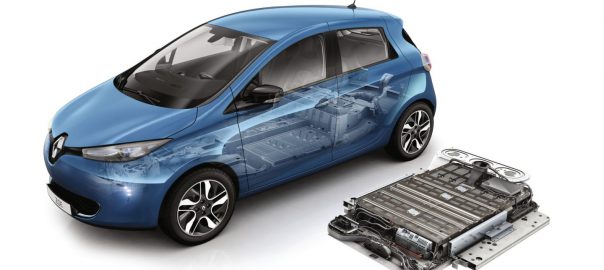
A consortium led by The Mobility House has installed its first storage facility comprising both used and new Renault ZOE batteries in France, thus growing the network of such storage facilities in Europe.

The premiere was made possible by Munich-based company The Mobility House, which specializes in the use of second-life batteries and vehicle-to-grid applications.

Together with its partners Mobilize, which belongs to the Renault group, the Banque des Territoires and the Ecological Transport Modernization Fund, which is managed by the investment manager Demeter, it set up the 4.7 MW storage facility on the factory premises of the Renault branch in Douai, France.

Renault ZOE, Battery illustration (image: Renault)

Of this capacity, 4 MW are prequalified for participation in the primary control power market. The Mobility House states that this project has helped increase the total capacity of car batteries it uses for the control power market in France, the Netherlands, and Germany to 33 MW.

The Renault storage system consists not only of used car batteries, but also first-life batteries. Car manufacturers are obliged to keep a certain number of batteries available as replacements. However, since they are difficult to store, one solution is to integrate them into storage devices. To achieve the optimum state of charge, they are only minimally charged and discharged.

“We have been working successfully on the integration and marketing of electric car batteries in the electricity market since 2014 and are already active in various European markets and the USA,” said Robert Hienz, CEO of The Mobility House. “With the integration of a storage facility in the capacity market, as is now the case in France, we are once again expanding our technology spectrum with an innovative application.”

Read more: pv magazine

It’s Time to Go Green!

If you would like to know more about Solar Panels and the PowerBanx range of home battery systems, and get a free instant quote, please complete our online form:

Vauxhall Grandland X Hybrid4 (Image: Vauxhall.co.uk)

U.K. Dodges Brexit Auto Disaster as Vauxhall Plant Goes Electric

Stellantis NV will convert its lone U.K. car factory to make electric vans, ending months of anguish at an almost 60-year-old plant threatened by the economic fallout from Brexit.

The automaker will spend 100 million pounds ($138 million) retooling its Ellesmere Port plant near Liverpool, which employs roughly 1,000 people. Production of Vauxhall and Opel Astras will end early next year, and output of Vauxhall, Opel, Peugeot and Citroen vans will begin by the end of 2022.

Securing the future of the factory is a boon to local workers and the U.K. government, which has been trying to safeguard the nation’s auto industry amid an accelerating shift to electric vehicles. It’s the latest post-Brexit boost for Prime Minister Boris Johnson after Nissan Motor Co. last week announced plans to create a new 1 billion-pound EV and battery hub in northern England.

Vauxhall Grandland X Hybrid4 (Image: Vauxhall.co.uk)

“It’s a huge vote of confidence in our economy, in the people of Ellesmere Port and in our fantastic post-Brexit trading relationships,” Johnson said in a video message.

As part of the conversion, Stellantis will build a new body shop and on-site battery pack assembly. The carmaker formed from the merger of PSA Group and Fiat Chrysler will shrink how much of the site it uses to reduce inefficiencies and consider redeveloping excess land.

Read more: Bloomberg

It’s Time to Go Green!

If you would like to know more about Solar Panels and the PowerBanx range of home battery systems, and get a free instant quote, please complete our online form:

Powerful fictions (and some facts): The truth about the harms of EV batteries

Electric vehicles are growing in popularity, but there are frequent claims the batteries in them aren’t up to snuff. Andrea Graves sets the record straight.

The electric vehicle feebate announcement has spurred keyboard warriors to “educate” others on the harms of EV batteries. Environmental and human rights advocates have emerged from unexpected quarters: Winston Peters is concerned about labour conditions in African mines and joins Judith Collins in fretting about a looming stockpile of depleted EV batteries.

These alarming claims deserve more than research via social media. Are they true?

Fiction: EV batteries will form a waste mountain
The worried politicians could turn to New Zealand’s Battery Industry Group (BIG), a stakeholder group of businesses, individuals, organisations and academics from energy, transport, waste and battery sectors. It’s committed to avoiding a large-battery legacy problem and co-designed a circular product stewardship scheme that is now with the Ministry for the Environment.

If the scheme becomes a regulation, all large batteries will have their chain of custody tracked after import. Their life expectancy varies by make, but the life of a Nissan Leaf’s relatively small and faster-degrading battery might look like this: five years with an owner who needs a long-range vehicle, who sells to someone who’s willing to charge up more often, who after another five years sells cheaply to someone who only tootles around town. A few years later, its remaining capacity can remain useful for a “second life” outside a car. Counties Power, for example, will shortly install ex-Nissan Leaf batteries to store electricity to cover outages and voltage fluctuations in remote locations. It’s also working on a battery bank to store off-peak electricity to power EV charging stations.

Fiction: EV batteries aren’t recyclable
BIG proposes collecting a fee when a battery is imported, which would fund the dissemination of batteries for second-life uses or recycling. Dr Peng Cao of the MacDiarmid Institute and the University of Auckland says that EV batteries are completely recyclable – but it’s not profitable and existing methods are polluting. Local recycling options are being explored, and nationwide scrap dealer Metalman hopes to soon offer a recycling service for all common battery types.

Fact: EV batteries (and all electronics) contain toxic materials
All electronic gear, from cellphones to televisions and electric toothbrushes, includes materials that can be toxic. Like oil, the materials are extracted from somewhere on the planet, and the resulting environmental destruction is comfortably distanced from our shopping experience. EV battery metals are no exception, but there is a mammoth push to do better.

“Developing environmentally friendly, less toxic batteries is a really hot research topic globally,” says Cao, who is part of this effort. “The second generation of EVs tried to minimise the use of cobalt. Now producers are trying to move away from it altogether. And the new chemistry batteries should be cheaper.”

A battery based on aluminium, an abundant and less toxic metal, is being developed by Wellington startup TasmanION.

Fact: Children mine cobalt for batteries (and oil refining etc)
This is true and troubling. About 40,000 children are thought to be involved in dangerous, unregulated mining in Democratic Republic of Congo. Poverty drives their families to it. The most valuable metal they unearth is cobalt – the same metal battery manufacturers are trying to retire from their products. International coalitions are working to improve the conditions that drive children to work in the mines and to source less exploitative cobalt from the murky supply chain.

But before you throw stones in a cobalt revolt, check whether you’re living in a glass house. Cobalt is also used in oil refining, the superalloys of aircraft engines and prosthetic joints. And do you own gold, drink coffee, eat chocolate, sugar or bananas or wear cotton? These are some of the products produced by an estimated 160 million children who labour in often dangerous conditions.

There are also valid concerns about rechargeable batteries’ other metals, particularly lithium. Again, there’s a huge research thrust to address that, with a local company at the cutting edge.

Read more: THE SPINOFF

It’s Time to Go Green!

If you would like to know more about Solar Panels and the PowerBanx range of home battery systems, and get a free instant quote, please complete our online form:

Audi e-tron (Image: Audi)

Vorsprung Durch Electric: Audi will release final petrol and diesel cars in 2026 and sell its last models with internal combustion engines in Europe in 2033 (but still offer them in China)

Bosses at German car firm Audi have today confirmed plans to phase-out petrol and diesel models, with a deadline of 2026 set for the release of its final vehicles with an internal combustion engine.

After that date the brand will cease development of fossil-fuelled cars and redirect attention to pure electrification.

By 2033, Audi says it will no longer offer petrol and diesel-engined models into its European showrooms – though it will continue to sell them in China.

Audi became the latest in a host of car makers to outline their intentions to do away with the internal combustion engine over the course of the next decade, following the likes of Fiat, Ford, Jaguar Land Rover and Volvo, as well as exotic brands including Bentley and Lamborghini.

Like many rival manufacturers, Audi’s goal is to be net-zero carbon by 2050 – the same carbon-neutrality target set by parent group VW.

Part of this process will see the end of development of internal combustion engines come in five years’ time.

Audi e-tron (Image: Audi)

From 2026 there will be no investment into evolving its petrol and diesel offering and all models removed from sale some seven years later.

But while there won’t be any new engines coming to market, Audi says it will continue to build its existing fossil-fuelled powertrains for China, as the market is expected to continue growing after 2033.

For Europe, the schedule for winding-down availability of petrol and diesel models begins with immediate effect, as the German car maker plans to launch ‘more than 20’ electric ‘e-tron’-badged vehicles before 2025.

Its latest electric car, the e-tron GT, has received rave reviews and is, despite a high starting price of £79,900, experiencing high demand.

Already due to launch next year is the large Q6 e-tron SUV, while an electrified version of the A6 luxury saloon is also due in 2023.

Speaking at the Climate Neutrality Foundation conference on Wednesday, CEO Markus Duesmann said: ‘Audi is ready to make its decisive and powerful move into the electric age.

‘Through our innovative strength, we offer individuals sustainable and carbon-neutral mobility options.’

Read more: This is MONEY

It’s Time to Go Green!

If you would like to know more about Solar Panels and the PowerBanx range of home battery systems, and get a free instant quote, please complete our online form:

How Can Switching to an Electric Vehicle Help the Planet?

We all need to do a lot more to help the planet. We shared a guide on sustainable living to help people know what steps they can take. There are a lot of ways that you can live an eco-friendlier lifestyle, but you might not be willing to take the initiative.

One idea that you should try is switching to a vehicle that doesn’t leave as large of a carbon footprint. Cars are responsible for a large amount of pollution, so moving to a more sustainable vehicle can do a lot.

More and more motorists are making the switch to electric vehicles and this is for a few different reasons. One of the main reasons is that people are becoming more environmentally aware and making changes in their life with driving being an activity that can be particularly damaging. Everyone knows that electric cars are much cleaner, but not everyone knows exactly why they are better for the environment than regular petrol/diesel-powered vehicles.

No CO2 Emissions
CO2 emissions are responsible for a lot of the environmental problems that we have faced in recent years. CO2 contributes more to global warming than most other greenhouse gasses, so finding ways to lessen these emissions is very important.

Electric vehicles run on batteries that power the engine, which means that there are no tailpipe emissions with these vehicles. Petrol and diesel-powered vehicles emit a huge amount of CO2 into the atmosphere, which is a major contributor to environmental damage and climate change. A study shows that one electric car on the roads for one year saves an average of 1.5 million grams of CO2 – the equivalent of four return flights from London to Barcelona.

Other Tailpipe Emissions
Although CO2 is the worst greenhouse gas for the environment, others contribute as well. Fortunately, switching to an electric vehicle can reduce the amount of these greenhouse gases as well.

On top of CO2, suffer dioxide, nitrogen oxides and particulate matter are also emitted from vehicles and these are bad both for the environment and our own health. Noise pollution is also reduced with electric cars as they are much quieter, which is particularly welcome in busy cities where noise levels can be high.

Financial Benefits
It is clear that driving an electric is much better for the environment than a petrol or diesel, but this is not the only reason to switch. You can make huge savings in the long term when you make the switch as you obviously no longer have to fill up at a petrol station, plus you will also pay no road tax with an electric car.

Greater Choice
There are also now many different types of electric vehicles available, so choosing an environmentally friendly vehicle should not be too challenging and you can even lower the price with a Government grant. The charging network is constantly growing with charging points outnumbering petrol stations, so range anxiety is less of an issue these days too.

Bans
There is also a plan to ban the sale of petrol and diesel vehicles by 2030, along with an increasing number of cities introducing bans and fines on polluting vehicles. This means that now is a smart time to make the switch and start reducing your environmental impact as well as reduce your car’s running costs.

It is worthwhile being aware of how electric vehicles are better for the environment and hopefully this will encourage you to make the switch. Electric cars are not just better for the environment either as there is also a range of other benefits and many terrific cars to choose from, so those considering making the change should start taking a look today.

Read more: blue&green

It’s Time to Go Green!

If you would like to know more about Solar Panels and the PowerBanx range of home battery systems, and get a free instant quote, please complete our online form:

ULEZ EXPANSION AIMS TO FIGHT DIESEL FUMES, WHAT DOES IT MEAN FOR SMEs?

From October 25th 2021, the London ULEZ will extend to the North (A406) and South (A205) Circular roads. Diesel vehicles must comply with Euro 6 emission standards, while petrol vehicles must meet Euro 4 standards to avoid the ULEZ charge. The expansion will attempt to improve London air quality and fight transport emissions – the largest polluting sector of the economy.

Lombard wants to raise awareness of the upcoming ULEZ changes and the impact this will have to London SMES.

KEY FINDINGS
• Transport remains the largest emitting sector, responsible for 28% of all greenhouse gas emissions in the UK in 2018, almost entirely through CO2 emissions
• Out of 4.53 million light commercial vehicles (LCVs) in the UK, 61% are based inside the capital. That’s 2.77 million in and around London daily
• To date, pure-electric models accounted for 6.4% of total new car registrations. Plug-in electric vehicles (EVs) make up 7.7% of all new cars sold
• 96.2% of vans on the road are still powered by diesel

ENERGY CONSUMPTION 27x HIGHER FOR DIESEL LCVs THAN FOR PETROL
• Transport emissions are only 3% lower than in 1990, due to increased road traffic. While emissions from passenger cars has generally decreased, this has been offset by increased emissions from LCVs
• The 2,77million LCVs in London would release an approximate of 844,850 tonnes of CO2
• In the capital alone, the road energy consumption for diesel LCVs in 2018 was 27x higher than for petrol LCVs. Diesel LCVs in London, consumed 403,982 tonnes of oil
• HGVs consumed 6,772,424 tonnes of oil in 2018. That’s the weight of around 376,245 packed London Routemaster buses

39 MILLION TREES NEEDED TO OFFSET LONDON’S LCV CO2 POLLUTION
• A mature tree absorbs CO2 at a rate of 48 pounds per year. In one year, an acre of forest can absorb twice the CO2 produced by the average car’s annual mileage
• London has around 8 million trees, covering 330km (21%) of the city’s area
• It would take 39 million trees to absorb London LCVs’ CO2 emissions
• This would cover 1,609km on top of the current area of London, bringing the total area to a whopping 3,181km

ONE VAN COULD COST £3,000 A YEAR FOR BUSINESSES WITHIN ULEZ
• Vehicles up to 3.5 tonnes will have to pay £12.50 if emission standards are not me
• HGVs with diesel engines not meeting Euro 6, will have to pay £100 to enter ULEZ
• A sole trader with one van can expect to pay upwards of £3,000 a year if operating a business within ULEZ
• Bus and coach companies could be affected the worst, as a fleet of 15 heavy duty engine buses could cost upwards of £500,000 a year to run in the extended zone

Read more: Lombard

It’s Time to Go Green!

If you would like to know more about Solar Panels and the PowerBanx range of home battery systems, and get a free instant quote, please complete our online form:

Tesla Model 3 (Image: Tesla.com)

Electric car owner weighs pros and cons amid gas shortage

There are quite a few makes and models of electric vehicles on the market, but, even during a gas shortage, owning one can have its pros and cons.

“I felt like I was in a really good position having an electric car and not having to fill up, but also, made me feel a little guilty passing all the long lines at gas stations,” said Tiffany Alexy, an electric vehicle owner.

Alexy has owned an electric car since 2017, and she knew she could help some people out during a time when many people are struggling to fill up their tanks.

“I was seeing more and more friends asking where gas stations are, what was open and what had gas,” Alexy said. “I posted, ‘hey if any of my friends really need to get somewhere and you don’t have gas, please let me know and I’ll give you a ride.'”

However, Alexy says she knows electric vehicles, or EVs, aren’t immune either.

Tesla Model 3 (Image: Tesla.com)

“The power grid can go down as well, so nobody is really safe. Ideally you would have some sort of renewable energy source, like solar panels, that power your charger, and those aren’t as easily hacked,” Alexy said.

She says there are misconceptions about EVs, but believes all drivers can face similar risks.

“It’s definitely the range anxiety. The fear that, ‘oh my gosh, what am I going to do if I run out of electricity and get stranded?’ Just like someone can run out of gas,” Alexy said.

Alexy says this gas shortage may be the tipping point needed to convince more people to buy an EV.

“They’ve definitely become more and more common in the past couple of years. I feel like that trend is going to continue, especially with different models coming out, price points getting lower. They are definitely more accessible,” Alexy said.

If you’re interested in buying an electric vehicle, Alexy says research is very important. You’ll want to look at range, which means how far the vehicle can travel before the battery needs to be recharged. You’ll also want to consider battery degradation, or how the battery’s maximum charge capacity is reduced over its lifespan.

Read more: SPECTRUM NEWS

It’s Time to Go Green!

If you would like to know more about Solar Panels and the PowerBanx range of home battery systems, and get a free instant quote, please complete our online form:

How Is This A Good Idea?: EV Battery Swapping

Swap this technological dead-end out for better batteries, improved superchargers and more universal EV charging standards

Battery swapping has become a lot like hydrogen fuel cells for passenger cars: They’re automotive ideas that are never quite born, but just won’t die.

Here in 2021, Battery swapping in EVs has become an especially bad idea. It’s a technical and market dead-end that seems more about separating green investors from their money than providing a solution. That’s despite credulous media reports that coo over the (admittedly cool) spectacle of robots switching car batteries like greasy Rube Goldbergs—but tend to avoid asking tough questions about how it’s supposed to work in the real world.

The technology’s troubled history traces to Better Place, or Exhibit A in the case against battery-swapping’s future. The Israel-based Better Place—founded in 2007 by smooth-talking Silicon Valley entrepreneur Shai Agassi—promised to change the world with robotic service stations that would pluck a battery from a car and pop in a fresh one, extending its driving range in a matter of minutes. In those quaint EV days, with Tesla taking baby steps with the Roadster (built from 2008 to 2011), battery swapping seemed to hold hazy promise. Most newfangled EVs (Tesla excepted) could barely get beyond city limits on a charge, including the 2011 Nissan Leaf and its 73-mile range. Once range was depleted, reliable public charging barely existed, as I recall from my own anxious drives in San Francisco when I tested the original Leaf and BMW i3. When you did find a working plug, batteries took forever to charge.

Better Place’s alternative, through a contract with Renault, was the 2011 Fluence Z.E.: An electric sedan whose upright battery ate into trunk space and provided a piddling 80-mile range. But that battery could drop through the Renault’s floor for swaps at Better Place stations in Israel and Denmark, adding another 80 miles in about 10 minutes, rather than hours of recharging.

Renault ZOE, Battery illustration (image: Renault)

But despite raising nearly $900 million from investors, and the media anointing Agassi as an electric savior, Better Place imploded like the Theranos of its day. Robotic swap stations were supposed to cost $500,000 each, but ended up costing $2 million. Critically, Better Place failed to get any other automaker onboard to design and produce standardized vehicles with swappable batteries, with Agassi alienating such potential partners as BMW and GM. Better Place sold fewer than 1,500 electric Renaults before it was liquidated, with Agassi fired in disgrace in 2012. Fast Company magazine called Better Place “the most spectacularly failed technology start-up of the 21st century.”

That debacle didn’t drive the final, automated nail into battery swapping’s coffin. The latest proponents are China’s EV maker Nio, and Ample, a San Francisco-based startup. China’s Nio has taken on the challenge of designing compatible cars, and a few hundred robotic stations that swap out batteries in three to five minutes. Cars roll into a covered bay for a hydraulic lift. Laser-guided wrenches unscrew bolts and lower the battery case from the car. That battery is whisked away on a motorized track, and a fresh one is installed. Despite the whiz-bang tech, Nio’s stations still require a human operator to safely drive the car onto the lift and monitor the process. It’s akin to every public charger coming with its own pump attendant.

Last fall, Nio launched a “Battery as a Service” subscription: Think of it as buying a car with “Batteries Not Included.” Since batteries remain the most expensive EV component, the plan saves owners roughly $10,000 on the car’s price. In return, owners pay about $142 a month to lease a 70 kWh pack with six monthly swaps. In April, Nio claimed it had performed 2 million total exchanges at its Power Swap stations, with users gaining an average of 123 miles of range per swap.

That’s a solid range boost in five minutes. But time, in multiple senses, is still conspiring against battery swapping. Jeremy Michalek, a mechanical engineering professor and director of Carnegie Mellon’s vehicle electrification group, calls battery swapping a relic of a bygone EV age.

Today’s new EVs routinely deliver 200 to 400 miles of range, with a potential 517 miles for the forthcoming Lucid Air. Those EVs charge in 35 minutes or less at Tesla Superchargers and other oases for time-pressed drivers. DC fast charging times have soared by roughly sevenfold, to today’s top 350-kilowatt units. Why do drivers need a contraption to extract the 630-kilogram battery of a Porsche Taycan Turbo, when they can juice that battery in 20 minutes flat? Lucid says its Air will add up to 300 miles of range in the same 20 minutes. That’s enough for nearly five hours of highway driving at 60 mph, before it’s time for a fill-up.

“When you’re looking at 300 miles of range from a fast charge, it changes the game for how convenient EVs are,” Michalek said. “You’re going to spend 20 minutes going to the bathroom and getting coffee anyway.”

In addition, the world has spoken, loudly. Governments around the world are choosing DC charging as the tech winner, including President Joe Biden’s plan to invest $15 billion to install at least 500,000 public chargers. Tesla demonstrated battery-swapping in 2013 on its Model S before abandoning the tech—with reasons including cumbersome stations and tepid consumer interest—in favor of its Supercharger network that now appears a smarter bet.

Read more: IEEE SPECTRUM

It’s Time to Go Green!

If you would like to know more about Solar Panels and the PowerBanx range of home battery systems, and get a free instant quote, please complete our online form: