All posts by Repost

Electric car with A.I. to undertake 745 mile Australian ‘road trip’

An electric vehicle with artificial intelligence (AI) sensors and computers is set to embark on a 1,200 kilometer (745 mile), three-month journey in Queensland, Australia.

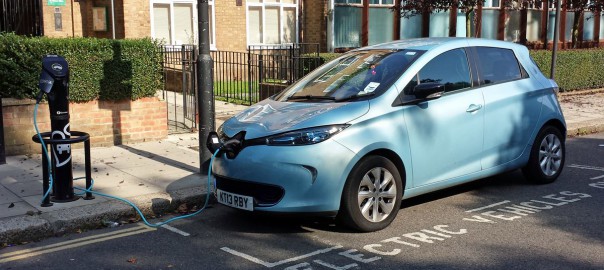
The zero-emissions Renault ZOE will be used to map roads in the state, which is in the northeast of the country. Researchers from the Queensland University of Technology (QUT), which is based in Brisbane, will man the car.

“As researchers drive the car across Queensland, onboard sensors will build a virtual map to help refine AI-equipped vehicles to drive safely on our roads,” Mark Bailey, Queensland’s minister for Transport and Main Roads, said in a statement Wednesday.

2018 – Renault ZOE

Bailey added that while it was “early days”, AI technology and smart road infrastructure had the potential to transform the way people travelled in Queensland and “reduce road trauma.”

The project will look at how the vehicle and its AI system adapts to lane markings, traffic lights and street signage. Additionally, it will look to overcome GPS systems’ limitations “in built-up areas and tunnels for vehicle positioning.”

Michael Milford, from QUT’s Australian Centre for Robotic Vision, said that as the vehicle was driven, AI would “watch and determine if it could perform the same as a human driver in all conditions.”

Read more: Yahoo

The Mother Who Wants to Put Air Pollution on Her Daughter’s Death Certificate

Millions die each year from dirty air. The trauma of a 9-year-old London girl may bring the dangers home.

LONDON — Dirty air kills millions of people around the world every year, but it can be hard to put a face on a danger so vast. Rosamund Adoo-Kissi-Debrah is fighting to do just that. The face she has in mind is her daughter’s.

Ella Kissi-Debrah was 9 when she died in 2013, after three years of asthma attacks so bad, they sometimes triggered seizures. In photos, her smile is broad and bright, her hair braided. She loved music and swimming, and dreamed of becoming a pilot.

Ella lived with her family just off London’s South Circular Road, a major thoroughfare that is clouded by the diesel fumes that make London’s air — like much of Europe’s — thick and foul-smelling. A scientist’s analysis found that many of her hospitalizations coincided with local pollution spikes.

Now Ms. Adoo-Kissi-Debrah wants to put air pollution on Ella’s death certificate. On Jan. 11, the top legal adviser for England and Wales, Attorney General Geoffrey Cox, backed her application for a new inquest, and this week, her lawyer plans to petition the High Court to authorize it.

The coroner who originally investigated Ella’s death ruled she had died of acute respiratory failure, but made no mention of pollution. Ms. Adoo-Kissi-Debrah did not know then what diesel fumes can do to young lungs. It was more than a year after Ella’s death that she first learned dirty air is a known asthma trigger. “It was like putting a picture together” as it finally began to make sense, she told me.

Air pollution has never appeared on a British death certificate, said Ms. Adoo-Kissi-Debrah’s lawyer, Jocelyn Cockburn. If a new coroner amends Ella’s to note its role, he or she could also demand that the government take action to prevent future deaths. And the moral and political repercussions could be even wider.

This grieving mother’s fight holds a power far greater than its potential to clarify the cause of one family’s tragedy. It’s bigger than just London and Britain, too. In demanding that dirty air be written into the official record as having contributed to her loss, Ms. Adoo-Kissi-Debrah wants to force us all to recognize a danger that is all around us, but which we have long chosen to ignore.

Read more: NY Times

Volkswagen Passat GTE (Image: T. Larkum)

New Volkswagen Passat Mk8.5 gets new tech and plug-in hybrid boost

The Volkswagen Passat range has been facelifted for 2019, with the GTE model getting longer electric-only range of 35 miles

Within the next month or two, the 30 millionth Volkswagen Passat will have been produced. Eight generations have hit the road since the car’s launch back in 1973, and UK orders for this newly updated Peugeot 508 rival will open in June.

The latest version is still based upon the Mk8, but VW believes the changes are significant enough to consider it a ‘Mk8.5’. Under the subtly massaged metal, the revised Passat packs improved safety tech, updated infotainment and connectivity systems, semi-autonomous driving capability and an overhauled engine range.

Volkswagen Passat GTE (Image: T. Larkum)
2017 Volkswagen Passat GTE (Image: T. Larkum)

Perhaps the most significant change under the bonnet is an improved GTE plug-in hybrid. The power output from the petrol/electric set-up remains the same as before, at 215bhp, but a larger-capacity battery – up to 13kWh from 9.9kWh – sees the electric-only range rise to 35 miles on the latest WLTP standards. That’s an increase of 40 per cent. However, there’s no fast-charging tech, so at best the GTE can replenish its cells in four hours.

Read more: Auto Express

Electric cars charging in Milton Keynes (Image: T. Larkum)

Zouk Capital named preferred bidder to run government-backed EV Charging

Infrastructure fund manager Zouk Capital has been named as the preferred bidder for the government’s much-vaunted EV Charging Infrastructure Investment Fund (CIIF).

The £400 million fund – half of which will be raised from the private sector and matched by the UK government – was announced in the 2017 Autumn Budget amongst a raft of other measures designed to accelerate the adoption of electric vehicles in the UK.

Electric cars charging in Milton Keynes (Image: T. Larkum)

The CIIF was launched in a bid to both enable the more rapid expansion of public EV charging networks and to stimulate further capital investment in the sector, with the government aiming for the fund to act as a catalyst for further investment.

A bidding process was launched by HM Treasury’s Infrastructure and Projects Authority last summer, inviting tenders from investment managers to be tasked with either the entire CIIF or a section of it.

Read more: Current News

Kia e-Niro EV (Image: Kia)

All-electric Kia e-Niro sold out after a month on sale

The initial UK production run of 900 Kia e-Niros has already sold out, and new orders will be delayed due to a supply chain bottleneck

Kia has sold all 900 e-Niros allocated for the UK market in 2019 in a matter of weeks. Lead times are set to increase for future orders, with the next batch of e-Niros not being set to land in the UK until 2020 due to a manufacturing bottleneck.

Demand for the all-electric Kia e-Niro, as well as its sister-model the Hyundai Kona Electric, has been greater than expected. As a result, the firms’ battery suppliers (which include Samsung and LG) have been unable to cope with the e-Niro’s production volumes, despite doubling their outputs.

Deliveries for the new Kia e-Niro were supposed to commence in April. However, as a result of the e-Niro’s popularity and the production bottleneck, buyers who managed to snag one of the initial 900-model run may have to wait until the end of 2019 before taking delivery.

Read more: Auto Express

Electric cars are already cheaper to own and run

Petrol and diesel vehicles cost more over four years in UK and four other European nations

Electric cars are already cheaper to own and run than petrol or diesel alternatives in five European countries analysed in new research.

The study examined the purchase, fuel and tax costs of Europe’s bestselling car, the VW golf, in its battery electric, hybrid, petrol and diesel versions. Over four years, the pure electric version was the cheapest in all places – UK, Germany, France, Netherlands and Norway – owing to a combination of lower taxes, fuel costs and subsidies on the purchase price.

Researchers from the International Council for Clean Transportation (ICCT) said their report showed that tax breaks are a key way to drive the rollout of electric vehicles and tackle climate change and air pollution.

Carbon emissions from transport are a big contributor to global warming, but have been rising in recent years in the European Union. Vehicles are also a source of much air pollution, which causes 500,000 early deaths a year in the EU.

Electric cars offer the biggest savings over diesel in Norway (27%) as the battery-powered vehicles are exempt from a heavy registration tax. The ICCT analysis was updated for the Guardian after recent cuts in the UK’s grants for electric car purchases. It shows British drivers see the smallest saving – 5%. In Germany, France and the Netherlands, the saving varied from 11% to 15%.

Read more: The Guardian

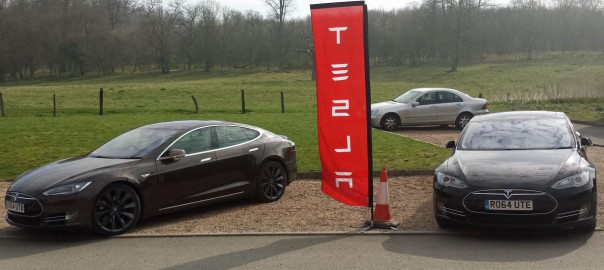
Could an electric car work for your business?

We meet the businesses who’ve taken the plunge by buying Teslas to deliver goods – and find out how they’ve never looked back since

We hear a lot about electric cars being the future of transport, but it’s easy to forget there are over four million vans on the UK’s roads, delivering vital goods to homes, businesses and institutions up and down the land.

But while the number of electric vans on sale continues to grow, there has been a wider choice of electric cars for some time. Similarly, although early EV vans had limited ranges, often of 100 miles or less, Tesla’s Model S could travel up to a claimed 300 miles from launch in 2012.

Now the likes of the Jaguar I-Pace and Audi e-tron have caught up, but for years if you wanted a large EV with a long range, the Tesla was the only real option.

Small wonder, then, that instead of a van, some forward-thinking business owners saw the financial and environmental advantages a Tesla could offer, and took the plunge. Auto Express met the owners of two such businesses to see how an EV works as a delivery vehicle.

Amore Bakery

For seven years, Amore Bakery has been selling personalised cupcakes on a business-to-business basis from its rural Buckinghamshire HQ. And the company’s in-house delivery service has been a tremendous success for owner, Paulo Benfeito.

“Cupcakes are quite delicate,” he says. “If you use a courier service, they often end up getting damaged on their way to the customer. What sets Amore apart from our competitors is that we deliver all of our goods ourselves.”

But Benfeito wondered if there were a way of streamlining the cost of running the delivery side. So, in 2014, he bought a Tesla Model S to join his conventional diesel delivery van. He admits this sounds extravagant, joking: “Often, when we want something, we tell ourselves we need it.”

Read more: Auto Express

Slow Charging the ZOE at Highgate (Image: T. Larkum)

EO Charging partners Bulb for UK’s ‘first fully open’ EV charging network

EO Charging has partnered with energy supplier Bulb and Suffolk County Council to launch what the trio claim to be the country’s first “fully open” charging network.

Plug In Suffolk, as the programme has been called, is said to be the country’s first fast charging network that allows EV drivers to charge simply through using contactless payments with no need to register or become a member of any organisation.

The first installation under the Plug In Suffolk scheme has been unveiled at the Urban Jungle Plant Nursery and Café in Beccles, near Lowestoft, comprising two 7kW chargers supplied by EV charge point manufacturer EO, as well as an EO Pay kiosk.

Slow Charging the ZOE at Highgate (Image: T. Larkum)
(Image: T. Larkum)

Up to 400 individual charge points across 100 locations and businesses are to be installed under the scheme once complete.

In addition, businesses participating in the scheme will be offered the chance to sign up to renewable energy supplier Bulb in order to ensure their power supply is green.

Read more: Current News

West Sussex Council Fleet Goes Electric With Renault ZOE (Image: Renault)

How to charge electric fleets

With reduced taxes, well-proven technology and expanding infrastructure, it is now becoming more and more convenient to run electric vehicles when compared with running petrol or diesel vehicles

Electric vehicles are already looking cheaper to run for individual drivers compared with petrol or diesel but, when it comes to fuelling a fleet, businesses will still want to arrange preferential rates to make the numbers work at scale.

There are huge savings to be made by drivers who switch to electric vehicles (EVs) from petrol or diesel, according to Ben Fletcher, of Renault UK.

The Renault ZOE hatchback, for example, is 100pc electric, has a WLTP driving range of 186 miles and costs just “2p per mile whereas an equivalent petrol or diesel would typically be around 12p”, says Mr Fletcher, head of electric vehicles in the UK for the French manufacturer.

West Sussex Council Fleet Goes Electric With Renault ZOE (Image: Renault)

The amount of electricity it takes to charge an EV costs around a third as much as buying petrol for a normal car
Not only is the cost lower, drivers can also have peace of mind about where their electricity comes from, with far greater control “over who provides their energy, whether it comes from a renewable source and what tariff they are on, than they would do if they fill their cars with petrol or diesel on a forecourt”, he adds.

Both considerations are important for individuals, but when it comes to corporate approaches to transport they take on even greater significance.

Renault’s electric cars, for instance, are mirrored by a range of Renault Pro+ electric vans, demonstrating the opportunities for companies to switch to electric even on multi-tonne light commercial vehicles.

Fleet managers with multiple EVs will see considerable fuel savings and a large reduction of tailpipe emissions. Jon Lawes, managing director of Hitachi Capital UK’s vehicle solutions business, says: “If all of Britain’s vans and heavy good vehicles [HGVs] were to switch to electricity, businesses could save around £14bn a year in fuel costs alone.”

Read more: Telegraph

Milton Keynes 'Mushrooms' Charging Hub (Image: T. Larkum)

Networks commit to cut EV charging red tape

The UK’s distribution network operators (DNOs) have committed to cut the red tape surrounding EV charger installations, aiming to help facilitate more mass installs.

Today the UK’s six DNOs have responded to calls from the parliament, enacting reforms that will make it easier for charging network operators to install charge points.

These reforms include a new, standardised process for all types of properties and businesses to apply for grid connection approval. As it stands, installers need to complete a range of different forms and meet different requirements in order to inform them of a new installation.

Milton Keynes 'Mushrooms' Charging Hub (Image: T. Larkum)
Milton Keynes ‘Mushrooms’ Charging Hub (Image: T. Larkum)

But as a result of these changes, the process will be streamlined and paperwork slashed. In addition, there is further work in the pipeline to digitalise the entire process, simplifying it further still.

Last month the government responded to a business, energy and industrial strategy select committee report into EV charging that sought to identify and highlight, as well as a perceived lack of real ambition on the government’s side, a raft of potential barriers that could hamper the adoption of EVs and rollout of associated infrastructure.

Read more: Current News