Monthly Archives: January 2023

“Electric cars should make up 1 in 4 sales by next year” – 2023 wish list

As EVs continue to improve at a rapid rate, Richard Ingram believes that buyer demand should grow even faster

​The march of electric cars has begun. Battery electric vehicles (BEVs) accounted for 16.6 per cent of the market in 2022 – up 40.1 per cent on the previous year. This is a landmark moment as BEVs have overtaken diesels in popularity and are now Britain’s second most popular powertrain. Add in PHEVs and more than one in five cars registered was fitted with a plug.

While supply constraints continue to suffocate the new-car market, demand for new electric vehicles shows no sign of slowing. December alone revealed a zero-emission share of almost 32.9 per cent – a record for the year – suggesting that over the next 12 months, accelerating past one in four is virtually guaranteed.

As editor of Auto Express’s sister site DrivingElectric.com, I’m admittedly a little biased. But having been driving EVs day in, day out for the best part of three years now, I’ve seen just how far these cars have come. Their range and charging are improving at an astonishing rate, and while the public infrastructure needs work, the comfort, convenience and environmental benefits are clear.

Read more: AutoExpress

It’s Time to Go Green!

If you would like to know more about Solar Panels and the PowerBanx range of home battery systems, and get a free instant quote, please complete our online form:

One in three cars sold in December were electric vehicles, says New AutoMotive

Battery electric vehicles (BEVs) ended the year strong with its highest market share in December as one in three cars where EVs, according to New AutoMotive.

Sales of BEVs for the whole year stayed strong and manage to increase 38% compared to 2021,


despite a decrease in sales of cars in the UK market.

During the month of December there were 39,780 BEVs registered which represented 34% of the total of all cars sold, while 27,605 hybrids were sold during the last month of 2022 and improving on November’s sales which stood at 24,748 BEVs registered.


Electric cars continue to be the fastest growing segment of the market, with 250,407 BEVs registered in 2022 and bringing its cumulative total to more than 610,000 at the end of December.

In contrast is the continued decline of fossil fuel vehicles with petrol market share dropping below 40% in December for the first time since at least 2010. The decline of sales from petrol cars will continue in 2023 as buyers transition to electric options.


Read more: Current+

It’s Time to Go Green!

If you would like to know more about Solar Panels and the PowerBanx range of home battery systems, and get a free instant quote, please complete our online form:

Tesla Model 3 Unveil (Image: Tesla)

Sales of new electric cars in the UK overtakes diesel vehicles for the first time

The month of December 2022 saw battery electric vehicles claim their largest ever monthly market share

Sales of electric cars in the UK are growing so fast that they have now overtaken diesel vehicles to become the second most popular type of new vehicle, behind petrol.

The Society of Motor Manufacturers and Traders reported that greening of the British car market continues, with a record low overall level of emissions recorded in 2022 – 111g of carbon dioxide emitted per km travelled on average, a fraction of the level of only a few years ago.

Vauxhall Corsa-e (Image: Vauxhall.co.uk)

The month of December 2022 saw battery electric vehicles (BEVs) claim their largest ever monthly market share, of 32.9 per cent while for 2022 as a whole, they comprised 16.6 per cent of registrations.

 The Tesla Model Y was the best-selling electric car in Britain, and the third best selling car overall, behind the Nissan Qashqai and Vauxhall Corsa (both now with electrified versions).

The growth in electric sales is largely due to fleet and business users – the private car buyer remains more sceptical, fearful of range and difficulties in finding public charging stations.

The government’s Electric Vehicle Infrastructure Strategy forecasts that the UK would require between 300,000 and 720,000 chargepoints by 2030.

Meeting just the lower number would still require more than 100 new chargers to be installed every single day: the current rate is around 23 per day.

Read more: Independent

It’s Time to Go Green!

If you would like to know more about Solar Panels and the PowerBanx range of home battery systems, and get a free instant quote, please complete our online form:
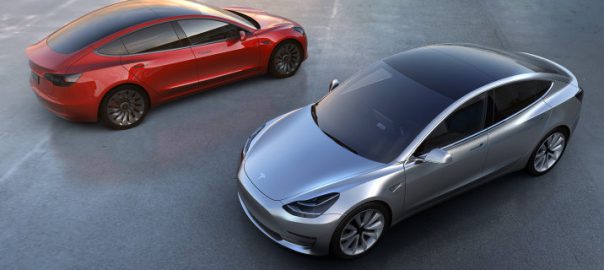
The Electric Car Year In Preview: 2023

Is 2023 the year of the electric car? Multiple experts think it is. Here at CleanTechnica we agree — this is the year EVs go mainstream.

Everyone and their brother is writing 2022 Year In Review stories. Sitting around the hydrogen-fueled fire pit at CleanTechnica’s mountain top aerie with a view of Katmandu, Zachary and the usual gang of idiots got to thinking we should do a year in preview article that focuses on where we expect the electric car revolution to go in the coming year. So we decided to do a sit and schvitz in the CleanTechnica sauna, which is heated by geothermal energy. After about 20 minutes of that foolishness, we came up with the following.

The Electric Car Tipping Point

Malcolm Gladwell made the phrase “tipping point” part of popular culture with his book entitled, appropriately enough, The Tipping Point — How Little Things Can Make A Big Difference. He defines a tipping point as “the moment of critical mass, the threshold, the boiling point” and suggests that “Ideas and products and messages and behaviors spread like viruses do.”

Read more: CleanTechnica

It’s Time to Go Green!

If you would like to know more about Solar Panels and the PowerBanx range of home battery systems, and get a free instant quote, please complete our online form:

Peugeot e-2008 electric SUV (Image: Peugeot)

How to design an electric car

Peugeot’s design boss explains how electrification will change his team’s work

There’s no escaping it: a ban on the sale of new internal combustion-engined cars is looming. And as the industry leads customers towards an all-electric future, the vehicles on UK roads are surely set to look very different. Having no engine in a car means much-reduced cooling requirements; even the length of the bonnet will change because, in many cases, there won’t be anything under it.

Peugeot’s design director Matthias Hossann is one of the key figures facing the challenge of turning the firm’s products into EVs over the coming decade (the commitment is all-electric in Europe by 2030), including the potentially awkward transition period when cars may have to be offered with both power sources.


Peugeot e-2008 electric SUV (Image: Peugeot)

Hossann has solid form at Peugeot, having worked on crucial models for the French brand over the past decade – the current 208 and 2008 for starters, but also eye-catching concepts like the stunning e-Legend. When we meet him for a chat, though, he’s walking around Peugeot’s latest creation, the new 408. It’s a car that’s had a long gestation period – seven years, in fact – and Matthias has had a hand in its design since the first sketches were put to paper.

Read more: AutoExpress

It’s Time to Go Green!

If you would like to know more about Solar Panels and the PowerBanx range of home battery systems, and get a free instant quote, please complete our online form:

‘EVs will kill us all’ – Why are haters so obsessed with electric vehicles?

I’m not sure if you’ve noticed this, but some people – no, it’s actually a lot of people – seem to really, deeply hate electric vehicles.

I know this because every time I write about one, or even mention the acronym, in a story for the country’s only national paper the comments beneath the online version of my story erupt into a frothing splurge of spleen and outrage.

I have wondered at what makes some humans so venomously vicious about the idea of cars running on electricity – other than the fact that they’re the kind of people who simply hate “change” of any kind, also sometimes colloquially known as “old people” – and that led me to wonder whether there were people who hated the original cars when they first changed the world.

Sure enough, there were plenty, particularly in America, where laws were proposed that involved any car user setting off rockets every mile that they drove and then waiting 10 minutes for the road to clear before proceeding. This was to give unhappy horse owners and pedestrians a chance to get out of the way of the evil, noisy, dust-devilling machines.

In Vermont, they actually passed a law demanding that an motor vehicle must be accompanied by a person walking in front of it at all times, waving a red flag. Even accounting for how slow cars were back then, this seems crushingly pointless and annoying.

Read more: EVCentral

It’s Time to Go Green!

If you would like to know more about Solar Panels and the PowerBanx range of home battery systems, and get a free instant quote, please complete our online form:

Mythbusting the world of EVs: can we move forwards without arguing?

Making positive noises about electric cars doesn’t take away from all other cars

MYTH: “We must argue to progress”

If you say anything positive about an electric car, either online or in an actual human conversation, people often get surprisingly agitated, as if you’re ramming electric vehicles down their throats. They say “I couldn’t manage with an electric car”, in a tone that implies, “So all electric cars are fundamentally a bad thing”.

The purpose of this series of articles is to show that a lot of perceived objections to electric cars are actually myths. I believe electric cars are more suitable for more people than many people think. But to be clear I am definitely not saying they’re for everyone. So why the hostility?

Pictured: TRO has designed the first of its kind Electric Vehicle Experience Centre, launching in Milton Keynes in spring

If I turn up in a two-seat car, people don’t harrumph, “I have five kids so two-seaters are a thoroughly bad idea”. Caravan owners don’t get riled up by the simple existence of superminis, it’s just that they buy for themselves something more capable of towing. When I review a petrol car with a 350-mile fuel tank, I don’t get comments saying “My diesel goes 800 miles, so all petrol cars are obviously a conspiracy against ordinary motorists”.

Read more: TopGear

It’s Time to Go Green!

If you would like to know more about Solar Panels and the PowerBanx range of home battery systems, and get a free instant quote, please complete our online form:

UK Power Networks fast-tracks EV charging at petrol stations

UK Power Networks (UKPN) has partnered with independent forecourt operator, Motor Fuel Group (MFG) to fast-track the installation of electric vehicle (EV) chargers in petrol stations.

The new EV chargepoints will be distributed amongst some of MFG’s 900 sites in addition to the eight newly installed ultra-fast 150kW chargepoints at the company’s Catford site in South East London.

Ed Chadwick Til, director at MFG commented: “Our EV hub in Catford provides eight 150kW chargers. Whilst getting EV drivers back on the road quickly, it will be crucial in giving motorists the confidence to switch to zero carbon fuels. Thanks to UK Power Networks’ great work and the Green Recovery programme, MFG is able to build hubs like this quickly and ahead of the curve.”

This project is part of UKPN’s Green Recovery programme, which aims to support the UK’s transition to net zero by investing £66 million in low carbon energy projects.

Inconveniences of Gasoline 1: Gas Station (Image: Clean Technica)

“We want to help enable the UK’s transition to Net Zero by reducing the cost of connecting EV chargers for our customers through our Green Recovery scheme,” said Adam Lakey, stakeholder engagement manager at UKPN.

Read more: Current+

It’s Time to Go Green!

If you would like to know more about Solar Panels and the PowerBanx range of home battery systems, and get a free instant quote, please complete our online form:

Nissan marks its 250,000th Leaf electric car with festive lights display

Sunderland Plant’s Christmas decorations are powered entirely by vehicle’s vehicle-to-grid technology

Nissan is marking its electric milestone in lights, as it celebrates the 250,000th Leaf electric car rolling off its production line with a dazzling festive display.

The motor manufacturer is using electric vehicle technology as the sole power supply for its Christmas decorations at the entrance of the Washington production site, with a Leaf rigged up to tree lights to power them. Star of the show is a 32-foot high Christmas tree.

Nissan began building the Leaf EV at the Sunderland plant in 2013, and this year started to produce electric versions of the Qashqai and Juke models.

Read more: ‘Totally unacceptable’ MPs fury over Northern Rail’s decision to close Sunderland station over Christmas

Like many of the latest electric cars on the market, the current Leaf has vehicle-to-grid – or V2X – technology, meaning it can become a mobile power supply for household products, which Nissan decided to demonstrate by using the Leaf as a power source for its festive display. The V2X system allows drivers to use electricity stored in their vehicle’s battery to power a variety of appliances, including a fridge-freezer, laptops and kettles, by using a three-pin plug converter that slots into the charging socket.

Read more: ChronicleLive

It’s Time to Go Green!

If you would like to know more about Solar Panels and the PowerBanx range of home battery systems, and get a free instant quote, please complete our online form:

IONITY rapid charge points at Leeds Skelton Lake Services (Image: IONITY)

Electric car drivers receive high-speed charging boost from major UK supermarket

Electric car owners are set to benefit from a huge expansion of EV chargers at supermarkets and shops around the country.

 and BP Pulse have signed an exclusive agreement to bring  to M&S stores across the UK. The agreement will see M&S and BP Pulse, BP’s electric vehicle charging business, work together to install an initial 900 electric vehicle charge points in around 70 of M&S’ national stores in the next two years.

The roll-out will significantly expand BP Pulse’s network, growing the UK’s charging network and adding up to 40,000 kWhs of charging capacity to the UK’s EV infrastructure.


In order to provide the appropriate speed for each need, a combination of ultra-fast (≥150kW) and rapid (≥50kW) charge points will be installed during the roll-out.

Fifteen rapid (50kW) charge points are already live and open to the public at M&S Maidstone Eclipse and Southgate following successful pilot installations.

Over 250 BP Pulse charge points are already available at over 60 BP-operated forecourts which also offer M&S Food.

Akira Kirton, CEO at BP Pulse UK, commented on the new partnership, saying it would help customers and help the companies achieve environmental goals.

Read more: Express

It’s Time to Go Green!

If you would like to know more about Solar Panels and the PowerBanx range of home battery systems, and get a free instant quote, please complete our online form: