Monthly Archives: November 2022

Electric car terms: What do I need to know?

There are all manner of terms and acronyms in the EV segment – we’re explaining the ones to keep in mind.

If you’re in the market for an electric car, you may have already encountered the sometimes bewildering number of terms and acronyms that are strewn across the segment. Knowing what they all mean – and which ones are important – can feel quite daunting, to begin with.


Drive Energi 50kW Tritium Veefil-RT chargers (Image: Drive Energi)

However, we’re going to be taking a look through some of the key EV terms that you really need to know. So let’s dive in.

Battery

A battery is the core of an electric vehicle. After all, without a battery, an EV has nowhere to store energy which wouldn’t allow it to travel.

You’ll see batteries measured in kilowatt hours – or kWh – and the higher the number that precedes it, the larger the battery, and likely the more range it’ll offer. For instance, the Mercedes EQS has a 107.8kWh battery, which is capable of delivering up to 453 miles of range.

Charging

Charging is how you’ll keep your electric vehicle topped up. Compared with filling up a petrol or diesel car, there are a number of options, however. Everything is measured in kilowatts – or kW – too, with a higher number of kilowatts meaning a quicker charge.

Slow charger

A slow charger, predictably, is one that’ll give a more modest supply of energy to an electric car. They’re usually rated around 3.6kW and might include charging locations such as those located in streetlamps and kerbs in urban areas. These are best for overnight charges, as they’ll need more time to fully charge an EV.

Read more: ExpressandStar

It’s Time to Go Green!

If you would like to know more about Solar Panels and the PowerBanx range of home battery systems, and get a free instant quote, please complete our online form:

GRIDSERVE installs the ‘UK’s fastest EV charger’ at the Braintree Electric Forecourt

GRIDSERVE has installed the UK’s “fastest EV charger” at the Braintree Electric Forecourt to optimise charging technologies.

The ABB Terra 360kW charger is capable of adding 100 miles of range in less than five minutes, the company said, dramatically increasing charging times whilst on the go around the UK.

The public charger is equipped with two combined charging system (CCS) connectors with long cables, contactless payment, easy access for wheelchair users and is positioned to allow heavy goods vehicles (HGVs) and cars towing caravans an area to charge with ease.

This could be a move that leads to the further adoption of EVs with research led by payments technology company Paythru having indicated that 80% of UK drivers may be deterred from driving an EV due to poor experience at the chargepoint.

One of the primary issues with the poor charging experience comes with difficulties in finding an EV chargepoint when it is required. This is an area that has been impacting the sector over recent months.

Over half of the respondents (54%) said not being able to find a chargepoint when it is required would put them off getting an EV and a further 26% said it might. A total of 80% highlighted it as a concern.

Read more: Current+

It’s Time to Go Green!

If you would like to know more about Solar Panels and the PowerBanx range of home battery systems, and get a free instant quote, please complete our online form:

E.U. plans for only electric new vehicles by 2035 ‘without precedent’

After months of negotiations, the European Union reached a political agreement this week to effectively ban new nonelectric cars from 2035 onward.

The agreement, reached at 9 p.m. on Thursday in Brussels and announced by the Council of the European Union and the European Parliament, amounts to a 100 percent carbon dioxide emission reduction target for new cars and vans by 2035.

“This agreement will pave the way for the modern and competitive automotive industry in the EU. The world is changing, and we must remain at the forefront of innovation,” Jozef Sikela — the minister of industry and trade in the Czech Republic, which holds the rotating council presidency — said in a statement.


The legislation still needs to be approved formally to become law in the E.U., one of the largest automobile markets and home to some of the biggest manufacturers. However, approval by the Council and European Parliament is expected, with only minor changes.

Many climate change campaigners, who hoped other governments would follow in the E.U.’s footsteps in effectively banning new gas and diesel vehicles, welcomed the news.

Read more: WashingtonPost

It’s Time to Go Green!

If you would like to know more about Solar Panels and the PowerBanx range of home battery systems, and get a free instant quote, please complete our online form:

What is electric car preconditioning and why does it matter?

Preconditioning is one of the lesser-known but brilliantly useful features of electric cars. On both cold winter days and hot summer days, you can benefit from it.

Put simply, preconditioning allows you to pre-heat or pre-cool the car’s cabin before you start your journey. Not only will you feel more comfortable, you’ll maximise the car’s driving range and prolong the life of its battery.

It’s a win-win-win situation, in other words.

Copyright: maridav / 123RF Stock Photo

How does preconditioning work?

Preconditioning can be activated via the car’s infotainment system or a connected smartphone app. By scheduling your daily departure times, the car will heat or cool its interior to optimum temperature – you just climb in and go.

Crucially, when the car is plugged in, electricity is drawn from the mains and not the car, so this has no impact on driving range. You start your journey with a full battery.

Also, because the car’s windows will be free of mist and ice when you enter the cabin, you won’t waste time waiting to clear or defrost them.

Read more: motoringelectric

It’s Time to Go Green!

If you would like to know more about Solar Panels and the PowerBanx range of home battery systems, and get a free instant quote, please complete our online form:

Ultra-low emission registrations up 386% on first quarter of 2014 (Image: OLEV)

Ford plows ahead with electric vehicle rollout, scrapping Ford Fiesta production

Ford drops Fiesta to focus on electric vehicles

It’s the end of an era, as the Ford Fiesta will be dropped from the automaker’s lineup sooner than expected. Ford says it will be saying farewell to the iconic little model that 22 million drivers trusted to get them where they need to go over five decades.

Meanwhile, Ford is gearing up for one of the most significant transformations in the automaker’s rich history, a fully electric one. The American automaker is scrapping production of its Ford Fiesta model next summer to focus on the next generation of electric vehicles in Europe.


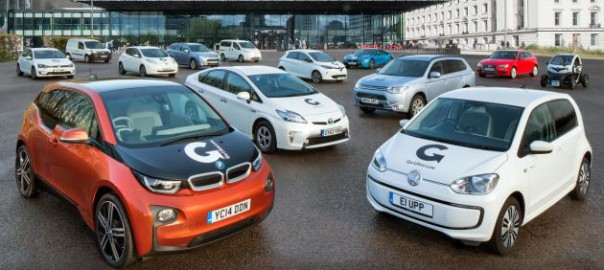
Electric Car Line-up (Image: Go Ultra Low)

The move comes a year earlier than expected as Ford begins rolling out all-electric models across its lineup.

Earlier this year, Ford released plans to become an all-electric brand in Europe by 2035, introducing nine EV models by 2024. The EV rollout started with the successful launch of the Mach-E and Mach-E GT and the E-Transit commercial van.

Read more: electrek

It’s Time to Go Green!

If you would like to know more about Solar Panels and the PowerBanx range of home battery systems, and get a free instant quote, please complete our online form:

Blades Being Installed on Turbine 5, Yelvertoft Wind Farm (Image: T. Larkum)

Wind power could save UK households £250 per annum compared to gas, says RenewableUK

Wind power could save each UK household nearly £250 in savings per year compared to gas, says new analysis conducted by RenewableUK.

The analysis showed that the 19GW of wind farm capacity that won Contracts for Difference (CfDs) support will generate around 93TWh by the time it is all operational in 2027. This is around 30% of the annual UK electricity generation at present. This will be at a total cost of £5 billion.


Blades Being Installed on Turbine 5, Yelvertoft Wind Farm (Image: T. Larkum)

RenewableUK stated that the equivalent cost of getting that electricity from gas would be around £26 billion at current prices, so this represents a saving to consumers of over £20 billion, with every UK household benefitting by £246 a year.

The CfD scheme has been a resounding success for the wind industry. The most recent CfD auction saw offshore wind farms win contracts at a fixed electricity price four times cheaper than the current cost of gas power stations. Auction Round Four saw the five offshore wind projects win contracts to secure a strike price of £37.35/MWh.

As well as this, CfD projects are predicted to pay back £25 this winter, and around £45 a year to each household from next winter. This is set to continue to grow as more low cost windfarms come online.

Read more: Current+

It’s Time to Go Green!

If you would like to know more about Solar Panels and the PowerBanx range of home battery systems, and get a free instant quote, please complete our online form:
EVIOS acquires Andersen EV to bolster chargepoint business

EV chargepoint manufacturer EVIOS has confirmed the acquisition of Andersen EV, a home charging company.

Under the agreement, the two brands will co-exist, serving different parts of the EV market and benefit from shared investment in technology, installation personnel and customer support.

EVIOS was founded by former founder and CEO of Chargemaster, David Martell. In April, Martell said EVIOS had designed its charger to meet six key criteria; to be hassle free, suitable for shared parking, to automatically link to off-peak electricity tariffs, integrate with solar installations, present information in understandable terms and to be affordable.

Securing Andersen will see production of the company’s A2 product recommence immediately with all associated customer support services to be merged with the existing operation at EVIOS’s Bedfordshire-based headquarters.

“Andersen’s design-led positioning complements our leadership in technology and functionality and running both brands in parallel will help us to serve an even broader range of customers,” said David Martell, chief executive of EVIOS.

Read more: Current+

It’s Time to Go Green!

If you would like to know more about Solar Panels and the PowerBanx range of home battery systems, and get a free instant quote, please complete our online form:

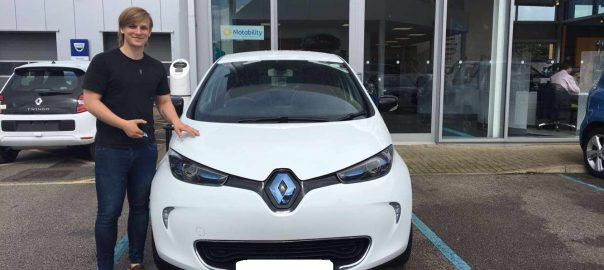
2020 Renault Zoe (Image: Renault)

Renault Zoe will not be replaced for another generation

The Renault Zoe, first released in 2012, will not be replaced, Renault boss Fabrice Cambolive has confirmed, ending its life as one of the best-selling electric cars in its home country.

2020 Renault Zoe (Image: Renault)

Instead, the Renault Clio and Renault Captur will continue so they can supplement Renault’s new electric compact car line-up, headed by the Renault 4 and 5 – both arriving by 2025.

Cambolive described this to Autocar as a dual approach where its hybrid and electric models co-exist for the foreseeable future.

He said: “It depends on the market. If a market is fully electric, okay, but most markets will have pure electric for the compact segment, and until 2035, if needed, we will have Clio and Captur too. They will have hybrid technology because that’s our solution, the technological choice we made to replace the normal of the combustion engine.”

The decision to cull the Zoe brings to an end a lifespan of more than a decade, during which it was the top-selling EV in Europe for two years running (2015-16) and achieved more than 100,000 sales in France alone.

A final date for the end of its production has yet to be confirmed.

Talking about the broader range, which will gain the new Renault Mégane and Renault Scenic imminently, Cambolive believes the perfect line-up in the European market is four electric and four hybrid models. Within those models, there should be a maximum of one engine and two or three equipment levels, he said.

Read more: AutoCar

It’s Time to Go Green!

If you would like to know more about Solar Panels and the PowerBanx range of home battery systems, and get a free instant quote, please complete our online form:

French farmers are covering crops with solar panels to produce food and energy at the same time

Agrivoltaics – the practice of using land for both solar energy and agriculture – is on the rise across France.

In the Haute-Saône region, in the northeastern part of the country, an experiment is being conducted by solar-energy company TSE.  It is hoping to find out whether solar energy can be generated without hindering large-scale cereal crops.

Previous attempts to experiment with agrivoltaics have been through smaller-scale projects. But, keen to see if it can thrive on an industrial level, 5,500 solar panels are being spread over this farm in the commune town of Amance by TSE.

If successful, the crossover could be revolutionary for both the agricultural and solar panel industries.

How do solar panels help protect crops from climate change?

“The aim was to be able to meet France’s needs in terms of renewable energy development, without pre-empting agricultural land,” says Xavier Guillot, head of agronomy research and development at TSE.

Read more: EuroNews

It’s Time to Go Green!

If you would like to know more about Solar Panels and the PowerBanx range of home battery systems, and get a free instant quote, please complete our online form:

Second-hand electric cars helping drivers ditch petrol and diesel – ‘An obvious go-to’

Second-hand electric cars are becoming more popular, with hopes that the automotive sector will adapt to the change and encourage motorists to invest in electric.

According to the RAC, sales of second-hand electric cars reached record levels in 2021. Sales of used battery electric vehicles soared by 119.1 percent to 40,228 last year compared with 2020.

Demand for plug-in hybrid electric vehicles (PHEVs) also jumped by 77.1 percent to 54,115 sales.

The data, from the Society of Motor Manufacturers and Traders (SMMT), showed that sales of used hybrids also rose by 50.6 percent, despite many drivers cooling on the idea of a hybrid.

Growth was driven by an increasing number of ultra-low and zero-emission models filtering through to the second-hand car market.

But, despite record sales in this area, these vehicles still only account for 3.1 percent of the total used car market.


Joanne Robinson, director of lenders at Zuto, said demand for second-hand EVs may be on the rise, but as an industry, it is nowhere near ready.

The large volume of brand new EVs being manufactured today (and large corporate fleets using EVs) will soon create a booming secondhand market.

Read more: Express

It’s Time to Go Green!

If you would like to know more about Solar Panels and the PowerBanx range of home battery systems, and get a free instant quote, please complete our online form: