Monthly Archives: March 2021

Lexus UX 300e (Image: blog.lexus.co.uk)

How much does it cost to tax an electric car?

Owning an electric car brings quite a lot of benefits, including zero emissions, low running costs and the ability to stick your foot down for eye-opening acceleration without the usual histrionics.

Better still, an EV will save you even more money in tax — be it as a personal vehicle or a company car. Read on to find out how:

Do I need to pay VED for an electric car?
If you’re looking to buy an electric car, the good news is that you’ll pay no Vehicle Excise Duty (VED) on your new purchase. Prior to April 2020, electric vehicles costing more than £40,000 were liable for an annual tax charge for the first five renewals – but that has been abolished.

VED is calculated on CO2 emissions at the car’s exhaust pipe, and EVs emit nothing, resulting in their exemption. Whether or not a revised system to tax electric cars will come down the line remains to be seen.

The same exemption applies to hydrogen-fuel-cell cars. Plug-in-hybrid vehicles are not exempt, however, and fall into the same tax bands as conventional petrol or diesel vehicles.

How does company car tax work for an electric car?
For the 2020/21 financial year, the Benefit-in-Kind (BiK) rate on fully electric vehicles is 0%, and will rise to just 1% for 2021/22, then 2% for 2022/23. For comparison, a plug-in hybrid car capable of up to 30 miles of electric-only driving will be charged at 12%, 13% then 14% in those years.

Lexus UX 300e (Image: blog.lexus.co.uk)

It could be much cheaper to run an EV as your company car than you expected, then.

The company under which the electric car is being registered still needs to pay tax. The amount paid is calculated by its P11D value — which includes the total cost of the car inclusive of on-the-road fees and options — as well as its CO2 emissions.

If you’re the employee running the car, the amount you’ll pay is slightly more complex to figure out. Normally, company car tax for employees is worked out based on the vehicle’s P11D value, its BiK rate and your personal tax band.

Nevertheless, you will pay less using an electric car as a company car compared with equivalent-value petrol or diesel alternatives.

Are there any other tax benefits with owning an electric car?
There are a few benefits to owning an electric car that you might be well-positioned to take advantage of during your ownership.

One of the biggest is the exemption from the London Congestion Charge, which stands at £15 a day for cars that don’t meet Euro 6 emissions standards or which emit more than 75g/km of CO2. From October 25, 2021, this exemption will apply only to fully electric or hydrogen vehicles. The bad news is that the scheme will be discontinued from December 25, 2025, after which EVs will then be subject to the charge.

Electric vehicles can also enter the London Ultra-Low Emissions Zone (ULEZ) without incurring the £12.50 charge that other cars do. As more cities in the UK adopt such zones, you might find yourself able to move around a bit more freely in an electric car.

Businesses are also able to claim back the full cost of one electric vehicle as a capital allowance, as well as claim grants towards installing chargers through the Workplace Charging Scheme. Might be a good excuse to pester your boss for that new Tesla Model 3 or Porsche Taycan then…

Read more: carwow

It’s Time to Go Green!

If you would like to know more about Solar Panels and the PowerBanx range of home battery systems, and get a free instant quote, please complete our online form:

SWARCO eVolt is supplying 45 charging units, including 11 of its Rapid Chargers capable of charging two vehicles simultaneously in 30 minutes, across 28 sites in East Lothian (Image: eVolt)

Motoring: How does charging electric vehicles at public charge points work?

Considering an EV, but not sure how charging on the road works? Here’s what you need to know, says Darren Cassey.

Interest in electric vehicles is rising rapidly, particularly since the government announced petrol and diesel cars will be banned from sale from 2030.

However, the idea of switching to an electric vehicle can be daunting, with all this talk of charging and ‘range anxiety’.

If you can charge your vehicle at home, ensuring you have a full ‘tank’ every time you leave the house, public charge points won’t be too much of a concern.

But if you do a lot of long journeys, or you can’t charge at home, using public charge points will be a vital – if currently alien – prospect.

With this in mind, we’ve put together a simple guide to show that while EV charging can seem like a minefield, once you’re all set up, it’s not much different to filling your car with petrol.

Here’s what you need to know…

What is a public charge point?

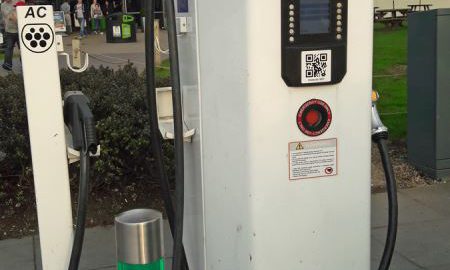
A public charge point is the petrol station of the EV world. It’s a place where EV owners can go to charge their vehicle, and they’re usually located in convenient locations, such as motorway service stations, hotel car parks and supermarkets. In some cases, they’re also available on residential streets, something that is becoming increasingly popular.

How do I find one?
The best way is to use a site like Zap-Map (zap-map.com), which provides a map of pretty much every connector in the UK.

However, if you have an account with a specific provider, it will almost certainly have an app that will show its own charge points.

How do they work?

The process is similar to using the ‘pay at pump’ feature of a petrol station, though it can vary slightly between providers.

SWARCO eVolt is supplying 45 charging units, including 11 of its Rapid Chargers capable of charging two vehicles simultaneously in 30 minutes, across 28 sites in East Lothian (Image: eVolt)

You simply drive up to the charge point and follow the instructions on the screen to set up payment, then plug your vehicle in using the cable on site or using your own.

It’s not always quite that simple, though.

There are numerous providers, each with their own app.

The vast majority should now allow for contactless payment, but it’s usually cheaper if you sign up for an account and pay through this. Some services require a monthly subscription fee too.

How much does it cost?
Here’s where it can get complicated.

Charging from home is the most cost-effective way of topping up your batteries, but when it comes to public charge points, it can vary depending on the provider and the speed of the charge – think of it like comparing the price of a litre of fuel at different forecourts, as well as the difference between premium and regular fuel.

As an example, BP Pulse charges 12p per kWh to subscription members, which some charge points costing nothing at all – membership costs £7.85 per month, with the first three months free.

However, if you ‘pay as you go’, there’s a minimum spend of £1.20 with prices starting at 18p per kWh.

Plus, using a contactless payment method sees prices start at 25p per kWh with a minimum spend of £1.50.

Are all chargers compatible with all cars?
No, so you’ll have to make sure your car is compatible with the charge point you’re heading to. In truth, you’ll be unlucky if you head to a location you can’t use, but it’s worth noting, just in case.

When searching on a site like Zap-Map, you can filter by connection type so it only shows places you can charge.

Which provider is best?

If you have a Tesla, great news, because the firm’s Supercharger network is consistently voted the best in the UK. However, drivers of non-Tesla models can’t use them.

Read more:

It’s Time to Go Green!

If you would like to know more about Solar Panels and the PowerBanx range of home battery systems, and get a free instant quote, please complete our online form:
Solihull Observer

Rapid Charging Step 1: Access the Rapid Charger (Image: T. Larkum)

Government to end Ecotricity’s service station charge point monopoly

Motoway service station charge points are set for an overhaul as the Government plans to intervene with new legislation to remove monopolies and ensure chargers are reliable and accessible by all.

Ecotricity currently holds an exclusive contract to provide charging provision along the motorway network, but this is set to change according to Transport Minister Rachel Maclean.

Speaking to electrifying.com, she said: “We do believe it will take government investment to ‘charge up’ this market. So we’ve got nearly £1 billion to upgrade those connections at motorway service stations. What we are going to have is at least six high power chargers in every motorway service area by 2023.”

Service level agreements will be put in place to ensure 24/7 customer care and there will be clear pricing information available. If these standards are not met the government says it will use legislation to enforce them.

Rapid Charging Step 1: Access the Rapid Charger (Image: T. Larkum)

The chargers will be available to anyone with a contactless payment card and will be in addition to Tesla units, which are already installed at most service stations. Larger sites will have up to 12 new points providing speeds of up to 350kW.

Maclean added: “We want the private sector to come in and we will take the best commercial offer. Now we have set out our strategy this is an attractive area for investment. This will drive an increase in performance.”

The move has been welcomed by industry experts. RAC spokesman Rod Dennis said: “This is great news as charging electric cars at motorway service areas needs to fast, reliable and easy to pay for so drivers can make longer journeys with the minimum of fuss.

“Nothing is more frustrating to an electric car driver than the sight of an out-of-order charge point, so the fact that there will be a commitment to having chargers ‘in service’ will make a big difference. The promise of clear pricing is also important as drivers are used to knowing what they’d be paying before filling up, thanks to petrol price ‘totems’ on forecourts.

“It should also go a long way towards showing would-be EV drivers that ‘range anxiety’ is a thing of the past, further speeding up the switch to electric.”

It’s not just the rapid charging network which will see investment, the Government has also doubled the funding available to councils to improve local charging infrastructure.

Read more: FleetNews

It’s Time to Go Green!

If you would like to know more about Solar Panels and the PowerBanx range of home battery systems, and get a free instant quote, please complete our online form:

Charging Hub with eVolt Rapid Chargers (Image: SWARCO eVolt)

Instavolt lauds opening of UK’s largest public rapid charger motorway hub

Instavolt has laid claim to the UK’s largest public rapid charger motorway hub as it opens a new electric vehicle (EV) charging site.

The eight-bay hub is located at Welcome Break’s service area on the northbound carriageway of the M6 at Corley in the Midlands. A further seven rapid chargers are to open on Welcome Break’s southbound carriageway at Corley by the end of the month.

The chargers form part of a £50 million investment by Instavolt to help meet its goal of installing 5,000 rapid EV chargers by 2025. It currently has 570 rapid chargers installed.

Charging Hub with eVolt Rapid Chargers (Image: SWARCO eVolt)

The EV charging firm has signed agreements for chargers with a number of companies, including fast food chains KFC and McDonalds. The KFC partnership covers the installation of rapid chargers at up to 450 KFC drive thru restaurants in the UK, while the McDonalds partnership – announced in July 2020 – is for the installation of 125kW chargers at new and existing drive thru restaurants “where they can be accommodated” across England, Wales, Scotland and Northern Ireland.

Instavolt’s chief executive officer, Adrian Keen, said the project at Welcome Break’s service areas marks “a significant step forward for EV drivers” as it allows them to take advantage of Instavolt’s contactless payment and “class leading reliability” on a motorway for the first time.

He added that the M6 has particular importance for the company due to it being “one of the busiest and longest continuous motorways in the UK”.

Read more: CURRENT

It’s Time to Go Green!

If you would like to know more about Solar Panels and the PowerBanx range of home battery systems, and get a free instant quote, please complete our online form:

Tesla, Powerwalls, Ford Hybrids, Green Energy Save Texans Amid Blackout

As it turns out, renewable energy is helping to keep some people warm and alive in Texas.

As we reported yesterday, people in Texas are in danger due to extreme winter weather, power outages, and contaminated water. Their houses are dangerously cold, they don’t have the ability to boil water, and some don’t have access to water at all.

While many people don’t have a warm place to sleep, some Tesla owners are camping out in their garages, in their Tesla vehicles. Unlike a gas car, you can run an electric car in the garage without fear of carbon monoxide poisoning.

Tesla Texans have taken to various social media platforms to share just how their electric cars have saved their families.

Some Tesla owners own more than just a Tesla car or SUV, but rather a solar roof and Powerwall battery energy storage unit. People who have solar panels of any kind on their home, especially if they have the means to store energy, are much better off than those relying on the failing Texas grid.

People are concerned that Texas won’t update and winterize the grid appropriately, which means this will happen again. Next time, they need to be better prepared. If their state and its leaders aren’t willing to take care of them, they have to plan ahead to take care of themselves. Interestingly, at least one official in Texas told citizens the problem is not the local government’s responsibility, and they should “fend for themselves.” He resigned shortly thereafter.

Meanwhile, people from all over the country have reached out to help. After Ford North America Product Communications manager Mike Levine posted the first tweet below, he took it a step further, with a few more related tweets.

Ford is even requesting that its Texas dealerships loan out any available vehicles that may be able to help people, such as F150s with built-in generators.

Some Tesla Energy owners have been sharing information related to their solar systems and Powerwalls. Despite the winter weather, they’re still able to capture energy during the day and store it for many hours of relief.

Read more: INSIDEEVs

It’s Time to Go Green!

If you would like to know more about Solar Panels and the PowerBanx range of home battery systems, and get a free instant quote, please complete our online form:

Hyundai Ioniq 5 (Image: hyundai.co.uk)

8 Coolest Features Of The Hyundai Ioniq 5

Hyundai’s new electric crossover looks special.

Hyundai is kicking off its new electric sub-brand with an absolute beauty. The Ioniq 5 is a mid-size crossover with hot hatch proportions. Or perhaps it’s just a very big hatchback – the jury is still out. Whatever you want to call it, it’s oozing style. While the design is sharp and modern, including the Z-shaped crease that’s part of Hyundai’s new design language, Hyundai says the Ioniq 5 was inspired by its first production car. We’ve squinted at it from all angles and don’t see it though. What we do see is a good-looking car with an innovative interior and a promising drivetrain. So let’s dig into its coolest features.

1. Thoughtful Aesthetic Design
Hyundai has come a long, long, long way when it comes to aesthetics, but there’s more to the Ionic 5 than next-generation European hot hatch looks. The Parametric Pixel lights, with their pixel-like clusters, are an artful acknowledgment of the Ioniq 5’s digital origins. Simultaneously, the clamshell hood and flush door handles are old-school tricks to maximize aerodynamic efficiency. The aero-optimized wheels will be available in sizes up to 20 inches and carry on the Parametric Pixel design theme. There’s a lot to love about the Ioniq 5’s styling, but the light clusters are arguably the coolest individual aspect.

2. Room For Activities
The Ioniq 5 has a 118-inch wheelbase, which is nearly four inches longer than Hyundai’s three-row Palisade SUV. Furthermore, the interior is unencumbered by a transmission tunnel and features a flat floor. That gives Hyundai room to apply what it calls a ‘Living Space’ theme to the interior. This means plenty of room to stretch out and relax, as well as lots of headroom and large amounts of useable storage space, including storage for a purse. The seats recline, complete with a (likely optional) first-class-cabin-style lower leg support on the front seats. Hyundai is even touting a single-pane glass ceiling so you can lay back and look at the stars. Lastly, and importantly, you can store all your stuff in 18.7 cubic feet of cargo space.

Hyundai Ioniq 5 (Image: hyundai.co.uk)

3. Solid Performance Meets Balanced Range
Power comes from either a 58-kWh or 72.6-kWh battery pack hooked up to a single rear electric motor or a dual-motor layout. With the two-wheel-drive configuration and a 72.6-kWh battery, the Ioniq 5 will jog up to 62 mph in 7.4 seconds while getting a range of almost 300 miles. The all-wheel-drive variant with the 72.6-kWh battery generates a healthy 301 horsepower and 446 lb-ft of torque and will sprint from 0-62 mph in 5.2 seconds and top out at 100 mph. These aren’t earth-shattering figures, but they’re more than adequate for the trendy family on the move.

From a range perspective, the WLTP test cycles suggest between 292 and 298 miles is capable on 2WD models with the larger battery. This will likely drop to around 220 miles when the EPA gets its mitts on the Ioniq 5.

4. Convenient Charging Technology
For electric vehicles to become widely adopted, charging the batteries needs to be quick and convenient. Hyundai claims that the Ioniq 5 can be charged from ten percent to 90 percent in 18 minutes using a 350-kW charger, which is a great start. The South Korean automaker also says that up to 62 miles of range can be recharged in just five minutes. For convenience, owners can start and stop charging with the touch of a button on their smartphone app, and Remote Climate Control gives the option of scheduling the vehicle’s pre-heating while connected to a power source. Hyundai’s E-GMP charging system can support both 400-V and 800-V charging infrastructures by using the motor and an inverter to boost 400 V to 800 V for stable charging.

5. Augmented Reality HUD
In its press release, Hyundai glosses over its Augmented Reality Head-Up Display (AR HUD). It shouldn’t, because the ability to turn the windshield into a display screen is crazy cool, especially when AR is involved. Plans for creating one for the brand started in 2020 when Hyundai Mobis, Hyundai’s parts and service arm, invested in Envisics, a UK-based AR HUD company. Hyundai hasn’t given any real details about the system yet, but we assume it’s similar to Mercedes-Benz’s AR-HUD technology. That said, with so much hype around it, we certainly expect some unique features to be debuted when the car arrives.

Read more: CARBUZZ

It’s Time to Go Green!

If you would like to know more about Solar Panels and the PowerBanx range of home battery systems, and get a free instant quote, please complete our online form:

BMW iX3

TEST DRIVE: 2021 BMW iX3 Electric SUV – Incremental Steps

This is BMW’s first electric car since the i3 and uses a completely different recipe.

The world is changing at a faster pace than ever. Most of the credit goes to the rapid tech advancements in all fields. At the same time, this change doesn’t seem to happen fast enough in some industries. The automotive world is one of them. Even though there were some pioneers, including the BMW Group. In 2011, the Bavarians founded the BMW i division, and this was supposed to be the specialist arm of the Bavarians, focused solely on electric drivetrains and alternatives to internal combustion engines.

BMW i – Born In 2011
The BMW i engineers started cranking out new technologies at a fast pace. One clear example in this regard is the BMW i3, their flagship EV, if you will. Even eight years later, the i3 is still the only car you can buy under $100,000 with a carbon fiber monocoque layout. But the more important thing to remember about the i3 is that it now has its third different battery pack to rely on. And over the course of just about 6 years, its energy storage capacity more than doubled. All that was done without physically increasing the size of the huge battery pack in the floor.

And that seems to be the key to a truly electric future, a future that is so uncertain, most companies don’t really know what the perfect recipe to tackle it is.

BMW iX3
BMW iX3
[contact-form][contact-field label=”Name” type=”name” required=”true” /][contact-field label=”Email” type=”email” required=”true” /][contact-field label=”Website” type=”url” /][contact-field label=”Message” type=”textarea” /][/contact-form]

At the moment, there are two different philosophies at play in the automotive industry. On the one hand, we have companies with dedicated EV platforms which allows them to build electric cars from the ground up with no limitations. These platforms would be adjustable and allow you to make the most out of the specifics of an electric car. From adjusting the design, to offering more space inside than a similarly sized internal combustion engine car. The problem with this approach is that it’s costly and you’re investing a lot in a platform that may not cater to all the needs your customers have.

Other car makers opted for a modular platform that can house both purely electric cars and internal combustion engine. That means they can build both types of cars on the same assembly line, with the same overall chassis design, allowing you to be very flexible and adapt to the customer demand. This is what BMW is doing and they call it ‘The Power of Choice’.

It’s a risky strategy that does come with a couple of shortcomings. For example, a car that was designed to use an internal combustion engine will have some issues with interior space, with weight distribution and even practicality once is converted to an EV. But that can be overlooked if the car in question is good enough for the customer.

Meet The iX3 – BMW’s First Electric SUV
That’s what the BMW iX3 is setting out to do. This is BMW’s first electric car since the i3 and uses a completely different recipe. This time, instead of giving it a bespoke platform just for itself, the new electric SUV is using the same platform as the regular X3.

Choosing the BMW X3 to be the first car offered as part of the ‘Power of Choice’ strategy wasn’t at random. The X3 is one of the best-selling BMWs and with this new choice, the range now includes all types of powertrains: from petrol to diesel engines, PHEV and, a full-on M car and now an EV. But what is the iX3 exactly? Nothing more than an electric X3 and you can see that from every angle.

Read more: BMWBLOG

It’s Time to Go Green!

If you would like to know more about Solar Panels and the PowerBanx range of home battery systems, and get a free instant quote, please complete our online form:

MG 5 review: What the electric estate lacks in luxury it makes up for in price

Mirror Motoring’s Colin Goodwin says that in a torrid year for the car industry, MG was the fastest growing car brand – with spectacular sales for a good reason

Last year, as you have no doubt guessed, was a shocker for the car industry. Sales in the first lockdown were virtually non existent – and for the rest of the year dealerships struggled.

Unless, that is, they had an MG sign out front.

In 2019, MG was the fastest growing car brand registering 13,000 sales. And in 2020 it had beat that figure by September.

Why this spectacular performance?

It’s simple really: MG makes cars that are very affordable, good value and crucially, many of them are electric. Like the ZS crossover which undercuts almost all EV rivals on price.

They’re what we motoring hacks like to call ‘honest’ cars.

And now we have the latest MG model on test. It’s called simply the MG 5 SW and it has the distinction of being the only pure electric estate on sale today.

Its positives well outweigh the negatives – and price is a big positive here.

To keep costs down it’s sensible to keep your range of cars simple – and MG has done that with the 5 SW.

There are only two trim levels; the entry-level Excite which is £24,495 (including PICG) and the Exclusive at £26,995.

Not only do these prices undercut most rivals, they’re lower than those for MG’s own ZS.

This MG is no beauty – a bit like a Kia or Hyundai from a few years back. But so what? It’s hardly ugly and you’ve got to remember that price.

It’s a similar story inside as there is a fair bit of hard plastic about the place. But I could live with that because of the simplicity and ease of use of the controls.

We’re testing the dearer Exclusive which comes with leather-style upholstery, heated front seats, sat nav, roof rails and automatic wipers.

I’d save two and a half grand and stick with the entry level car. Not least because the satnav isn’t brilliant and since both trim levels come with Apple Carplay and Android Auto you can use your phone for navigating.

Roof rails aren’t a good idea on an EV anyway, they add drag.

Which brings us neatly onto range. The MG 5 SW is fitted with a 154bhp electric motor that’s powered by a 52.5kWh battery of which 49kWh is usable.

Again, the MG thrashes its nearest price rivals including the ZS. The claimed WLTP range is an impressive 214 miles.

You can charge the MG using a rapid charger via a CCS-style connector at a maximum rate of 50kWh – which means you can take the battery from zero to 80% in 50 minutes. In theory.

I’m sure EV drivers will know it’s not always possible to achieve ‘book figures’ for recharging.

I used a rapid charger on this and in half an hour had only added about 20kW.

Read more: Mirror

It’s Time to Go Green!

If you would like to know more about Solar Panels and the PowerBanx range of home battery systems, and get a free instant quote, please complete our online form:

Hyundai Ioniq 5 (Image: hyundai.co.uk)

This is the new, fully-electric Hyundai Ioniq 5

And it’s the first Hyundai you might actually *desire*. Still want that Tesla Model 3?

Hyundais are cars we admire but don’t necessarily desire. Well that’s about to change. The Ioniq 5 is the first to use the brand’s new Electric-Global Modular Platform, so it’s hugely significant. It also references the Seventies Pony, the hatch (designed by il maestro Giorgetto Giugiaro) that first gave the brand serious traction outside South Korea. Not sure how many of us really remember it, but somehow that little nostalgia kick really works. The result is a sharply surfaced example of the perfect post-modern BEV.

Trailed by 2019’s lovely ‘45’ EV concept, the real thing remains impressively faithful to the motor show tease. “It’s an opportunity to showcase a part of history that not that many people know about. There’s a lot of history to tell,” Hyundai’s head of design for Europe, Thomas Buerkle tells TG.com. “We had the chance to pull the A-pillar forward, and extended it into the clamshell bonnet. So there are fewer shutlines, and it looks cleaner and wider. We wanted there to be some real excitement to the EV driving experience. There are lines on this car that are only possible with special tooling and stamping, and of course it helps that Hyundai is the only brand in the world that produces its own steel. So we can get the precision we need. The less busy the design, the more you focus on the details.”

Details like the body side slash, the pronounced V shape in the nose and the minimal ‘pixellated’ head- and tail-lights. There are flush door handles and cladding on the sills and at the front and rear which actually helps define the shape rather than looking tacked on, and also contains hidden illuminated elements.

It’s all part of what Hyundai calls ‘parametric design’, which means ‘something expressed in terms of a parameter’. Erm, isn’t everything? Never mind, because the car is a sensation: taut, well-proportioned and beautifully surfaced. It also rides on 20in wheels, the biggest ever fitted to a production Hyundai, and also surely the most imaginatively designed, kind of like fractals. Note also the Ioniq 5’s wheelbase: exactly 3000mm. This is a BEV purpose-designed and built as such, that takes the possibilities of the rapidly evolving electric car form, including the skateboard chassis, and runs with them.

Hyundai Ioniq 5 (Image: hyundai.co.uk)

Hyundai has thrown everything and then a bit more at this new car. You can choose between a single motor rear-drive version or an all-wheel drive dual motor one, with a 58kWh or 72.6kWh battery. The dual motor version makes just over 350bhp and 446 torques so it’s good for 62mph in 5.2 seconds (top speed on all versions is limited to 115mph). There’s a multi-link rear suspension too, promising genuine handling smarts.

Crucially, the Ioniq 5 uses 800-volt battery tech so it can rapid charge on a 350kW charger from 10 to 80 per cent in 18 minutes, or replenish 62 miles of range in just five. The higher voltage also improves charging efficiency and reduces heat loss. Hyundai is claiming a range of 295 miles on the most efficient version. It’s also fitted with something called Vehicle to Load (V2L) which turns the car into a giant portable powerpack – yep, this is an EV you can use to charge another EV (with the correct adapter), amongst other appliances. It supplies up to 3.6kW of power, and has a 220-volt port located under the back seats with another one beside the car’s exterior charging port. And there’s a solar panel roof which offers an additional boost to the battery pack – it can produce up to 205 watts, though this is probably a more significant USP in California than Clacton.

The Ioniq 5’s 3m-long wheelbase makes good on Hyundai’s ‘Smart Living Space’ claims for the interior, which also uses sustainable materials and slimline seats. The seats, headliner, door trim, floor and arm rest use recycled plastic bottles, plant-based yarns and eco-processed leather. A moveable centre console – dubbed the ‘universal island’ – can slide back by up to 140mm. The seats also fold almost totally flat, and together with an unimpeded floor suggests that the Ioniq 5 could double as a rather commodious mobile home. The boot can hold up to 540 litres with the seats up, 1,600 litres with them folded flat. There’s a bit more room in the ‘frunk’.

There’s full Android auto and Apple carplay connectivity, Bluelink connected car services for live routing and over-the-air updates, two 12.25in screens, augmented head-up display, wireless phone charging, voice recognition software, and a Bose audio system. And the full suite of advanced driver assistance tech – Hyundai calls it SmartSense – is also integrated.

Early adopters can go for a fully loaded ‘Project 45’ edition that’ll cost you £45k (prices for the rest of the range haven’t been confirmed yet). Hyundai’s Tesla Model 3 killer? This could be the closest yet.

Read more: BBC Top Gear

It’s Time to Go Green!

If you would like to know more about Solar Panels and the PowerBanx range of home battery systems, and get a free instant quote, please complete our online form:

Volvo XC40 P8 (Image: media.volvocars.com)

Volvo says it will make only electric cars by 2030

Swedish carmaker also says it will sell its vehicles to consumers online only

Volvo plans to sell only electric cars by 2030 in the latest move by a legacy carmaker to abandon fossil fuels that contribute to global heating.

The Swedish carmaker also said it would sell its electric cars direct to consumers or via dealerships through the same simplified online portal, in a blow to the traditional model of selling vehicles via independent dealerships.

Volvo had previously said it wanted half of its sales to be electric by 2025, but it said on Tuesday its new strategy – which puts it in line with the UK’s 2030 ban on internal combustion engine sales – was an “acceleration” of plans to phase out internal combustion engine sales completely.

Håkan Samuelsson, the Volvo chief executive, said the company did not want to be stuck targeting a shrinking market for petrol and diesel cars. He expected the carmaker’s sales to continue to grow as it moved to electric technology.

“To remain successful, we need profitable growth,” he said. “So instead of investing in a shrinking business, we choose to invest in the future – electric and online. We are fully focused on becoming a leader in the fast-growing premium electric segment.”

Rivals that have in 2021 unveiled formal plans to abandon fossil fuels include the Jaguar brand (by 2025) and luxury carmaker Bentley (by 2030). Jaguar’s move had “encouraged us to be a bit braver”, Samuelsson said.

Volvo XC40 P8 (Image: media.volvocars.com)

Samuelsson added that he expected the cost of manufacturing an electric car to drop to the same level as internal combustion engine cars by 2025. In the longer term, the cost of manufacturing electric cars would be lower, he said, achieved through reducing the number of complex systems in the car and cutting the number of separate computers needed.

However, a customer in 2025 will probably still pay more compared with an equivalent hybrid version, Samuelsson said.

Volvo last year launched its first fully electric car, the XC40 Recharge, and it will unveil a new electric 40 Series on Tuesday. However, its higher-margin premium cars allowed it to be among the more advanced European legacy carmakers in the transition away from fossil fuels, including the launch of its Polestar all-electric brand to rival US electric car pioneer Tesla. Volvo also sells several plug-in hybrid electric vehicles.

Its electrified portfolio meant that Volvo easily achieved EU-mandated emissions targets in 2020. That allowed it to sell emissions credits to Ford for an undisclosed sum, helping the US carmaker avoid steep fines.

“There is no long-term future for cars with an internal combustion engine,” said Henrik Green, the Volvo chief technology officer. “We are firmly committed to becoming an electric-only carmaker and the transition should happen by 2030. It will allow us to meet the expectations of our customers and be a part of the solution when it comes to fighting climate change.”

The company recorded its best-ever profits in the second half of 2020 as the Chinese market rebounded from the fall in sales at the start of the coronavirus pandemic.

Read more: The Guardian

It’s Time to Go Green!

If you would like to know more about Solar Panels and the PowerBanx range of home battery systems, and get a free instant quote, please complete our online form: