Monthly Archives: December 2020

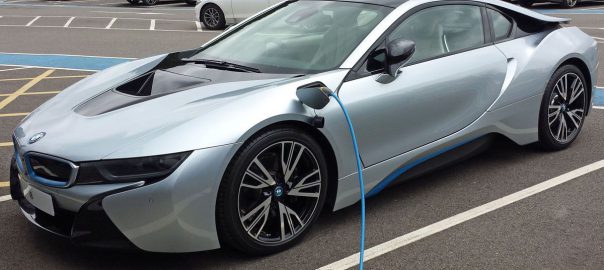
BMW i8 on charge (Image: T. Larkum)

Analysis: winners and losers in the automotive CO2 race

While some car makers will easily hit their EU emissions targets, others are in trouble

The enforced need to dramatically reduce the CO2 emissions of cars sold in the European Union and UK this year has led to expensive stumbles from manufacturers including BMW, Ford and Jaguar Land Rover as new electrified technologies faltered at the crucial moment.

The task to reduce average CO2 emitted to the 95g/km required by the EU (although this differs slightly for each brand based on the average vehicle weight) was always going to be massive. The average was 122g/km in 2019, and it had actually risen over the preceding three years as buyers ditched diesel for petrol.

Many companies chose to wait until this year to roll out expensive new plug-in hybrids and electric cars to comply. They may have been costly but, under the rules, any car sold emitting less than 50g/km not only helped to cut average CO2 but also counted as two sales under the supercredit system, which was designed to help car makers over the line in the first year of the new rules.

Ford had pinned its hopes of reaching its specific target on its new 33g/km Kuga Plug-in Hybrid. But then disaster: it had to recall 21,000 examples to replace their battery packs, due to the risk of contaminated cells causing a fire.

BMW i8 on charge (Image: T. Larkum)

To avoid missing its target and paying substantial fines, Ford paid Volvo an undisclosed sum to pool together the two brands’ average CO2 and take advantage of Volvo’s more successful roll-out of plug-in hybrids, which had put the Swedish firm below its target.

The recall and hook-up with Volvo cost Ford an estimated $600 million (£510m) and wiped out all of its third-quarter European profits.

“We were on track for our CO2 target this year until the Kuga PHEV situation,” CEO Jim Farley said on a call with investors earlier this month.

Meanwhile, BMW suffered similar problems and had to recall 26,900 plug-in hybrids, mostly in Europe. So far it’s confident that it will still reach its target and thus avoid fines.

Not so fortunate is Jaguar Land Rover, which has set aside £90m to pay fines after the launch of its key Range Rover Evoque and Land Rover Discovery Sport plug-in hybrid models was delayed due to problems with achieving the promised electric-only range. JLR halted sales while it worked to solve the issue, which it said was exacerbated by the UK’s first lockdown.

Common to the affected plug-in hybrids of all three manufacturers were battery packs supplied by Samsung, although the Korean firm hasn’t commented on the delays and nor have manufacturers apportioned blame.

Other marques have approached the targets in different ways. Fiat Chrysler Automobiles said in a recent earnings call that it had also suffered a financial loss for the third quarter of 2020, partly due to compliance costs – both rolling out new plug-in cars and paying EV maker Tesla to pool its fleet and thus avoid fines.

The Volkswagen Group, meanwhile, had been expected to hit its target this year after launching the Volkswagen ID 3 EV, but it unexpectedly announced in September that it had pooled with MG to take advantage of the Chinese firm’s strong-selling ZS EV.

Read more: AUTOCAR

It’s Time to Go Green!

If you would like to know more about Solar Panels and the PowerBanx range of home battery systems, and get a free instant quote, please complete our online form:

BMW iX3

2021 BMW iX3 First Drive Review: The New Normal?

Though it’s electric, the BMW iX3 feels very familiar.

It had to be an SUV, everything these days is an SUV. But if you’re a brand launching its first “mass-produced” electric car, why wouldn’t you position it in the lowest-risk segment? The 2021 BMW iX3 may not be a completely new model (like, say, the Volkswagen ID.4), but it rounds out the range, joining the already available gasoline, diesel, and plug-in hybrid variants.

And visually, the iX3 doesn’t look all that different from its gas-powered sibling. Trim-exclusive design elements like new front aprons, a faux dual kidney grille, and electric blue accents – the latter available as an option – are the only elements that give away its identity. The fancy aero wheels come standard, and not only do they save 15 percent in weight versus traditional alloys, but they’re also five percent more aerodynamic, adding an extra six miles of range.

BMW iX3
BMW iX3

While it may not be brand-new, the iX3 does have a few advantages that other manufacturers don’t – the key of which being that the iX3 borrows nearly all of its packaging from the base X3. But since there are no major changes to the exterior and cabin versus the standard X3, that also means there are some drawbacks. The iX3 has no extra trunk (or frunk), no noticeable increase in passenger space compared to the gas model, and no additional power.

Unfortunately, there is no brutal dual-motor, all-wheel-drive version of the BMW iX3 that accelerates with supercar quickness (yet). This EV is rear-wheel-drive only with a usable but not huge 74-kilowatt-hour battery pack. That battery pack also sits pretty low in the car, which gives the iX3 a nice center of gravity, but not great ground clearance, as one might expect of an SUV.

But the BMW iX3 doesn’t necessarily need to mimic market trends to be successful. This is the EV for people who are looking for a practical crossover that also happens to be electric. And BMW knows how to build practical, comfortable crossovers – the company has been doing it for quite some time now.

The iX3 benefits from BMW’s pioneering work in electric mobility. Seven years after the brand’s very first electric car, the BMW i3, the company now employs its “fifth-generation eDrive technology.” All of the drive and battery development takes place in-house. The motor now has 30 percent more energy density than that of the i3 and, according to BMW, is 93 percent efficient (a combustion engine is around 40 percent).

The battery may not be the largest, but the WLTP range of 286 miles is a real achievement. The storage system has 20 percent more energy density and uses 66 percent less cobalt than before. In addition, it can be charged super fast at DC stations with up to 150 kilowatts. Charging from 0 to 80 percent takes just 34 minutes, and adding 62 miles of range takes just 10 minutes.

BMW also wants to reassure those skeptics who see the carbon footprint of electric cars over the entire life cycle as a major problem. If you consider raw material procurement, supply chain, production, use phase, and recycling, it is significantly lower here than with an X3 xDrive20d, for example – by more than 30 percent when using electricity from the European electricity mix during the use phase. And that number jumps to around 60 percent if only green electricity is used.

Read more: Motor1

Renault ZOE 2020 (Image: Renault.com)

Renault Ending Era of Carmaking at French Plant Despite Pushback

Renault SA is pushing ahead with plans to cease vehicle production at a plant outside Paris despite union opposition and government pressure to keep manufacturing in France.

“We’re facing up to reality,” Chairman Jean-Dominique Senard said Wednesday after meeting with labor representatives at the Flins plant that’s made 20 different models over almost 70 years. “We all know that the status quo is no longer possible. We need to reinvent Flins.”

The Flins factory, which makes the best-selling Zoe electric vehicle and the Nissan Micra, will transform by 2024 into a site to recycle and retrofit cars and batteries, Renault said in a statement. While production of the Zoe will continue until then, Renault will then consolidate EV output in France at its plant in Douai, where the electric Megane will be made.

Renault ZOE 2020 (Image: Renault.com)

Renault executives are treading carefully in the company’s home country due to pressure from President Emmanuel Macron to keep production and research in France in exchange for financial backing from the state to get through the pandemic. Macron delayed a 5 billion-euro loan guarantee to the carmaker earlier this year until it had agreed with unions about two northern factories.

“Flins should continue to produce new cars alongside other activities,” CGT union representative Jean-Francois Pibouleau said by phone.

The CFDT union is urging Renault to reconsider cutting jobs at the site and shifting production to Douai. As many as three quarters of the EVs the carmaker sells in its home country will be built elsewhere five years from now, according to the union.

“Renault can’t destroy production capacity in France while at the same time benefit from state support,” it said in a statement. “We won’t accept it.”

The conversion of Flins is a key part of a broader overhaul Renault has said will lead to roughly 4,600 staff departures in France, including at its engineering division. The loss-making carmaker is aiming to eliminate a total of about 14,600 jobs worldwide and lower production capacity by almost a fifth to cut costs by more than 2 billion euros.

Maintaining EV production in France “is a bet that isn’t won yet,” Senard said. Renault will make its no-frills Dacia Spring model in China.

“We want to remain at the cutting edge of this technology,” CEO Luca de Meo said. “We’ve already shown we can be successful.”

Read more: Bloomberg

It’s Time to Go Green!

If you would like to know more about Solar Panels and the PowerBanx range of home battery systems, and get a free instant quote, please complete our online form:

Hove teenager on mission to get young people driving electric vehicles

A TEENAGER is on a mission to get as many other young drivers using electric vehicles as possible.

Harrison Hughes from Hove is so passionate about electric cars that he saved up to buy a second-hand one before he had even passed his driving test.

The 17-year-old said: “For years I’ve been fascinated that you can drive cars powered by electricity. I got my first job in a supermarket and saved all the money I could to buy a second-hand Renault Zoe.

“Even my driving instructor’s car was electric. I’ve no plans to ever drive a petrol or diesel vehicle.”

Harrison has been following the uptake of electric vehicles from a young age and believes they will become increasingly popular.

However he said cost is a key barrier and insurance prices are still too expensive for many young drivers.

The business student said: “Sadly the insurance prices and car prices haven’t changed much and most people get into an internal combustion engine. This is a step backwards and not where we want to be going.

“My car was just under £5,000, which definitely is not cheap but I’m very passionate about it.

“Obviously not having to pay petrol costs is a huge saving and you don’t even have to pay much in terms of maintenance.

“It costs me 50p to charge my car up overnight.”

Harrison has been sharing his experience of driving an electric vehicle through videos on his Twitter page. He receives a lot of questions about charging points and how much energy is needed for various distances.

Harrison said: “A lot of people who are wrongly informed about electric vehicles think you need to buy a new battery every year for example, or that you can’t drive them through a car wash.

“My battery is six years old and its state of health is still 99 per cent, and the car has done 40,000 miles. It just shows how amazing they are and how long they will last.

“Mine is a nippy city car but there are some which will do 400 miles on one charge.”

Read more: The Argus

It’s Time to Go Green!

If you would like to know more about Solar Panels and the PowerBanx range of home battery systems, and get a free instant quote, please complete our online form:

2020 Renault Zoe (Image: Renault)

Expect car brands to launch half-baked marketing in rush to electric

Consumer demand for electric cars is about to turn a dramatic corner, but how many auto brands will have a real story to tell about innovation?

It’s not long ago that only the Tesla S, Nissan Leaf, BMW i3 and Renault Zoe were the only pure electric cars we’d spot on the roads, year after year. A polite tribe, a peripheral species that was more curiosity than serious contender.
Slow shifts beckon in complacency and now suddenly we’re at a dramatic inflection point. The epicentre of the biggest pivot since Ford set up production lines to fire out Model Ts by the millions. We’re about to witness a bloodbath as the new-starts and incumbents battle for supremacy in automotive’s new era.
Only this year, the UK government slid back its proposed date to blanket ban every vehicle that runs on the black stuff by 10 years to 2030. If a model’s development cycle is 10 years, it just lost a whole cycle.
The apparent snail’s pace of EV adoption so far could easily fool you into thinking the graph will be a gentle sweep upwards. But it’s about to turn a very dramatic corner. In 2021 we’ll see a huge uplift in pure electric launches both from start-ups and incumbents. Serious contenders vying for a place in the new order. Evaluated by market cap, Tesla has graced top spot already, but even relative unknown pure-electric player NIO is at number six already selling more than 20,000 units this year in China.

2020 Renault Zoe (Image: Renault)

The compound pressure created by the rapidly expanding competitive landscape and the squeeze of approaching regulatory timelines leaves a lot of the auto makers with their pants hanging loosely around their tyres. A palpable freak-out is felt in an industry only recently slipping merrily along on the lube of their own hubris.
There’s a huge consequence for marketers at the end of this often mangled chain of decisions. You can’t pivot a product life-cycle mid-way, so, over the next couple of years, we’re going to see lots of premature launches of half-baked concepts in the rush to grab a stake in EV. These about-turns inevitably lead to less than impressive performance stats that appear more and more conspicuous as market awareness grows and latches on to benchmarks set by pure-players that aren’t burdened with the twin-task of shooting an EV rocket into space, while simultaneously managing the gentle palliative care for their huge internal combustion ranges nose-diving toward termination.
Marketing is going to get handed some rotten briefs to prop up poorly conceived product and capabilities, fit only for a sweeping under the rug. The new electric Mini launched this year has only two-thirds of the range of the exclusively electric Fiat 500 that was architected ground up as an EV, a result of many a misstep that cost BMW’s CEO Harald Krueger his job. We’re going to see these disparities open up much wider between marques and models over the coming years as new concepts emerge in the flurry of technological innovation. In one way this means rich pickings for brand builders and storytellers, but only if you’re on the right side of the innovation. On the wrong side and the marketer will have a pretty serious mess to clear up, trying to paper over gaping holes in acceptable standards.

You can’t apply old logic to a new situation. So much is changing in automotive we have to treat this as a revolution rather than an evolution. That means a more radical appraisal of how the products are communicated and how brands will be built to thrive. What we’re selling is fundamentally different, the driving and ownership experience will change fundamentally, if customers are even owners at all in the classic sense. When we (Poke) launched EE in 2012, the brief was to create a digital brand not another telco operator. That didn’t just demand a shift in messaging, but a foundational reappraisal of principle and approach. We launched the brand in social media, before the stores opened, and the TV ads ran nearly two months later. A radical departure from the norm, but an approach that laid the foundations for a very valuable brand as BT demonstrated with its big-ticket acquisition. Auto brands that accept this virgin context will do well.
Revolutions can be moments to lose all focus in the speed of change and the ensuing confusion that comes from accepted truths becoming irrelevant conjecture. But they are also the best moments to take stock, simplify and reinvent brands for the unveiling epoch.
Marketing in automotive can no longer be an auxiliary function, because the brand is baked in to the product story like never before. And with dealer networks being replaced by direct digital channels, the need to integrate brand experience, marketing and service more completely and elegantly has never been more pressing. Even in digital and traditional comms, there is a job to do, revolutionising the way product and brand functions and stories are told.

Read more: Campaign

It’s Time to Go Green!

If you would like to know more about Solar Panels and the PowerBanx range of home battery systems, and get a free instant quote, please complete our online form:

Q&A: What does the 2030 ban for petrol and diesel cars mean? Your electric car questions answered

Like most things, the government’s plan to ban petrol and diesel cars by 2030 wasn’t much of a secret, so its announcement last night won’t come as a surprise to many in the motor trade.
The prime minister Boris Johnson has bought forward the deadline to ban the sale of traditionally fuelled cars in less than a decade, with hybrids allowed to remain on sale until 2035.
But what does it mean for car buyers and dealers? Here we tackle some of the most common questions.

When was the ban initially due to come into force?
In July 2017, Theresa May’s government announced the ban would be implemented in 2040.
May’s successor as prime minister, Boris Johnson, has decided moving the ban to 2030 is vital for the UK meeting its commitment to reach net-zero carbon emissions by 2050.

What will replace the banned cars?
Bringing the ban forward by 10 years will speed up the development of electric vehicles, which are the most common type of alternatively-fuelled vehicle. There are already huge numbers available to buy and they are growing every month, but this will supercharge the brands’ investment.

Will every car manufacturer survive the 2030 ban?
Probably not. The investment needed to design and make electric cars is astronomical and there will be a number of them that simply won’t have the funds. Expect more consolidation and withdrawals from the UK over the coming years, much like Mitsubishi’s decision to call it quits recently.

How popular are electric cars?
Figures published by the Society of Motor Manufacturers and Traders (SMMT) show pure battery-electric new cars held a 5.5 per cent share of the new car market in the first 10 months of the year. In October, alternatively fuelled cars which include hybrids, accounted for 35 per cent of registrations.

Will electric car buyers get a discount?
Currently electric car buyers get £3k off with government support. It is not clear how long that will continue, but the PM did say that £582m in grants will be made available for those buying zero or ultra-low emission vehicles to help reduce the costs. How that translates into a discount at the point of sale is not yet known.

How quickly is the charging network growing?
One of the main things that puts buyers off is the fact there are not as many chargers as needed yet. And many of the public charging points are often broken or busy when you get to them.

But the numbers are growing – more than 1,200 charging devices for public use were installed in the UK between July and September, according to the Department for Transport (DfT).

Read more: Car Dealer Magazine

It’s Time to Go Green!

If you would like to know more about Solar Panels and the PowerBanx range of home battery systems, and get a free instant quote, please complete our online form:

Ubitricity Electric Avenue project lamppost charging (Image: Siemens)

Electric Vehicle Interest Surges 500% In UK On News Of 2030 Fossil Fuel Car Ban

2030 is a little more than 9 years away, but news of the UK’s plan to ban sales of new gas/diesel cars in 2030 has reportedly led to a surge in interest in electric vehicles (EVs).
Practically speaking, there’s one decent reason for that, but the core reason is probably just increased awareness that electric vehicles are becoming mainstream and will eventually take over the market — something that is extremely old news to CleanTechnica readers but still largely unknown to the broader public. Helping the public to learn that the future (the medium-term future even) is electric leads to many more people thinking about their existence and viability right now.

Among other things, this just shows the power of strong country targets.

According to BuyaCar.co.uk, electric vehicle inquiries increased by 500% following the news of the stronger timeline. The website, which has more than 60,000 cars available for sale, saw searches for electric cars rise from about 300 a day to “1,679 in the 24 hours following Boris Johnson’s announcement.” They represented 6.5% of vehicle searches in the previous 30 days, and then 10.3% in the day following the announcement from UK Prime Minister Boris Johnson.

UK plugin vehicle sales rose above 12% in October (6.6% fully electric/BEV share), and was above 9% in the first 10 months of 2020 (5.5% BEV share). If a five-fold increase in EV interest translated to a five-fold increase in plugin vehicle sales, we’d see rocket grow to around 50% of the UK’s auto market! Of course, a search surge in 24 hours after a major national announcement does not mean sales will follow the same surge in interest. However, it’s a good sign — growth in consumer exploration of the superior technology should lead to an increase in sales.

Ubitricity Electric Avenue project lamppost charging (Image: Siemens)

Also noteworthy, being a used vehicle site, BuyaCar.co.uk does not see the interest in electric vehicles that the new car market sees. The company shares that not even 1% of its 2020 sales of used cars were full electrics.

Naturally, electric vehicles benefit from instant torque, a completely smooth & quiet powertrain, zero emissions, a simple powertrain that results in very low cost operation and much less maintenance, and the glamor of new tech.

One of the biggest advantages of a good electric car is that it holds its value well — something demonstrated over and over again, especially when it comes to Tesla models. As noted at the top, there is also a practical reason for a surge in interest following the 2030 ban announcement — gas and diesel cars could really see high depreciation as we get closer to 2030. If someone wanted to avoid being stuck with a used fossil fuel vehicle that had depreciated a great deal, resulting in a high total cost of ownership, it seems that it would be smart to go electric sooner rather than later.

BuyaCar.co.uk focused on the fact that the vast majority of buyers are still buying diesel and petrol cars, especially on the used market. While the crew there may think it’s for logical reasons, I would argue that it’s mostly due to cultural inertia, psychological inertia, and limited availability. All of those barriers can be overcome rather swiftly, especially considering the pace of change in the new-car market. The good news is that people seem to have an increasingly open mind about the new powertrain (which isn’t actually new, but that’s a story for another day). Even the BuyaCar.co.uk team seemed open minded about the transition, despite being probably less optimistic about the growth potential than you or I am.

Read more: Clean Technica

It’s Time to Go Green!

If you would like to know more about Solar Panels and the PowerBanx range of home battery systems, and get a free instant quote, please complete our online form: