Opel aims to deliver a small, punchy and affordable electric car when it launches a full-electric version of its popular small hatchback in November.
The Corsa-e is the brand’s first battery-powered vehicle developed since becoming part of the PSA Group two years ago.
Under previous owner General Motors, Opel was an early proponent of electromobility with the Ampera plug-in hybrid, which debuted in 2011, and the full-electric Ampera-e, with its 423-km WLTP-certified range, that arrived six years later. Both Ampera models flopped, however, partly because of their high starting prices.
Opel Corsa-e Electric Car (Image: Opel.com)
Opel wants to be more competitive this time with a lower cost of entry — 29,900 euros — along with offering numerous related services including charging. The starting price is still more than twice that of the entry gasoline version of the Corsa, which will cost 13,990 euros.
“The know-how we have collected [from launching the Amperas] is a tremendous help now that the whole automotive industry is entering the era of mass electrification due to the CO2 targets set by the European Union,”
CEO Michael Lohscheller said at the debut of the Corsa-e this summer.
After reigning in the auto industry as the powertrain of choice for a century, the internal combustion engine is finally dying.
Now even Daimler says that it is stopping development of new internal combustion engines to focus on electric cars.
The German automaker whose namesake, Gottlieb Daimler, is credited for having invented the prototype of the modern gasoline engine recently released its latest generation internal combustion engine and it might be its last.
Mercedes-Benz EQC (Image: Mercedes-Benz)
According to German magazine Auto Motor und Sport, Daimler development chief Markus Schaefer said that they currently have no plans to develop a next-generation combustion engine and they are focusing on new electric powertrains.
While they will not invest in the development of new combustion engines, Schaefer reportedly noted that they still might work on some specific parts to improve on their existing engines.
In recent years, there have been signs that internal combustion engines were reaching their limits.
It became increasingly clear when the entire industry was caught cheating to make it look like their diesel engines were actually more efficient and less polluting than they actually were.
Furthermore, generations of combustion engines have long development timelines and there are other factors that may render the investment worthless.
For example, several countries are implementing or announcing their intentions to ban the sale of new gasoline and diesel-powered vehicles by 2040.
Estate agents have been urged to automatically disclose air pollution figures to home buyers.
The industry trade body said providing this information should now be standard practice.
“Air quality is now public information, and it will never not be again,” said Mark Hayward, chief executive of NAEA Propertymark.
His comments came as a new website was launched which details air pollution by postcode.
The site, called addresspollution.org, uses data from King’s College London to give the level of nitrogen dioxide.
House price hit?
The website has been created by the Central Office of Public Interest (COPI), a not-for-profit campaign, the Times newspaper reports.
The site is currently limited to properties in London. It shows the concentration of nitrogen dioxide in the air and compares it to the World Health Organization’s annual legal limit of 40 micrograms per cubic metre. Long term exposure to high concentrations of the gas have been linked to early deaths.
Humphrey Milles, its founder, said he thinks it could have an impact on where new homes are built, and that data such as this should be used to determine where schools and homes for the elderly are built.
“The data shows this is isn’t just something that you are exposed to on the road, this pollution is in the air in our homes,” he said.
Earlier this year, as part of a long-term test review, I had six months to discover just how good the Kia e-Niro is. But as the time neared its end, it became apparent that the car’s real-world 250-300-mile range meant I hadn’t driven anywhere that necessitated the use of the UK’s public charging network.
So it was that I took the plunge, adding further jeopardy by making this pioneering journey with my entire family in tow, off on our summer holidays to West Wales.
At worst, I wouldn’t return just on a flatbed truck but also divorced and with children who no longer wanted to know me.
The challenge was complex, because we needed to travel to and from Wales on the motorway networks, whereas we would be looking for every kind of charger available while we were there, from rural public spots to those provided by local car dealers and even, on occasion, three-pin plugs where we were staying.
However, 800 miles later and with two journeys of more than 250 miles under our belts, we were back home and still on speaking terms. It took some planning and there were fleeting moments of inconvenience and lost time, but it worked out just fine, a few ultimately minor dramas aside.
Here, then, are some of the lessons learned from a trip that proved to me once and for all that the capability of today’s EVs and charging network make the switch from a petrol or diesel car far easier than most people imagine.
1. Electric car people are nice people
I’ll be honest, I had my doubts. Social media is awash with virtue-signalling EV evangelists who jump at the chance to strike out at anyone who dare suggest even the slightest compromise of electrification. But everyone I met in an electric car was friendly, helpful and informative, and many went out of their way to help and educate me. This is the kind of advocacy needed to persuade anyone with doubts to switch to electric motoring, and it was a joy to discover a positive subject that bound people together in a common goal.
2. Some people can’t help behaving like idiots
Based on my journey, ‘some people’ is actually mostly made up of BMW drivers. The chap who parked his diesel X6 in a charging bay and left its engine running for 20 minutes? Idiot. The BMW 5 Series plug-in hybrid buyer who dropped it in a charging bay but then got ticketed because he wasn’t smart enough to plug it in? Bigger idiot. The only upside was that they weren’t using disabled bays, I guess.
I have a love-hate relationship with international motor shows such as this week’s extravaganza in Frankfurt.
On the one hand, if you like cars, if you have a single drop of petrol in your veins, it’s impossible not to be impressed by the array of awesome engineering on display. And that of course is the general idea.
Manufacturers spend huge sums developing their latest four-wheeled fantasies, laden with up-to-the-minute electronic gizmos, which apparently will do everything for you except brush your teeth. They want you to be impressed.
…
For many years now, the dominant themes have been electrification and automation.
At the major European shows in Frankfurt, Geneva and Paris there’s been endless speculative talk about the need to develop battery powered cars, and about how we’ll live with self-driving machines.
But here in Frankfurt, what used to be speculation is becoming reality. The launch of Volkswagen’s ID.3 is being seen as a landmark moment. Not because it looks particularly flashy or exotic – it doesn’t – but because this is the first purpose-built electric car the German giant has produced, the first fruit of a €30bn (£27bn) investment programme, designed to turn the company into a market leader in electric cars. Volkswagen ID.3 electric car (Image: Volkswagen.com)
There’s an irony here, of course. Four years ago, Volkswagen was a very different company. It was during the 2015 show in Frankfurt that the US environmental authorities dropped their bombshell, accusing the German company of deliberately manipulating emissions tests. Executive heads rolled, billions of dollars in fines were paid, and the company embarked on a very different corporate strategy.
In the Netherlands, Jedlix and Elaad say the Zoe is good for the smart grid
Dutch smart charging specialist Jedlix and the Elaad Competence Centre have concluded that Renault Zoe can be used in a balancing capacity of TenneT in the Netherlands.
National grids must be able to balance electricity production and consumption and when this is disrupted, Transport System Operators (TSOs) are forced to activate secondary options to prevent imbalance, which often come from fossil-fuelled power plants.
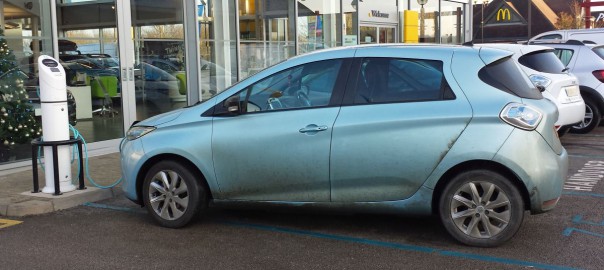
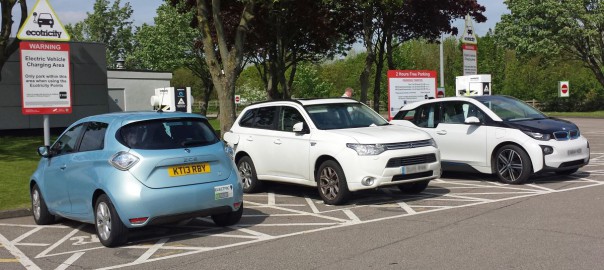
ZOE on charge (Image: T. Larkum)
To use Renault Zoe for network balancing, the car’s charging process had to be able to react to real-time signals. At Elaad’s test centre in Arnhem, in the Netherlands, the two partners conclusively proved that the Zoe is able to respond to TenneT signals within seconds. According to Jedlix, this kind of suitability is further proof that electric vehicle batteries can be efficient and competitive resources that contribute to increasing the flexibility requirements of national grids.
What the company has not mentioned in their press release, however, is whether the charging is bidirectional, i.e. whether electricity from the car’s battery can also be fed into the grid. Certainly, the Renault electric car does not come ex-works supporting bi-directional charging, only being designed to take up electricity. What is possible to help balance the grid, is that the charging power can be reduced if necessary – which can reduce peak loads and thus contribute to grid stability.
Two years ago, Jedlix and Elaad made the same tests with Tesla cars. “In a previous study with Jedlix, we also found a positive effect on the distribution network when we respond to transmission network signals, which is crucial for the long-term introduction of electric vehicles,” says Elaad Director Onoph Caron. “We invite all OEMs to implement similar programs here in the Netherlands.”
It’ll start at £26,160 pounds or around $32,000 in basic trim.
Honda’s E electric car is officially here and the production model has kept nearly all the charm and gadgets of the original concept. At the same time, Honda has unveiled pricing and specs for the urban EV, and that’s where things get interesting.
As the company revealed last week, the Honda E will be available in Europe (and not the US, I’m sorry to say) with a 137-mile range, making it more of a city runabout than a highway cruiser. That’s down to a smallish 35.5 kWh battery, making it more competitive with EVs like the Renault Zoe than the Tesla Model 3. The Honda E supports chargers up to about 75 kW (Honda didn’t say exactly how much) that will let you charge from 10 to 80 percent in about 30 minutes.
Honda e Electric Car (Image: Honda.co.uk)
For urban and suburban use, it should be a kick to drive. The Honda E’s electric motor delivers up to 152 horsepower and 232 foot-pounds of torque, meaning it should accelerate like a demon given the EV’s small size. If you’re looking more for economy, it’ll also come in a cheaper 134 horsepower flavor that will still be relatively quick.
Inside, the E will be a futuristic car, as Honda has managed to retain most of the fun stuff from the original concept. Rather than side mirrors, it will have a camera mirror system with two six-inch screens mounted (legally for the US) at the extreme left and right side of the EV. That’s a first “in the compact segment,” Honda said in a press release, and gives the car smoother lines, better aerodynamics and an improved driver field of view.
In April 2019, Hans-Werner Sinn and his co-authors started a lively discussion about battery-electric vehicles and their CO2 emissions compared to conventional diesel vehicles.
At thinkstep, we welcome such public discourse, because it’s important to present different perspectives on such complex challenges and to think critically about the transition to more efficient and effective energy and mobility. With a strong background in and continuous experience with the topic, we would like to contribute a few additional comments to the discussion.
EVs charging (Image: T. Larkum)
1. E-Vehicle Production Volume Influences Comparisons
On the one hand, holistic technology comparisons, which take into account the manufacturing, use and disposal of vehicles, are nothing new. thinkstep has made many such comparisons, some of which have been published [1-3]. In those considerations, we repeatedly emphasized that an electric vehicle first has to reach a certain mileage to compensate for the emissions resulting from the production of its large battery. Increasing the volume of green energy in a grid mix in relationship to non-renewable energy sources will reduce the overall emissions associated with that grid mix. So, increasing the number of electric vehicles in production should ideally cause us to generate more renewable energy so as to improve the environmental footprint of electric vehicles in contrast to conventional vehicles.
The current debate about this topic has included arguments from all sides. Among other things, the arguments concern the lack of comparability between diesel and electric vehicles. Of course, there are some significant differences between those two types of vehicles, such as range, maximum drive power and the torque curve. While diesel vehicles have an advantage with range, the electric vehicle is ahead in the other two categories. There is a certain number of people who doubt the importance of making such comparisons, but such comparisons are necessary even though unavoidable differences between the products are part of equation.
2. Emissions from Battery Production Are Key
However, much more important is the quantification of emissions from battery production, which is a particularly critical parameter in the comparison of the two vehicle types. The battery production study [4], cited by Sinn and his co-authors, shows the immense range of values published to make such comparisons and the relevance of the energy demand and the corresponding CO2 emissions. A closer look at this parameter reveals how important the production volume is for energy consumption per battery capacity and, accordingly, that the CO2 emissions resulting from battery production fall sharply with larger production volumes (Figure 1). Therefore, the CO2 emissions determined by the authors do not represent large-scale battery production, but rather are based on early, smaller production quantities.
3. The Source Of Your Electricity Matters
In addition, the corresponding electricity procurement is of immense importance. The use of electricity with low CO2 emissions—in particular, through the company’s own production of electricity from renewable energy—significantly reduces the carbon footprint of the battery. The same applies to the constantly advancing optimization of battery technologies, such as through higher storage capacities and more efficient production processes (e.g., due to the economies of scale already discussed). Electric vehicle manufacturers continue to keep a close eye on all of these developments. However, the same efficient production measures do not lead to the same improvements for a combustion vehicle, because the majority of a combustion engine’s CO2 emissions are generated during the use phase (when the vehicle is driven).
The UK government has formally unveiled its new £400 million Charging Infrastructure Investment Fund (CIIF), boasting a maiden investment from UAE renewables investment group Masdar.
That investment, provided by both the government and Masdar, is valued at £70 million and will be used to more than double the UK’s rapid charge point infrastructure over the next five years.
It’s intended that the investment will take the number of rapid chargers installed in the UK to 5,000, of which 2,000 are already installed.
Milton Keynes ‘Mushrooms’ Charging Hub (Image: T. Larkum)
The CIIF was first announced in July 2018, prompting a lengthy search for a fund manager. Zouk Capital was then announced as the government’s preferred bidder in February this year, and has now been formally handed the reins to the CIIF.
Speaking to Current± after that news, Zouk senior partner Colin Campbell said its fundamental interest would remain in charging networks and EV charging technologies.
Government has also today announced a review to explore EV charge point infrastructure across major road networks, which is aimed to educate investment destinations.
Volkswagen introduced Monday the ID.3, the first model in its new all-electric ID brand and the beginning of the automaker’s ambitious plan to sell 1 million EVs annually by 2025.
The ID.3 debut, which is ahead of the IAA International Motor Show in Frankfurt, is an important milestone for Volkswagen. The company upended its entire business strategy in the wake of the diesel emissions cheating scandal that erupted in September 2015. Now, four years later, VW is starting to show more than just concept vehicles for its newly imagined electric, connected and carbon-neutral brand.
Information about the ID.3, which was unveiled alongside a new VW logo and brand design, has trickled out for months now. Monday’s reveal finally fills in some much-needed details on the interior, battery, infotainment and driver assistance systems.
Volkswagen ID.3 electric car (Image: Volkswagen.com)
The upshot: Everything about the ID.3, from its size and styling to its battery range and pricing, is aiming for the mass-market category.
The electric hatchback is similar in size to the VW Golf. But this is no VW Golf. The aim here, and one Volkswagen just might have achieved, was to signal the beginning of a new brand.
Numerous details in the special edition version of the ID.3, including a panorama tilting glass roof edged in black and interactive LED headlights that have “eyelids” that flutter when the driver approaches the parked vehicle, help drive the future-is-here point home.
The ID.3 will only be sold in Europe and have a starting price under €30,000 (about $33,000). North America’s first chance at an all-electric VW will be the ID Crozz, which is coming to the U.S. at the end of 2020.