Category Archives: FAQ

Licensed BEVs reach half-a-million despite slowdown of adoption amid energy crisis

Figures released by the RAC Foundation has disclosed that the number of pure battery-electric vehicles (BEVs) has exceeded half-a-million to reach 519,266 at the end of June 2022.

The rise in BEVs on the UK’s roads continue to grow significantly as the nation races towards the internal combustion engine (ICE) ban that will come into play from 2030. Because of this, many UK drivers have been exploring the possibility of adopting electric vehicles (EVs).

This can also be recognised with licensed BEVs one year earlier standing at 282,977 and 130,246 at the end of June 2020, stated the RAC who analysed data released by the Driver and Vehicle Licensing Agency (DVLA).

Although there are many factors as to why BEV adoption has surged in recent years, one striking correlation is the rise in EV charging infrastructure across the UK, providing drivers with plentiful areas to recharge on the road.

“This is a very significant milestone in terms of getting more battery-powered cars onto our roads, but we still have a long way to travel before we achieve a truly green fleet given that there are around 33 million cars in Britain,” said Steve Gooding, director of the RAC Foundation.

Read more: Current+

It’s Time to Go Green!

If you would like to know more about Solar Panels and the PowerBanx range of home battery systems, and get a free instant quote, please complete our online form:

Mazda MX-30 EV (Image: Mazda)

The American EV boom is about to begin. Does the US have the power to charge it?

States have plans to ban gas-powered cars and the White House wants chargers along highways, but implementation is a challenge

Speaking in front of a line of the latest electric vehicles (EVs) at this month’s North American International Auto Show, President Joe Biden declared: “The great American road trip is going to be fully electrified.”

Most vehicles on the road are still gas guzzlers, but Washington is betting big on change, hoping that major federal investment will help reach a target set by the White House for 50% of new cars to be electric by 2030. But there are roadblocks – specifically when it comes to charging them all. “Range anxiety,” or how far one can travel before needing to charge, is still cited as a major deterrent for potential EV buyers.


The welcoming entrance of Disney’s magic kingdom (Image: L. Larkum)

The auto industry recently passed the 5% mark of EV market share – a watershed moment, analysts say, before rapid growth. New policies at the state and local level could very well spur that growth: the Inflation Reduction Act, which passed this summer, offers tax credits of $4,000 to purchase a used EV and up to $7,500 for certain new ones. In August, California, the nation’s largest state and economy, announced rules that would ban all new gas-powered cars by 2035. New York plans to follow.

Read more: TheGuardian

It’s Time to Go Green!

If you would like to know more about Solar Panels and the PowerBanx range of home battery systems, and get a free instant quote, please complete our online form:

Cost-of-living crisis: ‘Electric cars are still cheaper to run’

Despite the soaring electricity prices, research shows you’ll still save money running an EV ‒ plus top tips from the experts on how to save even more

There’s been a flurry of energy-price fluctuations over the past couple of months, but despite the dropping of fuel prices and energy price rises (and more to come), the latest research shows that it’s still cheaper to run an electric car.

The planned rise of electricity to around 34p per kWh (a jump from the current average unit of 28p) on October 1 will bump up the price of running an EV, but, according to the RAC, it’s still cheaper than driving a petrol car. Comparing similar cars under comparable conditions, the organisation found that an EV driver would pay 9p per mile while a petrol driver would pay 19p.

cheapest electric car UK

Still, with electricity at an all-time high, EV drivers will be looking to save all the charge, and pounds, they can. With the help of Stuart Masson, editor of car ownership advice site The Car Expert, and Simon Williams, EV lead at the RAC, here’s our list of money-saving tips to help keep costs as low as possible…

Charge at home overnight on the off-peak rate. Most chargers have smart-charge software that powers up when electricity is cheapest at around 2am ‒ so if you’re charging a home only do so overnight.

Read more: EveningStandard

It’s Time to Go Green!

If you would like to know more about Solar Panels and the PowerBanx range of home battery systems, and get a free instant quote, please complete our online form:

One in seven cars bought in August were EVs

Electric car sales in August accounted for one in seven of new cars registered, according to new data from New Automotive.

While internal combustion engines (ICE) registrations have maintained steady in August, the electric vehicle (EVs) market continues to grow. It accounted for 14.48% of the market with 8,926 EVs registered in August, an increase of more than 2,000 on August 2021.


MINI Cooper Concept (Image: MINI)

More motorists are looking to reap benefits of owning an EV amid the rising cost of living, and while hybrid sales continue to fall, EVs have grown at the expense of that market as more customers opt for a fully electric car instead of an hybrid.

“As the cost of living crisis worsens, UK motorists continue to turn towards cheaper-to-run electric vehicles,” said Ben Nelmes, co-founder and head of policy at New Automotive.

“Even with the increase in the Ofgem price cap for electricity in October, EVs will continue to offer running cost savings compared to ICE models.”

In July, total sales of electric cars in 2022 had already passed totals for the entirety of 2020, despite July being the first full month since government scrapped its plug-in car grant on 14 June.

Read more: Current+

It’s Time to Go Green!

If you would like to know more about Solar Panels and the PowerBanx range of home battery systems, and get a free instant quote, please complete our online form:

MINI Electric

How much does an electric car cost? Why switching to an EV can save you money, from cheap charging to road tax

With fossil fuel cars on the way out, battery-powered alternatives are not only cleaner but can also be cheaper to run

With the cost of petrol soaring and the potential benefit to the environment becoming ever more apparent, electric vehicles (EVs) are becoming an increasingly attractive option for many drivers.

Registrations of new battery EVs grew at a record rate of 49.9 per cent in the past year, according to the Society of Motor Manufacturers and Traders (SMMT), even as the car market lagged due to supply issues. One in 10 new cars sold is now powered by electricity rather than fossil fuel, up from just one in 100 in 2015.


Nissan Leaf (Image: Qurren/Wikipedia)

That uptake is only likely to increase as the Government’s 2030 ban on sales of new petrol and diesel vehicles looms. A poll of drivers by Moneysupermarket found that of those considering a new vehicle this year, 28 per cent were thinking of buying an electric car and 27 per cent were considering a hybrid.

But EVs are generally more expensive than their equivalents: as of August 2022, the UK’s most popular car model (according to SMMT data), the Vauxhall Corsa, would set you back £17,330 for a petrol model, against £27,055 for the Corsa-e.

Read more: inews

It’s Time to Go Green!

If you would like to know more about Solar Panels and the PowerBanx range of home battery systems, and get a free instant quote, please complete our online form:
Ubitricity Electric Avenue project lamppost charging (Image: Siemens)

£1 million funding to support development of EV chargers across five Midlands areas

Five local authorities in the Midlands are set to install electric vehicle (EV) chargers in areas with limited off-street parking, courtesy of almost £1 million in government funding.

The bid, launched in June 2022, aims to deliver “hundreds” of new EV charging sites across the Midlands in order to support the integration of clean vehicles to the UK’s roads. This comes with the impending internal combustion engine ban coming into force from 2030.


Ubitricity Electric Avenue project lamppost charging (Image: Siemens)

Lincolnshire County Council, Herefordshire Council, Leicestershire County Council, Rutland County Council, and Stoke-on-Trent City Council – alongside Sub-National Transport Body Midlands Connect, submitted the bid resulting in a share of £935,355 set to be distributed between the five councils.

“I’m delighted that this successful bid means that we will be able to offer more electric charging facilities across the county which will support our residents and business to make the shift to ultra-low emission vehicles as part our strong commitment to addressing the climate and ecological emergency,” said Councillor John Harrington, cabinet member for infrastructure and transport.

Read more: Current+

It’s Time to Go Green!

If you would like to know more about Solar Panels and the PowerBanx range of home battery systems, and get a free instant quote, please complete our online form:

One of the many Polar rapid charge points around Milton Keynes, this one is in Central MK (Image: T. Larkum)

Osprey to develop ultra-fast EV charging hubs for 12 British Garden Centres

Osprey Charging has partnered with British Garden Centres in order to add ultra-rapid charging hubs for electric vehicles (EVs) at 12 stores across the UK.

The ultra-rapid charging hubs are said to be capable of adding 100 miles of range in 20-30 minutes for EVs, with the first set to be established in a Carmarthen store in Wales. This will include eight ultra-rapid (159kW) chargers and is set to open later this year.


Charging at Cherwell (Image: T. Heale)

Further hubs will be developed across UK garden centres including Wimborne (Dorset), Carr Gate (Yorkshire), Braintree (Essex) and Harrow (London). A total of 12 sites have been confirmed with a mix of these larger hubs and some smaller installations depending on the size of the site and availability of power.

“The British Garden Centres name is synonymous with first-class customer experience, and we’re delighted to provide safe, reliable, and accessible charging at their UK stores,” said Ian Johnston, CEO of Osprey Charging.

“We look forward to a fruitful partnership as we work together to offer EV charging at more of its centres up and down the country.”

Read more: Current+

It’s Time to Go Green!

If you would like to know more about Solar Panels and the PowerBanx range of home battery systems, and get a free instant quote, please complete our online form:

Comment: Connecting EV batteries to the grid is key to solving energy crisis

To solve the energy crisis and green the grid, we need to massively ramp up battery storage to help power the national and international grid; the successful trials of ‘Vehicle to Grid’ technology proves that electric vehicles could do just that, argues Aidan McClean, CEO of UFODrive.

Through charging the vehicle during periods of low energy cost, such as at night, and powering the national grid or home during periods of high cost, users reduced energy costs by at least 40%, some to zero.

Furthermore, charging the car during periods of high renewables generation and powering the home during fossil fuel generation (when renewable sources aren’t producing) allowed for reductions in carbon emissions of at least 25%, with some achieving 100% when timed correctly.


59210374 – beautiful isometric design of energy efficient house using renewable energy and home energy storage

At a similar time, an Open Letter to the European Commission was penned by major market leaders in battery storage technologies. It argued that Europe’s net zero, geopolitically independent energy goals, summed up in the REpowerEU plan, require a huge increase in battery storage infrastructure.

This letter argues that a renewable-powered grid needs a backup energy source when the sun isn’t shining or the wind blowing. Traditionally, this may have been gas, but this is now clearly not feasible due to the EU’s over-reliance on Russian gas supplies.

Read more: fleetworld

It’s Time to Go Green!

If you would like to know more about Solar Panels and the PowerBanx range of home battery systems, and get a free instant quote, please complete our online form:

Charging Hub with eVolt Rapid Chargers (Image: SWARCO eVolt)

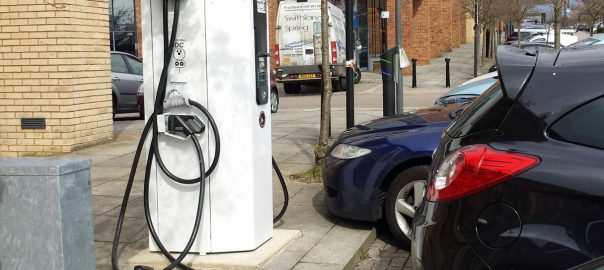
Electric car charging points: Why 1,000 new chargers probably still aren’t enough for all the EVs in the UK

Charge points will be built in nine local authorities across England but the rising use of EVs might outpace the installation of chargers

Drivers will have access to more than 1,000 new on-street charging points for their electric vehicles thanks to a £20m pilot scheme unveiled by the Government today.

BP Chargemaster Rapid Charger at Milton Keynes Charging Hub (Image: T. Larkum)

Charge points will be built in nine local authorities across England including Durham, Dorset, Kent, Lincolnshire, Barnet, North Yorkshire, Nottinghamshire, Suffolk, and Warrington.

The pilot comes as the number of electric vehicles on the road keeps soaring, and amid warnings of major gaps across the country after figures showed local governments were failing to make use of government funds to boost residential charging infrastructure.

Ministers said the new scheme was aimed particularly at those without off-street parking who cannot charge their electric car at home, as well as at drivers needing a quick charge while travelling.

Trudy Harrison, transport minister, said: “We want to expand and grow our world-leading network of EV charge points, working closely with industry and local government, making it even easier for those without driveways to charge their electric vehicles and support the switch to cleaner travel.”

AA president, Edmund King, said it was “essential” that more on-street chargers were delivered, adding: “This is one further positive step on the road to electrification.”

Read more: inews

It’s Time to Go Green!

If you would like to know more about Solar Panels and the PowerBanx range of home battery systems, and get a free instant quote, please complete our online form:

Dacia Spring 2021 (Image: Dacia.co.uk)

Shortage of electric cars set to derail sales boom: Supply issues delaying orders for up to TWO YEARS – we reveal waiting times for the most popular EVs

Sales of electric cars have been booming in recent years but restricted production of new models looks set to derail the nation’s switch to plug-in vehicles, according to a new report.

Drivers wanting to make the switch to an electric vehicle are facing long delays for cars to arrive, in some cases up to two years from the point of ordering, research by Electrifying.com has revealed.

The combination of surging demand together with a global shortage of semiconductor chips and other key components that has wreaked havoc on the wider automotive industry for the last two years is now starting to have a crippling impact on the availability of the latest electric models.


Dacia Spring 2021 (Image: Dacia.co.uk)

And we can tell you how long, on average, you might have to wait to get your hands on a brand new electric car if you placed an order for one at a dealership today.

Just four months ago, popular models including the Vauxhall Corsa-e, Mokka-e and the Renault Zoe were freely available, however, buyers now face waiting times of up to four months to get their hands on one, the website said.

At the more luxurious end of the market, consumers could be waiting for up to 18 months for an Audi E-tron, which costs from £63,000.

Comparatively modest models including the Kia EV6 (from £44,195) and Skoda Enyaq (£42,435) come with waiting times of more than a year.

The current climate has even led to Elon Musk’s Tesla brand pausing production altogether for the Model X and Model S in order to meet the higher demand for its smaller – and more affordable – Model 3 and Model Y.

Read more: thismoney

It’s Time to Go Green!

If you would like to know more about Solar Panels and the PowerBanx range of home battery systems, and get a free instant quote, please complete our online form: