Category Archives: Sales

Seven Reasons Why The Internal Combustion Engine Is A Dead Man Walking

The age of the Internal Combustion Engine (ICE) is over. Electric cars are the future. The transition has just begun, but the move from ICE vehicles to Electric will happen sooner and more quickly than most people suspect.

What are the factors that lead me to say this with such confidence?

1 China says so!

China is now the world’s largest car market (of the 86m cars sold in 2017, 30% (25.8m) were sold in China, compared to 20% (17.2m) in the US, and 18% (15.6m) in the EU).

Unsurprisingly, car manufacturers want to have access to this market. However, China has passed a law which requires any vehicle maker to obtain a new energy vehicle score of at least 10% by 2019, which rises to 12% by 2020, and on up to 20% of sales by 2025.

As a result of this announcement, all the major OEM’s have suddenly found EV religion. A slew of announcements has followed about the 10’s of billions of dollars or Euros they are investing in their EV development programs and the partnerships or huge investments they are creating to secure their battery supply chain. The CEO of Porsche has even gone on record as saying that after 2030 all Porsche cars will be 100% electric.

So, China has spoken, and the car manufacturers have listened. In the next 18 months, expect the number of electric vehicle models available to purchase, to increase significantly.

2 Battery Costs are falling

The main cost of an electric vehicle is the cost of the battery. These price of these batteries is falling significantly.

Lithium-Ion batteries cost $1,000 per kWh in 2010. By 2017 that cost had fallen to $200 per kWh, and it won’t stop there. At the Tesla shareholder meeting on June 5th of this year, Elon Musk stated that Tesla would be at $100 per kWh within 2 years. $100 per kWh is widely agreed to be the figure where EVs and ICE vehicles will have a comparable upfront purchase price.

So, by 2020 the cost of batteries will have fallen 90% in 10 years, and the price will continue to drop.

3 Battery capacity is increasing

Lithium-Ion batteries are increasing in energy density at a rate of 5-8% per annum. Mercedes has said that their fully electric Mercedes EQC, which will come to market in 2019, will have an expected range of 500km. While the Tesla Roadster, which launches in 2020, has a stated range of 1,000km. When Electric Vehicles have a range of 1,000km, it is the ICE vehicles which start to have a range problem.

Moreover, other battery technologies like solid-state batteries will come on stream giving us batteries that are cheaper, faster charging, and with even greater range still.

4 Electric car batteries have a very long life

Contrary to what many believe, the batteries in electric vehicles don’t degrade over time (or over miles/kilometers driven either).

Read more: Forbes
Low emissions cars could get green number plates

Environmentally-friendly vehicles could be awarded green number plates, signalling their virtue to other road users
Low emissions cars, vans and taxis could sport green number plates to highlight their environmentally friendly status, after the government launched a public consultation on the idea.

The Department for Transport (DfT) and the Office for Low Emission Vehicles (OLEV) say the public consultation will “seek views on whether green plates could work in the UK, and if so, what they should look like”, with the “eye-catching” plates potentially arriving in “the next few years”.

While details of what standards cars would have to meet in order to get a green plate are yet to be ironed out, electric cars such as the Nissan Leaf, and plug-in hybrids such as the Toyota Prius Plug-In are likely to be eligible for them. OLEV defines an Ultra-Low Emission Vehicle (ULEV) as a car that emits up to 75 grams per kilometre of carbon dioxide.

As well as sending an encouraging message out to other drivers, owners of qualifying cars could get free or discounted access to current or future low-emission zones.

Read more: Auto Express

Cheap Motoring

‘If you don’t believe in the electric car yet, you soon will’

Electric cars are the future of motoring, and they’ll soon be impossible for consumers to ignore, says Steve Fowler…

This is when the electric car starts to get really serious. This week Mercedes has revealed its first, bespoke, all-electric car to the world and later this month, Audi does the same. Rest assured, it’s not stopping there.

It all comes hot on the heels of Jaguar getting its I-Pace to customers before its rivals – and winning our Car of the Year prize in the process – and Hyundai launching an affordable all-electric small SUV with a real-world range of 300 miles.

Cheap Motoring

Of course, cars like the Nissan Leaf, Renault Zoe and Tesla Models S and X have been with us for a while, but it’s going to take more mainstream and premium brands to come to the party to make wary buyers really sit up and take notice.

The biggest barrier to EV ownership remains range – unfairly so, these days. The perception of ‘under 100 miles’ will soon change as closer to 300 miles becomes the new norm, while interest will increase as more and more appealing (if not particular attractive) cars like the EQC are launched.

Mercedes is going at it with real gusto – EQ is set to become a Mercedes brand in the same way AMG and Maybach are. EQ stands for ‘electric intelligence’ (yes, that’s what I thought, too). It also stands for a range of electrified models that’ll line up against rivals from every other maker in the coming years.

Read more: Auto Express

Electric vehicle sales surge in UK as fuel prices rise

Sales of electric vehicles reached a record high last month, accounting for one in every 12 new cars purchased in the UK.

The Society of Motor Manufacturers and Traders (SMMT) said hybrid, plug-in hybrid and pure electric cars made up 8% of the overall market.

The number of total vehicles registered was up 23% on the same period in 2017.

But SMMT’s chief executive warned “it would be wrong to view the market as booming”.

“August is always a small month in new car registrations ahead of the important plate-change month of September,” Mike Hawes said.

Last month 7,489 electric and alternative fuel vehicles were sold, up from the 3,968 sold in August of 2017. In total 94,094 cars were sold last month.

While calling the surge in electric sales an “extraordinary achievement”, Ian Gilmartin of Barclays urged caution, alluding to the fact that the British car industry has had a bruising few months, suffering from a 4% decline in sales so far this year.

“Regulatory changes that came into force at the start of September led to some very generous deals being offered in August which will have brought sales forward,” he added.

“All eyes will now be on next month’s data.”

The boom in plug-in sales comes as the cost of petrol and diesel continues to creep upwards, with the average price at the highest level since July 2014.

Pump prices have gone up for eight of the last 12 months, according to the RAC, with both fuels 13p more expensive than this time last year.

Read more: BBC

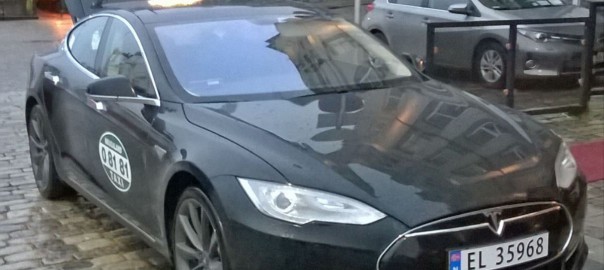
Tesla Model S Taxi in Norway (Image: J. Tisdall)

Electric vehicles make up nearly half the market in Norway

Electric vehicles make up only a small percentage of the global fleet of cars, but perhaps not for much longer. In some countries sales of EVs are soaring and overtaking sales of traditional cars. It’s no longer hard to imagine that the next generation will view the internal combustion engine in much the same way as we view the horse and cart – a relic of times past.

The Nordic countries are racing ahead when it comes to electric transformation. For instance, of all the cars sold in Norway this year, almost half were electric.

By June 2018, 47% of all new cars sold were either plug-in hybrid or battery powered electric vehicles.

Tesla Model S Taxi in Norway (Image: J. Tisdall)

According to the Norwegian Institute of Transport Economics, sales of electric vehicles in fact reached a tipping point in 2014. That year, total vehicle ownership increased, but sales of combustion engine vehicles declined. Electric vehicle sales made up the balance.

Generous incentives

Since the 1990s, Norway has had a very generous incentive system to encourage the proliferation of electric cars.

Drivers benefit from free parking and free charging in public places and no annual road tax.
Road toll charges are waived and electric cars are allowed to use bus lanes.

Norway also has the world’s largest fast-charging station, capable of charging up to 28 vehicles at a time in around half an hour.

Oslo is known as the EV capital of the world because of its high proportion of electric vehicles.

Read more: We Forum

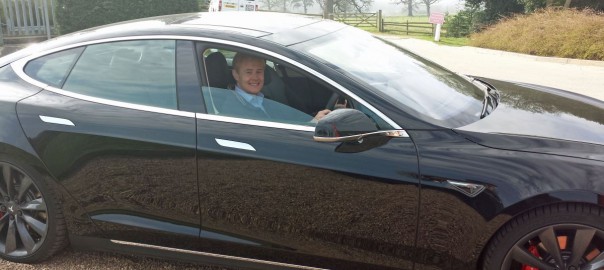
A classic Tesla grin (Image: T. Larkum)

Study identifies distinct groups interested in types of electric vehicles

Drivers considering plug-in hybrid vehicles with a gasoline backup are most interested in economic benefits while those gravitating toward battery-electric vehicles have stronger environmental concerns, according to a study led by a University of Kansas transportation policy scholar.

The research has identified distinct profiles of people considering newer electric vehicle technologies showing the two types of vehicles—one that offers gasoline as a safety net and another that relies solely on battery charging—are very different in the eyes of consumers.

A classic Tesla grin (Image: T. Larkum)

“Our findings inform the misconception and show that electric vehicles are not a homogeneous entity,” said the study’s lead author Bradley Lane, associate professor in the KU School of Public Affairs & Administration. “There are distinctive profiles of potential users for whom a plug-in hybrid is attractive and another for whom a battery electric is attractive. And these are two very distinct groups, similar to how there is a group of users who are attracted to a sport-utility vehicle and a separate group attracted to an economy car. We have shed more light on what factors influence how people make these decisions.”

The journal Transportation Research Part D recently published the group’s findings. Lane’s co-authors are Jerome Dumortier of the School of Public and Environmental Affairs at Indiana University-Purdue University Indianapolis; Sanya Carley and John Graham, both of the School of Public and Environmental Affairs at Indiana University; Saba Siddiki of the Maxwell School of Citizenship and Public Affairs at Syracuse University and Kyle Clark-Sutton of RTI International of Research Triangle Park in North Carolina.

The findings could be important as automakers seek to market more electric vehicles and for national, state and local policymakers as they consider changes and any potential incentives for the production and use of the different types of electric vehicles. Much of the recent incentives date back to the 2009 American Recovery and Reinvestment Act that Congress passed in the Obama administration’s early days.

“After about 10 years into significant policy and investment, there are still a lot of unknowns about these vehicles from the viewpoints of the consumers,” he said.

But the advancement of  still represents one of the most notable developments of surface transportation in recent decades. With much of the petroleum-based resources being finite and located in politically unstable regions, there likely will continue to be a push for alternative fuels for internal combustion engines, Lane said.

Read more: Phys.org

Total Global EV Sales to Hit 4 Million This Week

Adding the next million electric vehicles will take just over six months, according to Bloomberg NEF.

Buckle up. Electric vehicle sales are shifting into high gear.

Cumulative passenger EV sales worldwide are set to hit 4 million this week, according to Bloomberg New Energy Finance. The next million EV mark could be reached slightly later if Tesla Model 3 sales slow down, the firm noted. But even then, the milestone would still be well within sight.

Including electric buses, the 4 million threshold has already been reached. At the end of June, there were more than 3.5 million passenger EVs sold globally and about 421,000 electric buses, bringing the total number of EVs sold to 3.97 million.

Sales were driven in large part by China, which is responsible for around 37 percent of passenger EVs sold around the world since 2011 and around 99 percent of e-buses.

EV sales are accelerating, Bloomberg NEF figures show. It took 17 months to go from the first million to the second million EV sales milestone, and just six months to go from the third million to the fourth million milestone.

Bloomberg NEF projects it will take just over six months to sell the next million EVs, reaching the 5 million milestone in March 2019.

Read more: Greentech Media

Go Ultra Low members boast 15 ULEVs across a range of segments (Image: OLEV)

Automakers Try Hard To NOT Sell Electric Cars

Automaker executives from Ford, GM, Nissan, and Toyota are fond of saying that not very many consumers want electric cars. They sometimes claim they could produce many more electric cars, but customers are not asking for them. (The execs somehow ignore the hundreds of thousands of orders Tesla has pulled in for the Model 3.)

Aside from giving me wicked cognitive dissonance via the completely incorrect claim that consumers don’t want electric cars, the insidious thing is that these automakers have hardly used traditional means of drumming up demand — aka advertising — to try to persuade buyers to want their electric cars.

Go Ultra Low members boast 15 ULEVs across a range of segments (Image: OLEV)
ULEVs across a range of segments (Image: OLEV)

Automakers have huge advertising budgets. Last I heard, the industry spends more money on advertising than any other industry in the US or worldwide. The automakers push SUVs and pickup trucks on you incessantly. They want to convince you to buy non-electric gas guzzlers. Yet, a new study from the Northeast States for Coordinated Air Use Management (NESCAUM) (NESCAUM) indicates that “six major automakers in the U.S. (General Motors, Ford, Toyota, Nissan, Volkswagen, and FiatChrysler) are spending almost nothing to advertise their electric vehicles,” as the Sierra Club summarizes it.

Normally, I wouldn’t say the automakers are trying to not sell electric cars. I’d just say that they aren’t trying very hard to sell the EVs. However, when you look at EV advertising compared to non-EV advertising from these firms, it becomes more visually obvious — the companies are trying hard to sell gasmobiles while not encouraging people to buy their electric cars. That essentially means they are trying to not sell electric cars.

Furthermore, it’s clear that it’s not just one company that’s lagging. Across the board, traditional automakers spend almost nothing to shape the values and product interests of consumers in a positive way.

Read more: Clean Technica

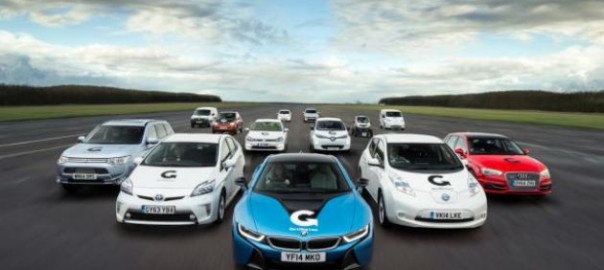
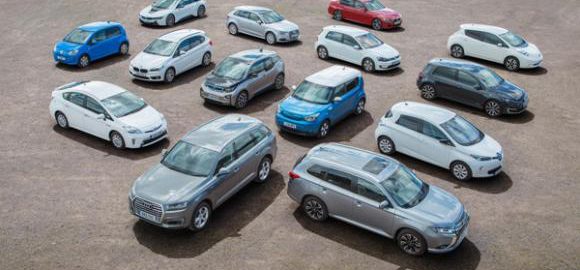
Electric Car Line-up (Image: Go Ultra Low)

Electric cars exceed 1m in Europe as sales soar by more than 40%

Milestone reached nearly a year after China but ahead of the US

There are now more than a million electric cars in Europe after sales soared by more than 40% in the first half of the year, new figures reveal.

Europe hit the milestone nearly a year after China, which has a much larger car market, but ahead of the US, which is expected to reach the landmark later this year driven by the appetite for Tesla’s latest model.

Between January and June around 195,000 plug-in cars were sold across the EU, Iceland, Liechtenstein, Norway and Switzerland, a 42% increase on the same period a year before.

Electric Car Line-up (Image: Go Ultra Low)

With growth speeding up, the cumulative total is expected to hit 1.35m by the end of the year, according to industry analysts EV-Volumes.

Viktor Irle, a market analyst at the group, said: “A stock of one million electric vehicles is an important milestone on the road to electrification and meeting emission targets but it is of course not enough.”

Read more: The Guardian

Electric shock! Diesel cars to be overtaken by electrics by July 2020

New forecasting research, based on analysis of trends revealed in Society of Motor Manufacturers and Traders (SMMT) sales data, predicts that electric car sales will surpass those of diesel in July 2020.

Diesel cars have continuously slumped following the VW emission scandal last year and the government announcement that they will be banned by 2040. With Nissan and Toyota stating that they will begin phasing out diesel cars from 2021and latest data showing that sales have fallen by 37.2% over the last year, it appears the end could be near for the fuel type.

Meanwhile the Government is introducing policies to support the growth of the Alternative Fuel Vehicles (AFV’s) market and sales of electric cars increased by 5.7% last year.

Read more: London Loves Business