Category Archives: Sales

Tesla Model 3 (Image: Tesla.com)

2019 was the year electric cars grew up

Electric cars had their biggest year ever in 2019, even as storm clouds gathered over their future.

The numbers were huge. Automakers committed $225 billion to electrification in the coming years. Electric vehicles (EVs) grabbed 2.2% of the global vehicle market over the first 10 months of 2019 as a slew of new models hit the road. Ford, which has yet to sell an all-electric vehicle, showed off the upcoming electric Mustang Mach-E (a crossover SUV) and an electric F-150 pick-up. Tesla, of course, shocked everyone by turning a profit and previewing a strange future with its “cybertruck,” potentially the Hummer for Millenials.

Tesla Model 3 (Image: Tesla.com)

But it wasn’t all rainbows. Outside of China and Norway, where car buyers enjoy generous incentives, the market is still driven by early adopters rather than the mainstream. EV sales for the year have been sluggish. While some states such as California have seen EVs capture 8% of new sales (all-electric and plug-in hybrid), the rest of the country has not yet caught on. After doubling between 2017 and 2018, EV market share in the US had crept up from 1.6% last March to 1.8% a year later (pdf).

That hasn’t slowed automakers’ ambitions. They’re betting it’s better to get ahead of the now-inevitable shift to EVs than play catch up to established rivals and Tesla. But if demand fails to pick up the big bet may mean consolidation and bankruptcy for some.

Here are the highlights from 2019.

EVs sold even as the car market dipped. The Model 3 can claim most of the credit.

The year started off strong for electric cars. After selling a record 361,000 EVs in 2018, automakers foresaw a robust 2019. Yet for carmakers not named Tesla, sales sputtered out mid-year. Sales for the three dozen or so other EV models on the market declined by an about 20% in 2019 compared to a year earlier, while Tesla’s Model 3 sales tripled between January and September. Tesla represented an astonishing 78% of US EV sales as of October, estimated CleanTechnica, delivering about 123,000 Model 3s, and 30,000 Model S and Model X vehicles. But EVs proved to be a rare bright spot amid what appears to be a long-term decline in global auto sales now entering its third year, what industry analysts call “peak car.”

Read more: Quartz

It’s Time to Go Green!

If you would like to know more about Solar Panels and the PowerBanx range of home battery systems, and get a free instant quote, please complete our online form:

Cheap Motoring

Why manufacturers aren’t delivering your EV sooner

If you have ordered an existing model in the past months, it’s unlikely you will pick it up at the dealer’s before January.

If you have put your name down for a model that is yet to be launched, you will probably have to wait until the end of 2020. What’s going on?

Getting electric vehicles to market has always been troublesome for Western OEMs. From the first-gen Renault Zoé to the Tesla Model 3 and the Audi e-tron: they have all arrived on the market later than planned. Somehow, manufacturers have a tendency of promising more than they can deliver, perhaps underestimating the challenges behind developing an EV and getting the supply chain and factories ready to build them.

Cheap Motoring

It seems that the Asian manufacturers have been better at managing this. It should hardly come as a surprise that in the land of affordable EVs with a decent range, it’s the Koreans and Japanese that rule. Hyundai Ioniq and Kona, Kia Niro, Nissan Leaf: they head the electric vehicle sales charts in Europe. They give the nearly pre-historic, totally obsolete VW e-Golf and equally retirement-deserving BMW i3 a run for their money.

Super credits

Whichever mass-production electric model you may have ordered in the past months, chances are you won’t see your EV arrive at the dealer’s before the first months of 2020. The same goes for the premium crossovers that go by the name Audi e-tron, Jaguar I-Pace or Mercedes EQC, incidentally. Is battery supply the issue, or is there more at play?

There are indeed only a handful of suppliers – mainly Chinese, Korean and Japanese – on the global lithium ion cell market and they are calling the shots. If you want cells as an OEM, you either pay a hefty price, or you wait until prices come down. The longer you wait, the cheaper you can buy, essentially. Guess which option most OEMs choose?

There is another, more important thing obstructing the delivery of EVs: the so-called super credits. Starting in 2020, every vehicle that emits less than 50g/km counts double in the calculation of an OEMs weighted average CO2 emissions. The average target is 95g/km and needs to be reached by 2021. No wonder that OEMs and their importers are postponing the delivery of as many EVs as possible.

Read more: Fleet Europe

It’s Time to Go Green!

If you would like to know more about Solar Panels and the PowerBanx range of home battery systems, and get a free instant quote, please complete our online form:

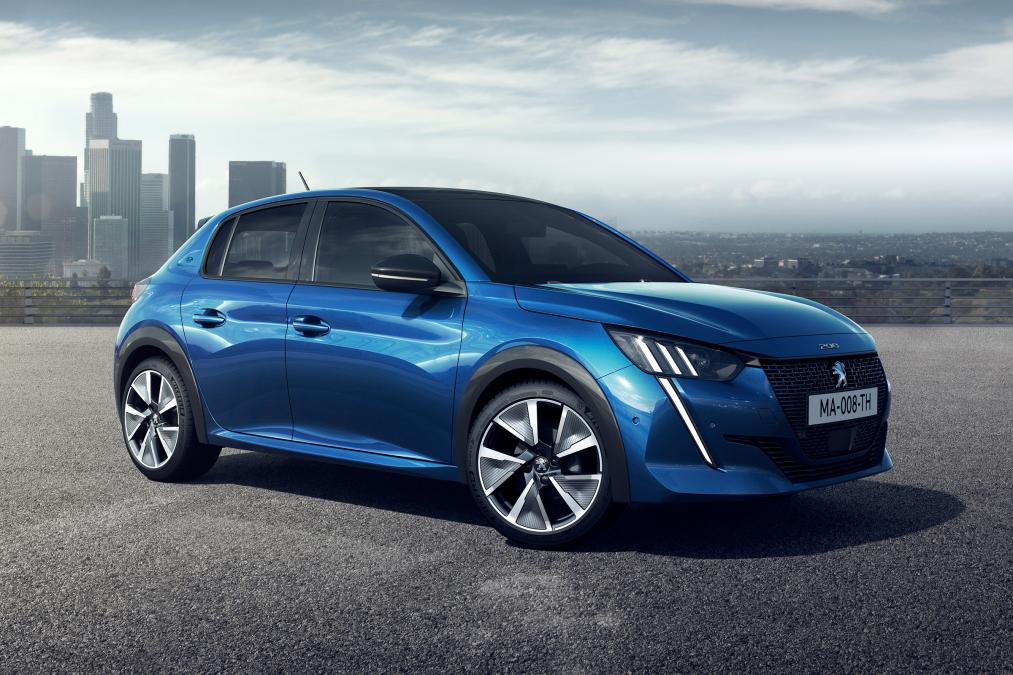
Peugeot e-208 (Image: Peugeot)

2020 set to be year of the electric car as sales soar

Experts are predicting that 2020 will be the year of the electric car as sales continue to rise.

Figures released today by the Society of Motor Manufacturers and Traders (SMMT) show that the number of battery-electric vehicles registered in November increased by 228.8 per cent compared to the same month in 2018 – with over 4500 new EVs hitting the roads.

So far this year, nearly 14,000 electric cars have been registered in the UK, compared to 38,500 plug-in hybrids and nearly 80,000 hybrids. Mild hybrids have also seen a dramatic increase in popularity, with registrations of mild-hybrid diesels increasing by more than 450 per cent last month.

Peugeot e-208 (Image: Peugeot)

Car manufacturers are rushing to launch new electric cars in a bid to meet new emission targets set by European Union legislators. By 2021, they face strict fines if their average CO2 emissions for each car exceed 95g/km. By selling more electric vehicles (with zero tailpipe emissions) and hybrids (with reduced tailpipe emissions), average CO2 emissions will drop.

Kia recently admitted that it has 3000 customers on a waiting list for the e-Niro – something it says it intends to clear in the first half of 2020, despite previously having to halt orders as it couldn’t keep up with demand.

Volkswagen is set to launch its new electric ID range with the ID.3 hatchback, while the Volkswagen Up, SEAT Mii and Skoda Citigo city cars are also going electric-only for 2020. Vauxhall’s new Corsa is available as a pure-electric model, as is the closely-related Peugeot 208.

Read more: Honest John

It’s Time to Go Green!

If you would like to know more about Solar Panels and the PowerBanx range of home battery systems, and get a free instant quote, please complete our online form:
Plug-In EV Car Sales In Europe Up 46% In October 2019

Plug-in hybrids entered a higher gear in Europe again, so the joint market share of BEVs/PHEVs went up to 4%.

While the Chinese and North American markets are experiencing (kind of temporary) a decrease of plug-in electric car sales, Europe moves forward with healthy growth rate.

In October, some 48,219 plug-ins were sold (up 46% year-over-year) according to EV Sales Blog, which notes also that PHEVs increased 75% almost matching BEVs, which increased 26%.

Together, all plug-ins hold roughly 4% of sales for the month, which is quite an achievement.

After ten months of 2019, sales amounted to over 429,250 at an average of 3.2% market share (2.0% or two-thirds for BEVs).

Read more: Inside EVs

It’s Time to Go Green!

If you would like to know more about Solar Panels and the PowerBanx range of home battery systems, and get a free instant quote, please complete our online form:

Best company cars to take advantages of the Benefit-in-Kind changes with in 2020

While Benefit-in-Kind has always worked in the favour of electric and plug-in hybrid models, it’s about to get much better for these vehicles from March 2021.

That’s because from 2020, the government is completely scrapping Benefit-in-Kind (BiK) for all-electric models – meaning that there has never been a better time to get behind the wheel of an EV as your company car.

Let’s have a look at the five best options available today.

Nissan Leaf

As one of the UK’s most popular electric cars on sale, the Sunderland-built is clearly doing something right to appeal to buyers. But aside from private buyers, the Leaf has long had lots of appeal to companies – featuring in fleets across the country.

And from April 2020, that appeal will elevate dramatically when BiK drops from its current 16 per cent rate. So, while someone in the 20 per cent tax bracket will currently pay £1,048 per year in company car tax, that will soon drop to zero.

BMW i3

If you want to convey a more upmarket image from your company car, the funky and unique BMW i3 is a superb choice. From its zippy powertrain through to its interior made from recycled materials, this is a fantastic EV.

And from next year it will be an excellent electric car to choose, whereby the average annual company car tax bill for an i3 will drop from £1,129 per year to absolutely nothing. It’s worth noting that, as with all the other models here, the zero per cent BiK applies to those paying tax at 20 and 40 per cent as well.

Audi e-tron

If your company is a bit more generous, or you need something a bit larger than the models here, the premium Audi e-tron SUV is a superb choice. Offering seating for five, a generous boot and a wonderfully techy interior, this is a true statement model.

Read more: Car Keys

It’s Time to Go Green!

If you would like to know more about Solar Panels and the PowerBanx range of home battery systems, and get a free instant quote, please complete our online form:

Making Electric Vehicles More Accessible in the UK Can Save Low-Income Households Millions

New reports from Environmental Defense Fund Europe and Green Alliance suggest the incoming government should prioritise steps to bring down electric vehicle costs

(LONDON – 11 November, 2019) Electric vehicles (EVs) can not only help clean the air and cut carbon emissions but also save millions of pounds for people with lower incomes, if the incoming Government takes proactive steps to bridge the affordability gap between EVs and fossil-fuel vehicles. According to two reports released today by Environmental Defense Fund Europe (EDFE) and by Green Alliance in conjunction with Frontier Economics and Element Energy, with targeted action, lower-income households could save nearly £350 million in total every year, with cost savings reaching £3,000-£5,000 per household over the time of owning a car.

Compared to petrol and diesel cars, EVs have zero combustion emissions, and are cheaper on a total cost of ownership basis. Yet, the reports show there are significant barriers preventing low-income households from accessing the EV market. By putting in place targeted policies, the Government can ensure those on lower incomes can benefit from electric transport sooner, as well as speed up the improvement of air quality.

“People with lower incomes bear the brunt of pollution from cars, while being least able to afford a clean alternative,” said Baroness Bryony Worthington, Executive Director of EDFE. “The good news is the Government has several tools at its fingertips to bring down the cost of electric vehicles and make clean transport more inclusive.”

Households in the lowest two income deciles made up just 4% of EV owners from 2015-2017, but more than 10% of internal combustion engine vehicle owners. On the other hand, those in the top 20% income range buy over half of the EVs sold annually, but only around a quarter of internal combustion engine vehicles.

Read more: EDF

Electric Renault Zoe is the UK’s fastest selling used car

The latest findings from the Auto Trader Fastest Selling Index reveal that second-hand car buyers are clamouring for EVs.

The Renault Zoe is particularly in demand. Renault’s long-serving electric city car takes up three of the top four fastest-selling spots. Zoes dating from 2017, 2016 and 2015 are selling, on average, in no more than 26 days. The 2016 Seat Alhambra diesel (automatic) takes third place among them.

It’s the third time that an EV has come top in the fastest-sellers chart. Last time, it was the Nissan Leaf in March 2019. Before that, it was the Zoe in July 2018. This is the first time, however, that an electric vehicle has taken first and second spots.

Overall, the MPVs and SUVs that normally dominate the top of the table have been deposed, with smaller and more fuel-efficient vehicles breaking into the top 10. Examples include the Volkswagen Polo, Toyota Aygo and Volkswagen Up.

“This month’s result is hugely significant as it marks the first time a pure electric has taken both the first and second spot on our list of fastest turners, and it’s only the third time since we’ve been tracking the market that one has been named the overall fastest,” said Auto Trader’s director of commercial products, Karolina Edwards-Smajda.

Read more: Motoring Research

Electric car sales were dramatically boosted in October as total UK car sales fall

ELECTRIC car sales were up again in October with a massive 151.8 percent boost from figures released 12 months ago as consumers jump to purchase eco-friendly vehicles.

New electric car registrations were boosted from just 1,256 in October 2018 to 3,162 last month. New sales of mild hybrid electric vehicles saw an incredible 378.1 percent rise in October 2019 compared to last year as sales of hybrid electric vehicles were also up 28.9 percent.

Battery electric vehicle sales are now up 125.1 percent year-on-year with almost 30,000 models sold and registered so far in 2019.

The Society of Motor Manufacturers and Traders (SMMT) data also revealed alternative fuelled vehicles now made up 9.9 percent of the overall UK car sales this month in a new record.

A total of 14,231 registrations beat the previous market share record of 6.9 percent.

Plug-in hybrid sales were down a minor 1.7 percent, while support for traditional vehicles fell away.

Last month’s data showed petrol vehicle sales were down 3.2 percent on figures from October 2018.

Diesel sales are in terrible decline and plummeted to a 28.3 percent reduction on data from twelve months ago. The drop is the 31st consecutive month diesel sales have been in negative figures.

Read more: Express

More than a fifth of motorists plan to go electric for their next car

Electric overtakes diesel to become second-most popular propulsion choice

More than a fifth of motorists plan to buy an electric vehicle as their next car, overtaking diesel to become the nation’s second-favourite choice of powerplant.

While petrol continues to be the most popular choice, a survey of 7,205 motorists on behalf of electric vehicle website Driving Electric found 22 per cent intended to buy an EV next, compared with 19 per cent for diesel, 16 per cent for hybrid, and 37 per cent for petrol.

This indicates a shift in attitudes compared with a similar survey of 13,289 motorists two years ago by the site’s sister publication Auto Express. Back then, just 10 per cent of buyers were said to be considering electric vehicles.

Read more: Express and Star