Category Archives: Electric Cars

News and reviews of the latest electric cars (full electrics and plug-in hybrids).

Conservatives outline fresh £500 million pledge for electric vehicles

A new Conservative government would plough an additional £500 million into EV charging infrastructure and new electric vehicles, ensuring there was a chargepoint within 30 miles of each home in England and Wales.

That was the central pledge within Conservative leader Boris Johnson’s latest election speech, delivered late Wednesday afternoon, alongside increased investment in R&D and a ramp-up of offshore wind development.

Campaigning for next month’s General Election started in earnest this week, with Johnson delivering a speech at the London Electric Vehicle Company’s manufacturing facility in the West Midlands, a speech billed as one highlighting the Tories’ proposed ‘Green Revolution’.

“Here in the West Midlands – the home of the first industrial revolution – we are seeing a new industrial revolution, a green industrial revolution, creating thousands of jobs of environmentally sustainable technologies and thousands of jobs,” said Johnson.

Much of the talk centred on the damage Brexit hesitancy has caused for the energy sector and more broadly investment, saying “we have to get Brexit done because it is also the best thing for the economy.”

While not explicitly mentioned within Johnson’s speech, further detail supplied by the Conservative Party detailed an additional £500 million of funding for electric vehicles and associated infrastructure, coming on top of the £400 million Charging Infrastructure Investment Fund (CIIF) that is up and running.

Read more: Current News


Get The Right PowerBanx For Your Home

If you would like to know more about Solar Panels and the PowerBanx range of home battery systems, and get a free instant quote, please complete our online form:
SEAT Mii Electric (Image: Seat.co.uk)

SEAT Mii electric 2020 Road Test

At £19,300 (after the £3,500 Plug In Car Grant) the SEAT Mii electric makes a lot of sense to a lot of people, not least the people who actually make it.

It’s a 5-door 4-seater with a maximum fair weather range of 162 miles, which is more than enough for most commuters, suburban drivers and the elderly and disabled for whom a car is their legs.

SEAT Mii Electric (Image: Seat.co.uk)

More importantly, with zero tailpipe emissions, it cuts the maker’s corporate average CO2 to a level that reduces EC fines and avoids some of the 10%-20% price increases that would otherwise have to be passed on to carbuyers generally from 2020 onwards. The more SEAT Mii electric EVs, Skoda Citgo electric EVs and e-Ups that VAG can sell, the less it has to charge for Porsches, Lamborghinis and Bentleys. The entire Mii, Citigo and most Up production line has been switched from petrol engined cars to EVs. In fact VAG is going all out to reduce its corporate carbon footprint with the Golf sized ID3; Golf VIIIs, new model Octavias and Q3 48v mild hybrids; Golf, Passat and Q5 PHEVs. A lot of vehicles.

The Mii electric comes decently trimmed and equipped with electric front windows, central locking, heated front seats, immobiliser as well as side and curtain airbags as standard. All have includes Climatronic a/c, TomTom satnav, lane assist, traffic sign reminder, hill hold and ‘SEAT drive profile’ (normal, eco, eco+).

Smartphone integration with the Drive Mii app includes a universal smartphone cradle that enables you to use the satnav on your phone such as TomTom® in the Drive Mii App, Google Maps, Waze or whatever you want. You also get handwriting recognition, Eco Trainer, USB port and an AUX-in port.

Read more: Honest John


Get The Right PowerBanx For Your Home

If you would like to know more about the PowerBanx range of home battery systems, and get a free instant quote, please complete our online form:

Tesla Model 3 (Image: Tesla.com)

Elon Musk says Brexit made him decide against Tesla electric car Gigafactory in UK

‘Brexit made it too risky to put a Gigafactory in the UK’

Electric car pioneer Elon Musk has picked Germany for his new factory because of Brexit, embarrassing Boris Johnson as he prepares to pledge a “clean-energy revolution”.

The prime minister is due to make a televised speech at an electric-car plant in the West Midlands – but the visit risks being overshadowed by Mr Musk’s change of heart.

Tesla Model 3 (Image: Tesla.com)

At an award ceremony in Germany, the entrepreneur announced: “We’ve decided to put the Tesla Gigafactory Europe in the Berlin area.”

And speaking to Auto Express, he blamed Brexit uncertainty for his decision to drop plans to build a research and development base in the UK, which will now also go to Germany.

“Brexit made it too risky to put a Gigafactory in the UK,” Mr Musk said, referring to Tesla’s new battery and electric vehicle plant.

Mr Johnson has claimed investors are ready to unleash development plans in the UK if his Brexit deal is passed – but is facing renewed criticism that it will be a hard Brexit that will deter companies.

Read more: Independent


Get The Right PowerBanx For Your Home

If you would like to know more about the PowerBanx range of home battery systems, and get a free instant quote, please complete our online form:
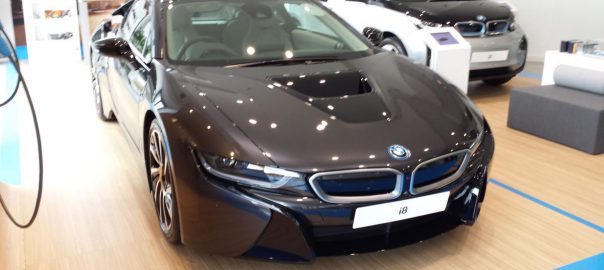
BMW i8 in Sophisto Grey (Image: T. Larkum)

‘No way around electrification,’ BMW says

Consumers are increasingly turning to electric vehicles – and they’re liking it, said BMW’s chief lobbyist in Europe, calling on policymakers to accelerate charging infrastructure deployment to support the roll-out of electric mobility on a mass scale.

“Our customers, what do they do? The good news is that they are starting to buy electric vehicles,” said Andreas Klugescheid, head of external affairs at the BMW Group, referring to plug-in hybrids as well as fully electric vehicles.

The EU’s newly-adopted CO2 emission standards for cars mean “there is no way around electrification,” he told the audience at a EURACTIV event, held in the automaker’s flagship Brussels store on Wednesday (6 November).

BMW i8 in Sophisto Grey (Image: T. Larkum)

In contrast to rival carmaker Volkswagen, BMW has opted for a softer transition to electric mobility. While Volkswagen plans to build 22 million EVs over the next ten years, BMW has hedged its bets on plug-in hybrids as well as fully-electric vehicles. And Klugescheid didn’t rule out other alternatives, saying hydrogen and eFuels will also play a key role in decarbonising transport, especially for long-haul, heavy-duty trucks.

But when it comes to personal cars, the battery electric vehicle stands out as a clear winner.

“People start to buy these vehicles. And they’re happy with them,” Klugescheid said. But the infrastructure does not follow customers’ expectations, he warned, calling on policymakers to accelerate deployment of charging points across Europe.

“The next charging point is 30km away from our house,” Klugescheid said. “And not everybody owns a house with a good charging infrastructure,” he pointed out. “So the message is clear: infrastructure is a topic” if Europe wants electric vehicles to be adopted on a mass scale.

Things are moving forward, however. On Monday, German automakers met with top government representatives and agreed to roll out 1 million charging points for electric vehicles across the country by 2030.

Read more: Euractiv

Honda e Electric Car (Image: Honda.co.uk)

Honda works on second EV, quits diesel, and puts hydrogen on hold

There’s no doubt that Honda fell behind on electric cars. Beat up the company as much as you like about its meager EV offerings to date.

But also consider signs that the Japanese automaker is slowly correcting its course. In addition to introducing the small Honda E in Europe next year, Honda is working on a second EV for about 2022. Other small victories include quitting diesel, putting hydrogen indefinitely on hold, and agreeing with California’s emissions standards.

In late October, at Honda’s “Electric Vision” event in Amsterdam, the company said it was “electrifying” its entire product line, which mostly means hybrids. But hold on. Tom Gardner, senior vice president of Honda Motor Europe Honda, also said, “We will bring further battery-electric products to the market.” The company is starting to talk the talk, a good first step.

The retro all-electric Honda E city car will arrive on European roads in summer 2020. Unfortunately, the $33,000 small EV with a 35.5-kWh pack (offering about 125 miles of range) is not coming to the United States.

Honda e Electric Car (Image: Honda.co.uk)

Honda will focus its EV efforts first on Europe, where electric-car demand is on the rise. Gardner told Driving.co.uk that the electric car market in the UK grew from 2% in 2015 to 7% or 8% today. “It’s beginning to be significant,” he said.

European emissions regulations are also a chief motivator. “The pace of change in regulation, the market, and consumer behavior in Europe means that the shift toward electrification is happening faster here than anywhere else in the world,” Gardner said.

Read more: Electrek

Red Tesla Model S (Image: T. Larkum)

James May: Cars Have to go Electric, Whether You Like It or Not

“I’m convinced that cars ought by right to be driven by electric motors”

WHILE JEREMY Clarkson has gone on record to say he will never, ever buy an electric car, his colleagues on The Grand Tour appear to be more open-minded about motoring minus petrol or diesel.

James May in particular has started to stand out as an especially big fan of zero emission vehicles. As well as owning an assortment of them, including Tesla Model S and leasing a Toyota Mirai hydrogen fuel-cell car (which is also powered by an electric motor), and testing a new electric superbike, he has gone on the record to say that today’s crop of EVs are “already as exciting as petrol-powered cars“.

Red Tesla Model S (Image: T. Larkum)

In fact, writing in today’s Sunday Times, May goes as far to suggest cars will be considerably better once the motoring industry finally decides to ditch fossil fuels for good.

He writes: “We’ve known since we have had the word “car” that the electric motor (which, by the way, predates the internal combustion engine) makes more sense. It’s light, compact, smooth-running, famously reliable, has excellent power and torque characteristics, is easy to produce and is virtually maintenance-free. It’s a bit of a 19th-century no-brainer.”

If those comments weren’t enough for dyed-in-the-wool petrolheads to get rubbed up the wrong way, May adds that he’s convinced cars “ought by right to be driven by electric motors”.

Read more: Driving

Making Electric Vehicles More Accessible in the UK Can Save Low-Income Households Millions

New reports from Environmental Defense Fund Europe and Green Alliance suggest the incoming government should prioritise steps to bring down electric vehicle costs

(LONDON – 11 November, 2019) Electric vehicles (EVs) can not only help clean the air and cut carbon emissions but also save millions of pounds for people with lower incomes, if the incoming Government takes proactive steps to bridge the affordability gap between EVs and fossil-fuel vehicles. According to two reports released today by Environmental Defense Fund Europe (EDFE) and by Green Alliance in conjunction with Frontier Economics and Element Energy, with targeted action, lower-income households could save nearly £350 million in total every year, with cost savings reaching £3,000-£5,000 per household over the time of owning a car.

Compared to petrol and diesel cars, EVs have zero combustion emissions, and are cheaper on a total cost of ownership basis. Yet, the reports show there are significant barriers preventing low-income households from accessing the EV market. By putting in place targeted policies, the Government can ensure those on lower incomes can benefit from electric transport sooner, as well as speed up the improvement of air quality.

“People with lower incomes bear the brunt of pollution from cars, while being least able to afford a clean alternative,” said Baroness Bryony Worthington, Executive Director of EDFE. “The good news is the Government has several tools at its fingertips to bring down the cost of electric vehicles and make clean transport more inclusive.”

Households in the lowest two income deciles made up just 4% of EV owners from 2015-2017, but more than 10% of internal combustion engine vehicle owners. On the other hand, those in the top 20% income range buy over half of the EVs sold annually, but only around a quarter of internal combustion engine vehicles.

Read more: EDF

Electric cars with the longest range

EV range is a hot topic right now so we’ve listed the new electric cars with the longest range you can buy now…

The first question most people have when a new electric car comes out is how much range it has. ‘Range anxiety’ is a phrase often thrown around to describe the fear EV owners could face when driving their electric car with a level of remaining battery charge that may not get them to their destination. As a result, there’s a certain kudos attached to the electric cars with the longest range as well as a valuable competitive advantage manifested as electric car buyers are attracted to them. If you’re wondering which electric car has the longest range, you can find out below.

Manufacturers have quickly realised the importance of range to existing petrol or diesel car owners and now some electric cars can travel just as far on a single charge as an internal combustion engined (ICE) equivalent can manage on a full tank – all the while producing zero emissions at a cheaper running cost to the owner. The fact that most drivers will very rarely travel the kind of distances in a single day that would deplete a modern electric car’s battery is seen as less important than the need to reassure motorists considering the switch to the new technology.

There’s no doubt that the UK’s charging infrastructure still remains a stumbling block for electric cars and their owners. Charging points are increasing in number across the country and charging times are dropping but the chargers that there are are still often in use compounding the fact that recharging an EV is still noticeably slower than filling up a petrol or diesel vehicle.

With increasing investment from the Government and charging infrastructure providers to improve EV charging options coupled with the appeal of emission-free motoring and cheaper running costs than ICE vehicles, electric cars are more appealing than ever. Manufacturers too are in a race to develop enhanced batteries and electric car technology that will increase the range available in electric cars to the point that range anxiety will become a thing of the past.

Read more: Auto Express

Electric Renault Zoe is the UK’s fastest selling used car

The latest findings from the Auto Trader Fastest Selling Index reveal that second-hand car buyers are clamouring for EVs.

The Renault Zoe is particularly in demand. Renault’s long-serving electric city car takes up three of the top four fastest-selling spots. Zoes dating from 2017, 2016 and 2015 are selling, on average, in no more than 26 days. The 2016 Seat Alhambra diesel (automatic) takes third place among them.

It’s the third time that an EV has come top in the fastest-sellers chart. Last time, it was the Nissan Leaf in March 2019. Before that, it was the Zoe in July 2018. This is the first time, however, that an electric vehicle has taken first and second spots.

Overall, the MPVs and SUVs that normally dominate the top of the table have been deposed, with smaller and more fuel-efficient vehicles breaking into the top 10. Examples include the Volkswagen Polo, Toyota Aygo and Volkswagen Up.

“This month’s result is hugely significant as it marks the first time a pure electric has taken both the first and second spot on our list of fastest turners, and it’s only the third time since we’ve been tracking the market that one has been named the overall fastest,” said Auto Trader’s director of commercial products, Karolina Edwards-Smajda.

Read more: Motoring Research

New BMW X5 plug-in hybrid 2019 review

The new plug-in hybrid BMW X5 xDrive45e promises up to 54 miles on electric power and over 140mpg, but does it deliver?

Verdict 4 stars
The new BMW X5 xDrive45e will actually be the best version of the X5 for many potential buyers. This is a very accomplished plug-in hybrid SUV with plenty of premium appeal, and it doesn’t stick out on price list. For many considering a conventionally powered X5, this is an option they’ll be able to afford. If you can deal with slowly recharging it overnight, this is a model worth thinking about.

Plug-in hybrid power is back on the menu for the BMW X5, but with a key difference this time around. BMW is aiming to make the new xDrive45e version of its long-running Audi Q7 and Volvo XC90 rival more than just a niche choice; it is hoping this new, six-cylinder petrol-assisted option will shape up as the X5 to buy for more people than ever before.

BMW X5 xDrive45e PHEV (Image: BMW)

Compared with the previous-generation plug-in X5 (the xDrive40e), the biggest change is the adoption of two more cylinders. The 3.0-litre turbocharged six-cylinder petrol engine links up with an electric motor attached to an eight-speed automatic transmission.

Total system power stands at 389bhp, but more importantly, the electric motor is fed by a 24kWh battery pack located under the rear bench. That’s a large battery for a plug-in hybrid car; for context that’s as big as the cell found in the previous-generation, fully electric Nissan Leaf. But in the BMW application it has six-cylinder shove to fall back on when necessary.

The size of that battery means that the X5 xDrive45e boasts a big range on electric power only. BMW says it’ll do between 42 to 54 miles at up to 83mph, according to WLTP standards. Those numbers easily beat out the maximum electric ranges of other large plug-in rivals like the new Audi Q7 TFSIe and Volvo XC90 T8. Only the upcoming, diesel powered Mercedes GLE 350de with its enormous 31.2kWh battery and 61-mile claimed range looks like it’ll outgun the BMW for electric running.

Read more: Auto Express