Category Archives: Charging

Mercedes-Benz reveals plans for new global EV charging network

During the Mercedes-Benz tech talks at CES 2023, chief technology officer Markus Schäfer announced plans for a branded Mercedes-Benz high-power charging network, which will begin in North America this year, followed by rollout in Europe, China and other main markets.

The North American charging network, consisting of over 400 charging hubs with more than 2,500 high power chargers, is scheduled for completion by 2027.


Mercedes eVito electric van (Image: DPD)

Mercedes have revealed that hubs will typically offer 4 to 12 high power chargers (HPCs) with 350kW charging power, however some regions and locations will have as many as 30 HPCs.

Wait times will also be kept to a minimum, said the car manufacturer, with the help of intelligent charge-load management, which will allow EVs to charge at maximum capacity.

The network will be open to all electric vehicle (EV) brands, whilst Mercedes customers will receive exclusive benefits including chargepoint reservation privileges.

Chargepoint hubs will be located at regular intervals near motorways, major intersections as well as metropolitan areas and will include safety measure such as surveillance cameras. Hubs that are able to accommodate roofing infrastructure will power these cameras using photovoltaic systems, in line with Mercedes’ sustainable business strategy “Ambition 2039”.

Read more: Current+

It’s Time to Go Green!

If you would like to know more about Solar Panels and the PowerBanx range of home battery systems, and get a free instant quote, please complete our online form:

Nissan marks its 250,000th Leaf electric car with festive lights display

Sunderland Plant’s Christmas decorations are powered entirely by vehicle’s vehicle-to-grid technology

Nissan is marking its electric milestone in lights, as it celebrates the 250,000th Leaf electric car rolling off its production line with a dazzling festive display.

The motor manufacturer is using electric vehicle technology as the sole power supply for its Christmas decorations at the entrance of the Washington production site, with a Leaf rigged up to tree lights to power them. Star of the show is a 32-foot high Christmas tree.

Nissan began building the Leaf EV at the Sunderland plant in 2013, and this year started to produce electric versions of the Qashqai and Juke models.

Read more: ‘Totally unacceptable’ MPs fury over Northern Rail’s decision to close Sunderland station over Christmas

Like many of the latest electric cars on the market, the current Leaf has vehicle-to-grid – or V2X – technology, meaning it can become a mobile power supply for household products, which Nissan decided to demonstrate by using the Leaf as a power source for its festive display. The V2X system allows drivers to use electricity stored in their vehicle’s battery to power a variety of appliances, including a fridge-freezer, laptops and kettles, by using a three-pin plug converter that slots into the charging socket.

Read more: ChronicleLive

It’s Time to Go Green!

If you would like to know more about Solar Panels and the PowerBanx range of home battery systems, and get a free instant quote, please complete our online form:

Why running out of battery in an electric car gave me hope for the future | Opinion

You’ve heard about how electric cars have things like flat floors, so-called ‘frunks’ for additional storage, and how the removal of engines, transmissions and drivelines allow automakers to experiment with more unconventional designs. It’s all good stuff, but the really life-changing features of EVs will come from how we use the battery.

Features like vehicle-to-load – which allows you to power devices externally using an EV’s charging port in reverse, or the more advanced vehicle-to-grid (V2G) which uses the same technology to dispense enough power for your whole home, or even sell energy back to the power grid.


This technology isn’t just a pipe dream. While the promising vehicle-to-grid technology is currently experiencing some bureaucratic hurdles in Australia, there are already a few models which are ready to support the technology when it can be used, like the Nissan Leaf and Mitsubishi Outlander PHEV, which are V2G capable thanks to their Japanese-standard CHAdeMO charging port.

Read more: CarsGuide

It’s Time to Go Green!

If you would like to know more about Solar Panels and the PowerBanx range of home battery systems, and get a free instant quote, please complete our online form:

EV charging: Saving the environment or breaking the bank?

There’s no doubt that electric vehicles can be beneficial for the environment. In fact, one electric car can save up to 1.5 million grams of C02 every year. We all know EVs are good for the planet, but are they economically viable?

The true cost of electric charging is the question on everyone’s mind, but the answer is anything but simple. This can depend on multiple things, including whether or not the charging station is public or private.

Here, with the help of Northern Powergrid, we take a closer look at the price of charging an EV.

How much does it cost to use public charging stations?

Let’s start with public charging stations. These are spread across the nation, but you might be able to use some of the standard charging stations for free, whereas Rapid or Ultra Rapid might require a fee for use.

Free public charging stations

According to figures collected at the end of April 2022, there are a reported 5,715 free public charging points in the UK. These are placed in a number of handy spots, such as supermarkets. In fact, Tesco is home to 600 free charging stations across 300 locations. The National Trust also offers several free electric chargers, and a two-hour top-up on their 7kW chargers takes you about 56 miles. Not bad!

Read more: SmartEnergy

It’s Time to Go Green!

If you would like to know more about Solar Panels and the PowerBanx range of home battery systems, and get a free instant quote, please complete our online form:
Oxfordshire’s charging network for electric vehicles finished

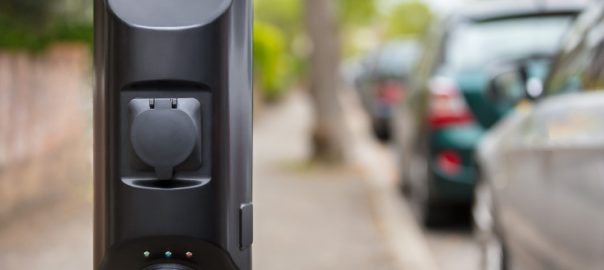
A network of 250 electric vehicle (EV) charging points has been completed in Oxfordshire.

The hubs in 20 car parks which allow people to park and charge their vehicle can also be booked overnight to aid residents without off-street parking.

The £5.4m scheme to install the chargers county-wide started in May – they have been installed by Bicester-based firm EZ-Charge.

It was funded through government grants.


An online map shows the locations of all the council-owned car parks with chargers.

The scheme has been supported by the University of Oxford, Oxfordshire county and district councils.

In July, a £41m energy hub with 42 EV charging points opened at the Redbridge Park and Ride in Oxford.

The Pivot Power site can recharge a car in as little as 20 minutes.

Read more: BBC

It’s Time to Go Green!

If you would like to know more about Solar Panels and the PowerBanx range of home battery systems, and get a free instant quote, please complete our online form:

Electric cars are still cheaper to run than petrol and diesel. T&E did the maths

Electricity prices have soared, but it’s still cheaper to recharge an EV than to refuel at the pump

Even if electric cars still cost more to buy than petrol cars, battery-electric vehicles have long been cheaper overall to own and run.

This is largely because recharging has typically cost much less than refuelling, so owning an electric vehicle (EV) would pay off after a couple of years. This is an irrefutable fact – or at least it was until recently.

Europe’s ongoing energy crisis, fuelled by Russia’s invasion of Ukraine and threats to cut off gas supplies, not only stirs up fears of a cold winter but is also sending electricity prices sky-high, due to the high share of gas in power generation.

Oil supply, on the other hand, was less affected and many European countries are heavily subsidising petrol and diesel.

In September, the average EU household had to pay a staggering 72 per cent more for each kWh of electricity than a year before. At the pump, aided by governments’ generous subsidies, fuel prices have increased less: diesel by 36 per cent and petrol by only 15 per cent.

The unprecedented surges in electricity prices have thrown into question the notion that recharging is cheaper than refuelling, and some are already predicting that the transition towards e-mobility will come to a sudden halt.

Read more: Transport&Environment

It’s Time to Go Green!

If you would like to know more about Solar Panels and the PowerBanx range of home battery systems, and get a free instant quote, please complete our online form:
Fastned and MFG EV Power rated the best UK charging networks

Fastned and Motor Fuel Group (MFG) EV Power have been announced as the joint highest ranked EV charging networks in the UK, according to a Zap-Map survey.

The chargepoint mapping service conducted a survey in which 4,300 EV drivers specified which charging network they believe is the best. This has been released as part of the annual public charging network satisfaction rankings.

Respondents rated their overall satisfaction for the networks they use regularly, which was then used to rank each network out of a maximum of five stars.


Rapid Charging Step 1: Access the Rapid Charger (Image: T. Larkum)

The respondents also rated their level of satisfaction with the networks in five key areas including reliability, ease of use, customer support, value for money and payment options.

Taking the top spot in joint first place are two ultra-rapid networks in Fastned and MFG EV Power, who each scored 4.0 in the overall ratings. Zap-Map said the two networks scored particularly high for reliability and ease of use.

A recent survey led by Paythru indicated that 80% of UK drivers may be deterred from driving an EV due to poor experience at the chargepoint. One of the primary issues with the poor charging experience comes with difficulties in finding an EV chargepoint when it is required.

Read more: Current+

It’s Time to Go Green!

If you would like to know more about Solar Panels and the PowerBanx range of home battery systems, and get a free instant quote, please complete our online form:

Does It Cost More To Run An EV Or An ICE?

Along with the environmental benefits, one of the main advantages of owning an electric vehicle (EV) is their relatively low running costs.

Charging a battery is much more affordable than filling a tank, and EVs are often more reliable than petrol and diesel cars since they have fewer moving parts that can fail.

However, a single tank of fuel will take you much further than even the most efficient EV battery. Add to that the jump in electricity prices that took place on 1 October, and you may need to consider the cost of owning an EV more carefully.

How much does it cost to charge an EV?

The price of charging an EV depends on where you do it.

At home 

Charging an EV at home is usually the most cost effective option. You can charge the car using a domestic three-pin socket, but installing a dedicated EV charger will deliver power much more quickly.

Installing an at-home EV charging point typically costs around £1,000.

With the government’s Energy Price Guarantee capping the cost of electricity at 34 pence per KWh in October 2022 (until April 2023), fully charging an EV at home will cost:

  • £12.51 to fully charge a small EV (VW e-Up!)
  • £13.60 to fully charge a medium sized EV (Nissan Leaf)
  • £24.14 to fully charge a large EV (Audi e-tron)

Read more: Forbes

It’s Time to Go Green!

If you would like to know more about Solar Panels and the PowerBanx range of home battery systems, and get a free instant quote, please complete our online form:

Electric car terms: What do I need to know?

There are all manner of terms and acronyms in the EV segment – we’re explaining the ones to keep in mind.

If you’re in the market for an electric car, you may have already encountered the sometimes bewildering number of terms and acronyms that are strewn across the segment. Knowing what they all mean – and which ones are important – can feel quite daunting, to begin with.


Drive Energi 50kW Tritium Veefil-RT chargers (Image: Drive Energi)

However, we’re going to be taking a look through some of the key EV terms that you really need to know. So let’s dive in.

Battery

A battery is the core of an electric vehicle. After all, without a battery, an EV has nowhere to store energy which wouldn’t allow it to travel.

You’ll see batteries measured in kilowatt hours – or kWh – and the higher the number that precedes it, the larger the battery, and likely the more range it’ll offer. For instance, the Mercedes EQS has a 107.8kWh battery, which is capable of delivering up to 453 miles of range.

Charging

Charging is how you’ll keep your electric vehicle topped up. Compared with filling up a petrol or diesel car, there are a number of options, however. Everything is measured in kilowatts – or kW – too, with a higher number of kilowatts meaning a quicker charge.

Slow charger

A slow charger, predictably, is one that’ll give a more modest supply of energy to an electric car. They’re usually rated around 3.6kW and might include charging locations such as those located in streetlamps and kerbs in urban areas. These are best for overnight charges, as they’ll need more time to fully charge an EV.

Read more: ExpressandStar

It’s Time to Go Green!

If you would like to know more about Solar Panels and the PowerBanx range of home battery systems, and get a free instant quote, please complete our online form:

GRIDSERVE installs the ‘UK’s fastest EV charger’ at the Braintree Electric Forecourt

GRIDSERVE has installed the UK’s “fastest EV charger” at the Braintree Electric Forecourt to optimise charging technologies.

The ABB Terra 360kW charger is capable of adding 100 miles of range in less than five minutes, the company said, dramatically increasing charging times whilst on the go around the UK.

The public charger is equipped with two combined charging system (CCS) connectors with long cables, contactless payment, easy access for wheelchair users and is positioned to allow heavy goods vehicles (HGVs) and cars towing caravans an area to charge with ease.

This could be a move that leads to the further adoption of EVs with research led by payments technology company Paythru having indicated that 80% of UK drivers may be deterred from driving an EV due to poor experience at the chargepoint.

One of the primary issues with the poor charging experience comes with difficulties in finding an EV chargepoint when it is required. This is an area that has been impacting the sector over recent months.

Over half of the respondents (54%) said not being able to find a chargepoint when it is required would put them off getting an EV and a further 26% said it might. A total of 80% highlighted it as a concern.

Read more: Current+

It’s Time to Go Green!

If you would like to know more about Solar Panels and the PowerBanx range of home battery systems, and get a free instant quote, please complete our online form: