Category Archives: Pollution

Was 2018 the peak for internal-combustion car sales?

Electric-car sales are growing. Total car sales around the world are shrinking.

Put the two together, and the conclusion from many analysts is that sales of cars powered by internal combustion engines around the world have already peaked.

From 2019 onward, they’re likely to do nothing but shrink, according to several automotive analysts interviewed in the Financial Times (subscription required) for a piece published late last month.

The FT quotes several analytics firms forecasting that global auto sales will fall in 2019 compared with a record 95.5 million cars sold in 2018, according to Moody’s Analytics.

There are several factors at play: an international trade war among the U.S., China, and Europe; tighter consumer credit in the world’s largest auto market, China; troubled Brexit negotiations; and tighter European restrictions on carbon-dioxide emissions.

Other analytics firms, including Evercore ISI, Accenture, and Jato Dynamics told the FT that they expect a structural downturn in 2019, based on slower sales in the second half of 2018.

At the same time, sales of electric cars are rising. AlixPartners, a British consulting service, says it expects electric car sales to grow by 1.5 million in 2019, reaching about 1.6 percent of the global market.

“Peak ICE” may already have occurred at the end of 2018, Elmer Kades, global co-leader of AlixPartners’ automotive practice told the FT. “It’s this slowing growth of the overall pie that the industry should be most concerned with, even as it has to … pay for the continuing switchover to electric vehicles.”

Read more: Green Car Reports

Millions could miss out on benefits of electric vehicles

Millions of people could miss out on the environmental and financial benefits of electric vehicles (EVs), according to a new report.

The report by the think tank Localis warns poorer parts of the country could get left behind unless local authorities are given to power to draw up their own ‘smart city’ plans and energy policies.

In addition, it argues local authorities should be able to form their own consortiums using existing knowledge of their local areas, and also be empowered to work with private energy network providers to deliver the infrastructure they need for the future.

The report also emphasised that families across the UK are at risk of sharing the cost for necessary new energy infrastructure, but not being able to access for themselves the benefits of EVs and other ‘smart’ technologies – driving further inequality between richer and poorer parts of the country.

‘Without a change in regulation, behaviour and a wholesale transfer of powers for local energy policies, we risk a tale of two cities in our major urban centres – deepening levels of inequality between the prosperous and more deprived parts of town,’ said Localis chief executive, Jonathan Werran.

‘A ‘devolution revolution’ in locally-regulated energy markets has the potential to accelerate the nation’s switch to clean growth, turn UK cities into powerhouses for sustainable and inclusive prosperity and improve livelihoods in towns and cities across the UK.’

Read more: Environment Journal

Diesel MoT failures quadruple under new emissions test rules

Tougher MoT test sees almost 750,000 cars fail for substandard emissions; failure rate for diesel cars shoots up more than fourfold

More than four times as many diesel cars have failed their MoT test for substandard emissions since tough new test criteria were introduced in May this year.

Some 58,004 diesels failed the emission portion of the MoT test between 20 May and 19 November 2017, but this figure increased to 238,871 in the same period this year. The new emission tests have proven so tough on diesels, in fact, that 17 per cent of all MoT failures for diesel cars were due to emission faults this year – up from 10 per cent in 2017.

The MoT test saw one of its biggest-ever updates on May 20, when Minor, Major and Dangerous fault categories were introduced, and tougher emission checks were brought in.

Diesel cars fitted with a particulate filter (DPF) that emit visible smoke of any colour, for example, now automatically fail their MoT, while petrol cars that emit dense blue or clearly visible black smoke for more than five seconds when idling also fail.

Some cars would seem to be struggling to meet these new requirements, with data from the Driver and Vehicle Standards Agency (DVSA) showing almost 750,000 cars failed their MoT for emissions between 20 May and 19 November 2018 – up from around 350,000 in the same period last year. But while twice as many petrol cars failed in 2018 compared to 2017 (up from 292,468 to 505,721), diesel cars were more severely affected.

Read more: AutoExpress

Electric vehicles are going to render the fight over fuel economy standards moot

The auto industry is headed for revolution, Trump notwithstanding.

Though it may seem like several dozen scandals ago, the Trump administration is just now finalizing plans to freeze national fuel-economy standards in place, rather than steadily increasing them as Obama planned.

This is a terrible idea, for reasons I have detailed at length — it will cost consumers more, ensure more air and climate pollution, and, obviously, yield less fuel-efficient vehicles. It’s a bad idea economically, environmentally, and in terms of America’s international reputation.

I’m not going to go through all that again, though. Instead, in this short post, I want to do two things: point out a fact about the political calculations of this plan, namely, that it is opposed by the very corporate entities for which it was designed; and, second, make a bold prediction about the effect of electric vehicles on this fuel-economy debate. Basically, I think EVs are going to render the whole dispute moot!

First, the fact.

Car companies don’t like this plan

Car companies have acted with grotesque dishonesty throughout the history of the fuel-economy debate. It was only when Obama bailed them out — literally saving them from bankruptcy — that they agreed to come to the table to work out increased national standards.

When Trump took over, they immediately reversed course and, like jackals, descended on the new administration, pleading for regulatory relief, for a few more years of SUV profits.

And as in so many other areas, Trump gave business what they wanted. More than what they wanted. So much of what they wanted that they don’t want it anymore! Let me explain.

The administration has been holding public hearings on its proposal, and not surprisingly, it has received a torrent of opposition from the usual suspects — environmentalists, health groups, California. What is somewhat surprising is that considerable opposition has come from the auto companies themselves. (Also speaking out against, Axios reports: Shell Oil! When you’ve lost Shell …)

Ford has opposed it, along with the United Auto Workers. “Let me be clear,” said Bob Holycross, Ford’s global director of Sustainability & Vehicle Environmental Matters. “We do not support standing still.” GM and Chrysler have also lobbied the administration to alter its plans.

The Alliance of Automobile Manufacturers, a major automaker trade group, has also opposed the plan. “We support standards that increase year over year,” said AAM CEO Mitch Bainwol at a hearing.

“The industry is united in its request that the agencies work out an agreement with California” for a single, rising national standard, Honda said in recent comments.

As for Trump’s plan? “We didn’t ask for that,” Robert Bienenfeld, Honda’s assistant vice president in charge of environment and energy strategy, told the New York Times. “The position we outlined was sensible.”

Read more: Vox

Electric vehicles will be allowed to drive at higher speed limits than gas cars, says Austrian government

A new initiative from the Austrian government is set to reward electric car owners with a unique incentive.

On October 25, the Austrian ministerial cabinet announced that it would be adjusting the speed restrictions for electric vehicles traveling in the country’s IG-L-Hundred zone, which covers a total area of 440 kilometers (273 miles). With the updated rules in place, owners of Teslas and other electric vehicles will be allowed to travel up to 130 km/h (80 mph) on the highway, 30 km/h (20 mph) faster than their fossil fuel-powered counterparts.

Austrian Minister of Sustainability Elisabeth Köstinger noted that the speed limit exception for electric vehicles is part of the country’s initiative to encourage the adoption of sustainable transportation. Together with the adjusted speed limits, the Austrian government is also pushing to open bus lanes for zero-emissions cars, and promote free parking programs for electrified vehicles.

“The exception for electric vehicles in the IG-L-Hundred is an advantage that we want to give owners of e-vehicles to internal combustion engines,” Köstinger said.

While the specifics of the speed limit incentive are yet to be fully announced, the Austrian government’s wording on the program suggests that the exception would be tailor-fit for battery-powered vehicles like Tesla’s electric cars. Köstinger, for one, noted that the top speed advantage would be given to EV drivers over drivers in vehicles with internal combustion engines. With this statement in mind, it appears that hybrid vehicles such as the BMW i8, which are equipped with a internal combustion engines and electric motors, would not be awarded the same top speed incentive.

The country’s EV community would likely appreciate a speed limit incentive for electric cars, and if it proves effective in Austria, there is a good chance that the program would be adopted in other regions as well. Electric cars, after all, emit no emissions regardless of their speed, and with the advent of high-performance vehicles like the Tesla Model S, Model X, and Model 3, EVs are now more than capable of maintaining high speeds for long periods of time. With batteries getting cheaper and better, electric cars will soon be able to travel even farther than before as well. With this in mind, even simple perks like a higher speed limit would likely encourage even more drivers to join the growing electric car movement.

Read more: Teslarati

Diesel and petrol ban should come much faster, say MPs

A ban on sales of new petrol and diesel cars should be brought forward by eight years to 2032, MPs have said.

The government’s current plans to ensure all new cars are “effectively zero emission” by 2040 were “vague and unambitious”, a report by Parliament’s business select committee said.

It also criticised cuts to subsidies and the lack of charging points.

The government said it aimed to make the UK “the best place in the world” to own an electric vehicle.

However, the report from the Business, Energy and Industrial Strategy committee said the government’s deeds did not match the ambitions of its words.

The committee’s chairwoman, Rachel Reeves MP, said the government’s targets gave “little clarity or incentive to industry or the consumer to invest in electric cars.”

‘Zero means zero’

Earlier this year the prime minister said that all new cars and vans should be “effectively zero emission” by 2040.

The government’s Road to Zero Strategy said it wanted “almost every car and van” in the UK to be zero emission by 2050. However it was unclear which, if any, hybrid models were being included.

The committee said “zero should mean zero” and called for the government to bring forward “a clear, precise target for new sales of cars and vans to be truly zero emission by 2032”.

The UK was among the top 10 countries for electric vehicle sales in 2017, and has around 14,500 public charging points. However, in its report the committee said the country was far from electric vehicle ready.

Read more: BBC

Reduce emissions or build more electric cars

The European Parliament has approved a draft law to reduce emissions of carbon dioxide from new cars by 20 per cent by 2025 and 40 per cent by 2030.

The proposal, a hard-won compromise between environmentalists and auto industry advocates, would reduce emissions from petrol and diesel cars and an increased focus on electric cars. MEPs set target of 30 per cent of new car and van sales to be electric by 2030.

One amendment passed by the parliament concerned a bonus system, whereby companies would be allowed a lower CO2 reduction target if they produced a certain proportion of electric cars.

However, if manufacturers fail to produce enough electric vehicles to meet the proposal’s benchmark, they would be obliged to reduce emissions beyond the 40 per cent target in order to compensate.

Carbon emissions from cars and vans have been a contentious subject of discussion in Europe since 2015, when Volkswagen was found to have rigged diesel engines to pass emissions tests. Many diesels were subsequently discovered to be more pollutant than had been believed. Some cities recommended banning older diesels altogether; while the Danish government recently proposed a full ban on new petrol and diesel cars by 2030.

Read more: Government Europa

How to approach driving in the face of climate change

Can you be an environmentalist and still drive a car?

The question came to mind last week, when the United Nations’ Intergovernmental Panel on Climate Change released a report that gave us 12 years to stave off cataclysmic climate change. If the world’s governments, businesses and people don’t act and act dramatically, global warming could rise more than 1.5 C and cause droughts, famine, floods and heat.

It’s a dire prediction.

As a driver, it forces you to think about your culpability. The automobile, after all, is a significant contributor to climate change. The Environmental Protection Agency maintains that cars and trucks account for 14 per cent of greenhouse gas emissions. So, you can either draw up a list of “10 Cars You Should Drive Before the Apocalypse”, or you can take a hard look at what you drive, how much you drive and whether you should be driving at all.

I’ve decided to do both. Some dream drives, some environmental action. A little sweet and a little sour.

SAY NO TO THE SUV

Sport-utility vehicles are behemoth gas-guzzlers, and their ever-soaring world-wide popularity is depressing. They’ve never been to my taste. Car makers are supposed to be introducing electric SUVs in 2019. But really, does the world need the SUV that much? Can’t we get by with fewer? Looking at their sales figures, the answer is no.

DRIVE HYBRID
I’m in the market for a new car. An electric, or at the very least a hybrid, increasingly seems like the more responsible choice. Of course, the most responsible choice (environmentally speaking) would be to hole up in a cement box and live on insects, water and music. To some people, the very act of owning an automobile is an assault on our climate and the future of the planet. We could shut down the automobile sector entirely, but that would trigger a global economic collapse and social unrest that could cause – you guessed it – Armageddon. I think I’ll go electric or hybrid – maybe a Tesla Model S, Volvo XC, BMW i3 or a Camry Hybrid LE.

Read more: Globe and Mail

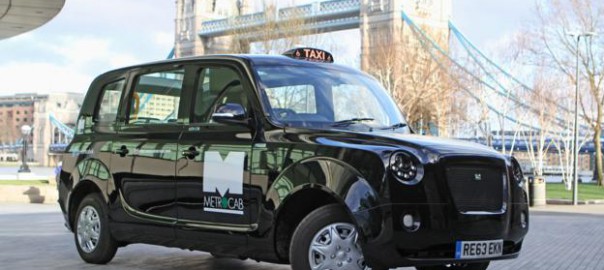
The release of the Metrocab, a battery-powered taxi capable of zero emissions, is one of the efforts to clean up the city’s transport (Image: Metrocab)

Electric vehicles halve drivers’ exposure to toxic emissions says Kings College London

Zero emission capable taxis can halve a driver’s exposure to toxic exhaust pollutants, according to new research.

The study into air quality by King’s College London’s Environmental Research Group (ERG) monitored drivers of both diesel and electric taxis, measuring particulate matter and nitrogen dioxide inside and outside of their working environments.

It found that drivers of diesel taxis are exposed to pollution levels 1.8 times higher than those driving an electric model.

The research programme, partly funded by electric taxi firm LEVC, also set out to understand whether there are certain behaviours professional drivers can adopt to minimise their exposure to air pollution.

The release of the Metrocab, a battery-powered taxi capable of zero emissions, is one of the efforts to clean up the city’s transport (Image: Metrocab)

Ten London taxi drivers took part and provided 390 hours of air pollution data.

In-vehicle concentrations were measured over a period of four full working days during summer 2018. Initial analysis found that while cab drivers face the same level of exposure to poor air quality as other commercial vehicle drivers, and experience double the exposure at work compared to outside of work, their choice of vehicle made a very significant difference.

Average exposure to nitrogen dioxide and black carbon during a standard shift was 1.8 times higher for drivers of the older diesel taxis compared to those in all-new electric cabs.

Read more: Fleet News

Denmark embraces electric car revolution with petrol and diesel ban plan

COPENHAGEN (Reuters) – Denmark has proposed a ban on the sale of new petrol and diesel cars from 2030 and hybrid from 2035, joining international efforts to promote electric-only vehicles to reduce air pollution and combat climate change.

The government has previously come under fire for increasing tax on electric cars in 2016, sending sales down from more than 3 percent of all new cars to almost zero, but now aims to follow the example being set in an increasing number of countries.

“It is a big ambition that will be hard to achieve. But that’s exactly why we need to try,”

Danish Prime Minister Lars Lokke Rasmussen told parliament on Tuesday.

The plan requires parliamentary approval to become law and will be presented to parliament next week.

Britain and France have both pledged to ban new petrol and diesel cars from 2040 in move that could hit the wealth of oil producers and transform a car industry in which global carmakers are scrambling to adapt to the brave new world of electric vehicles.

Read more: Reuters