Category Archives: Energy and Climate Change

News and articles on climate change, vehicle pollution, and renewable energy.

How to approach driving in the face of climate change

Can you be an environmentalist and still drive a car?

The question came to mind last week, when the United Nations’ Intergovernmental Panel on Climate Change released a report that gave us 12 years to stave off cataclysmic climate change. If the world’s governments, businesses and people don’t act and act dramatically, global warming could rise more than 1.5 C and cause droughts, famine, floods and heat.

It’s a dire prediction.
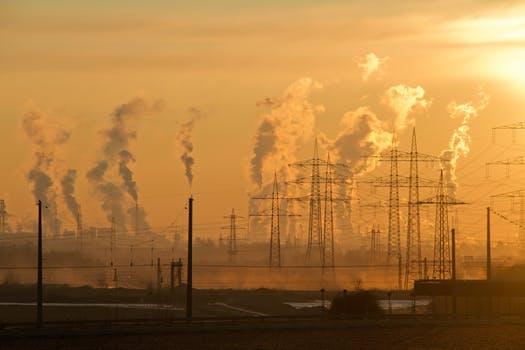
As a driver, it forces you to think about your culpability. The automobile, after all, is a significant contributor to climate change. The Environmental Protection Agency maintains that cars and trucks account for 14 per cent of greenhouse gas emissions. So, you can either draw up a list of “10 Cars You Should Drive Before the Apocalypse”, or you can take a hard look at what you drive, how much you drive and whether you should be driving at all.

I’ve decided to do both. Some dream drives, some environmental action. A little sweet and a little sour.

SAY NO TO THE SUV

Sport-utility vehicles are behemoth gas-guzzlers, and their ever-soaring world-wide popularity is depressing. They’ve never been to my taste. Car makers are supposed to be introducing electric SUVs in 2019. But really, does the world need the SUV that much? Can’t we get by with fewer? Looking at their sales figures, the answer is no.

DRIVE HYBRID
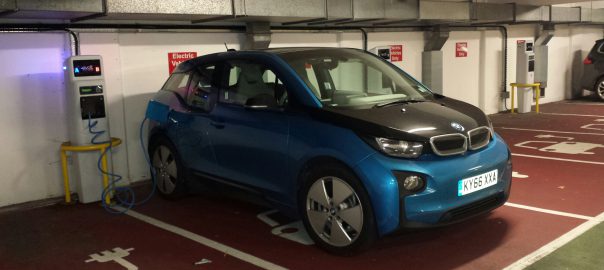
I’m in the market for a new car. An electric, or at the very least a hybrid, increasingly seems like the more responsible choice. Of course, the most responsible choice (environmentally speaking) would be to hole up in a cement box and live on insects, water and music. To some people, the very act of owning an automobile is an assault on our climate and the future of the planet. We could shut down the automobile sector entirely, but that would trigger a global economic collapse and social unrest that could cause – you guessed it – Armageddon. I think I’ll go electric or hybrid – maybe a Tesla Model S, Volvo XC, BMW i3 or a Camry Hybrid LE.

Read more: Globe and Mail
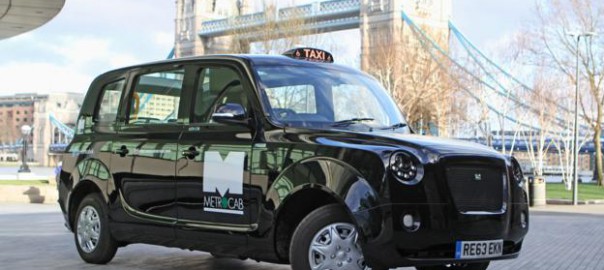
The release of the Metrocab, a battery-powered taxi capable of zero emissions, is one of the efforts to clean up the city’s transport (Image: Metrocab)

Electric vehicles halve drivers’ exposure to toxic emissions says Kings College London

Zero emission capable taxis can halve a driver’s exposure to toxic exhaust pollutants, according to new research.

The study into air quality by King’s College London’s Environmental Research Group (ERG) monitored drivers of both diesel and electric taxis, measuring particulate matter and nitrogen dioxide inside and outside of their working environments.

It found that drivers of diesel taxis are exposed to pollution levels 1.8 times higher than those driving an electric model.

The research programme, partly funded by electric taxi firm LEVC, also set out to understand whether there are certain behaviours professional drivers can adopt to minimise their exposure to air pollution.

The release of the Metrocab, a battery-powered taxi capable of zero emissions, is one of the efforts to clean up the city’s transport (Image: Metrocab)

Ten London taxi drivers took part and provided 390 hours of air pollution data.

In-vehicle concentrations were measured over a period of four full working days during summer 2018. Initial analysis found that while cab drivers face the same level of exposure to poor air quality as other commercial vehicle drivers, and experience double the exposure at work compared to outside of work, their choice of vehicle made a very significant difference.

Average exposure to nitrogen dioxide and black carbon during a standard shift was 1.8 times higher for drivers of the older diesel taxis compared to those in all-new electric cabs.

Read more: Fleet News

Denmark embraces electric car revolution with petrol and diesel ban plan

COPENHAGEN (Reuters) – Denmark has proposed a ban on the sale of new petrol and diesel cars from 2030 and hybrid from 2035, joining international efforts to promote electric-only vehicles to reduce air pollution and combat climate change.

The government has previously come under fire for increasing tax on electric cars in 2016, sending sales down from more than 3 percent of all new cars to almost zero, but now aims to follow the example being set in an increasing number of countries.

“It is a big ambition that will be hard to achieve. But that’s exactly why we need to try,”

Danish Prime Minister Lars Lokke Rasmussen told parliament on Tuesday.

The plan requires parliamentary approval to become law and will be presented to parliament next week.

Britain and France have both pledged to ban new petrol and diesel cars from 2040 in move that could hit the wealth of oil producers and transform a car industry in which global carmakers are scrambling to adapt to the brave new world of electric vehicles.

Read more: Reuters

Air pollution linked to higher risk of dementia

Air pollution may be linked with an increased risk of developing dementia, research suggests.

A London-based study, published in BMJ Open, found an association between the neurodegenerative condition and exposure to nitrogen dioxide and microscopic particles known as PM2.5.

Alzheimer’s Research UK described it is a “growing area of research”, but said the results should be treated with caution.

The researchers, from the University of London, Imperial College and King’s College London, used anonymous patient health records from the Clinical Practice Research Datalink, which collects data from GP practices.

They focused on 131,000 patients aged between 50 and 79 in 2004, who had not been diagnosed with dementia, registered at 75 general practices within the M25.

The health of the patients was tracked for an average of seven years, until they were diagnosed with dementia, died or left their GP practice.

Between 2005 and 2013, a total of 2181 patients (1.7 per cent) were diagnosed with dementia, 39 per cent of whom had Alzheimer’s disease and 29 per cent of whom had vascular dementia.

These diagnoses were found to be linked to ambient levels of nitrogen dioxide and PM2.5, based on estimates taken near the homes of patients in 2004.

Those living in areas with the top fifth of nitrogen dioxide levels had a 40 per cent increased risk of being diagnosed with dementia compared with those living in areas with the lowest, the researchers said.

A similar increase was seen with levels of PM2.5, they added.

The associations could not be explained by factors known to influence the development of the condition, but the links were more consistent for Alzheimer’s disease than vascular dementia.

The authors said:

“With the future global burden of dementia likely to be substantial, further epidemiological work is urgently needed to confirm and understand better recent findings linking air pollution to dementia.

“Our results suggest both regional and urban background pollutants may be as important as near-traffic pollutants.

“The cause of these neurodegenerative diseases is still largely unknown and may be multifactorial.

“While toxicants from air pollution have several plausible pathways to reach the brain, how and when they may influence neurodegeneration remains speculative.”

Read more: Future Build

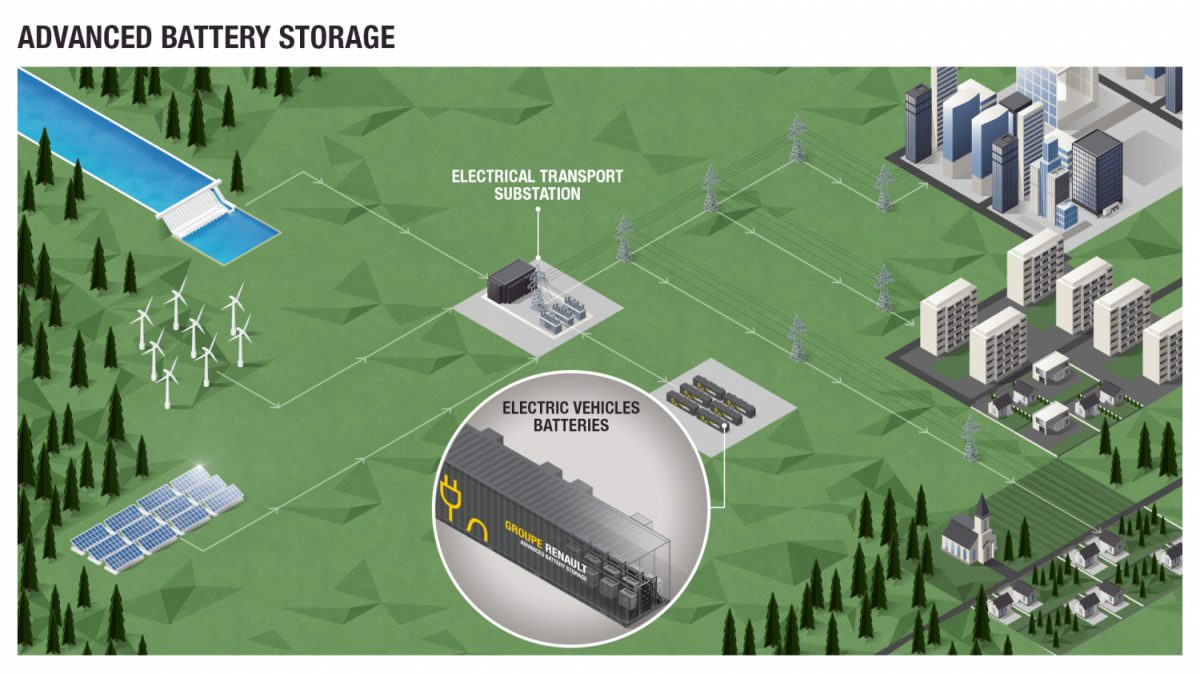
Groupe Renault is launching “Advanced Battery Storage” (Image: Renault)

Groupe Renault is launching “Advanced Battery Storage”

Groupe Renault is launching “Advanced Battery Storage”, the biggest energy stationary storage system from electric vehicle (EV) batteries in Europe

  • Groupe Renault is announcing the launch of its “Advanced Battery Storage” program, which aims to build the biggest energy stationary storage system using EV batteries ever designed in Europe by 2020 (power: 70 MW / energy: 60MWh).
  • This system, installed on several sites in France and Germany, will facilitate the integration of renewable energies into electric grids.
  • “Advanced Battery Storage” is part of Groupe Renault’s strategy to develop a smart electric ecosystem in favor of the energy transition.

Groupe Renault, the European leader in electric mobility, announced today the launch of Advanced Battery Storage, a stationary storage system for energy developed exclusively from EV batteries.

Groupe Renault is launching “Advanced Battery Storage” (Image: Renault)

It will have a storage capacity of at least 60 MWh, making it the biggest system of its kind ever built in Europe. The first facilities will be developed in early 2019 on three sites in France and Germany: at the Renault plants in Douai and Cléon and at a former coal-fired plant in North Rhine-Westphalia. The storage capacity will then be gradually expanded over time to contain the energy of 2,000 EV batteries. At this phase, the system will have reached – or more likely, exceed – the 60 MWh, equivalent to the daily consumption of a city of 5,000 households.

The purpose of this system is to manage the difference between electricity consumption and production at a given time, in order to increase the proportion of renewable sources in the energy mix. This means maintaining the balance between offer and demand on the electricity grid by integrating different energy sources with fluctuating production capacities. The slightest gap between consumption and production sets off disturbances that can compromise the stability of the local frequency (50 Hz). “Our stationary storage solution aims to offset these differences: it delivers its reserves to a point of imbalance in the grid at a given time to reduce the effects,” said Nicolas Schottey, Director of the Groupe Renault New Business Energy program. By helping to maintain the balance of the grid, the stationary storage system will boost the economic attractiveness of low-carbon energies.

This stationary storage system is built using EV batteries compiled in containers. The system uses second-life batteries, as well as new batteries stored for future use in standard replacement during after-sales operations.

“This unique assembly will give Advanced Battery Storage the capacity to generate or absorb, instantaneously the 70MW power. This high power combined with high capacity of our solution will allow to react efficiently to all major grid solicitations”, explains Nicolas Schottey.

Read more: Renault Press

Porsche stops making diesel cars after VW emissions scandal

The German carmaker Porsche says it will stop making diesel cars, and concentrate on petrol, electric and hybrid engines instead.

It follows a 2015 scandal in which its parent company, Volkswagen, admitted it had cheated emissions tests for diesel engines.

Diesel cars over a certain age have been banned in parts of some German cities in a bid to cut pollution.

The Porsche chief executive said the company was “not demonising diesel”.

“It is and will remain an important propulsion technology,” Oliver Blume said.

“We as a sports car manufacturer, however, for whom diesel has always played a secondary role, have come to the conclusion that we would like our future to be diesel-free.

“Petrol engines are well suited for sporty driving.”

Existing diesel car customers would continue to be served, he said.

Porsche did not build its own diesel engines, preferring to use Audi ones.

“Nevertheless, Porsche’s image has suffered, Mr Blume said.

“The diesel crisis caused us a lot of trouble.”

Read more: BBC

Groupe Renault unveils France's first Smart Island on Belle-Île-En-Mer (Image: Renault)

Groupe Renault unveils France’s first Smart Island on Belle-Île-En-Mer

  • Groupe Renault, Morbihan Energie, Les Cars Bleus and Enedis have joined forces to create FlexMob’île, an innovative programme aimed at accompanying the energy transition on the French island of Belle-Île-en-Mer.
  • This smart electric ecosystem is founded on three core activities, namely the sharing of electric vehicles, the stationary storage of solar energy and smart charging.
  • FlexMob’île sees Groupe Renault continue to develop the principle of smart islands, the first of which was Portugal’s Porto Santo.

Belle-Île-en-Mer (France), September 21, 2018 – In association with its partners the Belle-Île-en-Mer Community of Communes, Morbihan Energies, Les Cars Bleus and Enedis, Groupe Renault – a major player in the world of electric ecosystems – is delighted to unveil a brand new joint project known as FlexMob’île. The aim of this smart electric ecosystem is to facilitate the energy transition on the French island of Belle-Île-en-Mer which lies off the coast of southern Brittany. This initiative follows in the footsteps of the innovative Smart Fossil Free Island programme which has been operational since last February on the Portuguese island of Porto Santo in the Madeira archipelago.

Groupe Renault unveils France's first Smart Island on Belle-Île-En-Mer (Image: Renault)
Groupe Renault unveils France’s first Smart Island on Belle-Île-En-Mer (Image: Renault)

For the next 24 months, Groupe Renault and its public and private partners will be developing a smart electric ecosystem that has been conceived to reduce the island’s carbon footprint and increase its energy independence.

“We are thrilled to be collaborating with the Belle-Île-en-Mer Community of Communes, Morbihan Energie, Les Cars Bleus and Enedis on this project which is unprecedented in France. Our goal is the same as with Porto Santo. That is to say the implementation of global solutions that meet local needs using both tried-and-tested and more recent technologies. It will be possible to carry over the Belle-Île-en-Mer system not just to other islands but also to cities and suburban areas,” says Gilles Normand, SVP, Group Electric Vehicle Division.

Read more: Renault Media

Electric vehicles already able to cut greenhouse gas emissions by half

Exclusive: Critics have played down ability of current electric cars to reduce CO2 levels, but new analysis shows significant impact

Replacing a fossil fuel-powered car with an electric model can halve greenhouse gas emissions over the course of the vehicle’s lifetime, according to a new report.

The finding challenges reports by the UK press, other transport research groups and the fossil fuel industry that have underestimated the rise of electric vehicles (EVs) and their capacity for cutting emissions.

Released ahead of the world’s first zero emission vehicle summit in Birmingham, experts hope these results will drive a rapid switch to electric vehicles.

It is well established that a transition to electric vehicles will immediately reduce toxic air pollution, but the impact on carbon emissions has been less clear.

Critics have pointed to the carbon-intensive process of battery manufacture and the relatively small share of Britain’s electricity supply coming from renewables as factors that stop EVs reaching their full CO2-cutting potential.

“The take up of EVs in the UK, as elsewhere, continues to grow fast and sales have just passed 4 million globally,” said Andy Eastlake, managing director of the Low Carbon Vehicle Partnership.

“While no one doubts the air quality benefits of zero tailpipe emissions, critics often question the overall life cycle greenhouse gas impacts.”

However, the new European Climate Foundation-commissioned report used 2017 data to demonstrate that owners of EVs – particularly smaller models – are already playing a big role in helping the climate.

Transport is now the sector that contributes most to the UK’s greenhouse gas emissions, and the Committee on Climate Change has urged the government to improve on their current plan to ensure all new diesel and petrol vehicles are banned from 2040.

In their role as the government’s climate advisers, the committee has called for “more stretching targets” to ensure most new cars and vans are electric by 2030.

Transport secretary Chris Grayling revealed his “Road to Zero” strategy in July to make the UK “the best country in the world in which to develop and manufacture zero-emission vehicles”.

Aurelien Schuller from French consulting firm Carbone 4, one of the report’s co-authors, said their new study revealed “there is no time to waste in the UK’s transition to EVs”.

“Thanks to an already-significant decarbonisation of its electricity generation through coal phase-out the UK is already in a position to make significant cuts in the greenhouse gases from its transport sector,” he said.

The research concluded that a smaller EV produces around 15 tonnes of CO2 from construction through to scrapping, compared to an average of 32 tonnes for the equivalent petrol or diesel car.

Read more: Independent

BMW says EV owners can turn i3 into ‘cash cow’, use more solar power

Over the past 3 years, BMW has been running a trial of its ‘ChargeForward’ program with BMW i3 owners willing to automatically delay the charging of their vehicle at the request of their local electric utility, PG&E, in order to offset peak demand.

BMW is presenting the results of the trial and says that electric car owners can turn i3 into ‘cash cow’ and use more solar power with controllable load technology

The idea is quite simple. Under the program, PG&E can request BMW to delay the charging sessions of BMW i3 owners by up to an hour in order to reduce the load.

Instead, the owners are incentivized to charge for cheaper when renewable energy production is higher.

In return, owners are compensated for the possible inconvenience. For the first trial run, owners received a $1,000 “gift card” at the launch of the program and they were able to get up to $540 more based on how their charging sessions were affected. BMW is actually reducing the rewards for the second round, presumably because they realized that it was a lot of money for what they were asking of the i3 owners.

It’s important to note that owners can easily temporarily opt out of the program before starting a charging session if they absolutely need to charge. But if your car needs to charge, but it’s not urgent, you plug it in and if PG&E needs to offset demand, they will delay it and your car will take up to one more hour to charge.

Read more: Electrek

Low emissions cars could get green number plates

Environmentally-friendly vehicles could be awarded green number plates, signalling their virtue to other road users
Low emissions cars, vans and taxis could sport green number plates to highlight their environmentally friendly status, after the government launched a public consultation on the idea.

The Department for Transport (DfT) and the Office for Low Emission Vehicles (OLEV) say the public consultation will “seek views on whether green plates could work in the UK, and if so, what they should look like”, with the “eye-catching” plates potentially arriving in “the next few years”.

While details of what standards cars would have to meet in order to get a green plate are yet to be ironed out, electric cars such as the Nissan Leaf, and plug-in hybrids such as the Toyota Prius Plug-In are likely to be eligible for them. OLEV defines an Ultra-Low Emission Vehicle (ULEV) as a car that emits up to 75 grams per kilometre of carbon dioxide.

As well as sending an encouraging message out to other drivers, owners of qualifying cars could get free or discounted access to current or future low-emission zones.

Read more: Auto Express