Category Archives: Energy and Climate Change

News and articles on climate change, vehicle pollution, and renewable energy.

ELECTRIC CARS – CLIMATE SAVIOURS OR ECO-VILLAINS?

As electric car sales skyrocket, there are some tough questions to answer, writes Danny Chivers.

Owning an electric car could double your chances of getting a date.

This eye-catching claim – from car dealers Big Motoring World – gives a sense of the buzz around electric vehicles (EVs) right now. And whether or not they can ignite your love life, EVs are definitely on the rise.

Global sales of fossil-fuelled cars have been falling since 2017 – down from 86 million to 69 million in 2022. In contrast, electric car sales increased by 60 per cent in 2022 and are projected to rise further in 2023 to conquer almost 20 per cent of the global car market.

Battery electric cars are now outselling diesel cars in the UK, and make up 26 per cent of all car sales in China.


The UK’s electric vehicle drive has put the energy sector on the road to change

But is this definitely good news for the planet? What about all the extra mining needed for electric vehicles, and the increased electricity demand? Aren’t we meant to be switching to buses, trains and bikes, rather than building more cars?

Ultimately, is there a risk that by electrifying the car market, we’re just swapping one set of problems for another?

ARE ELECTRIC CARS THE LEAST WORST OPTION?

In a direct comparison, a battery-powered car is definitely better for the planet than a fossil-fuelled one.

We’re not just talking about cleaner air and less noise pollution in cities; internal combustion engines are highly inefficient, wasting over 70 per cent of the energy in the fuel.

Read more: NewInternationalist

It’s Time to Go Green!

If you would like to know more about Solar Panels and the PowerBanx range of home battery systems, and get a free instant quote, please complete our online form:

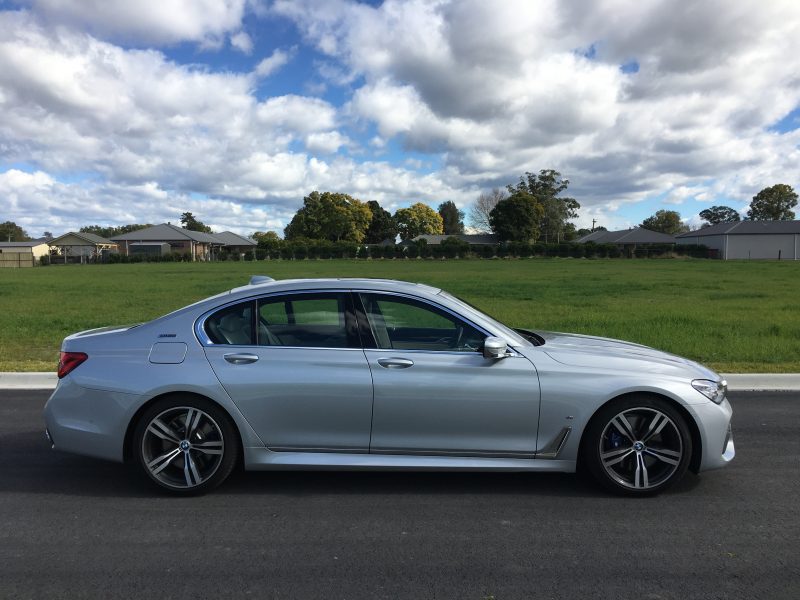
Southampton City Council: Rise in electric cars improves air quality

A COUNCIL scheme to improve the air quality in Southampton has taken shape as the number of electric cars in the city has risen over 50 per cent from the previous year.

Read more: DailyEcho

It’s Time to Go Green!

If you would like to know more about Solar Panels and the PowerBanx range of home battery systems, and get a free instant quote, please complete our online form:

Owners of the most polluting cars to pay double for parking across England

Lambeth council in London is latest to introduce emissions-based fees, with similar charges expected to be widely introduced

Owners of the most polluting cars may soon have to pay more to park as councils across England are expected to roll out new charges based on a vehicle’s CO2 emissions.

Lambeth is the latest council in London to introduce emissions-based parking fees, with similar charges now expected elsewhere in England. Owners of the most polluting cars can expect to pay more than twice as much as cleaner cars. There are now 26 different charges to park for an hour in Lambeth, depending on a car’s tax band and whether there is a diesel surcharge. The cost of a parking bay near Waterloo station in south London now ranges between £6.30 and £13.23 an hour, with payment made by an app.

The consultation on the charges introduced on 30 May included a new pricing structure for residents’ parking permits, which are already based on CO2 emissions. The annual cost of the highest band has risen from £340.73 to £500, with an additional annual surcharge of £140 for a diesel vehicle that does not comply with Euro 6 emission standards.

Of more than 2,900 responses in the consultation, 59% objected to the proposals. Lambeth has implemented the changes despite opposition, stating that air quality is a major public health issue and a wide range of interventions is required.

Read more: TheGuardian

It’s Time to Go Green!

If you would like to know more about Solar Panels and the PowerBanx range of home battery systems, and get a free instant quote, please complete our online form:

Washington gas stations are leaking toxins into nearby groundwater

Faulty tanks have caused a $20 billion environmental disaster across the U.S. Who will pay for the cleanup — the stations, oil companies, or you?

A black, electric-powered Nissan Leaf pulled up to a gas station – not to fuel up, of course. Matthew Metz, the founder of Coltura, a nonprofit trying to speed the country’s shift away from gasoline, climbed out of his car with printed maps in hand, prepared to give me a tour.


Charging Station in Sunderland (Image: Fastned)

It was a sunny spring day, and the Arco station in north Seattle looked like any other on a busy street corner, with cars fueling up and a line of bored people waiting to buy snacks and drinks inside the convenience store. Metz knows a lot about gas stations, and it changes what he sees. Looking around, he marveled at the risks that everyone was taking, even if they weren’t aware of it. “This is a hazardous materials facility,” he told me.

Drivers pumped their tanks with gas, breathing carcinogens like benzene, the source of gasoline’s signature sweet smell. On the east side of the property, tall white pipes that vent toxic vapors from petroleum kept underground stood just 10 feet away from the window of a child care center. Hidden below the station is a tract of contaminated soil that extends underneath a neighboring apartment building.

Read more: Crosscut

It’s Time to Go Green!

If you would like to know more about Solar Panels and the PowerBanx range of home battery systems, and get a free instant quote, please complete our online form:

Fact check: why Rowan Atkinson is wrong about electric vehicles

In a widely shared comment piece for the Guardian, comedian Rowan Atkinson said he felt “duped” by the green claims about electric vehicles (EVs).

In support of his contention, however, Atkinson repeats a series of repeatedly debunked talking points, often used by those seeking to delay action on the climate crisis.

Moreover, he suggests alternatives to EVs that are not yet widely available, would be less beneficial to the climate and are guaranteed to be more costly.

Atkinson’s biggest mistake is his failure to recognise that electric vehicles already offer significant global environmental benefits, compared with combustion-engine cars.

While EVs won’t solve all of the problems associated with car use – from traffic congestion through to our increasingly sedentary lifestyles – they are an essential part of tackling the climate emergency.

In its latest report, for example, the Intergovernmental Panel on Climate Change (IPCC) said, with “high confidence”, that EVs have lower greenhouse gas emissions than conventional cars. The IPCC said that electric vehicles not only “offer the greatest low-carbon potential for land-based transport”, but their use would save money. (Despite elevated electricity prices, EVs are still much cheaper to run than petrol cars in the UK.)

Indeed, without a widespread shift to EVs, there is no plausible route to meeting the UK’s legally binding target of net zero greenhouse emissions by 2050 – and the same is true globally.

Read more: TheGuardian

It’s Time to Go Green!

If you would like to know more about Solar Panels and the PowerBanx range of home battery systems, and get a free instant quote, please complete our online form:

EVs and the grid—it’s all about give and take

There is no disputing that we need more flexibility within the grid in the UK, and across countries globally, if we’re to accommodate an influx of new energy resources. Large volumes of renewables are and will continue to feed in, while increased demand from the electrification of transport and heat continue to cause strain during peak times. In the UK, although there is flexibility within the grid, the nation’s energy regulator Ofgem (Office of Gas and Electricity Markets) has recently proposed to create an energy marketplace that aims to address the challenge of how we unlock value from assets that are connected to our distribution networks.


New LEVC electric van (Image: LEVC)

Using electric vehicles (EVs) as an example, there is a huge long-term potential for both give and take on the grid. Advancements in smart charging will transform the way that EV users charge their vehicles, opting to take from the grid at times that suit the grid’s capacity—offering the potential to avoid peak times and essentially manage the ‘surplus’ energy that exists within our systems at other times of the day—and vehicle-to-grid (V2G) is offering drivers a way to feed power back into the grid in times of a supply deficit by discharging back into the grid to plug supply shortfalls.

Read more: automotiveworld

It’s Time to Go Green!

If you would like to know more about Solar Panels and the PowerBanx range of home battery systems, and get a free instant quote, please complete our online form:

The Guardian view on the electric car revolution: targets are not enough

The government must do its bit to make new electric vehicles more affordable if mass adoption is to be achieved on the road to net zero

When the government controversially scrapped its discount on the purchase of electric cars last summer, the move was justified on the grounds that its work was done. After 11 years of subsidies, said ministers, the electric vehicle revolution had been “kickstarted”. As Britain strives to meet a 2030 target to end the sale of new petrol and diesel vehicles, that judgment is beginning to look a little complacent.

Amid ongoing economic headwinds, data has emerged that suggests a drop-off in current demand for electric cars, despite notable public enthusiasm for their adoption in principle. Auto Trader, which hosts the country’s largest car sales website, reported this month that inquiries in relation to new electric vehicles had fallen significantly compared with last year.

A number of factors are likely to be involved. As interest rates and inflation remain high, the upfront cost of a new electric car makes it more expensive in the short term than a petrol or diesel one. Falling oil prices may have diminished the immediate incentive to switch. At the same time, despite repeated pledges by Whitehall, the rollout of charging infrastructure continues to be too slow and is not keeping pace with sales.

Read more: TheGuardian

It’s Time to Go Green!

If you would like to know more about Solar Panels and the PowerBanx range of home battery systems, and get a free instant quote, please complete our online form:

G7 countries agree to accelerate the phaseout of fossil fuels

G7 ministers have collectively agreed to accelerate the transition away from fossil fuels during last week’s meeting on Climate, Energy and Environment in Sapporo, Japan.

The nations – consisting of the UK, US, France, Japan and Canada – agreed “to accelerate the phaseout of unabated fossil fuels so as to achieve net zero in energy systems by 2050”.

Published yesterday (16 April), the ministers’ Communiqué recommitted the parties to the Paris Agreement, “keeping a limit of 1.5 °C global temperature rise within reach through scaled up action in this critical decade,” and to “recognize the importance of promoting an efficient diversification of supply sources to enhance energy security and energy affordability.”

The UK is seeking to pivot its trade focus to the Pacific after it joined the Comprehensive and Progressive Trans Pacific Partnership (CPTPP), and British energy companies like Octopus have also recently expanded their involvement in the Japanese market.


The agreement also aims for “a collective increase in offshore wind capacity of 150GW by 2030 based on each country’s existing targets and a collective increase of solar PV to more than 1TW by 2030 estimated by the IEA and IRENA through means such as each country’s existing targets or policy measures.”

Read more: Current+

It’s Time to Go Green!

If you would like to know more about Solar Panels and the PowerBanx range of home battery systems, and get a free instant quote, please complete our online form:

Climate change: Fossil fuel emissions from electricity set to fall – report

The world will likely use fewer fossil fuels to produce electricity this year in a “turning point” for planet-friendly energy, a new report says.

It would be the first ever annual drop in the use of coal, oil and gas to generate electricity, outside of a global recession or pandemic.

As a result, fewer warming gases would be released during energy production.

The authors attribute the expected change to a boom in renewable energy led mainly by China.


Wind and solar now produce 12% of global electricity with enough wind turbines added in 2022 to power almost all of the UK.

Renewables are set to meet all growth in demand this year, the study from energy analysts Ember says.

Making electricity is the single biggest contributor to global warming, responsible for over a third of energy-related carbon emissions in 2021.

So phasing out coal, oil and gas in this sector is seen as critical in helping the world avoid dangerous levels of climate change.

This new study looks at data from countries representing 93% of global electricity demand.

Read more: BBC

It’s Time to Go Green!

If you would like to know more about Solar Panels and the PowerBanx range of home battery systems, and get a free instant quote, please complete our online form:

Blades Being Installed on Turbine 5, Yelvertoft Wind Farm (Image: T. Larkum)

SSE Renewables installs world’s deepest offshore wind turbine foundations in Scotland

SSE Renewables has announced the installation of the world’s deepest offshore wind turbine foundations at what it claims will become Scotland’s largest offshore windfarm off the coast of Angus.

The foundation, also known as the “jacket”, had been transferred to the Seagreen wind farm on the 7 April by contractor Seaway 7. It was then taken by a submersible crane vessel, the Saipem 7000, to be installed on the seabed. The foundations weigh about 2000 tonnes each.


SSE has beaten its own record, from October 2022, when it installed foundations at a depth of 57.4 metres (188 feet). The latest foundations have been installed at 58.6 metres below sea level. It is the 112th jacket to be installed at the wind farm, which will have 114 turbines.

The project is a £3 billion joint venture between SSE Renewables and TotalEnergies. SSE said the final turbine foundation would be installed later this week.

SSE recently announced plans to build the UK’s largest offshore windfarm at Berwick Bank in Scotland. The project could generate 4.1GW of electricity and is situated 38km off the coast of East Lothian. A final decision on the project is expected later in 2023.

Read more: Current+

It’s Time to Go Green!

If you would like to know more about Solar Panels and the PowerBanx range of home battery systems, and get a free instant quote, please complete our online form: