All posts by Repost

The future of transport – building EV growth into the energy network

Climate change has raced up the list of priorities for the public during the last year or so.

MORI polls have shown that this is now at the top of the public’s concerns, sharing importance levels only achieved by Brexit, social care and the NHS

But there is much to do in order to meet the government’s legally binding targets of the UK being net-zero carbon by 2050. Of the key areas of electricity supply, heating and transport, progress in the latter is slower by some margin.

So, what are the answers?

Government policy is lagging behind where it should be and attracting criticism from the independent Committee on Climate Change. The automobile industry is moving ahead regardless, perhaps seeing the way the wind is blowing. Local authorities are declaring climate emergencies and introducing wide ranging local plans to achieve even more stringent targets.

More infrastructure is being delivered to facilitate EV charging but, more importantly, this is being linked to wider green agenda aims via vehicle to grid chargers. These fit EV ownership nicely into the thread of ‘homes / buildings as power stations’ in their own regard and the very definition of decentralisation. All of these will play a role in the future. Government policy looks forward to 2035 but perhaps by then the deep seated and intractable desire of the British individual to own a car at all might be starting to fade, with car clubs and shared transportation becoming the norm.

Climate Change

There is a whole international infrastructure which oversees climate change across the globe. The UNFCCC and IPCC have been saying for years that global warming is worsening and that urgent action needs to be taken. However, the IPCC report of October 2018 touched a particular nerve with the public.

This was the most hard-hitting report to date and effectively said that the world has 12 years to get a grip on global warming, or there will be irreparable damage to the world’s ecosystems and environment. From this report sprung a new vigour of climate action. Greta Thunberg and Extinction Rebellion were but two indicators of this.

Read more: Air Quality News

It’s Time to Go Green!

If you would like to know more about Solar Panels and the PowerBanx range of home battery systems, and get a free instant quote, please complete our online form:

Lambeth cracks down on harmful car idling

Lambeth Council is introducing £20 fines for drivers who leave their engine running whilst stationary and will run a new awareness campaign as part of the ongoing battle to improve air quality in the London borough.

Drivers who allow their vehicle engines to run unnecessarily when parked in the borough will be asked to turn off their engines, and if they fail to cooperate, will be issued with a fine under the new policy adopted in May. The move builds on previous anti-idling events in the borough to raise awareness and educate drivers on the effects of idling.

Councillor Claire Holland, Lambeth’s Deputy Leader (Sustainable Transport, Environment & Clean Air), said: “Cleaning up toxic air is an absolute priority for this council.

“Poor air quality is a huge health risk to our residents, and engine idling is a major contributor. We are determined to tackle the issue and are confident these new measures will help encourage people to change their behaviour so that everyone in Lambeth – particularly young children due to the effects on their development – is able to breathe clean air.”

Read more: Smart Transport

It’s Time to Go Green!

If you would like to know more about Solar Panels and the PowerBanx range of home battery systems, and get a free instant quote, please complete our online form:
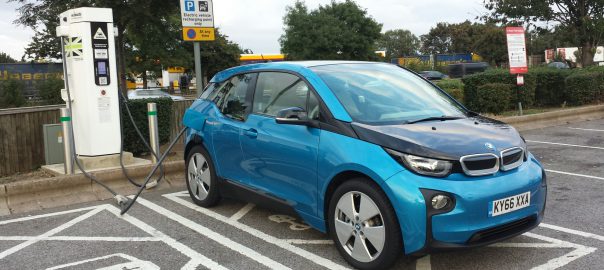
Brits predicted to surge to electric vehicles post-lockdown

Improved air pollution levels during lockdown could result in a surge towards electric vehicles (EVs), a new study has found.

The latest research by online parking portal YourParkingSpace.co.uk discovered that 4-in-10 people are more likely to purchase an EV in the future as a direct result of the lockdown which has seen fewer vehicles on the road, resulting in less pollution.

Indeed, the findings correspond to April’s car sales, which although dramatically down due to the government restrictions, saw the electric Tesla Model 3 as the UK’s best-selling car and EVs take a record market share of 32 per cent.

Harrison Woods, managing director at YourParkingSpace.co.uk, commented: “The lockdown has changed nearly every aspect of life, including less vehicles and traffic fumes, and our study would indicate that this will result in a surge in popularity towards electric vehicles.

“While plug-in cars have been growing in popularity over the last few years, seeing and feeling the benefits of less pollution means we will probably see many more EVs on the roads of Britain sooner rather than later.”

Read more: Fleet Point

It’s Time to Go Green!

If you would like to know more about Solar Panels and the PowerBanx range of home battery systems, and get a free instant quote, please complete our online form:

Milton Keynes 'Mushrooms' Charging Hub (Image: T. Larkum)

Government to finance connection costs for 350kW chargers across strategic road network

A new government fund is to help pay for connection costs to enable the installation of high-powered charging (HPC) at motorway sites across England.

The Rapid Charging Fund – which was first announced in the 2020 Budget – will be available to fund a portion of costs at strategic sites where upgrading connections to meet future demand for HPC is “prohibitively expensive and uncommercial”, supporting several governmental ambitions.

Milton Keynes 'Mushrooms' Charging Hub (Image: T. Larkum)
Milton Keynes ‘Mushrooms’ Charging Hub (Image: T. Larkum)

One such ambition is that by 2023, six HPC points between 150kW and 350kW will be available at motorway service areas in England, with some larger sites having up to 10-12 chargers.

Secondly, by 2030 this network is expected to be “extensive”, with the government planning for there to be 2,500 HPC points across England’s motorways and major A roads. This increases to 6,000 by 2035, the date the government is consulting on to ban sales of new petrol and diesel vehicles.

Timing and delivery of the funding is to be confirmed in due course, the government said. No details as to how much funding will be available has been disclosed.

It listed expectations it had for new chargepoints to make them easy to use and hassle-free, including that they are able to take credit and debit card payments and will be available 99% of the time.

Read more: Current News

It’s Time to Go Green!

If you would like to know more about Solar Panels and the PowerBanx range of home battery systems, and get a free instant quote, please complete our online form:

Nissan Leaf 3.Zero e+ (Image: Nissan)

UK: Stealthy police use electric cars to hunt poachers

The Gloucestershire Constabulary is putting the country’s largest police fleet of electric cars to new tactical use.

On Twitter, they described their latest ops against illegal poachers with the electric vehicles being central to their strategy.

To catch unwanted hunters, the police on Gloucestershire tweeted that the officers lay waiting in “unmarked electric cars patrolling and listening for gunshots, utilising their quiet running”.

Nissan Leaf 3.Zero e+ (Image: Nissan)

It is an unusual use for electric cars and followed a string of poaching incidents which left local deer shot but left alive. The police reports speak of “appalling acts of cruelty” leading them to come up with what we’d like to call Operation Smart Charge.

Read more: Electrive

It’s Time to Go Green!

If you would like to know more about Solar Panels and the PowerBanx range of home battery systems, and get a free instant quote, please complete our online form:

Number of diesel cars on UK roads falls for first time in 25 years

There were 111,000 fewer diesel cars in the UK in 2019 than the year before as people switched from polluting vehicles to greener ones

The UK has reached a motoring milestone, passing ‘peak diesel’ as the number of diesel cars on the roads fell for the first time in at least 25 years.

There were 111,000 fewer diesel cars in the UK in 2019 than the year before as people switched from polluting vehicles to greener, electric ones, according to government figures.

Although sales of diesel vehicles have been falling for a while this is the first time that the total number on the roads has declined, according to data from the Department for Transport.

“These figures hint at a motoring milestone – the possibility that we have hit or even passed ‘peak diesel’,” said Steve Gooding, director of the RAC Foundation.

Collapse in diesel sales

“This was due to the collapse in sales of new diesel cars together with the scrapping of older diesels, which have either come to the end of their useful lives or whose owners fear increasing restrictions on their use because of air quality concerns,” he said.

Read more: iNews

It’s Time to Go Green!

If you would like to know more about Solar Panels and the PowerBanx range of home battery systems, and get a free instant quote, please complete our online form:

2020 Renault Zoe (Image: Renault)

Renault Zoe GT Line review: Electric vehicle perfect for essential journeys

Mirror Motoring’s Colin Goodwin has found the Renault Zoe electric vehicle the perfect runner in lockdown to go and visit his mum and – with no off-street parking – found it easy to charge up away from home

There’s only one essential journey that I have to make and that’s to care for my 94-year-old mum.

She’s only 10 miles away and for this I’ve been using a new Renault Zoe that was delivered a few days before the lockdown started.

2020 Renault Zoe (Image: Renault)
The improved Renault Zoe has a longer range and posher interior (Image: Renault)

This is the longest period that I’ve run an electric car and it’s proving to be a very interesting experience as I live in a terraced street with no off-street parking.

That means I cannot charge the car at home.

This leaves me with three options: our local mini Waitrose which has a Polar public charging point; my pal Jim’s wallbox charger; or public charging points while out on my travels.

Anyway, this is the third generation Zoe and its range has been extended to 245 miles thanks to a 52kWh battery.

There’s also a new front bumper and LED headlamps.

Other changes to the car’s lines bring its styling more into line with the latest Clio and Captur models.

The more significant changes, however, have taken place inside.

Many of the hard plastics have been replaced by soft-touch materials. There’s also more brightwork which lifts the perceived quality.

There are three grades of Zoe to choose from, starting with the entry-level Play (106bhp R110 motor), the Iconic (R110 or 133bhp R135 motor) and top-spec GT Line (R135 motor only).

Read more: Mirror

It’s Time to Go Green!

If you would like to know more about Solar Panels and the PowerBanx range of home battery systems, and get a free instant quote, please complete our online form:

Tesla Cybertruck (Image: Tesla)

Why Electric Vehicles Are Going To Take Over The World

Interesting times in the electric vehicle market, as more and more carmakers try to position themselves in what looks like a second phase of growth.

In the luxury market segment, the announced launch of Tesla’s Cybertruck has galvanized a market that, in the United States, buys two million vehicles each year. What at first looked like a prototype of a prototype, has turned out to be a completely revolutionary design that combines a unique-looking vehicle with much lower manufacturing costs than expected. With more than half-a-million orders on its books, the company is now prioritizing its production over the Roadster.

Tesla Cybertruck (Image: Tesla)

The reason is simple: the Roadster appeals to a relatively marginal market and, from a target audience point of view, does not contribute much to the segments in which the brand already had significant appeal, whereas the Cybertruck, if successful, could allow it to dominate a very important and iconic part of the market that is fundamental to achieving mass popularity in a country like the United States.

In the economy segment, Volkswagen has announced plans to launch a family of electric vehicles priced at below $22,000, targeting city dwellers and not originally designed for the US, which was originally going to be launched under the Seat brand. Affordable mobility is an important segment that could shift a lot of units.

Read more: Forbes

It’s Time to Go Green!

If you would like to know more about Solar Panels and the PowerBanx range of home battery systems, and get a free instant quote, please complete our online form:

Asda electric delivery vehicle (Image: Asda)

Asda rolls out electric vehicle fleet in a bid to boost online capacity

Asda has rolled out a fleet of electric vehicle in a bid to boost its online delivery capacity, amid the increasing demand on online services due to the Coronavirus (COVID-19) pandemic.

Used in 48 stores

The new fleet of electric vehicles will be used to ferry orders from stores to click-and collect points, freeing up traditional delivery vans to focus on home deliveries.

Asda electric delivery vehicle (Image: Asda)

The initiative will enable stores to collectively ramp up the number of available click and collect slots by over 7,000 per week, to reach more than 34,000 slots.

The electric vehicles, which can be charged on-site, have a 40 miles single charge range, and are fully road-legal.

Read more: Supply Chain Analysis

It’s Time to Go Green!

If you would like to know more about Solar Panels and the PowerBanx range of home battery systems, and get a free instant quote, please complete our online form:

Electric cars could cut total CO2 by 12 per cent, Nottingham study shows

Total carbon emissions in the UK will be cut by almost 12 per cent if the country exclusively uses electric cars in future, a new study shows.

Research by Nottingham Trent University shows that 42 million tons of CO2 (MtCO2) will be removed from the atmosphere in the UK – a reduction of 11.89 per cent of the UK’s 351.5 MtCO2 total emitted last year.

The analysis offsets the increase in carbon emissions for the electricity grid which is required to power the country’s 32 million cars and taxis if they were switched to electric vehicles.

The switch to electric cars is found to save 14 per cent from the total carbon emissions, but will also cause an increase in carbon emissions from electric power stations of about 2.1 per cent for the additional electricity needed, making the net savings to be about 11.89 per cent.

The research – by PhD candidate George Milev, from the School of Architecture, Design and the Built Environment – considers fully electric cars currently used in the UK, including the Tesla Model 3, Nissan Leaf, Jaguar I-Pace, and more.

“These are encouraging findings and show just how much impact the switch to electric cars could have,” said researcher Mr Milev.

“In the wake of the Covid-19 pandemic, we are regularly seeing reports on how the environment has benefitted from the decreased use of combustion engines.

“If and when the UK moves exclusively to electric car usage, we will similarly see real benefits in the dramatic reduction in levels of CO2.”

Read more: Westbridgford Wire

It’s Time to Go Green!

If you would like to know more about Solar Panels and the PowerBanx range of home battery systems, and get a free instant quote, please complete our online form: