ELECTRIC cars are becoming more and more popular as the UK public aims to be more environmentally conscious and cut back on their pollution emissions. But how far can an electric car go before it needs charging? These are the top 10 electric cars compared, including models from Tesla, Hyundai and Renault.
The UK will be banning the sale of new petrol and diesel cars from 2030, in a bid to improve the nation’s carbon footprint. That means manufacturers and the public will be forced into looking at electric vehicles – and there are plenty already on the market.
Electric cars are very similar to the modern day petrol or diesel vehicle – with one very big difference.
The engines aren’t powered directly by fossil fuels, and instead use everyday electricity to get people from A to B.
All you need to do is plug your car into your domestic electrical points, saving you a trip to the petrol station.
But some people may have heard horror stories about electric cars only managing to go 50 miles before having to recharge for a few hours – that simply isn’t the case.
Lexus UX 300e (Image: blog.lexus.co.uk)
How many miles can an electric car go?
The average modern-day electric car can drive anywhere between 200 and 350 miles before needing to charge.
That’s relatively similar to most full tanks of petrol or diesel.
In the early years of electric cars, up to 2016, vehicles were only capable of going about 100 miles before running out of power.
If you have a hybrid vehicle, you’re likely to get between 10 and 50 miles out of it before switching to petrol.
The University of California, Davis’s Plug-In Hybdrid & Electric Vehicle Research Center said: “All electric vehicles come with a standard 120V charging cord (like your laptop or mobile phone) that you can plug-in in your garage or carport.
“Electric vehicles that are equipped for fast-charging can receive an 80 percent charge in about 20 minutes.
“Current electric vehicles travel about 250 miles on a charge, though there are some, such as Teslas, that can do about 350 miles on a charge.
“Many automakers have announced plans to bring to market electric vehicles that promise longer range and even faster charging.”
Estimate ranges for different electric cars:
Tesla Model 3 LR – 348 miles
Hyundai IONIQ – 193 miles
Renault All-New Zoe – 338 miles
Nissan Leaf e+ – 239 miles
Jaguar I-Pace – 292 miles
Honda e – 125 miles
Kia e Niro – 281 miles
Vauxhall Corsa e – 209 miles
Audi E-tron – 249 miles
BMW i3 – 182 miles
Tesla vehicles provide drivers with one of the greatest ranges in a single charge, according to the Society of Motor Manufacturers and Traders (SMMT).
The car could take you from Brighton to Newcastle in a single journey without stopping.
If you would like to know more about Solar Panels and the PowerBanx range of home battery systems, and get a free instant quote, please complete our online form:
To steal a line from Jerry Seinfeld, what’s the deal with electric car names?
As the automotive landscape shifts towards EVs, car makers have come up with some creative names … and some downright odd ones.
For so long they relied on technical specifications like engine capacity to help create simple, easy-to-understand nameplates; like the BMW 318i was a 3 Series with a 1.8-litre fuel-injected engine or an Audi A4 2.0TDI was fitted with a 2.0-litre diesel engine.
But without engine capacities and cylinder counts, or even petrol or diesel to differentiate, the marketing and product planning departments have gone into overdrive. Luckily CarsGuide is here to help you make sense of all these new names.
Audi e-tron
The German brand began preparing for its electric switch long ago, introducing the ‘e-tron’ badge on early plug-in hybrid models and ditching engine capacities in favour of a more esoteric number designation – so an A4 2.0 TFSI became an A4 45 TFSI.
The problem is the company has now applied the ‘e-tron’ name to a single model, right on the cusp of a flood of similar EVs, such as the e-tron GT, Q4 e-tron and A6 e-tron. So how does it make sense?
Well, Audi sees the e-tron SUV (and Sportback variant) as the template for all new EVs, introducing the technology in the same way that the brand called its first four-wheel drive production car the ‘quattro’. It helped establish the system and then it was rolled out across the range.
BMW i
The Bavarian brand had a clear plan for its EV roll-out – a range of bespoke models designed from the ground-up and marketed under the new sub-brand BMW i. The first models were the i3 city car and i8 hybrid sports car, but neither managed to sell enough volume to justify all-new models, so BMW has opted to change course.
Now it will introduce electric versions of existing models, such as the new X3-based iX3 and 4-Series-sized i4, indicating that i is the new EV prefix. The catch is, they’ll also introduce a standalone model called the iX.
This X5-sized SUV is meant to be the flagship of this new range and will arrive to compete with the Audi e-tron, Mercedes-Benz EQC (more on that in a moment) and Tesla Model X. The name is bound to create confusion, with iX likely to be confused with the other models with numerical additions. It also becomes a mouthful when you add in the various model designations – iX xDrive40 and iX xDrive50.
In other words, get used to lots of ‘i’ and ‘X’ in future BMWs.
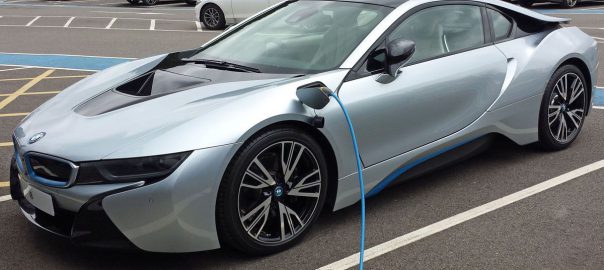
BMW i8 on charge (Image: T. Larkum)
Mercedes EQ
Mercedes has either telegraphed its intentions or perhaps not fully thought through the future and how many models it could have.
In some respects, the brand has done a good job by keeping things simple, creating the ‘EQ’ sub-brand for its initial run of EVs and basing them on its existing range. So, the GLC-based EV is called the EQC, the S-Class version called EQS and the Viano-based model the EQV.
But what happens when the brand wants to build a full-size electric SUV based on the GLS? EQLS? Or a Tesla Model 3 and BMW i4 rival the same size as the C-Class? The EQCC?
Surely, they have prepared a plan for this, but it does have potential to get messy for consumers down the road.
Toyota bZ4X
It’s not clear if Toyota meant to name its new EV SUV this or if someone just mashed the keyboard and liked the result.
But seriously, there is method behind the syntax-defying name, with ‘bZ’ standing for ‘beyond zero’ and signifying the start of a new range of models that will come over the next few years.
It hardly rolls off the tongue like RAV4 or LandCruiser, but it seems EVs can’t have traditional names.
If you would like to know more about Solar Panels and the PowerBanx range of home battery systems, and get a free instant quote, please complete our online form:
Electric cars have come a long way since the first mainstream models were introduced a decade or so ago.
Since the first truly modern fully electric cars were produced in 2009 and 2010 with the likes of the Mitsubishi i-MiEV, the Citroën C-Zero, the Peugeot iOn, and the Nissan Leaf, things have really come a long way. Back then, electric cars were little more than curiosities and seen as impractical by most people. Many would just discount them as being not ready for the market and unable to compete with normal gasoline and diesel-powered vehicles.
Now, that has all changed, and they are rapidly becoming mainstream and are proceeding to displace fossil-fueled cars – in Norway for example the sale of new gasoline and diesel cars will be banned in less than 4 years. General Motors has announced that it is intending to only sell electric vehicles after 2035, while many other car companies are echoing this too. EVs are now almost unrecognizable from what they were just 10 or so years ago. Here are eight ways the EVs have dramatically improved over the last decade.
Increased Range
The range of EVs has been growing dramatically. When the Nissan Leaf debuted in 2010 it came with an EPA range of only 73 miles, now in its second generation, it boasts 151 miles — a doubling in range in just ten years.
But its 151-mile range is dwarfed by some other ranges out there on the market with Tesla’s Model S reaching ranges of more than 400 miles and the upcoming Tesla Cybertruck Tri Motor and the Lucid Air expected to achieve EPA ranges of up to 500 miles.
Dacia Spring 2021 (Image: Dacia.co.uk)
Increased Speed
Tesla’s Roadster, expected to hit production within months, can reach dizzying speeds of up to 250 miles per hour while the Lucid Air is projected to be able to zip along at 168 miles per hour.
The electric vehicles of ten years ago were humble, sluggish affairs that could find themselves stuck in the slow lane of the Interstate Highway. But not anymore!
Charging Infrastructure
Back in 2010, one would be justifiably concerned about the distinct lack of charging infrastructure installed. But today that has changed dramatically – especially in states like California. The growth of charging infrastructure installed is explosive. Additionally, the ranges of the cars have also dramatically improved meaning that the constant need for charging is also less acute.
You can easily explore all corners of California with a Tesla now and while it’s possible some regions may still be very difficult to transverse with shorter ranged EVs – especially in the more mountainous regions that require more power, this is set to change in the near future.
Rapid Charging
The long time it takes to charge the vehicles has also been a significant stumbling block to adoption. But that too is now changing. Back in 2010, the charging times were so long that you basically had to let your vehicle charge in the garage overnight.
Today, superfast chargers like Tesla’s Model S can add 200 miles worth of charge in a mere 15 minutes, while the Lucid Air can add 300 miles worth of charge in 20 minutes. This is rapidly getting to the point of being a little less inconvenient than filling up with gas.
Price
Not only has the performance of the EVs gotten better and better, but the price of electric cars has also fallen precipitously. As economies of scale continue to kick in, that trend is set to continue.
If you would like to know more about Solar Panels and the PowerBanx range of home battery systems, and get a free instant quote, please complete our online form:
Good Energy is launching a new tariff that allows electric vehicle (EV) drivers to charge for free during periods of excess wind and solar generation.
Developed in partnership with Zap-Map – a company Good Energy owns a 50.1% stake in – the Zap Flash tariff includes ‘flash’ windows based on periods where Britain is generating an abundance of solar and wind. Drivers will then be alerted to a four-hour window when charging their vehicle comes at no extra cost and is backed by Good Energy’s 100% renewable electricity supply.
The flash period will vary in day each week, although the times will remain the same in the summer and winter months, with customers to receive at least 24 hours notice ahead of the period. The Summer Flash period will run from April to September between 11am and 3pm, while the Winter Flash Period is to run from October to March between 11pm and 3am.
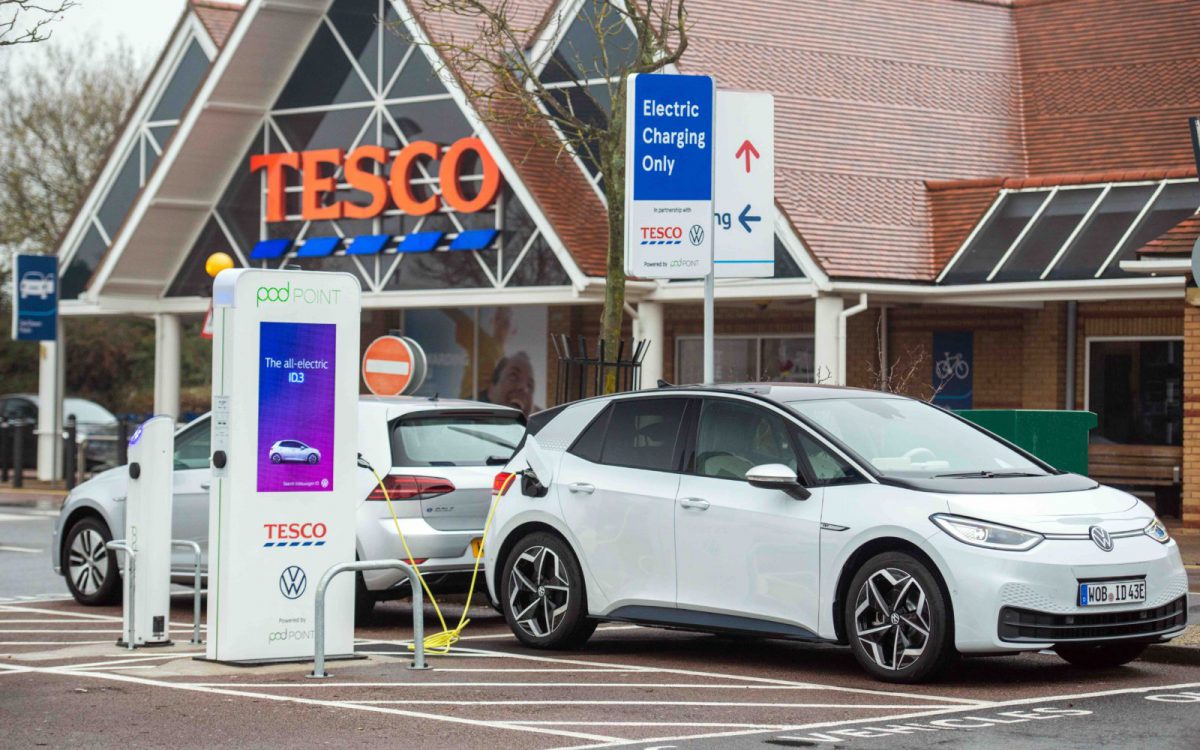
POD Point Rollout at Tesco Stores (Image: Tesco/POD Point)
The tariff will be enabled by smart metering, with Good Energy to rollout smart EV chargers and an updated app alongside the new product. It will initially be launched in beta phase, allowing for more sophisticated versions as the energy supplier learns from customers.
Good Energy’s CEO and founder, Juliet Davenport, said that with Britain generating “so much” renewable electricity, it only “makes sense for us to take advantage of this free resource”.
It was announced in February that Davenport is to step down as CEO, with Nigel Pocklington to takeover the role.
If you would like to know more about Solar Panels and the PowerBanx range of home battery systems, and get a free instant quote, please complete our online form:
Switching to zero emission motoring is hot topic right now, and the results show there is support as seven in ten petrol and diesel drivers said they would consider going electric
The automotive industry is on the cusp of a revolution as 70 per cent of European motorists would consider getting an electric vehicle for their next car.
A survey of 3,500 petrol and diesel, and 3,500 electric car owners spread across seven countries and regions – including the UK – examined EV satisfaction and attitudes other drivers have towards switching to zero emission motoring.
Overall, 89 per cent of EV drivers said going electric was the right decision.
And 97 per cent of EV drivers described the transition from the internal combustion engine (ICE) to EV was as expected or easier.
Seven in 10 petrol and diesel drivers said they would consider going electric – with the environmental benefits topping a list of reasons why, according to the large-scale study commissioned by Nissan.
Arnaud Charpentier, Region Vice President, Product Strategy and Pricing, Nissan AMIEO, said: “With this new research, we’re seeing first-hand that European drivers are embracing electrification.
2020 Renault Zoe (Image: Renault)
“Just as drivers are continuing to explore what electric vehicles have to offer, we are committed to showing drivers the vast benefits of electric mobility and how easy actually it is to make the switch.”
The majority (70 per cent) of EV drivers surveyed said the range autonomy of their electric car is better than expected before purchase.
This counteracts the 58 per cent of ‘ICE’ owners who consider EVs to offer low driving range.
Almost one third (34 per cent) of EV drivers made the decision to switch thanks to the advanced technology offering in electric cars, demonstrating the key role these features play in enhancing enjoyment behind the wheel.
A similar number (31 per cent) of ICE drivers considering an EV also confirm the advanced technology is tempting them to convert, making its role in the electric revolution more prominent than ever.
Low running costs are a big driver for 31 per cent of ICE owners considering the switch – while 83 per cent of EV drivers say their car has lower running costs than an EV.
Nissan launched a collection of testimonials, ‘ My Life with a Nissan LEAF ‘, to highlight owner experiences from around the world.
Among those were Neil Swanson, from Scotland, who initially won a LEAF trial in a competition. He then purchased one and has driven more than 80,000 miles in it since.
Nissan estimates LEAF owners have prevented more than 2.5 million tonnes of CO2 from being emitted into the atmosphere globally.
If you would like to know more about Solar Panels and the PowerBanx range of home battery systems, and get a free instant quote, please complete our online form:
Honda’s electric supermini has its charms, but what’s it like to live with? Let’s find out
Why we ran it: To see if the E has the everyday usability to match its desirability, despite its relatively short range
Life with a Honda E: month 5
Our time is up with Honda’s eye- catching electric city car. So how has it fared in our hands? Let’s find out – 7 April 2021
The world is quite divisive, you may have noticed. Debates are fierce, and the grey middle ground seems lost in a desire to make everything black or white. Whatever happened to a bit of good old-fashioned fence-sitting?
With that in mind, comments about the Honda E tend to go something like this: “Yeah, I love the way it looks inside and out, even more so the way it drives, but its range is tiny, so it’s basically rubbish.” Sure, the range figure is smaller than similarly priced rivals such as the Peugeot e-208, but by enough to discount the E entirely? Not a chance.
We’ll come back to the issue of range later. Yes, it’s part of the story of this car that started with us last summer, but it’s not the only part of it.
Our Crystal Blue metallic-coloured E came in the higher of two trim levels, Advance. This specification gets you not only an extra 17bhp for the single, rear-mounted electric motor, but also some extra comfort, convenience and safety features for a £2500 jump over the base car. For a premium product, it’s a price worth paying to experience the E in its very best light.
On first impressions, and even for the weeks and months that follow, the E will charm you with its exterior styling. This is a fine-looking, well-proportioned car that you never get tired of clapping eyes on – from a company whose styling department has a less than impressive past decade behind it. Indeed, the E looks like it’s from an altogether different manufacturer when it’s sat in a showroom with its Honda rangemates. But it’s a welcome reminder that the Japanese car maker still knows how to nail a timeless design, and it’s one that has never stopped turning the heads of passers-by during its time with us.
Those show-stopping looks make this not just another electric car but also the exact type of car to bring the EV debate to a more mainstream audience. Those conversations with strangers would so often start with a discussion on the looks, or the two side cameras that replace the door mirrors, but then talk would turn to general electric car ownership. Those conversations between curious strangers and real-world EV users give a far better impression of what it’s really like to live with an electric car than an internet search engine can ever hope to achieve.
Ah yes, those mirrors. What I at first thought was a bit of a gimmick actually turned out to be an incredibly useful feature. The ‘mirrors’ display just inside the A-pillars on a screen that extends across from the centre of the dash. The display is crisp, clear and perfectly sited, and the cameras give not only a slightly wider field of vision but also a clearer one that performs particularly well in low light. Quite what they do to the aero performance and therefore range is impossible to quantify in a test like this, but every little helps.
Honda E 2021 (Image: honda.co.uk)
Bravo, too, to Honda for creating such a great interior. There’s a real sense of space and airiness, which comes from a combination of the light-coloured fabrics, large windscreen and even more so the absence of a centre tunnel between the front seats. It’s a really good use of space: with the rear bench up there’s enough room in the back for two adults for short journeys (although the boot is tiny like this), or drive it as I did for the most part with the bench folded flat and you have a spacious two-seater minivan with enough room for a large greyhound to sprawl out on her way to some daily mandated exercise (in the local area, of course).
Nippy off the line, adjustable regenerative braking allowing for true one-pedal use, runs out of puff a bit above 60mph… These attributes could apply to all manner of small EVs, but the E really stands out in other ways. Chief among them is its amazing turning circle, thanks to the rear-mounted motor and rear-wheel drive. Three-point turns have never really been the bane of my life, but I’m now sneaking round in one turn when before it would take three. It really is fantastic.
The E, then, is a car you desire when looking at it, when sitting in it and when driving it, and it comes with three or four killer features that make it excel as the most modern of city cars. If you do most of your miles within a short radius of home and can charge at home (or work, if your commute isn’t a monster), and have access to a second car for longer journeys, then even the range is fine.
The range, then, from the E’s 35.5kWh battery pack, is officially 125 miles. We got close to that in the summer, but it’s a figure that only tells half the story. On the coldest winter days, you’re likely only to manage half that distance, when you need to demist the windows, warm the cabin and make use of the heated seats and steering wheel.
For those who fit the home charging and second-car criteria, is a 125-mile range enough? Most likely, yes, but don’t rush into ownership without taking the 65-mile winter range into serious consideration. I was surprised to find that, despite its range limitations, the E managed everything I asked of it without causing range anxiety. For others, though, that winter range doesn’t half undermine the E’s overall appeal, so any final verdict comes with a significant caveat.
But caveats are fine so long as you go in with eyes wide open: the E is still a great car, just one with a great big (potential) flaw that limits any emphatic
I was captivated by the Honda E – the looks, the interior, the handling and that amazing turning circle. You look forward to offering someone new a chance to ride in it, just to demonstrate how well it turns. But range is the decider. If you need a car for local trips – a city car, as Honda labels it – there’s almost nothing to dislike, especially if home charging is the norm for you. But as your one car for all jobs? Forget it.
Life with a Honda E: Month 4
If you thought its range was too short in the summer, well… – 17 February 2021
We’re very much still in the education phase of electric cars among the public. Many Autocar readers will know their appeal and drawbacks, likewise the early adopters and evangelists – although less of the drawbacks there…
That education must include an explanation of what a headline range figure really means. In the Honda E’s case, 125 miles is very much a best-case scenario, and one valid only for the warmest months of the year. Or warmest days, in the UK’s case.
In the summer heatwave when the E was first delivered, a range approaching 125 miles was indeed possible when I drove carefully and turned the regenerative braking to its maximum, always-on setting using the button on the centre tunnel (rather than the lighter touch given by the steering-mounted paddles).
In the winter, I’ve seen it drop below 70 miles when getting in on a 99% charge (for some reason, it never shows 100%) on the coldest days.
If you would like to know more about Solar Panels and the PowerBanx range of home battery systems, and get a free instant quote, please complete our online form:
InstaVolt has achieved a record month for electric vehicle (EV) charging installations, with 62 rapid chargers set live in March.
These 62 chargers are spread across twenty different regions in the UK, with the highest proportions being in Warwickshire (15), Greater London (six) and Oxfordshire (four).
These new charger installations are to support InstaVolt’s ambitions of delivering 5,000 chargers by 2024/25, with CEO Adrian Keen stating the record couldn’t have been achieved without the effort put in by the installation team, praising for having worked “incredibly hard”.
Instavolt rapid charger at McDonalds (Image: Instavolt)
It comes after InstaVolt opened the UK’s largest public rapid charger motorway hub, located at Welcome Break’s service area on the northbound carriageway of the M6 at Corley in the Midlands.
The EV charging network has also previously signed deals with KFC and McDonalds to rollout chargers at their sites, with the KFC partnership targeting the installation of rapid chargers at up to 450 sites while the McDonalds partnership is for the installation of 125kW chargers at new and existing drive thru restaurants.
If you would like to know more about Solar Panels and the PowerBanx range of home battery systems, and get a free instant quote, please complete our online form:
Oil and gas major Shell plans to install 5,000 rapid electric vehicle chargers in Britain by 2025 in a bid confirm a market-leading position in the transition to clean energy.
The Anglo-Dutch company is also proposing an investment in on-street public charging points, building on its relationship with Ubitricity which it acquired in February.
The plans form part of Shell’s low-carbon strategy unveiled in February which will see more than 30,000 Shell Recharge charge points by 2025. It is working with a network of 17 partners.
Shell currently has 100 “rapid” 50-kilowatt and “ultra-rapid” 150KW chargers on its forecourts in Britain.
A Charging Hub (Image: T. Larkum)
Shell Recharge locations are supplied by 100% certified renewable energy sources, that have been generated using wind, solar and biomass.
Meanwhile, Reuters reports that EU policy plans for plug-in hybrid vehicles (PHEVs), which contain an electric battery and a combustion engine, could mean the “transition” technology has a shorter lifespan than envisaged by some leading automakers.
Draft green finance regulations would ban manufacturers from labelling them as “sustainable investments” beyond 2025, potentially deterring investors. Meanwhile planned rules on emissions of pollutants like nitrogen oxides could increase the cost of producing these cars.
The aim of such reforms is to speed the transit to fully-electric vehicles and meet climate goals.
If you would like to know more about Solar Panels and the PowerBanx range of home battery systems, and get a free instant quote, please complete our online form:
The Texas blackouts caused by the severe winter storm caused havoc for millions of residents earlier this year. But never let a crisis go to waste, as the old saying goes. New Ford F-150 owners realized their trucks’ Power Boost generator could serve as a temporary solution to get some electricity running inside their homes. The automaker even asked Texas Ford dealerships to lend out F-150s with this onboard generator to those in desperate situations. If a combustion-engined truck with a generator can help save the day, a pure battery-electric can do the same, right? Absolutely.
Think of EVs as portable power banks on wheels, but they require one critical feature to distribute that power elsewhere: bidirectional charging. According to Germany’s Handelsblatt, Volkswagen plans to enable this feature on all MEB-based models, such as the ID.4, beginning next year.
Volkswagen ID 4 (Image: Volkswagen.co.uk)
Most new EVs, including the ID.4, have a minimum driving range of around 250 miles. More expensive ones, like the Tesla Model S Plaid, can exceed 500 miles on a single charge. Because of lockdowns and work from home policies, we’re all driving less these days and all indicators point this new lifestyle (or some hybrid form) is here to stay.
That means EVs could have more extra power available for a variety of situations. Bidirectional charging can work in a few ways. The most common method is called “vehicle-to-grid,” or V2G, meaning one can return the car’s stored energy back into the electricity grid. Why would owners want to do this even in non-emergencies? Because they can make money.
Power companies could potentially pay users to return unused energy, and there could be greater incentives to do so during peak hours. Owners usually recharge their vehicles during non-peak hours, like in the middle of the night. Other types of bidirectional charging include vehicle-to-home, vehicle-to-building, and vehicle-to-load.
Somewhat astonishingly, only a few EVs are currently equipped with bidirectional charging, specifically the Nissan Leaf and Tesla’s lineup. The upcoming Hyundai Ioniq 5 will have it as well. VW has confirmed it’s now in the final testing phase for the tech, and other Group brands like Audi and Porsche will get the feature too.
If you would like to know more about Solar Panels and the PowerBanx range of home battery systems, and get a free instant quote, please complete our online form:
Here’s the dream: an affordable electric vehicle that can go as far on a charged-up battery as your regular car can on a full tank of fuel. Believe it or not, that’s not far off – and the Hyundai Kona Electric proves it.
It’s an electric car that you can buy right now and is claimed to travel up to 300 miles between charges thanks to its 64kWh battery. That sort of distance used to be the preserve of much more expensive EV from Tesla and the like.
The Kona Electric isn’t just concerned with being an automotive Duracell Bunny and lasting forever, though – it’s also pretty nippy. Plus, if you’re more concerned about pricing than pace and stamina, it also offers a cheaper 39kWh battery option with a claimed range of up to 189 miles.
Not only does the Kona Electric have a broad appeal on paper, but it’s also bang on trend with its SUV styling. It’s based on – as you might have gathered – the Hyundai Kona, which is the company’s small SUV. But is it better than its competitors?
If you’re looking at an electric vehicle along the lines of a Kona Electric, you’ll probably also be considering the closely-related Kia e-Niro and Kia Soul EV, as well as the Volkswagen ID.3 and Peugeot e-2008. But rivals in this class also stretch to the likes of the Renault Zoe and Peugeot e-208.
Keep on reading this Hyundai Kona Electric review to find out all its secrets, including how far it will go in real-world driving conditions, how it handles, and what the interior quality is like.
Hyundai Kona Electric (Image: Hyundai)
If you do decide you want to buy one, or indeed any other new car, do be sure to try our free New Car Buying service to see how much we could save you, without any haggling at all. Performance & drive
What it’s like to drive, and how quiet it is
The Hyundai Kona Electric’s 39kWh battery option, with 134bhp, offers lively performance, but our pick is the 64kWh version. That packs enough juice to give it 201bhp, which is quite a lot. Such a lot, in fact, that on a wet road the front wheels really struggle for traction. That requires you to be jolly delicate with your right foot to avoid the traction control light winking endlessly as the system tries to manage all the power.
Once you’re on the move, the Kona Electric builds speed almost as quickly as the Ford Fiesta ST hot hatch, with 0-60mph ticked off in around seven seconds (a couple of seconds quicker than the 39kWh version). As it’s electric, there’s no waiting for the engine revs to rise before maximum thrust is delivered – simply flex your right foot and the car sets off with the immediacy of one of Elon Musk’s space rockets.
The Kona Electric is quicker than an MG ZS EV, Nissan Leaf and Renault Zoe, and just as quick as a Kia e-Niro and Volkswagen ID.3. But it’s not actually Tesla quick; a Model 3 would leave it for dust.
When it comes to electric cars, though, performance isn’t just about how quickly you can speed up. It’s also about how far you can travel. In our Real Range tests, a Kona Electric with the smaller 39kWh battery managed a real-world distance of 158 miles. That’s competitive, but the 64kWh version managed a mega 259 miles – more than any other car we’ve tested to date. It’s better by a few miles than the Kia e-Niro, which shares the same battery and motor as the Kona, and a lot better than the ZS EV, Leaf, Peugeot e-2008 and Zoe can manage. It even outperforms the more expensive Model 3.
When you lift off the accelerator, you feel the car slowing down quite quickly thanks to the regenerative braking – a system that allows the car to harvest otherwise wasted energy to replenish the battery. You can increase this braking effect if you wish via the paddles on the steering wheel, and you can even make it so strong that it will bring the car to a complete stop without touching the brake pedal.
In corners, the Kona Electric leans less markedly than the ZS EV or Leaf. In most other respects, though, it’s not great to drive spiritedly; the ID.3 and even the smaller e-208 are better handling cars that offer more accurate steering and have more grip to exploit if the mood takes you. The e-Niro is also sharper to drive than the Kona Electric.
Those rivals are also more comfortable. Whatever speed you’re doing, the Kona Electric jostles around over smaller road imperfections, although never to the point that it becomes truly annoying.
Naturally, being an electric car, the Hyundai Kona Electric is as peaceful as a cathedral at town speeds. Once you pick up the pace, road and wind noise start to increase, and by the time you’re cruising at 70mph there’s more of both than there is in the ID.3 or Peugeot e-208.
If you would like to know more about Solar Panels and the PowerBanx range of home battery systems, and get a free instant quote, please complete our online form: