All posts by Repost

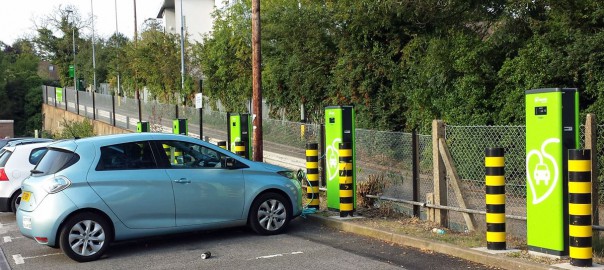
Zappi 2018 EV Charge Point (Image: myEnergi)

Government announces EV chargepoints must be smart to secure grant funding

The new regulations governing the Electric Vehicle Homecharge Scheme will take effect from 1 July, Roads Minister Michael Ellis announced today

Regulations covering a government grant scheme for electric vehicle (EV) chargers will require all devices funded through the initiative to use smart technology from 1 July, Roads Minister Michael Ellis will announce today.

The new rules mean all chargepoints backed by the government’s Electric Vehicle Homecharge Scheme must have the capacity to be remotely accessed and capable of receiving and reacting to a signal.

The functionality enables a device to engage in ‘smart charging’: adjusting when it takes charge to the ebb and flow of demand in the grid, responding to signals from the grid operator to halt charging at peak times.

Zappi 2018 EV Charge Point (Image: myEnergi)

Smart charging helps minimise peaks in electricity demand, minimising the impact of electric vehicles on the grid and keeping costs down for consumers. It also makes it easier to match demand from EVs with peaks in supply from weather-dependent renewables, such as wind farms, maximising emissions and cost savings in the process.

“The government wants the UK to be the best place in the world to build and own an electric vehicle, with leadership and innovation helping us pave the way to a zero emission future,” Ellis said. “Our new requirements for chargepoints could help keep costs down, ensuring the benefits of green transport are felt by everyone.”

Read more: Business Green

Nissan e-NV200 sales soar as UK small businesses electrify their van fleets

  • UK sales of Nissan e-NV200 increase by 200% as business leaders switch to zero emission deliveries
  • e-NV200 tops zero-emissions LCV sales in 10 European markets, including UK, Italy, Norway and the Netherlands
  • The Nissan e-NV200’s environmental credentials and practicality attracts fleet customers including DHL, Chronopost, in adddition to private hire businesses

LONDON, UK (June 14, 2019) – UK sales of the fully electric Nissan e-NV200 have increased by 200% in 2019 as small business leaders look to increase fleet efficiency and reduce costs, amid changing emissions legislation and the introduction of London’s Ultra Low Emission Zone.

The surging demand echoes the results of a recent Nissan survey, showing that 24% of UK small businesses expect van fleets to be fully electric within a decade*.

1 in 3 UK van fleet operators also say that business efficiency is their main motivation when adopting new technologies, followed by cost saving (17%). The e-NV200 is perfect for addressing this demand, with running costs from 2p per mile, and zero tailpipe emissions that ensure the vehicle is exempt from low emission charge zones.

Paolo D’Ettore, Director LCV Business Unit Nissan Europe, said

“The success of e-NV200 truly demonstrates that we have the right product at the right time. The acceleration of fleet electrification – especially in city centres – is a challenge for our customers, so we recognise the need to work with them and provide the optimal ecosystem to support a smooth transition to electric vehicles.

“Thanks to its intelligent design and zero-emissions powertrain, the Nissan e-NV200 is the perfect tool to help businesses maximise their operational success and contribute to a more sustainable future.”

With particularly high demand from last-mile delivery businesses the 40kW e-NV200 has posted record sales across Europe, with over 10,000 orders since its introduction in February 2018.

Read more: Nissan News

2020 Renault Zoe (Image: Renault)

New Renault Zoe revealed: price, specs and release date

Today’s Renault Zoe is one of the most affordable electric cars on sale, but its replacement brings additional tech, a more sophisticated interior and a 236-mile range…

On sale August Price from Around £22,000 (before gov’t grant)

When the current Renault Zoe was launched, it addressed two of the most common complaints about electric cars: the paltry range and high price. But with competition now a lot stiffer, this new version has to push up the former again while keeping down the latter.

Sure enough, while the battery is no larger to ensure it doesn’t eat into passenger space, its energy capacity is up from 41kWh to 52kWh. That results in a 20% improvement in official range, to 236 miles.

2020 Renault Zoe (Image: Renault)

Putting that into perspective, the long-range, e+ version of Nissan’s Leaf can travel just three miles farther, despite costing almost £40k. And the upcoming Peugeot e-208 and Vauxhall Corsa-e both manage only 211 miles.

A full charge of the new Zoe from a 7kW home wallbox takes nine hours and 25 minutes. Or if you’re out and about, 30 minutes plugged into a 50kW public charger gives enough juice for about 90 miles of driving.

Read more: What Car

Fast charging at one of the dozen rapid chargers at Stanmore (Image: T. Larkum)

Mayor of London outlines major EV infrastructure expansion as 2030 target set

EV charging infrastructure in London is to undergo a major expansion, including five flagship charging hubs, in a bid for zero emission transport by 2030.

The Mayor of London, Sadiq Khan, has laid out plans for an ‘electric revolution’ of London’s transport in line with ambitions for the capital to be one of the world’s leading zero-emission cities.

Five flagship charging hubs are to be introduced, the first of which will be operational in Square Mile by the end of 2019.

A ‘one-stop-shop’ for Londoners to request new charging infrastructure from local authorities will also be led by London councils, with the aim of making the switch to EVs easier.

Fast charging at one of the dozen rapid chargers at Stanmore (Image: T. Larkum)
Fast charging at one of the dozen rapid chargers at Stanmore – before they were removed (Image: T. Larkum)

Next generation ultra-rapid charging points are to be installed at London petrol stations later in the year, with 300 rapid chargers to be installed by the end of next year. There will also be a focus on expanding car clubs and bringing more vehicles to the market.

A new electric van, based on the electric black cab, has also been unveiled by the London Electric Vehicle Company, going on sale next year.

Sir John Armitt, chair of the National Infrastructure Commission, said whilst launch of the van and rapid chargers highlights the importance of EVs in improving air quality and reducing the impact of the growth in urban freight, the government should commit to a national rapid charging network.

“More action will needed– such as the ban on new diesel HGV sales by 2040 we recommended in our recent report on freight and reinforcing the electricity network – if we’re to meet the UK’s climate change targets and clean up the air in London and other cities,” Armitt added.

Read more: Current News

The Guilt & Embarrassment Of NOT Driving An EV

For several years now, I’ve felt both guilt and embarrassment for not driving an EV.

I wonder how many other CleanTechnica readers who don’t own an EV yet, who own an ICE (internal combustion engine) car, feel similarly. This article is intended to bring to the surface a possible undercurrent that may exist for many of us who care about the environment, and the climate crisis, and who support EVs.

My next car will be an EV, but mostly for financial reasons (caused primarily by doing a lot of non-paying community volunteer work), I’m not at the moment in a position to buy a new or even a used EV. This bothers me. Every time I go to a gas station and pay money to the oil industry, it bothers me. It bothers me a lot.

Perhaps one might think that the commitment to EVs is shallow. I read CleanTechnica daily, I have for several years, and watch a number of YouTubers who are focused on EVs, including Zac and Jesse of Now You Know, Ben Sullins of Teslanomics, Sean Mitchell of All Things EV, Gali Russell of HyperChange TV, Fully Charged, Tesla Owners Online, Kyle Field, Frugal Tesla Guy, Sandy Munro on Autoline, Tesloop, and E for Electric. I’m a member of the local EV club, and I run a local Green Community Meetup group.

I love new technology, and I’ve attended a local electric utility event where I got to drive a Tesla Model 3, Model S, Nissan Leaf, and Chevy Bolt. There’s another one this weekend that I’ll be attending where I hope I can drive a Model X. I care about the environment, live vegan in part due to environmental considerations, and have studied and written about climate heating here, here, and here.

In short, while I consider myself a well informed and strong supporter of EVs, I still reluctantly drive a gasoline vehicle.

Read more: Clean Technica

Renault Kangoo ZE 33 (Image: Renault)

EU states set binding CO2 limits for trucks and buses

The first European CO2 emission standards for trucks and other heavy commercial vehicles have now been set: the European Council’s formal adoption of the regulation was the final step in the procedure after the EU Parliament had passed the CO2 targets in April.

According to the now-binding regulations, manufacturers must reduce CO2 emissions from new heavy commercial vehicles by an average of 15 per cent from 2025 compared to 2019, and by 30 per cent from 2030. “Such a stepwise approach also provides a clear and early signal for the industry to accelerate the market introduction of energy-efficient technologies and zero-and low-emission heavy-duty vehicles. The deployment of zero-emission heavy-duty vehicles should also contribute to addressing urban mobility problems,” the paper states.

Emission-free and low-emission vehicles will be credited several times by 2024, with a factor of 2 applying to emission-free, i.e. fully electric vehicles. By 2025, manufacturers must also ensure that zero-emission or low-emission vehicles account for at least two per cent of all new vehicles sold.

Renault Kangoo ZE 33 (Image: Renault)

Originally, the EU Parliament had called for more ambitious targets. For example, EU parliamentarians wanted to reduce CO2 levels by 35 per cent by 2030 and by 20 per cent by 2025. However, the member states were not willing or able to achieve this.

The European Council has made it very clear that the guidelines are binding – manufacturers who fail to meet these targets must pay a fine in the form of an excess emissions premium. The Council also iterated a number of times that the measuring and monitoring of CO2 emissions will be robust and transparent. Data will be obtained through on-board devices that monitor the actual fuel and energy consumption of heavy-duty vehicles.

Read more: Electrive

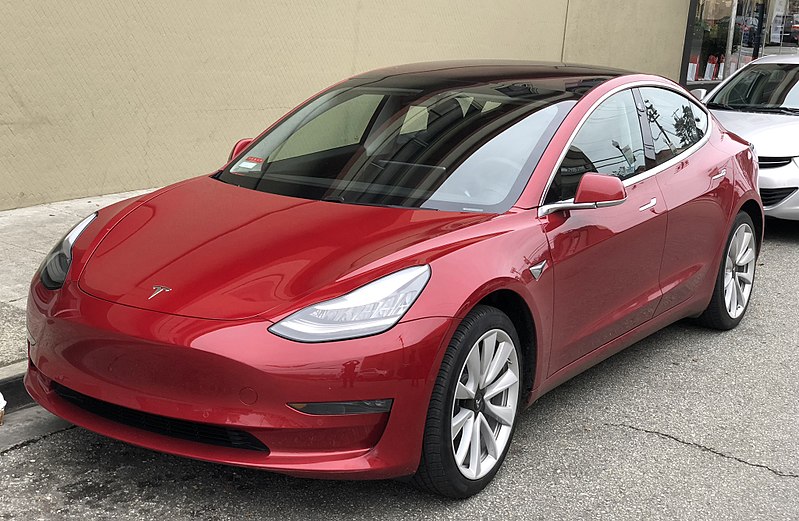
Tesla Model3 (Image: Wikimedia/Carlquinn)

Everyone wants to lease a Tesla Model 3

Leasing company says 3 is more popular than Jag’s I-Pace and the Audi e-Tron

You lot are all desperately trying to get your hands on Tesla Model 3s. Because why wouldn’t you be – it’s a rather nice thing, after all.

It’s so nice, in fact, Leasing.com tells us that in May, it had more enquiries for the Model 3 in the space of one week than it did for “premium rivals” like the Jaguar I-Pace and Audi e-Tron over the whole month.

Tesla Model3 (Image: Wikimedia/Carlquinn)

The only electrified car that garnered more interest last month was the Toyota RAV4. One place back in the website’s league table is the Hyundai Ioniq, then the Toyota C-HR. The I-Pace is back in 5th, while the e-Tron is down in 7th. Of the non-electric/hybrid stuff, it’s the Mercedes A-Class that’s the most popular, with Mercedes being generally the most popular manufacturer.

Read more: Top Gear

BP Chargemaster Rapid Charger at Milton Keynes Charging Hub (Image: T. Larkum)

BP Chargemaster bolsters charging range with new 150kW unit, confirms roll-out plans

BP Chargemaster has unveiled its new 150kW ultra-fast charger, which is to start being deployed across its Polar network.

Dubbed the Ultracharge 150, the charging point features both CCS and CHAdeMO connectors and will be capable of providing some 100 miles of range in 10 minutes.

The charging infrastructure owner also moved to confirm plans to deploy the chargers at BP forecourts throughout the UK over the next two years.

BP Chargemaster Rapid Charger at Milton Keynes Charging Hub (Image: T. Larkum)

At an industry event last month, Tufan Erginbilgic, chief executive of Downstream BP, revealed plans to install 400 of the chargers by the end of 2021, with around 100 being installed across 50 forecourts by the end of this year.

The installations are to be financed by BP Chargemaster, which now counts more than 7,000 charging points across its Polar network.

Read more: Current News

Electric Models To Dominate Car Sales By 2040, Wiping Out 13m Barrels A Day Of Oil Demand

It may not seem like it now, but we may now be living in a world where sales of conventional passenger cars have already peaked, a development that will have widespread implications not just for the automotive sector but also oil and gas companies and metals and mining groups.

Electric vehicles (EVs) are set to make up more than half of global passenger car sales by 2040 and completely dominate the bus market according to new research.

Sales of diesel and gasoline vehicles will continue to decline, according to BloombergNEF’s Electric Vehicle Outlook 2019.

The report shows that electrics will take up 57% of the global passenger car sales by 2040, with electric buses dominating their sector, holding 81% of municipal bus sales by the same date.

Electric models will also make up 56% of light commercial vehicle sales – vans and light trucks in Europe, the US and China within the next two decades, and 31% of the medium commercial market. However, heavy trucks will be a harder nut for electric technology to crack because of their weight, but electric heavy trucks will still comprise almost a fifth of the market, although these will be mostly limited to shorter routes.

Conventional heavy trucks will, however face competition from other alternative fuels such as natural gas and hydrogen fuel cells.

Colin McKerracher, head of advanced transport for BNEF, commented: “Our conclusions are stark for fossil fuel use in road transport. Electrification will still take time because the global fleet changes over slowly but, once it gets rolling in the 2020s, it starts to spread to many other areas of road transport. We see a real possibility that global sales of conventional passenger cars have already passed their peak.”

Read more: Forbes

Tesla Model 3 (Image: Tesla.com)

Tesla Model 3 becomes most popular EV to lease in the UK

The Tesla Model 3 was the UK’s the most popular electric vehicle to lease in May, according to the latest Leasing.com League Tables.

It came out ahead of other popular new electric models such as the Audi e-tron and Jaguar I-Pace, generating more personal lease enquiries within seven days than its premium rivals managed to achieve during the entire month.

Tesla Model 3 (Image: Tesla.com)

Interest in the Model 3, I-Pace and e-tron has seen EV enquiries increase 30% year on year during the first five months of 2019.

Paul Harrison, Head of Strategic Partnerships at Leasing.com, said: “The Model 3’s popularity is down to several factors, with cost being one of them.

Monthly prices for the Model 3 start at around £400 per month, which is almost half the cost of Tesla’s larger models. It also undercuts comparable EVs such as the Audi e-tron and Jaguar I-Pace.

Read more: Motor Trader