All posts by Repost

Charging Hub with eVolt Rapid Chargers (Image: SWARCO eVolt)

Electric vehicle charging hub opens in Dundee

A new charging hub for electric cars has opened in Dundee.

The city has one of the highest concentrations of electric vehicles (EVs) in the UK.

The new hub, situated on top of Greenmarket car park, is the first of three planned in Dundee. It uses solar canopies and a battery storage system to charge up 20 vehicles at a time.

Charging Hub with eVolt Rapid Chargers (Image: SWARCO eVolt)

Currently, vehicles can be charged for free but the city council plans to bring in phased tariffs from November.

Dundee has more than 130 electric taxis and the city council says its own fleet of electric cars and vans is the largest of any local authority in the UK.

The new hub, along with two more planned for the Bell Street and Olympia multi-storey car parks, will provide an extra 300 charge point connections across the city.

Read more: BBC

Mercedes A250e Plug-in Hybrid (Image: Mercedes)

New Mercedes A 250 e 2019 review

With a claimed economy figure of over 200mpg, the new plug-in Mercedes A 250 e is arguably the pick of the range

Verdict 4.5 Stars
The new Mercedes A 250 e isn’t perfect; the ride is a little firm and the petrol engine isn’t particularly smooth. But none of that will matter when you look at the numbers, which are sure to entice a throng of junior execs into this stylish and desirable plug-in hybrid. It offers a usable range, a quiet and refined electric powertrain, and huge fuel and tax savings to boot. Ignoring the fact it currently has no direct rivals, this is the most convincing A-Class to date.

It’d be somewhat crass to suggest the only reason Mercedes has added a trio of plug-in hybrid versions to its small car range is to help it meet upcoming and ever-stringent emissions legislation.

Mercedes A250e Plug-in Hybrid (Image: Mercedes)

Yet mass-market cars like the new A-Class PHEV will significantly reduce the company’s overall CO2 rating, allowing it to avoid some fairly significant fines. Cars like these also have the potential to usher sizeable tax benefits to those considering buying one when order books open next month.

No other car in this class – aside from the now defunct Volkswagen Golf GTE – offers a useable all-electric range, let alone one of more than 40 miles on a single charge. BMW will add a PHEV version to the new 1 Series range in the near future, but we’ll have to wait a while until Audi offers its latest A3 executive hatch with a plug.

Read more: Auto Express

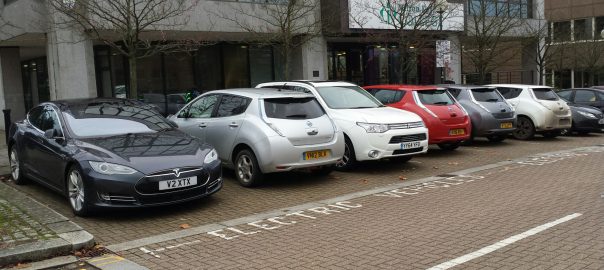
Electric cars charging in Milton Keynes (Image: T. Larkum)

The oil industry vs. the electric car

Electric vehicles could make up nearly half the fleet of passenger cars and trucks by 2040. But oil and gas companies are striking back.

The oil industry is trying to crush the booming electric car movement.

Groups backed by industry giants like Exxon Mobil and the Koch empire are waging a state-by-state, multimillion-dollar battle to squelch utilities’ plans to build charging stations across the country. Environmentalists call the fight a reprise of the “Who Killed the Electric Car?” battles that doomed an earlier generation of battery-driven vehicles in the 1990s.

Electric cars charging in Milton Keynes (Image: T. Larkum)

Oil-backed groups have challenged electric companies’ plans in 10 states, according to utility commission filings reviewed by POLITICO, waging regulatory and lobbying campaigns against the proposals. The showdown is taking place as utilities, eager to increase the demand for power, push for approval to build charging networks in locations such as shopping centers and rest stops in more than half the nation.

“Fossil fuel interests control 90 percent of the transportation fuel market in the U.S. and are really feeling threatened,” said Gina Coplon-Newfield, director of the electric vehicle initiative at the Sierra Club.

The counterattack involves an array of trade associations and industry-funded political groups representing every segment of the petroleum sector.

Read more: Politico

Renault ZOE 2020 (Image: Renault.com)

Test driving the new Renault Zoe: More power, range, and charging options

The new Renault ZOE is here, and I got a chance to test drive it this weekend in Sardinia, Italy.

If you thought you knew the ZOE then think again, because Renault has upgraded the New ZOE with better range, power, and charging options, plus a number of other changes. Check it all out below.

Like the previous ZOE, but better

The previous version of the Renault ZOE, known as the ZOE Z.E. 40, was released in 2016. That car has already sold like hot cakes in Europe, with over 250,000 ZOEs sold. The car’s popularity grew quickly, with many years showing around 50% growth in sales YoY.

Renault ZOE 2020 (Image: Renault.com)

The ZOE eventually became the highest-selling electric car in many markets before the introduction of the Model 3 earlier this year. And even after the Model 3 was introduced, the ZOE held on to an impressive amount of market share.

But now three years later, the ZOE is beginning to show its age. Fortunately though, Renault is back to give us the ZOE updates we’ve wanted and has done so building on its 10 years of experience in the electric car market.

The New ZOE comes with a number of updates and upgrades, yet has managed to maintain the same price. In most markets, the car costs around €23,000 without the battery (which customers can pay a monthly rate towards), or around €30,000 with the battery, though the price varies a bit according to the country.

Major updates to the New ZOE include a more powerful motor, increased range, and new CCS charging.

Read more: Electrek

Cheap Motoring

Electric is reaching TCO parity

EVs are finally making their presence felt in the True Fleet registrations.

By the end of 2019, electric cars will probably hit six figures in the EU18 market. On some markets, the TCO is on a par with ICE cars – all depends on discounts, subsidies and residual values.

Cheap Motoring

Electric is finally appearing to make it presence felt in the True Fleet new car market during the first six months of 2019, already up by almost 27,000 registrations from 1st HY 2018. The momentum is finally building and at the present rate will probably see the fuel type hit six figures by the end of 2019. Hybrid has also increased but by a more sedate 1.7%. Already in the six-figure club, it could finish with close to quarter of a million registrations, Dataforce finds.

The Tesla Model 3 is the rising star – many corporates have been waiting to take delivery of the all-electric alternative to the German premium C and D segment saloons. Interestingly, Renault has been shifting a lot of Zoes in the first half-year of 2019 and the BMW i3 has climbed to number three, ahead of the Nissan Leaf and the VW Golf.

Read more: Fleet Europe

Government Plans to Scrap the £3,500 Plug-in Car Grant Subsidy for Electric Cars

‘I make no bones about it. We want to remove all the subsidy’

THINKING of upgrading to a new pure-electric car? You may want to consider putting your order in sooner rather than later, as the Department for Transport (DfT) plans to fully phase out the Plug-in Car Grant subsidy.

In an interview with The Times, the transport secretary Grant Shapps confirmed the government wants to pull the plug on the grant, which allows buyers of eligible vehicles to save up to £3,500 on their new car purchase — though didn’t indicate when exactly the incentive will be scrapped.

Shapps said: “I make no bones about it. We want to remove all the subsidy. So you can see this in two ways. If you are out there reading this, thinking of buying an electric car, buy it while the subsidy’s there, because it will go eventually.”

While the transport secretary has personally benefitted from the scheme, having purchased a pure-electric Tesla Model 3 saloon, and believes the scheme is “helping people switch to the emissions-free cars of the future”, he said he can’t promise “lots of extra public bungs of taxpayers’ cash so you can buy your new car” in future.

Phasing out the subsidy for pure-electric cars appears to be at odds with the government’s plans to reduce UK emissions and its Road to Zero strategy, which will require all new cars to produce “effectively zero” emissions by 2040.

The transport secretary says he instead wants policy makers play their part in assisting drivers make the switch to zero emission vehicles, helping to “normalise electric cars as being the way forward”.

Read more: Driving

Two-thirds of Brits expect electric vehicles to be ‘normal’ by 2030

Research shows ‘electric cars’ will simply be called ‘cars’ by the end of the next decade.

More than two-thirds of British adults expect electric cars to become so ‘normal’ that they will simply be called ‘cars’ by 2030, new research has found.

A study of 2,000 UK adults found that 69 percent said they expected people to drop the word ‘electric’ from ‘electric cars’ over the next decade. The research, which was conducted by the Go Ultra Low campaign – a joint venture between the government and the automotive industry designed to increase the uptake of low-emission vehicles – revealed that drivers think increasing familiarity with the technology will help normalise the zero-emission cars.

Of the survey’s respondents, a third (33 percent) said they thought seeing family and friends drive electric vehicles (EVs) would help normalise the cars. Almost half (49 percent), however, said seeing more electric cars on the road would be among the biggest factors in changing consumer perceptions.

However, the research also suggested there may be some work to do before consumers make the switch to ultra-low-emission transport. Almost half of respondents (45 percent) said they thought improved charging infrastructure would be key to increasing uptake of EVs, while a quarter (25 percent) said they thought a wider variety of available models would make them more likely to go electric.

But Go Ultra Low suggested these issues may be down to misconceptions, rather than valid concerns. The study found the average Brit believes there are 15 EVs on the market, but Go Ultra Low says there are actually 24 fully electric or hydrogen-powered cars on sale, plus a further 27 plug-in hybrid cars. And the organisation pointed out that the UK’s charging network is “constantly growing”, with more than 25,000 charge connectors currently provided at around 9,500 locations. Recent figures showed the number of British EV charge points has now outstripped the number of petrol stations in the UK.

Read more: Yahoo News

Opel Corsa-e Electric Car (Image: Opel.com)

Opel looks to fix rough EV past with Corsa-e

Opel aims to deliver a small, punchy and affordable electric car when it launches a full-electric version of its popular small hatchback in November.

The Corsa-e is the brand’s first battery-powered vehicle developed since becoming part of the PSA Group two years ago.

Under previous owner General Motors, Opel was an early proponent of electromobility with the Ampera plug-in hybrid, which debuted in 2011, and the full-electric Ampera-e, with its 423-km WLTP-certified range, that arrived six years later. Both Ampera models flopped, however, partly because of their high starting prices.

Opel Corsa-e Electric Car (Image: Opel.com)

Opel wants to be more competitive this time with a lower cost of entry — 29,900 euros — along with offering numerous related services including charging. The starting price is still more than twice that of the entry gasoline version of the Corsa, which will cost 13,990 euros.

“The know-how we have collected [from launching the Amperas] is a tremendous help now that the whole automotive industry is entering the era of mass electrification due to the CO2 targets set by the European Union,”

CEO Michael Lohscheller said at the debut of the Corsa-e this summer.

Read more: Autonews

Mercedes-Benz EQC (Image: Mercedes-Benz)

Daimler stops developing internal combustion engines to focus on electric cars

After reigning in the auto industry as the powertrain of choice for a century, the internal combustion engine is finally dying.

Now even Daimler says that it is stopping development of new internal combustion engines to focus on electric cars.

The German automaker whose namesake, Gottlieb Daimler, is credited for having invented the prototype of the modern gasoline engine recently released its latest generation internal combustion engine and it might be its last.

Mercedes-Benz EQC (Image: Mercedes-Benz)

According to German magazine Auto Motor und Sport, Daimler development chief Markus Schaefer said that they currently have no plans to develop a next-generation combustion engine and they are focusing on new electric powertrains.

While they will not invest in the development of new combustion engines, Schaefer reportedly noted that they still might work on some specific parts to improve on their existing engines.

In recent years, there have been signs that internal combustion engines were reaching their limits.

It became increasingly clear when the entire industry was caught cheating to make it look like their diesel engines were actually more efficient and less polluting than they actually were.

Furthermore, generations of combustion engines have long development timelines and there are other factors that may render the investment worthless.

For example, several countries are implementing or announcing their intentions to ban the sale of new gasoline and diesel-powered vehicles by 2040.

Read more: Electrek

Estate agents urged to tell buyers about air pollution

Estate agents have been urged to automatically disclose air pollution figures to home buyers.

The industry trade body said providing this information should now be standard practice.

“Air quality is now public information, and it will never not be again,” said Mark Hayward, chief executive of NAEA Propertymark.

His comments came as a new website was launched which details air pollution by postcode.

The site, called addresspollution.org, uses data from King’s College London to give the level of nitrogen dioxide.

House price hit?

The website has been created by the Central Office of Public Interest (COPI), a not-for-profit campaign, the Times newspaper reports.

The site is currently limited to properties in London. It shows the concentration of nitrogen dioxide in the air and compares it to the World Health Organization’s annual legal limit of 40 micrograms per cubic metre. Long term exposure to high concentrations of the gas have been linked to early deaths.

Humphrey Milles, its founder, said he thinks it could have an impact on where new homes are built, and that data such as this should be used to determine where schools and homes for the elderly are built.

“The data shows this is isn’t just something that you are exposed to on the road, this pollution is in the air in our homes,” he said.

Read more: BBC