Monthly Archives: January 2023

Record number of public electric vehicle chargers installed in UK in 2022

More than 8,700 chargers installed, bringing total to 37,000 in a 30% increase

British companies installed a record number of public electric car chargers during 2022 as they raced to dominate a fast-growing and potentially lucrative market.

There were more than 8,700 public chargers installed in the UK during the year to 22 December, bringing the total available to more than 37,000, according to Zap-Map, a data company. That represented a 30% year-on-year increase, slower than the 38% annual growth in sales of battery electric cars during the year to November.

Solar EV Charging Hub on Princes Street, Dundee (Image: eVolt)

Boris Johnson’s government announced a target of 300,000 publicly available chargers by 2030, when the sale of new pure petrol or diesel cars will be banned. Year-on-year growth of 30% in the number of chargers installed would be enough to hit the target, although that would mean annual installations more than doubling to 19,000 by 2025 and accelerating from there.

Despite the scale of the challenge, many in the industry regard the 300,000 target as realistic, according to Ben Nelmes, chief executive of New Automotive, a thinktank. Charger companies have more investment coming in than they can put to work, but problems may remain where local authorities are slow to act, he said.

Chris Pateman-Jones, chief executive of Connected Kerb, which plans to install 190,000 on-street chargers by 2030, said he expected a further significant increase in charger numbers during 2023, but “much more needs to be done if the country is to be EV-ready for 2030”.

Read more: TheGuardian

It’s Time to Go Green!

If you would like to know more about Solar Panels and the PowerBanx range of home battery systems, and get a free instant quote, please complete our online form:

The (Wonderful) Downside of Electric Cars

It’s a lovely problem to have.

I’ve written regularly and enthusiastically about my 7+ years with a used Nissan Leaf. And for good reason. I firmly believe that purchasing this car is one of the single best things I have done for both my family finances and my own personal carbon footprint, in many years. (Yes, it’s used. Yes, I drive it as little as possible. And yes, I do own a bicycle.)

However, as my 2013 model starts to inch toward its 10-year mark, I am beginning to reflect more regularly on the one significant downside of electric vehicle ownership: And that’s the fact that I never have to take it to the shop.


Nissan Leaf 3.Zero e+ (Image: Nissan)

No oil changes. No transmission fluid to worry about. And none of the mechanical failures I have previously had to contend with in similarly-aged ICE vehicles. I mean, sure, once a year I do have to get it inspected. But other than that, the maintenance I have had to do on my weird-looking blue steed is little more than occasionally changing a tire, and once having to switch out the 12v battery that runs the accessories. Leaving aside the money I save on gas, I am pretty sure I have saved thousands over the years in maintenance costs alone. So what’s the problem?

Read more: Treehugger

It’s Time to Go Green!

If you would like to know more about Solar Panels and the PowerBanx range of home battery systems, and get a free instant quote, please complete our online form:

Why running out of battery in an electric car gave me hope for the future | Opinion

You’ve heard about how electric cars have things like flat floors, so-called ‘frunks’ for additional storage, and how the removal of engines, transmissions and drivelines allow automakers to experiment with more unconventional designs. It’s all good stuff, but the really life-changing features of EVs will come from how we use the battery.

Features like vehicle-to-load – which allows you to power devices externally using an EV’s charging port in reverse, or the more advanced vehicle-to-grid (V2G) which uses the same technology to dispense enough power for your whole home, or even sell energy back to the power grid.


This technology isn’t just a pipe dream. While the promising vehicle-to-grid technology is currently experiencing some bureaucratic hurdles in Australia, there are already a few models which are ready to support the technology when it can be used, like the Nissan Leaf and Mitsubishi Outlander PHEV, which are V2G capable thanks to their Japanese-standard CHAdeMO charging port.

Read more: CarsGuide

It’s Time to Go Green!

If you would like to know more about Solar Panels and the PowerBanx range of home battery systems, and get a free instant quote, please complete our online form:

Nissan Leaf 3.Zero e+ (Image: Nissan)

Nissan lights up Christmas tree with Leaf as it marks production of 250,000th model

Nissan has marked the milestone of its 250,000th Leaf electric vehicle rolling off its production line with a festive display.

A 32-foot high Christmas tree at its Sunderland Plant has been fully powered using the battery of one of the electric vehicles.


Nissan Leaf 3.Zero e+ (Image: Nissan)

The Leaf has been built on Wearside for more than a decade. Nissan says the Christmas display demonstrates the power of the electric vehicle’s storage capabilities.

The vehicle-to-grid technology behind the model allows drivers to store electricity in its battery, which can then be fed back to the grid or their building as required.

Alan Johnson, vice president manufacturing at Nissan Sunderland plant, said: “Passing aquarter of a million Nissan Leaf is a tremendous milestone, and demonstrates the electricvehicle manufacturing expertise we have built up at our plant over the past decade.

“This year we have completely electrified the plant’s line-up with the new versions ofQashqai and Juke launched, so lighting up the Christmas tree with our original EV is aspectacular and appropriate way to end 2022.”

Read  more: ITV

It’s Time to Go Green!

If you would like to know more about Solar Panels and the PowerBanx range of home battery systems, and get a free instant quote, please complete our online form:

Electric cars perform better in winter conditions than petrol alternatives

As the snow begins to settle across parts of the UK, motoring experts have investigated how well electric cars perform in slippery conditions, with results showing that EVs may have an advantage during the current cold snap.

A new investigation from car buying and selling marketplace carwow showed that  perform better in slippery wintry conditions, giving them another advantage in the current cold snap. Carwow’s latest findings also serve as a timely reminder of how important it is drivers check their cars’ carefully, particularly in the current climate.

The findings are showcased in the latest video released on carwow’s YouTube channel that pits an electric Audi RS e-tron GT against the petrol powered Audi RS3 and RS6 as the three cars face a series of challenges driving up an indoor ski slope.

All three cars are equipped both with four-wheel drive and Pirelli P Zero winter tyres, which have a specially formulated tread design and rubber compound to improve grip in cold, poor-traction conditions.

Despite these equal footings, the electric e-tron GT proved itself markedly superior in carwow’s tough challenges, being able to put its power down more effectively, and beating the RS3 and RS6 in an uphill drag race as a result.

Read more: Express

It’s Time to Go Green!

If you would like to know more about Solar Panels and the PowerBanx range of home battery systems, and get a free instant quote, please complete our online form:
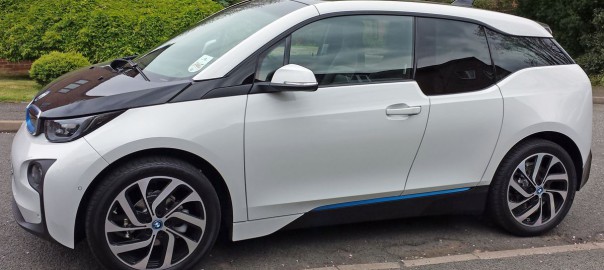
BMW i3 Test Drive (Image: T. Larkum)

BMW i3 is EV cult classic in U.S.

BMW’s first mass-market EV, the i3, is gaining cult status in the U.S.

When BMW launched its i3 electric-hatchback in 2013, it was the automaker’s first ever mass-produced full-electric vehicle.

A quirky little car, with four seats, rear-hinged back doors and a frame made from carbon fiber-reinforced plastic, the i3 stood dramatically apart from the rest of the brand’s lineup.

This was by design. BMW was not trying to convince its core customers to abandon their sporty sedans and roomy SUVs — the goal was to entice early EV adopters to give the automaker a try.

The plan worked perhaps too well. When the i3 started popping up on U.S. dealership lots, BMW loyalists largely ignored it, while new customers came looking for the car.


BMW i3 Test Drive (Image: T. Larkum)

By 2021, the company was ready to refocus on its core customers, and set a goal of making 50 percent of all BMW sales EVs by 2030.

In January 2022, BMW said it would stop production of the i3 entirely, instead leaning into larger, longer range EV options like the i4 and iX — cars meant to look like the brand’s other models.

Over the i3’s nine years on the market in the U.S., slightly more than half of sales went to first-time BMW buyers. But it sold fewer than 50,000 units, according to data from Edmunds, often at steep discounts.

Read more: AutomotiveNewsEurope

It’s Time to Go Green!

If you would like to know more about Solar Panels and the PowerBanx range of home battery systems, and get a free instant quote, please complete our online form:

BMW i4 EV (Image: BMW)

Top 10 best plug-in hybrids to buy 2023

The plug-in hybrid market has grown exponentially in recent years. Here are our electrified favourites

Not everyone is ready to take the plunge with a full-electric vehicle, which makes plug-in hybrids (PHEV) a great ‘stepping stone’. What’s more, with many manufacturers joining the PHEV arms race, there’s now a huge array of models to choose from in a variety of formats – whether you want a SUV, saloon, estate or hatchback, there’s an option out there for you, as our list of the best plug-in hybrids to buy confirms.


Mercedes-Benz EQC (Image: Mercedes-Benz)

There are lots of reasons to make the switch from internal-combustion-engined cars to hybrid, whether you’re looking to lower your carbon footprint, take advantage of government incentives, lower tax rates, or just prefer the drive of a plug-in hybrid car.

The sheer variety of vehicles that now offer plug-in hybrid ability means there are PHEV options to suit buyers from a range of markets. It also means that buyers have a tougher time than ever choosing the best plug-in hybrid car for them. On this page we aim to help by explaining the market and delivering our verdicts on the best plug-in hybrids you can buy.

Read more: AutoExpress

It’s Time to Go Green!

If you would like to know more about Solar Panels and the PowerBanx range of home battery systems, and get a free instant quote, please complete our online form:

NIO Rolls 300,000th Electric Car Off Production Line

In the first half of 2023, the company intends to launch five new models.

NIO celebrates production of 300,000th electric car since the company introduced its first model (ES8) in 2018.


The jubilee vehicle happens to be a blue NIO ET5 mid-size sedan (launched in September), which is produced at NIO‘s Second Advanced Manufacturing Base (NeoPark).

The other five NIO models (ES8 flagship SUV, ES6 all-around SUV, coupe SUV EC6, flagship sedan ET7 and mid-large SUV ES7) are produced at the JAC-NIO Advanced Manufacturing Centre in Hefei.

NIO is currently in an expansion phase – the company recently achieved a new monthly sales record and expands geographically, entering multiple European countries (deliveries of the ET7 in Germany, the Netherlands, Denmark, and Sweden started in October).

The 200,000th vehicle was produced on April 26, so it took less than eight months to produce an additional 100,000 premium BEVs. Cumulatively, NIO sold 273,741 electric cars through the end of November, which also means that there is basically not much inventory (mostly vehicles in transit to customers).

While six models are already a pretty decent EV lineup for a startup, NIO expressed an ambition to launch five new models in the first half of 2023.

Read more: InsideEvs

It’s Time to Go Green!

If you would like to know more about Solar Panels and the PowerBanx range of home battery systems, and get a free instant quote, please complete our online form:

‘Owning an electric car is now cheaper than a petrol car’

That includes the total cost of maintenance, according to new data

In almost all of Europe, owning an electric car is now cheaper than a petrol or diesel one.

That’s according to analysis by LeasePlan, claiming that although electric vehicles (EVs) cost more to buy, this is offset by lower running costs, less maintenance and less to charge up.

The report revealed that “EVs in nearly every segment and European country are now the same price or cheaper on a total cost of ownership basis than petrol or diesel cars.”

The only nations where an EV was still considerably more expensive were the Czech Republic, Italy and Poland.


Smart FourTwo

From a UK perspective, the total monthly cost of running a new EV stood at £790, whilst a petrol car cost £820 and a diesel vehicle £809.

This was even more stark in the nation’s neighbours France – with a cost of £632 for an EV, £778 for diesel and £747 for petrol.

The study also revealed that charging at home was always cheaper than public chargers.

Read more: EnergyLive

It’s Time to Go Green!

If you would like to know more about Solar Panels and the PowerBanx range of home battery systems, and get a free instant quote, please complete our online form:

Bp pulse to provide rapid EV charging for M&S customers

Marks & Spencer (M&S) has signed an exclusive agreement with bp’s electric vehicle (EV) charging business, bp pulse, to install 900 EV chargepoints across 70 of its national stores over the next two years.

The announcement follows the successful pilot installation of 12 rapid (50kW) chargepoints at M&S stores in Eclipse, Southgate and Maidstone.

The roll-out will include a combination of ultra-fast (≥150kW) and rapid (≥50kW) chargepoints that will add 40,000kWhs of charging capacity to the EV infrastructure in the UK, said the retailer.

Each chargepoint will have a minimum capacity of 50kW with either standard grid connection or a battery-integrated solution. M&S have said that as many sites as possible will also include at least one ultra-fast 150kW chargepoint.

Bp pulse will supply, install, operate and maintain these chargepoints.

Commenting on the agreement, Sacha Berendji, director of operations at M&S said: “EV charging is the latest feature to ensure we have a store estate fit for the future, to help our customers live lower carbon lives. We know that services like EV charging are in demand from our customers, so we’re delighted to be offering this service and give more reasons for customers to shop with us.”

Read more: Current+

It’s Time to Go Green!

If you would like to know more about Solar Panels and the PowerBanx range of home battery systems, and get a free instant quote, please complete our online form: