Monthly Archives: March 2021

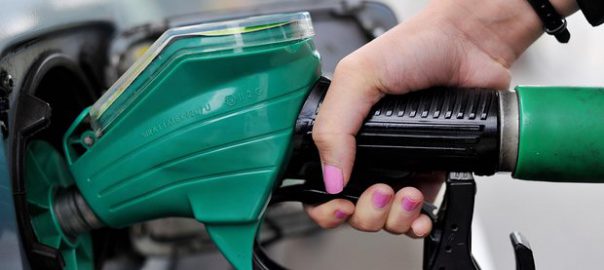
Fuel prices have risen as oil recovers to $40 per barrel (Image: N. Ansell/PA)

Fossil fuel cars make ‘hundreds of times’ more waste than electric cars

Analysis by transport group says battery electric vehicles are superior to their petrol and diesel counterparts

Fossil fuel cars waste hundreds of times more raw material than their battery electric equivalents, according to a study that adds to evidence that the move away from petrol and diesel cars will bring large net environmental benefits.

Only about 30kg of raw material will be lost over the lifecycle of a lithium ion battery used in electric cars once recycling is taken into account, compared with 17,000 litres of oil, according to analysis by Transport & Environment (T&E) seen by the Guardian.

A calculation of the resources for each relative to their weight shows internal combustion engines burn material 300 times greater than that lost once an electric car battery is scrapped. The comparison did not include potential emissions if fossil fuels were burned to create the power for recharging of car batteries.

“Our previous analysis has shown that that electric vehicles emit 64% less CO2, including all the different stages like electricity generation and fuel production, but this still hasn’t shaken off the argument that electric vehicles use up a large amounts of raw materials,” said Lucien Mathieu, a transport analyst at T&E and an author of the report. “Our analysis shows that the raw material needs of EV batteries pale in comparison to the fuel burned by fossil fuel cars, which, unlike batteries cannot be recycled.”

Fuel prices have risen as oil recovers to $40 per barrel (Image: N. Ansell/PA)

In the fossil engine/battery calculations, “we excluded the raw material needed to produce the electricity and the [fossil] fuel because this is contingent on factors such as national electricity mixes and fuel extraction efficiency. In our analysis of upstream energy use [producing the electricity and making the solar panels and turbines used to produce that electricity], we have shown that it would only make a 5% to 10% difference in total energy consumption” for electric vehicles powered by renewable energy.

On other aspects of the two vehicle types, the Brussels-based campaign group said battery electric vehicles were superior to their petrol and diesel counterparts across raw material demand, energy efficiency or cost – as well as eliminating exhaust emissions of carbon dioxide and other harmful gases.

The accelerating move to electric vehicles will entail environmental costs. Higher battery production will require more mining of minerals such as lithium, cobalt and nickel.

However, T&E argued that the cost of oil extraction for fuel represents a much greater environmental toll. The report pointed to a “double standard” used when assessing the relative merits of electric and fossil fuel vehicles, which takes the use of oil for granted.

“When it comes to raw materials there is simply no comparison,” said Mathieu. “Over its lifetime, an average fossil-fuel car burns the equivalent of a stack of oil barrels 25 storeys high. If you take into account the recycling of battery materials, only around 30kg of metals would be lost – roughly the size of a football.”

Developments in battery technology will reduce the average amount of lithium, nickel and cobalt required for each car, mitigating some of the increased demand for the materials as well as lowering car prices. At the same time, circular economy regulations requiring higher recycling rates could cut demand further.

Read more: The Guardian

It’s Time to Go Green!

If you would like to know more about Solar Panels and the PowerBanx range of home battery systems, and get a free instant quote, please complete our online form:

Charging Station in Sunderland (Image: Fastned)

Analysis: How UK grid will cope with an EV revolution by 2030

Executives from National Grid and home battery firm Moixa discuss the challenges

It has been clear for a while now that electric vehicles are coming. If the sales charts and chatter on social media weren’t clues enough, the UK government’s announcement of a 2030 ban on the sale of new ICE cars is the future writ large in bold font. But as Brits start to buy more EVs, many people are worried about the infrastructure to charge them and whether it can cope.

Will the UK’s transport network give us the flexibility we currently enjoy from our cars? In the latest of our Autocar Business Live webinars, sponsored by NewMotion, some of the fog was cleared by our guests: Graeme Cooper, National Grid’s project director for transport decarbonisation, and Ben Fletcher, EV project lead at Moixa, a clean-tech software company working specifically with home batteries.

Some EVs, such as the Nissan Leaf, can serve as a storage medium. Will all cars act as storage devices in the future?

Fletcher said: “This is known as vehicle-to-grid [charging]. The car can take power from the grid or provide it back into the house. There are huge advantages to this, but there are a number of challenges around it. There are some hardware costs – it isn’t just a normal charge point, so that’s a bit more expensive – and there’s also a different way that the driver thinks of the vehicle. They need to be incentivised to be plugging in their car at all times, rather than just when they want it to be taking a charge.”

Cooper added: “There’s societal behaviour with this. I’m three years and 40,000 miles into EV ownership, and when I first had it, I plugged it in every night; now I only plug it about once a week. And if it’s not plugged in, it’s not visible and not controllable.

“We need behavioural scientists to look at this: when you ask people when they use their car, it’s 5.30 to 7.30 on a cold, wet winter’s commute. When does the grid most likely need power out of the battery? At 5.30 to 7.30 on a cold, wet winter’s day. Is this [vehicle-to-grid] going to be big or small? I think the jury is out on that. But one thing I would say is that flexibility is going to be critical. If we’ve got more variable generators like wind or solar, what you need is consumption that turns up or down when that is happening.

Charging Station in Sunderland (Image: Fastned)

Why won’t there be blackouts?

Cooper answered: “Because we [National Grid] are a monopoly, we work to a standard that’s administered by Ofgem, the regulator, and we live up to a 99.99987% reliability; that’s seven seconds a year. When we look forward to what’s coming – more EVs, more electrification of heat – yes, the grid and the energy market will change. But this is a managed transition that doesn’t happen overnight. So we plan for it, we watch for it, we even advise: The people in the National Grid Electricity System Operator do a forward forecast every year called the Future Energy Scenarios that says what we think is coming and how we manage it. The uptake we’re seeing in electric cars now isn’t a surprise.

Is there enough time before 2030 to get it all ready?

Fletcher said: “As somebody who has been involved with the EV market for quite a long time now, what’s interesting is that the ‘hockey stick’ we see with the vehicles [slow growth of sales morphing into rapid uptake] is actually following a similar trend that we see in the number of charge points that are out there. The more people buy EVs, the greater the market there is for people to be charging those cars.

Cooper added: “By 2030, we will have 40GW of off-shore [energy generation capacity] installed in the UK. That’s an additional 30GW on top of what we already have today. Now, that in itself means we need more smart consumption to match that, so the two things go lock-step together. There will be the right wires to do off-shore wind and the right wires to do EV charging. The energy market will grow because of electrifying more things.

“The government has a policy called Project Rapid, which is high-power, on-route charging. They also have £950 million funding in place, and that’s to make sure that at every motorway service area in England, there’s adequate futureproofed capacity for everybody to go clean transport. You will start to see futureproofed grid capacity going into these services.”

What speed does my home charger need to provide?

Cooper said: “If you’re thinking about fuelling an EV like you would a petrol car, then all of this is lost on you. Cars are stationary for 96% of the time, so what you actually want to do is charge the car while it’s parked – so overnight or while you’re in an office. Charging a car fast is actually the wrong thing to do. I come home and once a week, I plug the car in and it charges at 7kW. By the morning, the car is full.”

Fletcher agreed: “You should always be doing something else while your car is charging. So the opportunity gain you get between a 22kW charger and 7kW charger is pretty small, because most people sleep overnight and that’s the time it will take to charge. I’ve never found a [charging] point where 7kW wasn’t adequate for what I needed to do with the car.”

Read more: AUTOCAR

It’s Time to Go Green!

If you would like to know more about Solar Panels and the PowerBanx range of home battery systems, and get a free instant quote, please complete our online form:

2020 Renault Zoe (Image: Renault)

A Complete Guide To Electric Cars

Introduction: Get Charged Up!

As time goes on, electric cars become more popular. There are an increasing number of brands from Jaguar to BMW to Audi that are making their own electric cars, and they’re becoming easier to access for the general public.

There are a lot of benefits to buying an electric car – they’re not just for the richest people in society anymore. They are affordable, and you’ll spend a lot of money on gas. You can also get tax breaks as they are energy efficient.

With that being said, electric cars are still a fairly new thing in some respects. This means that a lot of people may not know how they operate, or even if an electric car is the right choice for them.

Thankfully, we’ve got the lowdown in this article about every single thing you could possibly need to know about electric cars.

When Was The First Electric Car Invented?
It’s easy to think that the electric car was a recent, 21st century invention. What you may be surprised to learn, however, that its history spans back a lot further than this.

Electric cars have actually been around since around the late 19th century, almost the same amount of time that we’ve had standard gas fueled cars.

It is somewhat challenging to pin an exact date on when the first electric car was invented. The reality is that it was a journey consisting of a range of smaller ideas.

2020 Renault Zoe (Image: Renault)

During the early 1800s, many inventors in the Netherlands and the United States were beginning to come up with the idea of vehicles powered by batteries.

It was during this time that some of the very first smaller-scale electric cars were produced. Then, later on the first electric carriage was made by Robert Anderson. With that being said, the first electric cars made for practical purposes didn’t emerge until the latter half of the 19th century.

There are a few different inventors credited with the ideas behind the first electric cars used in a practical setting. The electric motor is generally attributed to the Hungarian Engineer Anyos Jedlik.

Lead acid batteries for commercial projects were invented by the French physicist Gaston Plane in 1859. These two things then combined together to manufacture the first electric car in London in 1884 by Thomas Parker.

The first ‘real’ electric car was made in 1888 by a German inventor by the name of Andreas Flocken, and it was called the Flocken Elektrowagen.

In fact, during the late 19th and early 20th century, electric cars were widely popular and a favorite method of transportation.

They have continued to be popular through the years, especially during the 1960s and 70s where gas was short and electric vehicles were an attractive alternative. They were not without their faults, however.

Today, electric vehicles are seen as an environmentally friendly alternative to gas fuelled cars, releasing far fewer carbon emissions for the sake of a greener planet.

Electric cars may be seen by many as the way forward for motorized vehicles, so understanding more about these energy efficient contraptions is certainly beneficial.

Read more: THINK EV

It’s Time to Go Green!

If you would like to know more about Solar Panels and the PowerBanx range of home battery systems, and get a free instant quote, please complete our online form:

BMW i3 120Ah (Image: BMW)

Electric cars ‘cheaper to insure’ than petrol and diesel

Electric cars are now cheaper to insure than their petrol and diesel counterparts, according to analysis of the electric vehicle market by heycar.

The online car marketplace analysed what a typical driver can expect to pay for a 12-month insurance policy and found that electric vehicle owners are increasingly getting favourable results.

For electric car drivers, 2020 marked a tipping point as data from two of the largest price comparison sites showed that electric vehicles are now consistently cheaper to insure than comparable petrol and diesel cars.

Examining annual insurance trend data from GoCompare, heycar found drivers of the electric Nissan Leaf paid on average £394 a year in 2020. Meanwhile owners of the smaller and cheaper to buy Ford Fiesta were charged £550 for their yearly premiums across all petrol and diesel models.

In 2019 Nissan Leaf drivers paid an average of £424 for their yearly premiums, while drivers of the smaller Ford Fiesta paid £602.

This trend is echoed in data from MoneySupermarket. Figures from the price comparison site show that the electric Renault Zoe cost £451 to insure on average in Q2 2020. In comparison, a Vauxhall Corsa owner paid £776 – more than 70% more than its electric rival.

BMW i3 120Ah (Image: BMW)

When it comes to luxury electric models, the Tesla Model 3 is the most expensive model to insure based on data from MoneySupermarket. However, it also followed the downward price trend seen elsewhere – with the average premium falling 16% from £1,464 in 2019 to £1,223 in 2020.

According to the Association of British Insurers (ABI), premiums for electric cars fell in 2020 because more insurers are entering the market to accommodate the growing number of electric vehicles on the UK’s roads.

Industry data from the Society of Motor Manufacturers & Traders (SMMT) shows a significant increase in the number of new electric vehicles being sold in the UK, with a year-on-year increase of 186% in 2020.

Mat Moakes, CEO at heycar, said: “It is generally assumed that the insurance price for electric vehicles greatly exceeds the price of its diesel and petrol counterparts and it certainly used to be that way.

“But our analysis shows that it is now the opposite as more insurers enter the EV market, which helps bring the price down.

“The cost of electric cars is finally getting cheaper, which is great news for people who drive EVs – and those looking to make the switch – to cut their carbon footprint as they can now do that without footing a huge insurance bill.

“Last year was definitely a tipping point, with insurance premiums for electric cars falling significantly in 2020.”

Read more: Your Money

It’s Time to Go Green!

If you would like to know more about Solar Panels and the PowerBanx range of home battery systems, and get a free instant quote, please complete our online form:

Tesla in Bitcoin’s driver’s seat, sending the crypto’s prices to the roof, literally

Elon Musk is powering electric cars, homes and now he’s trying to give homeowners the chance to mine Bitcoin using his solar panels. He’s got vested interests

Your home can allow you to generate actual Bitcoins with the surplus energy your solar system makes
Musk is now tied to the bitcoin story in the eyes of the Street
Tesla could have made more in profits from its recent bitcoin investment than it has made selling EVs

Tesla made a substantial investment in Bitcoin and allowed the cryptocurrency to be used for car purchases in the future perhaps as a way of differentiating Tesla from other auto manufacturers.

But besides cars, Tesla’s other significant business involves solar panels, solar roofs, and batteries. The batteries are used in their cars and provide power storage for their residential solar systems, sold as the Tesla Powerwall.

Powerwalls can store that surplus energy and power various things in your home, including air conditioners, and charge your Tesla EV.

Tesla Powerwall

But Tesla added a capability to its on-premises solar energy/battery energy management computer that would give it GPUs for mining cryptocurrencies.

These are already connected to home Wi-Fi. They have a management app, so upgrading it with Wi-Fi 6 and attaching it to a cryptocurrency network and an easy-to-use mobile app for cryptocurrency account management would be an achievable systems integration effort for Tesla, given the company’s considerable engineering resources.

It would then be possible for your home to become the ultimate idle money-producing game allowing you would generate actual Bitcoins with the surplus energy your solar system makes.

How smart is that? And just how many birds can Musk hit with one stone?

The key is you need areas with plenty of sun and fewer high-rises and plenty of those exist around the world.

A Tesla solar-paneled roof, on average, will cost $50,000 (to $75,000) or just about the cost of one Bitcoin today. A good mining machine will set you back another $5000 and voila! You’re all set.

Of course, not that simple and there’s plenty of technical issues to be solved before any of this happens, but what a way to sell solar panels and drive Musk’s beloved Bitcoin prices to the roof, quite literally.

Talking about power…
As Texas continues to struggle with major blackouts, some of its residents are finding innovative ways to provide power to their homes, using their cars’ battery packs, including Tesla’s.

Local Tesla owners have used the Tesla Powerwall to provide backup power during the outages and many such owners have taken to Twitter and Reddit to share the wonders of their savior Powerwalls, or simply their seemingly heroic Teslas.

EV adoption is skyrocketing globally, led by China, and Tesla is well-positioned to capitalize on this $5 trillion market over the next decade.

Tesla and Bitcoin share a destiny
Tesla’s share price is now directly linked to the price of bitcoin after Elon Musk’s company invested $1.5 billion into it, according to Daniel Ives, an analyst at Wedbush.

Read more: AMEinfo

It’s Time to Go Green!

If you would like to know more about Solar Panels and the PowerBanx range of home battery systems, and get a free instant quote, please complete our online form:

IONITY rapid charge points at Leeds Skelton Lake Services (Image: IONITY)

Electric car uptake in the slow lane

The government wants to stop sales of new petrol and diesel cars by 2030, but drivers are being slow to switch to electric vehicles.

A report by the National Audit Office (NAO) found that sales of electric cars not growing fast enough to meet the government’s climate targets.

In November 2020, the government announced plans to stop the sale of new cars that are powered solely by petrol or diesel by 2030. From 2035, only zero-emission cars can be sold, and by 2050 government wants almost all cars to emit zero carbon.

But as of September 2020, only 1.1% of UK cars were ultra-low emission including 0.5% which were electric.

By the end of September 2020, sales of new ultra-low emission cars accounted for 8% of the market, above the projections of the Office for Zero Emission Vehicles (OZEV).

But while sales of electric cars have increased, the NAO says “substantial growth” is required to meet the government’s target for them to comprise 100% of new sales from 2035.

The report also criticised the setting up of public charging points in residential areas. Between 2017-18 and 2019-20, OZEV allocated £8.5m to help local authorities install on-street residential charge points, but uptake has been slow.

IONITY rapid charge points at Leeds Skelton Lake Services (Image: IONITY)

By March 2020, government funding had contributed to 142,604 new charge-points, most of which are on private driveways. OZEV has spent £97.2m supporting the installation of more than 133,000 chargers for those with off-street parking.

OZEV informed the NAO that it initially focused on supporting people with off-street parking or with an ability to charge at work. It has not yet focused sufficiently on charge-point availability for people who do not have a driveway.

Gareth Davies, the head of the NAO, said: “The number of ultra-low emission cars on UK roads has increased, but meeting the government’s ambitious targets to phase out new petrol and diesel cars in less than a decade still requires a major transition for consumers, car makers and those responsible for charging infrastructure.

“Government now has the opportunity to reflect on what has gone well and better target its interventions and spending to secure this fundamental change and deliver the carbon reduction required.”

Michael Briggs, head of sustainability at Which?, said: “To ensure electric cars are a viable option for motorists and the UK can hit its net zero target the government must urgently tackle the costs involved for those who do not have the ability to charge at home.

“The public charging network can be confusing due to the lack of easy ways to pay, inconsistency of unit pricing and unreliable apps. The multiple networks of chargers also require motorists to download specific apps, or register a card, prior to charging their car.

“If it wants to achieve its target of phasing out new petrol and diesel car sales by 2030, the government should prioritise making the public electric vehicle charging network larger, simpler and far more accessible than it is today.”

Research by heycar has found that electric cars are cheaper to insure than comparable petrol and diesel models.

It’s Time to Go Green!

If you would like to know more about Solar Panels and the PowerBanx range of home battery systems, and get a free instant quote, please complete our online form:

Scottish Fire & Rescue ZOE (Image: Renault)

Should Businesses be Considering Electric Cars for their Company?

There was a time not too long ago when an electric car would be a rarity on the roads, but these days they are becoming increasingly prevalent with so many motorists making the switch. So, should businesses be looking at electric vehicles as their new company cars? Read on to discover why this might be a good choice and could bring a range of benefits.

Tax Laws
Tax is always an important consideration when looking at a company car and switching to electric could help your business to make huge savings. In April 2020, the BIK rate for fully electric vehicles become 0% which is enticing for those looking to offer a company car scheme to their employees.

Employees Want Eco-Friendly Vehicles
It is clear that people are becoming increasingly eco-conscious and looking for ways to reduce their environmental impact, so providing an electric car for your employees will keep them happy and show that you are a business that is considerate to the environment.

Scottish Fire & Rescue ZOE (Image: Renault)

Employees More Interested in Electric Cars
In addition to being green, electric cars are also more interesting and modern to today’s motorist. Electric cars have become symbolic for being progressive, forward-thinking and modern with many impressive options available, so this can be a smart way to show that you are a business that adapts to the times.

Cheaper to Run
Of course, another major benefit to switching to electric is that they are significantly cheaper to run. While the upfront cost can be higher, you will make huge savings in the long-term when it comes to fuel and road tax. As with any vehicle, you also need to make sure that you protect your investment with GAP insurance being a smart form of insurance which would stop you from being out of pocket if the vehicle is ever written off.

Good Image for Your Business
Today’s consumer is becoming increasingly eco-aware and selective of the brands that they use. Therefore, driving an electric car is good for your brand image and will position your company as one which cares about the environment.

Charging has Become Easier
One of the main reasons that the uptake was initially slow for electric vehicles was due to concerns over charging and range anxiety. This is no longer an issue as the battery technology has improved drastically and there are now twice more electric charging points than petrol stations, meaning that you do not have to worry about the range of your electric car.

As you can see, there are a multitude of benefits to a business for making the switch along with the obvious environmental perks.

Read more: CoFounder

It’s Time to Go Green!

If you would like to know more about Solar Panels and the PowerBanx range of home battery systems, and get a free instant quote, please complete our online form:

Volkswagen ID 4 (Image: Volkswagen.co.uk)

2021 Volkswagen ID 4 second drive review: Refreshingly normal

Our second go with VW’s upcoming EV leaves us convinced that electrification is the way forward.

It’s been a long time coming, but the 2021 Volkswagen ID 4 EV is nearly here. That is, nearly ready for patient buyers to actually take the things home and experience what VW can do when it makes up its mind to build an electric car from the ground up.

Don’t get me wrong, the VW e-Golf was great, but shoving a battery pack in a car designed around an engine and gasoline tank necessarily results in some substantial compromises. The ID 4’s MEB platform was designed for EVs like this, and as such offers far more range and a much better layout than the humble Golf.

How much more range? At 250 miles per the EPA, the ID 4 can go twice as far on a charge as the e-Golf. That’s despite having much more power (201 horsepower and 228 pound-feet of torque) and being bigger and roomier, too.

My colleague Steven Ewing already had a go in the American flavor of the ID 4, so I won’t rehash too many details, but suffice to say my impressions behind the wheel were very much the same. Despite all that power going to the rear axle, there’s very little that’s sporty about the ID 4. It accelerates briskly but not angrily and offers a comfortable, relaxed ride quality. It’s a very different thing from Volvo’s electric XC40 Recharge, which is surprisingly quick.

Volkswagen ID 4 (Image: Volkswagen.co.uk)

This observation is not a strike against the VW. Far from it. I really liked the chill feel of the ID 4, a vibe you pick up as soon as you get in the car. The stark, white of the steering wheel and other interior highlights present on this First Edition give the car a bright, modern aesthetic that’s more concept car than conventional cruiser. Even the act of driving away is free of drama. You just sit down, tilt the gauge-cluster-mounted shifter in the direction you want to go, and step on the accelerator.

The shifter is very much in the style of that found in another EV, BMW’s i3, which I adored. This style didn’t catch on back then, and I’d probably be letting optimism get the better of me to hope that it might do so now. Regardless, it’s far more intuitive than the push-button solutions showing up on more and more cars.

After you get where you’re going, just push a button to put the car into park (it clicks like a mouse when you do), get out, and walk away. The car powers itself down.

To find more fresh takes on everyday tasks, look no further than this VW’s HVAC system. Sure, you can do the usual zones and temperatures and defrost settings, but the ID 4 adds some smarts and personality with Smart Climate modes. Are your hands cold? There’s a mode for that, which turns on the steering wheel and directs warm air through the dashboard vents. Feet too hot? There’s a mode for that too, plus one called Fresh Air that quickly sucks in some ambient atmosphere — not something I sampled much on my chilly New Jersey drive, I confess.

Control freaks will surely want to dial in their own climate settings, which they can do, but I’ll be curious to see how well these modes strike their targeted scenarios when we get a chance to spend a little more quality time with the ID 4. I’m also curious to see whether Volkswagen can improve the responsiveness of the software the car is running, because right now, it’s all sorts of laggy. That’s not good given how many of the car’s systems are all handled via the center-mounted touchscreen.

Really, though, that’s the only fly in this ointment. The 2021 Volkswagen ID 4 is an impressive package. From the fresh look inside and out to the overall calm, relaxed aura of the thing, it left me smiling and wanting more. Hopefully that’s something we’ll all get soon.

Read more: CNET ROAD SHOW

It’s Time to Go Green!

If you would like to know more about Solar Panels and the PowerBanx range of home battery systems, and get a free instant quote, please complete our online form:
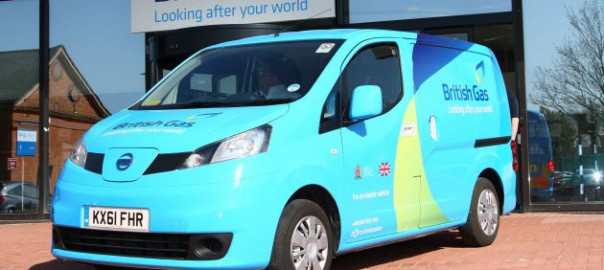
British Gas has a fleet of 100 e-NV200s

Centrica commits to fleet electrification by 2025

Centrica has committed to electrifying its 12,000-strong operational fleet by 2025, five years earlier than it had previously aimed for.

It comes as British Gas – its energy supply arm – orders a further 2,000 of the new all-electric Vivaro-e vans from Vauxhall for its engineers, the largest electric vehicle (EV) order for a commercial fleet in the UK ever. It adds onto the 1,000 ordered by the energy supplier last summer, which at the time was celebrated as the largest order.

All 3,000 of the EVs will be on the road by 2022, with engineers able to volunteer to have the new vans during the rollout, although the company is prioritising high pollution areas to help lower emissions.

British Gas engineers will install all chargers at engineer homes. The company is currently increasing the EV engineer workforce through training existing engineers, recruiting new engineers and creating 1,000 new engineering apprenticeships by the end of 2022.

British Gas has a fleet of 100 e-NV200s

In December, Centrica announced it had signed a three-year framework with Alfen to supply EV chargers to British Gas engineers and Centrica sites, with the chargers to be initially be rolled out at the homes of British Gas engineers before then being installed at their premises and those of Centrica.

Centrica will also make its 1,500 company cars EVs by 2025, it announced, and will be making further orders with Vauxhall for EVs as soon as they are available.

Chris O’Shea, chief executive of Centrica, said that electrifying the company’s fleet will “make a big difference” when it comes to lowering emissions.

“At the same time, we are helping our customers make the switch to electric and working with motor manufacturers such as Vauxhall on services and solutions for their EV customers such as charge points, infrastructure and innovative EV tariffs with cheaper charging at night and free EV miles,” he added.

Read more: CURRENT

It’s Time to Go Green!

If you would like to know more about Solar Panels and the PowerBanx range of home battery systems, and get a free instant quote, please complete our online form:

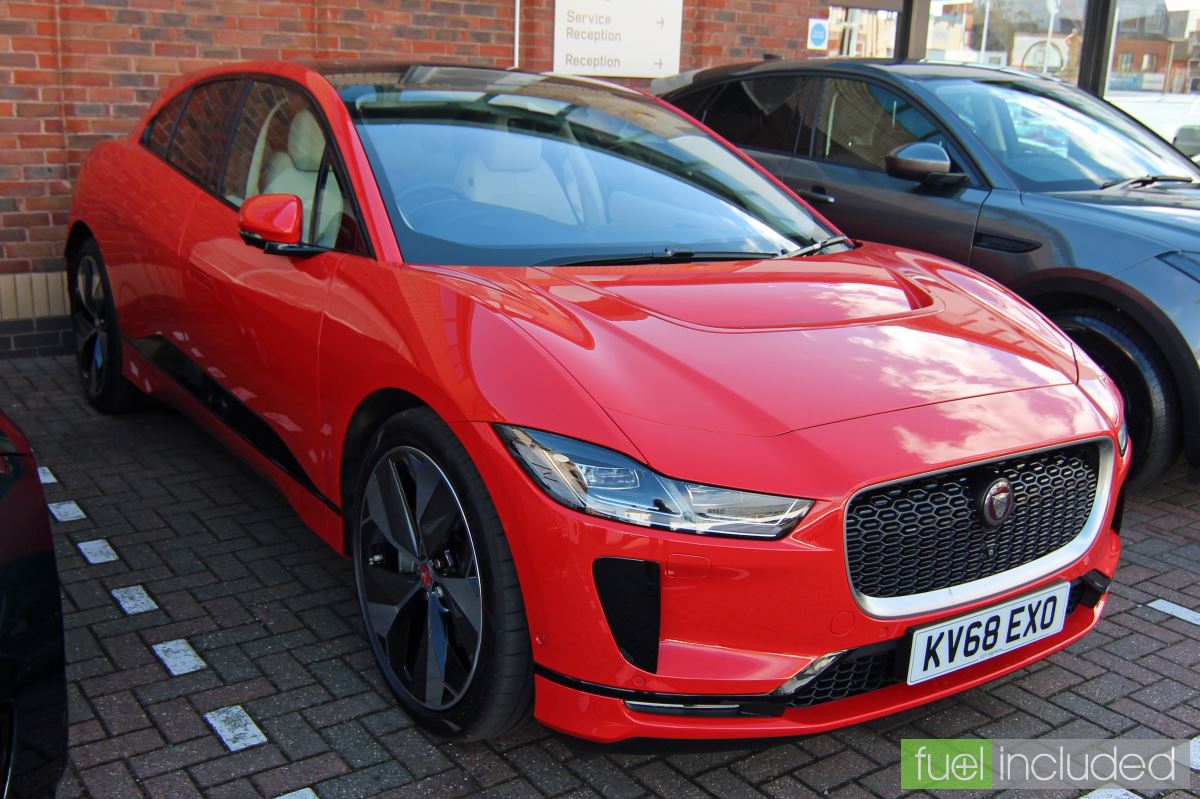
Jaguar I-PACE Electric Car (Image: T. Larkum)

Jaguar announces it will be all-electric brand by 2025, Land Rover to quickly follow

Jaguar Land Rover announced today a new global strategy called “Reimagine,” and it involves a serious acceleration of the electrification of all its brands, including Jaguar going all-electric by 2025 and Land Rover following with mostly electric vehicles after that.

As part of the new plan, the automaker is planning to have Land Rover and Jaguar brands develop separate electric architectures with “two clear, unique personalities.”

It said about Land Rover:

In a Land Rover, vehicle and driver are united by adventure. By breaking new ground, confronting new challenges and not being content with the expected, Land Rover truly helps people to go ‘Above and Beyond.’ In the next five years, Land Rover will welcome six pure electric variants as it continues to be the world leader of luxury SUVs through its three families of Range Rover, Discovery and Defender. The first all-electric variant will arrive in 2024.

And then it wrote about Jaguar:

By the middle of the decade, Jaguar will have undergone a renaissance to emerge as a pure electric luxury brand with a dramatically beautiful new portfolio of emotionally engaging designs and pioneering next-generation technologies. Jaguar will exist to make life extraordinary by creating dramatically beautiful automotive experiences that leave its customers feeling unique and rewarded. Although the nameplate may be retained, the planned Jaguar XJ replacement will not form part of the lineup, as the brand looks to realize its unique potential.

Jaguar I-PACE Electric Car (Image: T. Larkum)

More concretely, it means that all new Jaguar vehicle will be all-electric by 2025, and by 2030, the British automaker expects 100% of the sales from the brand to be all-electric vehicles.

As for Land Rover, it will lag a bit behind the Jaguar brand, which already has an electrification lead with the I-Pace.

It will get its first all-electric vehicle in 2024, and by 2030, the company aims for 60% of all sales coming from all-electric vehicles.

Here are the highlights of Jaguar Land Rover’s new global strategy:

New global strategy – Reimagine – announced for the British company under the leadership of Chief Executive Officer, Thierry Bolloré
A sustainability-rich reimagination of modern luxury, unique customer experiences, and positive societal impact
Start of journey to become a net zero carbon business by 2039
Reimagination of Jaguar as an all-electric luxury brand from 2025 to ‘realize its unique potential’
In the next five years, Land Rover will welcome six pure electric variants as it continues to be the world leader of luxury SUVs
All Jaguar and Land Rover nameplates to be available in pure electric form by end of the decade; first all-electric Land Rover model in 2024
Clean-hydrogen fuel-cell power being developed in preparation for future demand
Streamlined structure to deliver greater agility and promote an efficiency of focus
Global manufacturing and assembly footprint to be retained, rightsized, repurposed and reorganised
Collaborations and knowledge-sharing with industry leaders, in particular from within the wider Tata Group will allow the company to explore potential synergies on clean energy, connected services, data and software development leadership
On a path toward double-digit EBIT margin and positive cash flow, with an ambition to achieve positive cash net-of-debt by 2025 with a value creation approach delivering quality and profit-over-volume

Read more: electrek

It’s Time to Go Green!

If you would like to know more about Solar Panels and the PowerBanx range of home battery systems, and get a free instant quote, please complete our online form: