Monthly Archives: July 2020

Volkswagen ID.3 electric car (Image: Volkswagen.com)

After Making 6 Million Golfs, VW’s Zwickau Plant Switches to Electric Cars Only

In what is perhaps the clearest sign that German carmaker Volkswagen is not joking around when it comes to its plans of becoming the planet’s largest electric car producer, the group announced at the end of last week a major shift in the production plan of its factory in Zwickau, Germany.

Having rolled its lines for the first time in 1990 for VW (the facility dates back to 1904, and was used by others as well, including Audi and Trabant), the site was mainly tasked with making the Volkswagen Golf (it also made Polos and Passats), and in the 30 years that have passed since, over 6 million units of the carmaker’s most successful car were produced there.

But no more. Last week, the last ICE-powered Golf rolled off the assembly lines. Starting this week, the facility will begin churning out electric vehicles only, starting of course with the ID.3.

Volkswagen ID.3 electric car (Image: Volkswagen.com)

For next year, the carmaker has a planned production output of 330,00 vehicles, as it will add production of electric cars made with the logos of Audi and SEAT as well. With this development, Zwickau is set to become Europe’s largest EV manufacturing hub.

“Zwickau is steeped in German automotive tradition. Our team has always delivered excellent performance and built vehicles with excellent quality,” said in a statement Jens Rothe, Chairman of the General Works Council at Volkswagen Sachsen.

“We have gained the trust in the Group to become the first location to start fully electric large-scale series production. The Zwickau plant is therefore well-equipped for the future.”

Read more: Auto Evolution

It’s Time to Go Green!

If you would like to know more about Solar Panels and the PowerBanx range of home battery systems, and get a free instant quote, please complete our online form:

Instavolt rapid charger at McDonalds (Image: Instavolt)

Electric Car CHARGING rolling out at McDonald’s in the UK – and it’s 125kW Rapid Charging

McDonald’s partners with InstaVolt to roll out rapid charging for electric cars at its UK restaurants, offering proper 125kW Rapid charging.

The rise and rise of electric cars seems pretty much unstoppable for now, but as the take-up of electric cars starts to shift from ambitious early adopters to the mainstream, there are still a number of obstacles to overcome.

Instavolt rapid charger at McDonalds (Image: Instavolt)

Price is still a big barrier for EVs, but there is light on the near horizon for that with predictions battery costs will soon mean EVs can be sold at prices comparable to ICE cars, and the electric car charging network is still an issue.

Yes, there are lots of little 7kW chargers floating around everywhere from on-street to supermarket car parks, but as batteries get bigger – and lower costs will see them getting better still – an hour-long charge at Tescos on a 7kW charge won’t do much more than get you home again.

But now McDonald’s has teamed up with InstaVolt to install proper Rapid Chargers at their UK Drive Thru restaurants, offering up to 125kW charge rates, enough to deliver an 80 per cent charge in most EVs in the time it takes you to wolf down a big Mac and Fries.

Paul Pomroy, McDonald’s UK CEO, said:

With over 1,300 restaurants our ambition would mean you would never be far from a charging point. As we look toward a return to normal service post-COVID19, drivers will be able to pop in for a coffee or a meal and get an 80% charge in 20 minutes. We are known for speed and convenience, and this partnership with InstaVolt will provide just that for EV driver.

Read more: Cars UK

It’s Time to Go Green!

If you would like to know more about Solar Panels and the PowerBanx range of home battery systems, and get a free instant quote, please complete our online form:

Mazda MX-30 EV (Image: Mazda)

The Mazda MX-30 is a corking little e-car

From the MX-30’s unique interior to its futuristic exterior, Mazda’s first entry into the EV world is definitely something different…

When I see the letters MX, I usually experience a frisson of excitement. They immediately make me think of the MX-5, hands down the greatest roadster ever made. And yes, I’m happy to argue that out with anyone. Because I’m right.

So when I saw that Mazda’s first electric car was called the MX-30, that little frisson of excitement hit me once again. Surely Mazda wouldn’t use those two letters lightly? After all, they belong to the best-selling two-seater convertible of all time. A car that is an absolute joy to drive.

Mazda MX-30 EV (Image: Mazda)

So, does the MX-30 live up to its moniker? Well, kind of. Because just as the MX-5 was revolutionary in its day, Mazda’s first electric car is doing it differently too.

There’s plenty of innovative design in Mazda’s MX-30. But there is one element that sticks in our memory: the cork interior. Rather than use the conventional plastic, metal or wood to trim parts of the dashboard, Mazda’s designers chose the material that plugs wine bottles, holds pinned notes to boards and hides damp patches in bathrooms decorated in the 1970s.

There’s some reasoning for it of course. It turns out Mazda was founded a century ago as a cork manufacturer. It developed some machines to help the processing and then somehow evolved into a carmaker. It’s a nice historical nod, but the cork’s use inside the MX-30 is also an indication that this is a company who likes to do things a little differently.

While its Japanese rivals, Toyota, Honda, Nissan and Mitsubishi, have been building hybrids and electric cars for more than a decade, Mazda has resisted the current flow. It argued that there are still ways to make the internal combustion engine more efficient, as shown by its Skyactiv petrol engines. The combination of light weight and engine technology means even a car like the MX-5 will squeeze 55 miles out of a gallon without even trying.

But now, with the forced end of internal combustion engines looming and the imposition of heavy emissions taxes, Mazda is bowing to the trend. But it’s not going to go the usual way. It wants to make its EV lighter and more efficient, while still being fun to drive. More like a BMW i3 than a Tesla. More, in fact, like the MX-5.

The MX-30, which can now be ordered at prices starting at £27,495, doesn’t have any direct rivals. The most obvious are the Mini Electric and the Honda e, both of which are thoroughly modern but have cutesy retro styling. But the MX-30 instead has a futuristic SUV-like look and pillarless doors, just like a BMW i3 or Mazda’s own deceased sports coupe, the RX-8.

They may not share an aesthetic but what the MX-30 does have in common with the Mini and Honda is a surprisingly small battery. At 35.5kWh it is noticeably smaller than rivals such as the Kia e-Niro’s 64kWh. For comparison, the newer VW ID.3 will start at 45kWh and offer up to 77kWh in the top version. And the bigger the battery, the bigger the range.

Read more: GQ Magazine

It’s Time to Go Green!

If you would like to know more about Solar Panels and the PowerBanx range of home battery systems, and get a free instant quote, please complete our online form:

Incentivising EVs suggested to reduce coronavirus impact

Electric vehicle tax breaks, scrappage schemes and extended emissions zones have all been proposed to reduce the likelihood of a second wave of coronavirus in the All-Party Parliamentary Group Air Pollution’s (APPG Air Pollution) latest document; Air Quality Strategy to Reduce Coronavirus Infection.

The Air Quality Strategy document recognises the importance the global lockdown has played in transforming, “the way we have lived, worked and interacted with each other and, in that process, significantly reduced air pollution.”

The document states that there is a connection between cleaner air and a reduction of COVID-19 risk – emerging evidence suggests that short term exposure to air pollution increases the risk of coronavirus infection – underlining the importance of a comprehensive air quality strategy as we emerge from lockdown. This is in addition to premature death figures for Europe of 470,000 each year pre lockdown attributable to air pollution – including 64,000 in the UK, and with poor health related to air pollution estimated to cost £20bn each year in the UK alone.

Geraint Davies, chair of the APPG Air Pollution, said:

“Air pollution may also carry the virus further afield. A study published in the New England Journal of Medicine finds the virus can remain infectious and airborne for hours and explores how pollution may transport coronavirus through the air. It is therefore essential that the government ensures pollution remains low.”

Read more: Fleet World

It’s Time to Go Green!

If you would like to know more about Solar Panels and the PowerBanx range of home battery systems, and get a free instant quote, please complete our online form:

The EV road to recovery

It is no surprise that business priorities have shifted since the Covid-19 crisis, as many look to preserve existing resources and start the rebuilding process. However, against the backdrop of the government’s ‘Build Back Better’ messaging, there is an opportunity to ensure sustainability remains a central part of any future plans.

According to research from the International Energy Agency, since travel restrictions were imposed at the start of the pandemic, up to 2.6 billion metric tons of carbon dioxide emissions have been prevented globally. The recent UK lockdown resulted in an unforeseen boost to the progress towards net-zero and businesses across the utility industry can look to use this shift as a catalyst for long-term change by accelerating their transition to electric vehicles.

Positive steps have already been taken by key players across the energy sector. Giants including Eon and British Gas have pledged to electrify their fleets and install the necessary charging infrastructure within the next ten years, as part of The Climate Group’s EV100 commitment, which we’re also signatories of.

As we begin to take the first steps towards a green recovery from the crisis, what should utility businesses consider when exploring their Electric Vehicle (EV) options and what is really driving fleet electrification?

Read more: Energy Digital

It’s Time to Go Green!

If you would like to know more about Solar Panels and the PowerBanx range of home battery systems, and get a free instant quote, please complete our online form:

OVO Vehicle-to-Grid (V2G) charging (Image: T. Larkum/Fuel Included)

V2G has ‘huge potential’ beyond financial benefits

Vehicle-to-grid (V2G) technology has been “reduced down” to making revenue from energy trading despite having a “range of opportunities” and benefits.

Vehicle-to-grid (V2G) technology has been “reduced down” to making revenue from energy trading despite having a “range of opportunities” and benefits.

This is according to a new review of nine European V2G projects by Cenex. The review, which was funded by Innovate UK, found that the traditional model for V2G of generating revenue through energy trading is only one of a number of opportunities for the technology, highlighting key value propositions such as resilience, the benefits to society, enhanced battery management and self sufficiency.

OVO Vehicle-to-Grid (V2G) charging (Image: T. Larkum/Fuel Included)

According to the review, V2G can significantly reduce energy system greenhouse gas emissions, as well as ensure resilience in the event of power outages and prolong the battery life of an EV.

Battery degradation is a contentious topic when discussing V2G technology, as increased cycling takes place for arbitrage, which is likely to increase a battery’s degradation.

However, the review states that whilst V2G for revenue generation is often associated with increased battery degradation, using V2G for grid services that are based on power availability but have low energy usage will “have a limited impact on battery degradation”.

In fact, it outlined how “based on current evidence”, V2G could extend the life of an EV battery by about 10%, which would allow customers to use the EV for longer and therefore reduce the total cost of ownership as well as help to reduce end-of-life waste and the demand for mining of new materials.

Read more: Energy Storage News

It’s Time to Go Green!

If you would like to know more about Solar Panels and the PowerBanx range of home battery systems, and get a free instant quote, please complete our online form:

Majority of drivers would consider EV purchase after lockdown

The majority of drivers have noticed a decline in air pollution during lockdown and would be willing to purchase an electric vehicle (EV) to help keep it this way, according to a survey carried out Smart Home Charge.

According to the survey, which was conducted on 291 people, 72.5% of respondents said good air quality was ‘very important’ to them with 97% saying they have noticed the positive effect that lockdown has had on local air quality.

68.4% of respondents acknowledged that having too many petrol/diesel vehicles on the road is having the biggest impact on air pollution and consequently 66% said they would be willing to purchase a fully electric car to help keep air pollution levels down.

14.4% said they would be willing to cycle and walk more, 2.1% said they would consider car-sharing, and 3.1% said they would avoid driving into town altogether.

Over 50% of respondents also said they would be more likely to buy a new or used EV in the next year if the government introduced a scrappage scheme for petrol and diesel cars.

Read more: Air Quality News

It’s Time to Go Green!

If you would like to know more about Solar Panels and the PowerBanx range of home battery systems, and get a free instant quote, please complete our online form:
Electric vehicles critical to post-pandemic UK economy claims report

Electric cars could benefit the UK economy by £24bn provided suppliers can rapidly ramp up their capacity to ten times current levels, according to new research published by the Advanced Propulsion Centre (APC).

The ‘Strategic UK opportunities in passenger car electrification’ report argues that with passenger cars requiring some form of electrification by 2030, the technology to achieve this will be crucial to the UK economy post COVID-19.

£50m clean mobility centre launched in Coventry

The report highlights market growth opportunities of £12bn for batteries, £10bn for power electronics and £2bn for electric machines (i.e. electric motors) but claims that delivering on these opportunities will require suppliers to ramp up their capacity to 10 times current levels.

“The electrification of vehicles is happening at pace,” said APC CEO Ian Constance, “but if we are to deliver on our 2035 goals, and take our place as world-leaders, the supply chain will need to expand more rapidly – our research predicts up to ten-fold in the next five years.”

Read more: The Engineer

It’s Time to Go Green!

If you would like to know more about Solar Panels and the PowerBanx range of home battery systems, and get a free instant quote, please complete our online form:

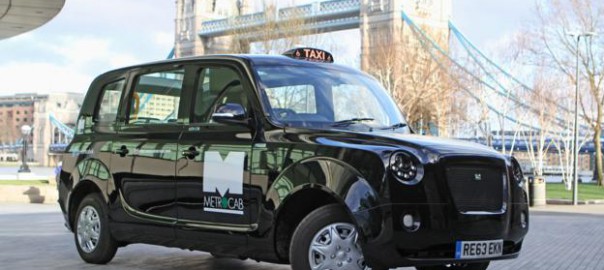
The release of the Metrocab, a battery-powered taxi capable of zero emissions, is one of the efforts to clean up the city’s transport (Image: Metrocab)

High-mileage EVs ‘cheaper to run’ than latest diesels

Electric vehicles (EVs) are becoming an attractive business proposition for high-mileage vehicle operators like Uber in some EU capitals, a new study suggests.

The new study, from Transport and Environment (T&E), does not include London in its analysis, but highlights the cost advantages of EVs in cities such as Paris, Berlin, Madrid and Lisbon.

Medium-sized battery EVs, such as the Nissan Leaf, are on average 14% cheaper to run than equivalent diesels today, if slow charging overnight near home and/or fast charging at preferential rates are available, it says.

The release of the Metrocab, a battery-powered taxi capable of zero emissions, is one of the efforts to clean up the city’s transport (Image: Metrocab)

The savings can be even higher (24%) in the case of Parisian drivers.

In monetary terms, these savings amount to €3,000 (£2,700) every year, because of cheaper electricity, lower EV retail prices and higher purchase incentives in France.

T&E says that the taxi and ride-hailing markets are best positioned to go fully electric first.

The economics of EVs – more expensive to buy but a lot cheaper to run – match perfectly with high-mileage, low-margin businesses like ride-hailing and taxis, the research suggests.

Uber-type drivers can travel up to five times the mileage of an average motorist.

Yoann Le Petit, new mobility expert with T&E, said: “This is a win-win-win situation for drivers, citizens and the planet.

“The sooner Uber and taxis go 100% electric, the sooner citizens will enjoy cleaner air.”

In London, the Mayor’s EV infrastructure taskforce estimates that 70% of the demand for slow and normal chargers in residential areas will come from Uber drivers alone.

Read more: Fleet News

It’s Time to Go Green!

If you would like to know more about Solar Panels and the PowerBanx range of home battery systems, and get a free instant quote, please complete our online form:

SWARCO eVolt is supplying 45 charging units, including 11 of its Rapid Chargers capable of charging two vehicles simultaneously in 30 minutes, across 28 sites in East Lothian (Image: eVolt)

Electric car charging points surge in the UK amid projected boom in EV ownership

Sales of electric cars are expected to hold steady despite the coronavirus pandemic, as the rest of the automotive industry suffers

The number of publicly-accessible charging points for electric vehicles (EVs) grew by 60 per cent in 2019, the biggest increase in three years and outpacing sales of battery-powered cars, a new report has found.

SWARCO eVolt is supplying 45 charging units, including 11 of its Rapid Chargers capable of charging two vehicles simultaneously in 30 minutes, across 28 sites in East Lothian (Image: eVolt)
SWARCO eVolt Rapid Chargers (Image: eVolt)

The International Energy Agency (IEA)’s annual Global EV Outlook study, the IEA reported the number of public slow and fast charging spots as having reached 862,118 globally – 60 per cent of which are in China, the world’s largest car market.

Fast charging points, including those used by Elon Musk’s Tesla electric cars, accounted for 31 per cent of the charger total. These points can charge vehicles’ batteries within minutes, with Supercharger stations charging Tesla batteries to around 80 per cent capacity within half an hour.

EV adoption rates to grow

The IEA defines slow charging as providing power of up to 22 kilowatts (kW), taking hours to charge a vehicle battery.

“China continues to lead in the rollout of publicly accessible chargers, particularly fast chargers, which are suited to its dense urban areas with less opportunity for private charging at home,” the report said.

The IEA expects global EV sales to match or slightly exceed last year’s in 2020 despite the coronavirus outbreak, meaning EVs will account for around 3 per cent of total global vehicle sales. In comparison, the wider automotive market is expected to drop by 15 per cent.

It projects that EVs will make up around 7 per cent of total global vehicles by 2030 if existing policies remain in place in the majority of countries.

Read more: iNews

It’s Time to Go Green!

If you would like to know more about Solar Panels and the PowerBanx range of home battery systems, and get a free instant quote, please complete our online form: