Environmentally-friendly vehicles could be awarded green number plates, signalling their virtue to other road users
Low emissions cars, vans and taxis could sport green number plates to highlight their environmentally friendly status, after the government launched a public consultation on the idea.
The Department for Transport (DfT) and the Office for Low Emission Vehicles (OLEV) say the public consultation will “seek views on whether green plates could work in the UK, and if so, what they should look like”, with the “eye-catching” plates potentially arriving in “the next few years”.
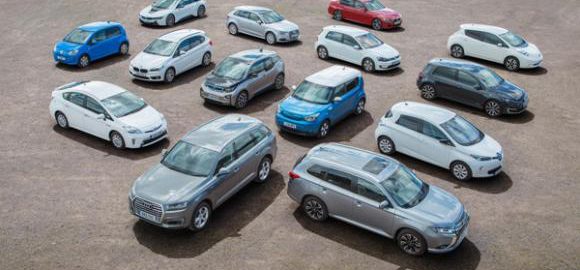
While details of what standards cars would have to meet in order to get a green plate are yet to be ironed out, electric cars such as the Nissan Leaf, and plug-in hybrids such as the Toyota Prius Plug-In are likely to be eligible for them. OLEV defines an Ultra-Low Emission Vehicle (ULEV) as a car that emits up to 75 grams per kilometre of carbon dioxide.
As well as sending an encouraging message out to other drivers, owners of qualifying cars could get free or discounted access to current or future low-emission zones.
BONN – Electric vehicles will be the main form of mobility in the coming years, and the challenge of making smart charging technology using weather conditions is becoming increasingly pressing, International Renewable Energy Agency (IRENA) officials told reporters on the sidelines of its Innovation Week in Bonn.
“Electric mobility will become the main form of mobility in some 7-8 years,” Adnan Amin, IRENA director-general, said.
59210374 – beautiful isometric design of energy efficient house using renewable energy and home energy storage
About 4 million electric vehicles are out in the world at the moment, Dolf Gielen, director of IRENA innovation and technology center, said at a briefing .
“That is about half a percent of the global vehicles stock, so it’s still a relatively small percentage, but it’s growing very rapidly,” Gielen said.
According to Amin, the number of electric vehicles grew by 77 percent last year.
“In a country like Norway, the majority of car sales is electric at this moment. That’s going to have a very significant effect on the transport sector of course, on the gasoline demand, but also it opens up new opportunities to integrate more renewables,” Gielen said.
Smart charging, which employs renewable energy, such as sunlight or wind, could be one of these opportunities.
Model 3 easily outpaced its German car competition
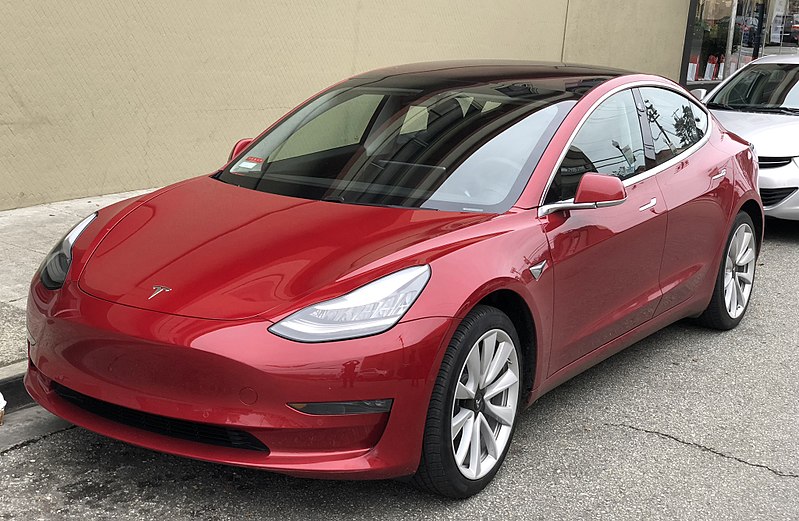
Tesla is selling every Model 3 it can screw together. Astonishingly, it’s selling so many of them that the Model 3 outsold every BMW passenger car combined. We should note that BMW still leads if you include SUV sales, but beating the Germans at passenger cars is no small feat.
Here’s the number breakdown: BMW sold 14,450 passenger cars in the U.S. market in August. This number includes sales from compact crossovers like the X1 and X2 as well. That’s a 13.5 percent decrease in car sales from August 2017. Car sales tracking site GoodCarBadCar lists Model 3 sales at 20,450 for the month of August. However, that’s only an estimate because Tesla doesn’t report official sales numbers. Other news outlets have estimated figures in the 17,000 range. And Bloomberg’s Tesla Tracker site puts the current production level of the Model 3 at 4,800 cars per week. But any of the estimates are safely above BMW’s exact figure. The BMW 3 Series (the Model 3’s direct competitor) sold only 3,751 cars in August.
Tesla Model3 (Image: Wikimedia/Carlquinn)
Lexus led the luxury vehicle segment, but its big winners were crossovers. From the start of the year, BMW is up compared to 2017 because of its SUVs as well. Tesla certainly isn’t experiencing the same drop in car interest after this surprising month of sales. As for the BMW i3, it sold all of 418 cars last month. The company’s only pure EV will be eclipsed by the new generation of electrics that BMW has in the works.
Selling this many Model 3s isn’t particularly surprising given the 420,000 reservations remaining as of July. It’s unlikely that all those turn into orders, but it explains why sales are so ludicrous at the moment. And In a week when the Mercedes EQC electric crossover was revealed and BMW is almost ready to show its Vision iNext concept, Tesla is starting to hear hoofbeats from competitors and needs to sell Model 3s as fast as it can.
Electric cars are the future of motoring, and they’ll soon be impossible for consumers to ignore, says Steve Fowler…
This is when the electric car starts to get really serious. This week Mercedes has revealed its first, bespoke, all-electric car to the world and later this month, Audi does the same. Rest assured, it’s not stopping there.
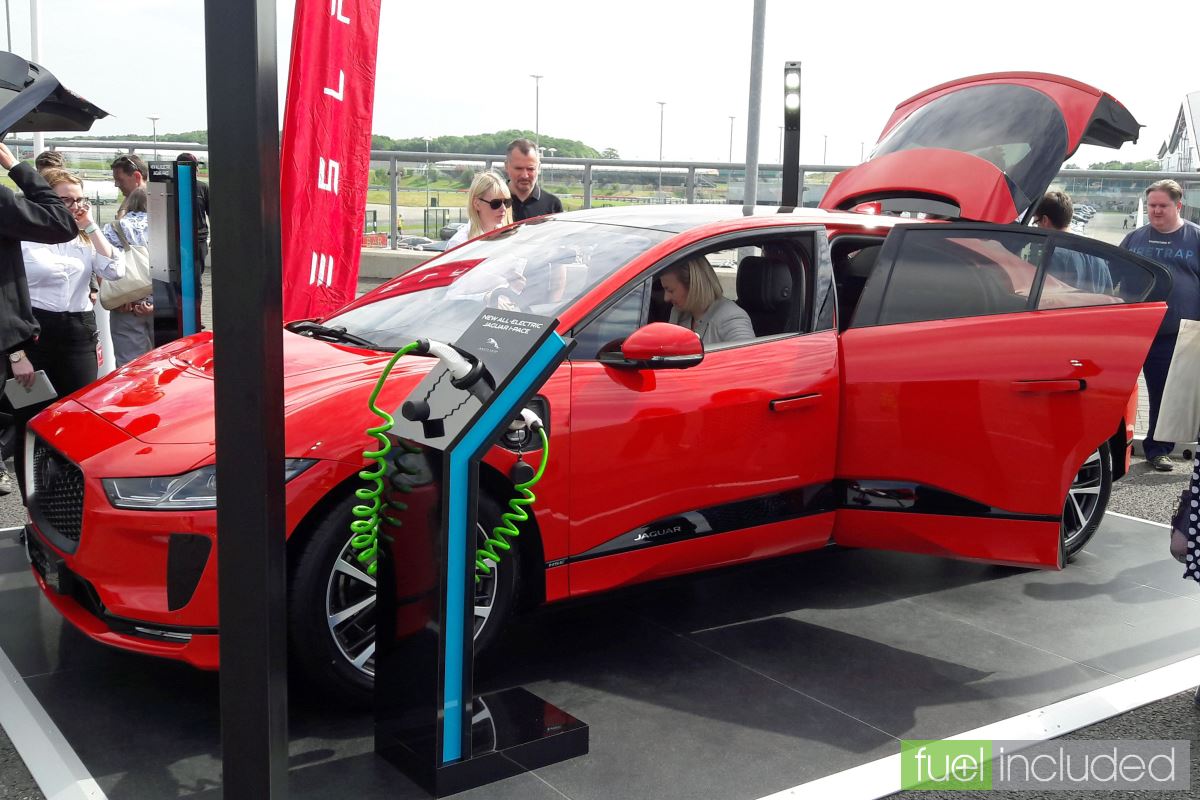
It all comes hot on the heels of Jaguar getting its I-Pace to customers before its rivals – and winning our Car of the Year prize in the process – and Hyundai launching an affordable all-electric small SUV with a real-world range of 300 miles.
Of course, cars like the Nissan Leaf, Renault Zoe and Tesla Models S and X have been with us for a while, but it’s going to take more mainstream and premium brands to come to the party to make wary buyers really sit up and take notice.
The biggest barrier to EV ownership remains range – unfairly so, these days. The perception of ‘under 100 miles’ will soon change as closer to 300 miles becomes the new norm, while interest will increase as more and more appealing (if not particular attractive) cars like the EQC are launched.
Mercedes is going at it with real gusto – EQ is set to become a Mercedes brand in the same way AMG and Maybach are. EQ stands for ‘electric intelligence’ (yes, that’s what I thought, too). It also stands for a range of electrified models that’ll line up against rivals from every other maker in the coming years.
There’s no questioning the fact that electric cars are the new ‘it’ thing, especially with major players like Tesla and Formula E in the scene. But this is also why recently the debates have been shifting more and more towards their environmental impact.
There are definitely many challenges that need to be addressed before electric cars can be declared as a completely green alternative to fossil fuels. For now, some of the major concerns for environmentalists have been the manufacturing process of the vehicles and the processes through which their batteries are charged. In fact, the batteries themselves are a greater cause of concern, mainly because of a key ingredient that lets the Li-ions battery generate electricity, i.e. cobalt.
Red Tesla Model S (Image: T. Larkum)
Discovering Cobalt
If you are just hearing about cobalt for the first time then you should be surprised to know how often it is used. Cobalt is the name of a chemical element that was discovered in 1739 by a Swedish chemist, Georg Brandt. This metal is silvery-white in appearance and it’s mostly produced as a by-product of nickel and copper mining.
Cobalt is used in a number of everyday products such as paints, medicines, powerful magnets, cutting tools, smartphones and even in some very basic items such as pottery. But the use that concerns us here is its use in car batteries. Cobalt, combined with other elements produces cathodes, which are then used in lithium-ion batteries – a major component of electric vehicles.
The Challenges
In recent years, cobalt has actually been a major cause of speed bumps on the road to developing the ideal electric vehicle. There are numerous economic and ethical issues that have surfaced regarding the use of cobalt.
The price of cobalt is set to rise as its supplies are dwindling. They are predicted to hit critically low levels by 2050, according to the the Helmholtz Institute Ulm (HIU) in Germany. Hopefully, this will lead to an increased need for manufacturers to replace its use with a new technology.
From an ethical, political and environmental stance, it’s seen as an ingredient that needs replacing, fast. The unearthing process is infamous for being unhealthy for miners, with the U.S. Centers for Disease Control and Prevention reporting that “chronic exposure to cobalt-containing hard metal (dust or fume) can result in a serious lung disease called ‘hard metal lung disease’”.
Positive Advancements
With so many things going against its use, it’s pretty clear that battery manufacturers have to look for alternative sources to power their car batteries. A lot of advancements have already been made and many positive signs for the future have been observed.
For instance, Tesla has been working with its battery cell suppliers, Panasonic, to produce batteries that would work with significantly lower levels of Cobalt and their ultimate aim is to completely eliminate its use.
How Practical is This?
While they’ve announced their goal, Panasonic and Tesla have not exactly made it clear how they plan on achieving it. However, there are a number of promising technologies around that they may choose from.
One option could be the use of lithium-manganese spinel or lithium-iron phosphate that might work without cobalt. However, certain concerns regarding the feasibility of these alternatives and their cost-effectiveness when it comes to using them for commercial vehicles still exist. There are also some other alternatives like solid-state lithium batteries, which are very promising, but their production processes are still in the testing phase.
The only thing that seems clear right now is that cobalt is not a sustainable element and thus it is not a viable option for future production of electrical vehicles. The success of both the ordinary and autonomous car industry is based heavily on sustainability, which rules out the use of an element that is likely to run out in future. It’s important for investors like Tesla to continue their research and experiments to produce greener car batteries in order to make the common use of electric cars a possibility.
…and Audi, Jaguar and the world. This is Merc’s plug-in future. Like it?
Up until now, Mercedes’ forays into the world of electric cars have constituted a very rare SLS AMG and a very niche B-class. No longer. This is the Mercedes EQ C, the launch star of the company’s all-electric EQ sub-brand. Looks reasonably close to the EQ concept, don’t you think?
Mercedes-Benz EQC (Image: Mercedes-Benz)
Under its svelte, slightly Range Rover Velar SUV proportions, the EQ C uses a familiar tactic in electric car construction. The 80kWh lithium-ion battery, weighing some 650kg (a quarter of the car’s entire 2.4-tonne mass) lives beneath the floor, keeping the centre of gravity low and improving crash safety. The EQ C’s front electric motor aims to offer the most efficiency, while the rear motor – this is a four-wheel-drive vehicle, like the Jaguar I-Pace and Tesla Model X – is optimised for more punch.
Maximum combined power output is 400 horsepower, while torque is a predictably titanic 765 Newton meters.
In old money – which seems somehow inappropriate for such a modern car – that’s 564lb ft. More than a C63’s V8 offers up, delivered silently. As a result, Mercedes is claiming 0-62mph in a hot-hatch-spec 5.1 seconds, and a modest top speed of 111mph. While v-max is unimportant, range obviously is.
So, in addition to Comfort, Eco and Sport driving modes, you’ll find a Max Range setting in the EQ C. Deploy that and Mercedes claims you’ll travel 280 miles. However, that’s calculated on the old NEDC test cycle, not the new WLTP regulations, so expect a real-world figure somewhere around the 250-mile mark. Next up in the EV checklist: charging. Mercedes has fitted a 7.4kW on-board, water-cooled charger.
Sales of electric vehicles reached a record high last month, accounting for one in every 12 new cars purchased in the UK.
The Society of Motor Manufacturers and Traders (SMMT) said hybrid, plug-in hybrid and pure electric cars made up 8% of the overall market.
The number of total vehicles registered was up 23% on the same period in 2017.
But SMMT’s chief executive warned “it would be wrong to view the market as booming”.
“August is always a small month in new car registrations ahead of the important plate-change month of September,” Mike Hawes said.
Last month 7,489 electric and alternative fuel vehicles were sold, up from the 3,968 sold in August of 2017. In total 94,094 cars were sold last month.
While calling the surge in electric sales an “extraordinary achievement”, Ian Gilmartin of Barclays urged caution, alluding to the fact that the British car industry has had a bruising few months, suffering from a 4% decline in sales so far this year.
“Regulatory changes that came into force at the start of September led to some very generous deals being offered in August which will have brought sales forward,” he added.
“All eyes will now be on next month’s data.”
The boom in plug-in sales comes as the cost of petrol and diesel continues to creep upwards, with the average price at the highest level since July 2014.
Pump prices have gone up for eight of the last 12 months, according to the RAC, with both fuels 13p more expensive than this time last year.
By the middle of the next decade, the world as we know it will end. This end is not written in stone, it was not predicted by the Mayans, and it was not foretold by UFO religions.
This end has been sung in the past few years in press releases, statements and interviews. It is the prophesied end of the internal combustion engine. And its killers, the three horsemen of the apocalypse, are finally here, waiting for the fourth to join them.
Until September 2018, the electric car segment has been one of marginal delight, laughter, and discord. Caught between the flamboyant statements showing the impressive sale figures for the Nissan Leaf, the pot-smelling tweets of Elon Musk, and promises made from all over the industry to go all electric, the world watched in amusement and amazement what until now amounted to nothing more than good television.
But no more. The big boys came out to play this month, and their way of playing the game will change the industry. As Turkish used to say, Ze Germans are here. And they are here because they saw something they like.
The three heralds of doom are Daimler, BMW, and Volkswagen. All three, be it in their own name or that of some of their subbrands, revealed in the past two weeks the three horsemen that will shape the future: the EQC, the Vision iNext, and the e-tron SUV.
BMW i3 All-Electric (Image: BMW)
How will they end the ICE world? Through sheer strength, numbers, and services.
Strength. The three are the biggest players in the automotive industry, period. Combined, their power – read sales numbers, financial figures, pretty much everything – dwarfs any competition.
And it is power that gets noticed. Try as it might, Tesla is incapable of single-handedly change centuries of habits and patterns, of changing rules and regulations, of getting enough government support. But when the likes of Daimler, BMW and Volkswagen step into the room, everything changes.
Numbers. Daimler plans to have on the roads ten different all-electric cars by 2022. BMW has 12 of them in the works, all to be released by 2025. Volkswagen shames both of them with plans to launch 80 new models across its brands by the same year.
The Scottish government is to invest £15 million in the deployment of 1,500 electric vehicle (EV) charge points across homes, businesses and the public network under plans outlined officially today (4 September 2018).
First minister Nicola Sturgeon unveiled her Programme for Government this afternoon, which included measures designed to ensure Scotland reaches its 2032 target of phasing out petrol and diesel cars.
The new investment will fund 150 publically available EV chargers which could be located across the 356 fire stations in Scotland under plans being considered by the Scottish Fire and Rescue Service (SFRS). The emergency service is also planning to introduce up to 100 ultra-low emission plug-in vehicles to its light fleet.
Solar EV Charging Hub on Princes Street, Dundee (Image: eVolt)
The remaining chargers will be set for private locations and communities. The EV push will see the launch of ‘Plugged-In Households’, intended to widen access to electric vehicles for communities, including through housing associations and car clubs.
“In last year’s Programme for Government we committed to remove the need for petrol and diesel cars and vans on Scotland’s roads by 2032. Electrifying the road network and transforming the way we travel is vital to reducing our carbon emission, tackling climate change and improving air quality,” Sturgeon said.
“This year we want to go further still, and through the package of support we’re announcing in this year’s Programme for Government, as well as our continued investment of £1 billion a year in low carbon and public transport, more people will be able to play their part in putting Scotland at the forefront of low carbon travel.”
Holyrood will also be more than doubling the Low Carbon Transport Loan Fund from £8 million to £20 million to enable more businesses and consumers to switch to EVs. To date the scheme has supported around 500 ULEV purchases; with another 450 forecast to be supported in 2018-19 with this increased funding.
More than 500 ultra low emission vehicles will also be added to public sector fleets, while a ‘Switched on Taxis’ initiative will be established to include a new fund for electrifying taxi ranks.