Daily Archives: January 16, 2017

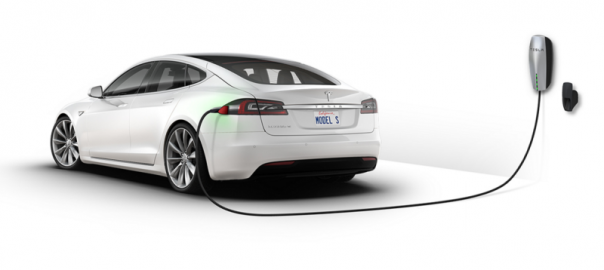
Tesla Model S on charge (Image: Tesla)

Electric Cars Could Send Oil Companies Into ‘Death Spiral’

Economists and reporters have been saying that electric cars could actually kill the oil industry for a little while now, but it hasn’t made a lot of real-world impact so far. But now Fitch, an enormously influential financial ratings agency, is issuing dire warnings over electric cars.

Tesla Model S on charge (Image: Tesla)

It actually seems impossible at this point to overstate just how screwed the oil industry as we know it appears to be by electric vehicles. “Resoundingly negative,” “serious threat,” and “investor death spiral” were all actual terms used by Fitch Ratings in a report detailing the future of oil in a world of electricity, the Financial Times says:

“An acceleration of the electrification of transport infrastructure would be resoundingly negative for the oil sector’s credit profile,” says the Fitch report.

“In an extreme scenario where electric cars gained a 50 per cent market share over 10 years about a quarter of European gasoline demand could disappear.”

The “death spiral” scenario entails a situation in which nervous investors start selling all of their assets attached to oil companies, the Fitch report says, making loans more expensive, which depresses the companies’ value further, which makes investors more nervous, which makes them sell, which makes loans more expensive, which depresses the oil companies’ value further, and on and on.

The electric car could completely eliminate the oil industry, and it won’t even take a complete lack of gasoline-powered cars to do it.

Read more: Jalopnik

Red Tesla Model S (Image: T. Larkum)

What’s Driving The Move To Electric Vehicles?

Tesla may be the catalyst driving electric cars. But just about every car maker in the world is developing either an all-electric car or a hybrid vehicle that runs on both electricity and petroleum. That’s good news for the environment, especially as such vehicles approach price parity with traditional ones.

Red Tesla Model S (Image: T. Larkum)

As electric cars continue to improve, so do the efficiencies — or the ability to input a unit of energy and to realize more output. In fact, traditional cars running on an internal combustion engine have a 30 percent efficiency rate. The rest is lost to heat, sound and energy. Just refining a gallon of gasoline takes 7 kilowatts-hours per gallon, says Thor Hinckley, an electric vehicle and renewable energy expert with CLEAResult, a consulting specializing in energy efficiency.

But vehicles that run on electricity have an 80 percent efficiency rate, or they convert 80 percent of those Btus to energy, he explains. The efficiencies are greater because of the superiority of the electric motor over that of the internal combustion engine — not because one unit of energy is better than another.

“With an efficiency difference that great, anything will be cleaner than burning gasoline,” says Hinckley. Obviously, burning a Btu of wind, solar or hydro is cleaner than burning the same unit of coal. But even if coal is used to generate the electricity to drive the car, he says that emissions are 20-30 percent less than a comparable vehicle running on petroleum. That’s huge.

Read more: Forbes