Monthly Archives: September 2016

Electric cars can be a very effective way to save you money on motoring (Image: Go Ultra Low)

Electric car sales to rise ‘once running costs myths are busted’

Electric car sales will soar once motorists overcome their misconceptions about the running costs, according to a new study.

Electric cars can be a very effective way to save you money on motoring (Image: Go Ultra Low)

More than half a million electric vehicles (EVs) will be in use by 2020 based on current buying intentions, research by the AA found.

The motoring organisation published a report which claimed this figure could rise significantly if concerns over the purchase price of EVs, availability of public charging points and the mileage that can be covered on a single charge are overcome.

Sales of new ultra-low emissions vehicles doubled over the past year and 63,000 drivers have taken advantage of plug-in car grants since they were introduced in 2011.

Motorists buying new vehicles with a zero emission range of over 70 miles are eligible for up to £4,500 while those purchasing cars with a shorter range – such as plug-in hybrids with a petrol or diesel engine – can receive £2,500.

AA president Edmund King said:

“We think that the EV revolution is about to take off and we want to help consumers understand the benefits of low cost, low emission driving and to show them it is accessible and affordable.

“Per mile driven an EV is five times cheaper than the average petrol car and carries no vehicle excise duty.

“Modern electric vehicle designs and performance are comparable to conventional internal combustion-powered vehicles. Concerns and regulations about diesel emissions may also prove to be a tipping point.”

The AA report stated that many plug-in hybrids are sold at “a very similar price” to the diesel equivalent, while it can cost as little as two pence per mile to power an EV.

It noted that within two years the vehicles are expected to have a range of around 200 miles on a single charge, making them a good option for a household’s second car.

Hundreds of charging points are to be installed at hotels rated by the AA in partnership with manufacturer Chargemaster.

Government advisers, the Committee on Climate Change, warned last year that 9% of new car sales should be electric vehicles by 2020 for the UK to meet its legal obligation to cut greenhouse gas emissions by 80% by 2050, compared to 1990 levels.

Source: Money AOL

APT Skidata launches new feature for creating emission-based tariffs

APT Skidata, the UK’s leading parking technology business, has launched a new feature that allows car park operators using an APT Skidata system to set individual parking tariffs according to the CO2 emissions of the vehicles.

32011833 - a car emits carbon monoxide gas from its exhaust tailpipe, showing how pollution is formed.
A car emits carbon dioxide gas from its exhaust tailpipe

The system uses automatic number plate recognition (ANPR) cameras to identify and record each vehicle as it enters a car park, and compare the license to a database that includes details around CO2 emissions.

Pete Brown, APT Skidata’s Managing Director, says that tariffs can therefore be set to reward those who are more environmentally friendly:

“Car park operators and local authorities are increasingly looking to address the environmental impact of cars on the local area,”

“By being able to charge customers according to CO2 emissions, they will be able to effectively reward users for driving more fuel efficient vehicles, especially in busy town and city centres.”

Mr Brown says that where surcharges are put in place for vehicles with the highest emissions, the additional revenue gained can be used to help offset the car park’s carbon footprint:

“It also allows tariffs to be set to allow free parking for drivers of Electric Vehicles (EVs),”

“All customers with a Skidata system will be able to access this new feature and tailor their tariffs according to their green strategy.”

The Spark – the voice of UK entrepreneurs – visits Milton Keynes

At Fuel Included we’re pleased to say we’ve been recognised as a start-up company with the potential for fast growth.

We have been invited into the nationwide Entrepreneurial Spark programme, one of the world’s largest business accelerators for early stage and growing ventures, with a place for us at the Milton Keynes office. This so-called ‘Hatchery’ had its official opening on 5 September:

Our BMW i3 94Ah manages 130 miles on a charge (Image: T. Larkum)

Our BMW i3 (94Ah) Achieves 150 Mile Range

Our BMW i3 94Ah manages 130 miles on a charge (Image: T. Larkum)
Our BMW i3 94Ah manages 150 miles on a charge (Image: T. Larkum)

Following my encouraging achievement of 130 miles on a single charge of the i3 without too much trouble, last week I decided to make a more determined attempt to get a good range. The process was the same as ever – commuting to work in a careful way. The journey is about 40 miles return but with additional errands in the evening (e.g. picking up children) I typically do 50 miles per day.

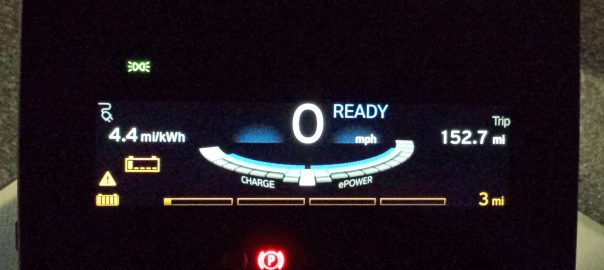
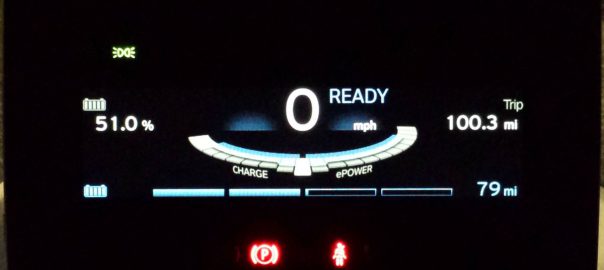
The approach was therefore simple – commute with gentle driving for three days in a row, and on the evening of the third day do some local driving until the charge had almost gone. I made sure I was driving in Eco Pro Mode, and also adjusted this so its maximum speed was reduced to 70mph. Doing that this time I was rewarded with a range on one charge of 152.7 miles (and a consumption figure of 4.4 mi/kWh).

I’m very pleased with that, but it has also encouraged me to try harder – particularly as that 4.4 consumption figure is still not as high as I’ve achieved with the (heavier) ZOE – so watch this space!

Tesla Model X

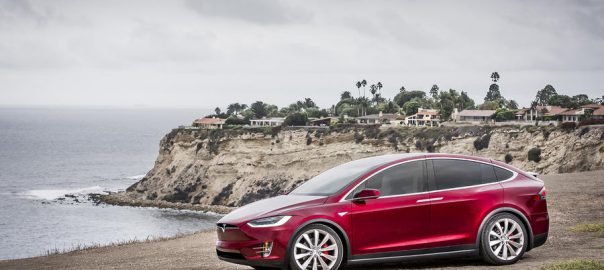
2016 Tesla Model X review

The Tesla Model X brings full electrification to the SUV class. We see if it’s as impressive as the Model S saloon

Tesla Model X
Tesla Model X

What is it?

Tesla has already shaken up the luxury car market with the electric Model S, thanks to a combination of rapid performance, low running costs and respectable range. But as impressive as all that is, the saloon car seems to be a dying breed, due to the ever-increasing popularity of the SUV.

The answer? Well, making an SUV seems like a sensible solution, something Tesla has done with the Model X. It was first seen as a concept back in 2013, but there have been a number of delays, due to issues relating to the unusual ‘falcon wing’ rear doors and rear seat mounts, among other things.

This car may have been originally pencilled in for a 2014 release, but it still promises to offer cutting-edge technology. This includes ‘autopilot’, those automatic falcon wing doors and a range that can top 300 miles if you avoid the temptation that is the Performance model.

If temptation is too much, the P90D with the Ludicrous Speed upgrade can manage the 0-60mph sprint in a staggering 3.2sec. That’s McLaren F1 territory from a 2.5-tonne, seven-seat SUV.

Underneath the distinctive styling is the same skateboard-style chassis that underpins the Model S. The battery pack lies flat on the floor beneath the seats, giving an incredibly low centre of gravity, even with taller SUV bodywork.

All Model Xs are four-wheel drive, courtesy of a pair of electric motors, one powering the rear wheels and one for the front pair. In the P90D, these motors are rated at 503bhp and 259bhp respectively. Sadly, the electrical system can only provide a total combined output of 464bhp, although this is increased to 532bhp with the Ludicrous upgrade.

What’s it like?

Getting inside the Model X can be quite a theatrical event. The front doors may be conventional but are electrically powered, with the driver’s door opening automatically when you unlock the car with the key fob. Step inside and a press of the brake pedal will see the doors close behind you.

It’s the rear doors that are the more interesting, though. Although they look like they’d be impossible to open in a confined space, the doors are double-hinged (one on the roof and another above the window line) so they can open with as little as 11 inches of clearance outwards. There are also ultrasonic sensors that lie beneath the bodywork so you can’t open one into an immovable object.

Read more: Autocar

Our BMW i3 94Ah manages 130 miles on a charge (Image: T. Larkum)

BMW i3 (94Ah) Promises 120 Mile Range

Our BMW i3 94Ah manages 130 miles on a charge (Image: T. Larkum)

With the ZOE we had before getting the i3 I used to enjoy the challenge of seeing how far I could get on a charge. While it was exciting when our ZOE first promised 100 mile range, such a distance should be no challenge for the ‘94Ah’ (longer-range) version of the i3.

When I collected it and first switched it on it very encouragingly promised 120 miles of range – a very good start, I thought. However, I did a lot of ‘testing of its performance’ on that first day and, as previously described, showed it off in the same vein to a number of colleagues at work. Later that day I went to another office and repeated the exercise.

Furthermore, that evening after work, I went out with friends and, partly to show off the new car, volunteered to drive. Again I couldn’t resist the urge to demonstrate its fast acceleration at every opportunity. The end result was that afterwards I was barely able to coax the car home – which served me right of course – having achieved just 100 miles range on that first day’s charge.

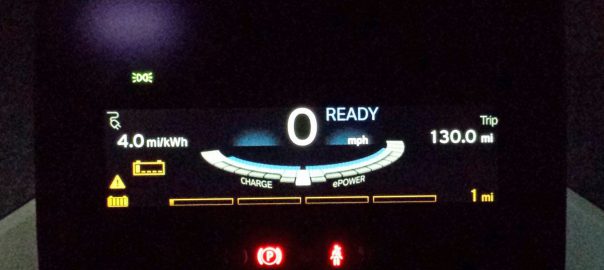
The following week I decided to attempt instead to see what range it was capable of. I commuted to work in a more relaxed manner over the next couple of days, keeping the car in Comfort Mode – and achieved 130 miles before putting the car on to charge. A much more respectable result!

According to the dashboard the consumption was 4.0mi/kWh over that long distance. On the ZOE it was possible fairly easily to get 4.5mpkWh (and I once achieved 6mpkWh, 142 miles) so I’m sure there’s more range to be had from the i3 yet.

2016 BMW i3 94Ah review

New battery pack gives BMW’s appealing electric hatchback a useful increase in driving range but it doesn’t come cheap

05_bmw_i3-94ah_bmw

What is it?

The BMW i3 94Ah is the first major upgrade of the German company’s radical city car since it was launched two and a half years ago.

The ‘94Ah’ in the name refers to a brand-new battery developed by BMW and made up of cells manufactured by Samsung. This lithium ion battery pack, which is mounted under the cabin floor, is the same size as the previous one but the energy density of the unit has been improved by an impressive 50%.

BMW claims the resulting 33kWh capacity significantly improves the i3’s range, boosting it from 118 miles to 195 miles when measured by the official New European Driving Cycle (NEDC) test.

However, BMW acknowledges that the official test regime for electric vehicles is flawed and says the real-world range for the i3 94Ah on a full charge is actually 124 miles. It claims this driving distance can be achieved even in tough conditions, such as the depths of winter (when the heating system is on) or during the height of summer (when the air-con is being used).

The i3’s charging system has been upgraded along with the battery pack. A specialist DC charger can be used to charge the new battery to 80% of its capacity in around 40min. That’s sufficient to give a real-world range of around 100 miles.

A bespoke BMW wall-mounted charging box with high-power 11kWh three-phase charging can be fitted to an owner’s home and offers the same 80% charge in less than three hours.

The rest of the i3 is pretty much unchanged. It’s still driven by a rear-mounted electric motor, which is designed and manufactured by BMW in Germany. By developing its own batteries and motor, BMW claims the i3 is the most energy-efficient electric vehicle on the market, consuming 12.6kWh per 100km (62 miles) of travel.

What’s it like?

This is an immensely likeable vehicle, but it’s hard not to wish that BMW had opted to make it a little longer, especially in the wheelbase, when you drive it. The i3 is a finger’s width under 4.0 metres long and, in that context, the 2.57m wheelbase sounds reasonable, but on the road, it’s clear a more generous footprint would have helped with the i3’s two biggest failings: its ride on rough roads and access to the rear seats.

On a very poor surface, the i3’s chassis finds it difficult to settle down. It reacts rather harshly on the very roughest surfaces, joggling the occupants as it thumps and crashes. It’s true that the chassis is relatively stiffly sprung, so the situation is more exaggerated that it might otherwise be. The 19in wheels probably don’t help.

In stark contrast, on a very well-surfaced stretch of road – and there were a few of those on the test route in southern Germany – the i3 is uncannily smooth and swift. And the serenity of the progress makes using the full potential of the i3’s electric motor hard to resist.

The i3’s performance is pretty eager even with the energy-saving EcoPro setting switched on (it subdues the throttle response and cuts the cooling power of the air-con) but fully unleashed it is a remarkably quick machine.

Read more: Autocar
SolarCity System With Tesla Powerwall

Tesla & SolarCity Finalize $2.6 Billion Deal

[From 1 August] The Tesla Motors merger with SolarCity, announced first approximately on month ago, becomes reality today.

SolarCity System With Tesla Powerwall

Both companies will combine in all stock deal, in which SolarCity stockholders will receive 0.110 Tesla common shares per SolarCity share.

Total equity value of SolarCity stands at ~ $2.6 billion, while Tesla is valuated at approximately $34-$35 billion.

The transaction is to be closed in Q4.

SolarCity now has a 45-day period known as a “go-shop” to see whether there are better options for stockholders.

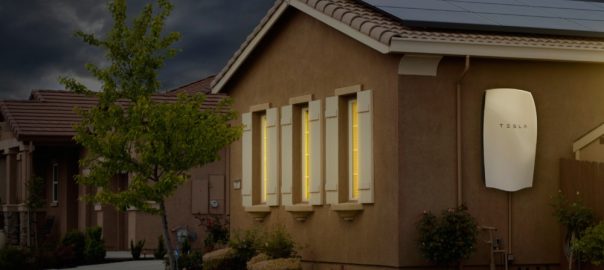
Elon Musk, who owns more than 20% of shares in both companies, argued that the merger is needed to achieve synergy between solar energy (SolarCity) and energy storage systems (Tesla Motors). After the combination, Tesla will be able to offer various products in the one-stop solar + storage experience.

Read more: Inside EVs