Monthly Archives: May 2015

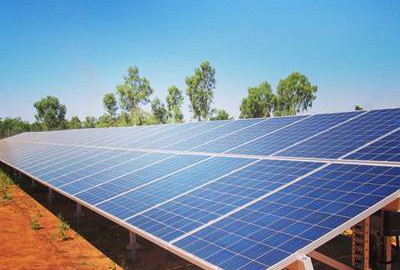
Solar Power (Image: ARENA)

Obama Pushes to Train Veterans for Solar Power

President Barack Obama on Friday unveiled an expansion of U.S. government efforts to train military veterans for jobs in the solar power industry during a visit to Utah.

The administration announced a new goal of training 75,000 people to enter the solar work force by 2020. That is an increase from a goal announced last year of training 50,000 workers by the same deadline.

Many of those workers would be veterans, administration officials said.

The Department of Defense plans to have “Solar Ready Vets” programs at 10 bases across the country to train military members who are returning to civilian life for solar jobs.

“It’s going to train transitioning military personnel for careers in this growing industry,”

Obama said of the program during remarks at Hill Air Force Base in Utah, standing near a set of solar panel installations.

Source: World Energy News

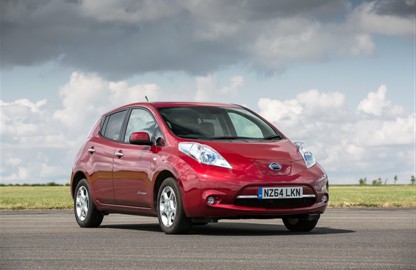
Hertz introduces the new 100% electric Nissan LEAF to its fleet in London

The latest zero-emission Nissan LEAF can be driven in London with unlimited mileage for less than the price of a one day, all-zone London Travelcard

The Hertz Corporation has introduced the latest 100% electric Nissan LEAF model to its fleet at its main London locations, providing tourists and local residents with an affordable and sustainable driving option. Hertz’s customers are now able to rent a modern, zero-emissions Nissan LEAF with unlimited mileage, at a special launch price of £ 9.99 (GBP) a day (up to 24 hours). Customers have the added benefit of being exempted of London’s congestion charge when driving in the center, as well as free parking in designated areas.

The new Nissan LEAFs are available to rent from Hertz UK’s branches at London Heathrow Airport, Marble Arch, Old Kent Road, Russell Square and London City Airport, which are all equipped with charge points. Customers can also charge the vehicle at over 1,600 electric vehicle (EV) charge points across London.

Neil Cunningham, General Manager, Hertz UK, said:

“With a range of up to 124 miles on a single charge, the new Nissan LEAF is perfect for driving around London and the greater area. With this initiative we aim to make environmentally-friendly driving available at a very attractive price.”

“Our customers will have the opportunity to benefit from our launch offer and drive these EVs for only £9.99 a day, less than the price of a London Underground travel card for zones 1 to 6. We are very confident that drivers who have never driven an EV before will now give this great experience a try, secure in the knowledge of the Nissan LEAF’s excellent driving range, and access to a large, citywide charging network.”

The Nissan LEAF features a satellite-based Intelligent Navigation System that indicates the driving range and proximity to charge points. The new LEAF is equipped with a number of driving modes and charging options as well as a B-Mode for enhanced braking response to maximize energy and features a large capacity boot – given that its lithium-ion battery is located under car.

Source: Incentive Travel

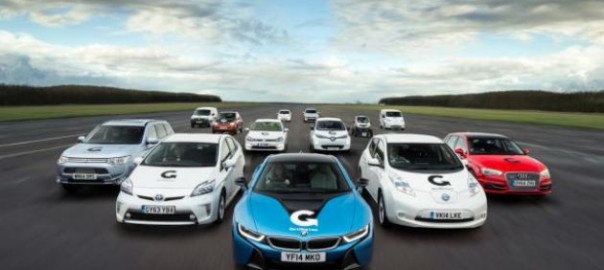
Go Ultra Low members boast 15 ULEVs across a range of segments (Image: OLEV)

Here’s Why an Electric Car Could Be the Best First Car

Across the country, thousands of high school students will be completing their sophomore year of high school. Many of them are about to turn 16. Many of them want a car. Many of them have activities like after-school sports, community service, SAT test prep, chess club, and possibly even a job. Many of them have parents who have become tired of driving their kids everywhere and want to spend some time towards their own pursuits. Many of those parents are worried about the costs and responsibility of their kids having a car. Many of those parents are afraid at the places their children could go without their knowledge with a car.

Well, parents of America, I have a solution: Lease an electric vehicle for your teenage son or daughter. Most parents will either hand their kids down a car or buy them something brand-new. Usually, the new car is a Honda Civic, Toyota Corolla, Hyundai Elantra, anything from Scion, and so on. Something safe, fuel-efficient, reasonably priced and something to take to college. A hand-me-down vehicle could be an old truck, old minivan, a 10+ year old car which gets very good fuel mileage, or maybe an old Volvo. But you have to pay for gas, insurance, maintenance (which gets seriously expensive on Volvos), as well as car payments if you buy a new car.

By the way, I stress the leasing part since some teenagers tend to move far away from their parents for college. Some of these campuses might not be car-friendly either, especially for undergraduate students. In cases like those, buying an electric vehicle probably won’t be the best option, since you might not want an extra car in the driveway that nobody is using.

Now, many of you might think it’s a bad idea to for a teenager to have a new electric car. It might be easy for them to sneak out of the house, for instance. Or it could be easy for them to sneak back into the house when it’s past curfew. It might be too expensive because you’re getting them a new car. You might believe on principle that a teenager shouldn’t have access to a new car. You might receive some criticism from your friends, neighbors, and coworkers for getting a teenager a new car. You also believe that range anxiety might not be the best thing for a teenager to handle.

However I, a 24-year-old car enthusiast whose first car was a MkV Volkswagen Jetta 2.0T (in hindsight, it shouldn’t have been), think an electric vehicle is an excellent starter car for a teenager. In that vein, I’ve come up with three reasons about why getting a teenager an electric car is a viable option.

  1. There’s actually a radius to where they can travel.

Most electric cars on the market have a range of 80 to 100 miles on a full charge. That isn’t very far, especially when traveling round-trip to the city from the suburbs. Now, as a parent, there might be range anxiety and you would hate your child to run out of battery in the middle of a busy road. But considering most electric vehicles have a range of at least 70 miles on a full charge, that’s more than enough range for a teenager’s typical day. Other than the usual drive to school and back, there’s still range for going to the mall, traveling to a friend’s house for a project, going to where they do community service, or drive to an after-school job.

For most parents, it minimizes the chances that their children will take unexpected “detours,” unless that particular destination has a quick charging station present. Some parents will complain that the “silence” of an electric vehicle will permit the kids to sneak out of the house, but unless their destination is within 15 miles round-trip, they may have some trouble getting to that full charge for the following morning. That range will also teach them responsibility when it comes to planning trips, since how they travel depends on whether they’ve charged it or not. At most, school will be 25 miles away (I actually know people who travel that far to get to high school), so the car has to be charged every night. (And in some states, electric vehicles get to travel in the HOV lane, so no more driving the school carpool!) It’ll be a bad day if he or she forgot to plug in the car. In addition, when going to activities that fall outside the daily routine, they’ll have to plan their trips and check whether there are places to charge nearby.

  1. The costs of ownership are reasonable.

Thankfully, there won’t be an extra car to add to the gasoline costs for the month. If the electric car is replacing a vehicle that could barely achieve 20 miles per gallon, leasing an electric vehicle could be more cost effective than handing down an old pickup. For example, the FIAT 500e, though available in California and Oregon only, has an advertised lease rate of $139 a month for 36 months with $1,999 down including the first lease payment and a 36,000 mile limit. Even a base model Nissan Leaf, which is more widely available, has a lease rate of $199 a month for 36 months with $2,399 due at signing including the first lease payment with a 36,000 mile limit. Without including taxes, insurance, maintenance and charging cost, that’s around $10,000 for three years of ownership of a car with a warranty and one that you can give back (with a $395 disposition fee).

Also, money is saved from all that gas you or your high school student doesn’t have to buy. Going on fueleconomy.gov, for most electric vehicles it costs under $1 to travel 25 miles. While the average 2015 vehicles gets 24 miles per gallon, on average, gas varies between $2 and $3.50, the $3+ mark being achieved thanks to California and Hawaii. The website estimates that most EV operators will spend between $500 and $600 on “fuel cost” for 15,000 miles per year.

Additionally, insurance costs tend to be less for an electric vehicle compared to a similarly priced gas vehicle. One study showed that on average driver’s saved $200 per year on insurance when they switched to electric. Considering how much a family’s car insurance shoots up when a teenage driver is added, the reduction in annual insurance premiums will be welcomed. Overall, if it comes to less than $5,000 a year to have your teenager driving, getting an electric vehicle might be a good car.

  1. Electric vehicles are safe.

No, I’m not thinking of the Tesla Model S and its exceptional crash test rating when I wrote the above. Electric vehicles like the Spark EV and Focus Electric are Top Safety Picks by the Insurance Institute of Highway Safety. The Leaf and 500e, which will undoubtedly be considered, don’t achieve that distinction due to their “Poor” rating in the small overlap front crash test. (But from 2013-2014 the Leaf was a Top Safety Pick before inclusion of the front overlap crash test.) However, electric vehicles are just as safe as normal new vehicles that are popular with teenagers such as the Toyota Corolla, Hyundai Accent, Chevrolet Sonic, Audi A4, and the Scion xD or xB.

Compare that to a 10+ year-old hand-me-down Accord, Maxima, or Jeep, which probably don’t come close to 2015 safety standards. Moreover, when the speed question comes up, most electric vehicles have a difficult time staying above 80 miles per hour, and even then, staying at those speeds quickly depletes the battery. As a result, there’s an incentive to stay at reasonable speeds. Leasing an electric vehicle means you won’t take a big hit if the car is totaled, too. Most lease agreements should have gap insurance (and seriously, ensure you have the gap coverage when leasing the car) for making up the difference in value that the insurance company will pay out.

So there you have it. The answers to most of your concerns of giving a car to your teenager. They’ll probably stay within 50 miles of the house or face being stranded. After all, most teenagers don’t have to drive over 100 miles a day over 90% of the time. They’ll learn responsibility in planning their trips. It could be the most cost effective solution at a cost of under $5,000 a year. And most importantly for parents, they’ll be safe if they get into an accident. And while the only detriment is that they could sneak out of the house, you know they won’t get far. Sometimes range anxiety helps.

Source: The Truth About Cars
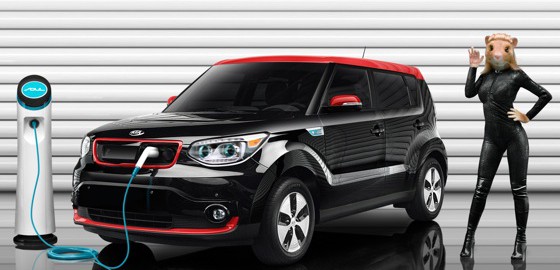
Kia Soul EV (Image: Kia America)

2015 Kia Soul EV Turns at Least One Cynic into a Hipster Hamster Lover

What blew me away most about my week-long test drive of the all-electric 2015 Kia Soul EV was despite the boxy exterior, booming sound system and man-size hamster ads that scream BOOMPF-BOOMPF-BOOMPF, DOOIT-DOOIT-DOOIT, what stood out most was the quiet, ultra-smooth ride.

Surely those young ‘uns stopped alongside me at red lights thinking to themselves “mid-life crisis … sad” had no idea that my blue-and-white charmer drove like grandma’s Buick LaCrosse.

Indeed, at around 35 grand with all the bells and whistles and mad beats on my test model, this Kia Soul EV had me re-thinking my looming personal strategy of going as cheaply as possible just to get into an electric, and then trade up as time (and main battery life) march on.

Besides the smooth ride, it delivers impressive power when you need it, like getting on the freeway or passing grandma in her Buick LaCrosse. Being winter in Southern California, there was no need to deploy the heat for the heated front seats, but with their leather trim they were quite comfortable. Rear-view mirror visibility, which has been an issue for me with other EVs and tiny cars, was no problem in this Korean version.

Then there were those aforementioned bells, whistles and yes, mad beats, yo. The electronically powered air conditioner had the cabin cool in a snap, something vital since it was winter in SoCal. (Pass the sunscreen.) What really had me styling was the smart key you keep in your pocket and the power-folding outside side mirrors. There’s a setting that allows the mirrors to fold inward when the car is off and then they electronically fold out when you unlock it. (The mirrors are also said to be heated and have turn-signal indicators, but I didn’t feel/see to confirm.)

The car makes a little blip sound as you (and only you) approach with the key in your pocket, purse or murse. You can take the key fob out and press unlock or simply push a little black button on the door handle to do the same. With the key still in pocket, you (and only you) can then press the car start button inside the cabin. The engine barely makes a noise; it’s better to check the gauge behind the steering wheel to see that it’s indeed running.

Kia Soul EV (Image: Kia America)

A large screen in the center console allows for viewing the navigation system, SIRIUSXM satellite radio settings or a split screen of both. Of course, when you shift your EV into reverse, the same screen is filled with the rear-camera image. This came in especially handy on a dark side street off PCH in Laguna Beach, where a mom and dad carrying little ones decided to walk right into my reverse path as I started to back up. I was able to watch them amble off to safety.

You’ll notice little holes around the front and back bumpers, which provide another safety feature: little sensors to alert you with a noise inside if you are getting too close to an object or vice versa. This got a little annoying while backing out of my car lot of a driveway but was welcome when a lane-changer on the freeway forgot to signal. All things considered, I’d rather put up with the annoyance.

Read more: OC Weekly

Automotive Fleet Reviews Volkswagen e-Golf – Video

Paul Clinton from Automotive Fleet takes the new Volkswagen e-Golf for a spin, providing both a video & article.
Volkswagen e-Golf.

The short video above discusses most of the e-Golf’s features: charging & range, price, etc.

As you will hear in the video, the e-Golf is not available in all 50 states. Why? Wish we knew…It’s time for Volkswagen to stop dragging its feet.

However, for those who live in one of the states where the e-Golf is available, than it definitely should make your list of contenders, as it stacks up well against other short-range BEVs.

AF stated that the e-Golf handles & performs precisely like the Golf’s with gas & diesel engines. That would be because it is the same basic vehicle, but with a different propulsion setup. AF adds this:

“Volkswagen may dominate the diesel passenger car market, but the e-Golf, the automaker’s first fully electric vehicle, could help establish an equally strong and deserved foothold in the electric vehicle market.”

Source: Inside EVs

5 Reasons For Choosing An Electric Car

Renault ZOE owner Séverin Groisne authored a post that appeared on the Renault-Nissan blog. The brief article focuses on exactly what the title states:

Five Reasons To Choose An EV

And here are those 5 reasons, along with a brief intro from Groisne:

When it comes to electric cars, it’s very difficult to find balanced advice… You have the idealists on the one hand, and the very sceptical people on the other. I’m going to try to be objective in demonstrating to you that driving electric can be just plain ‘normal’. So here are five good reasons why you should take a closer look at the electric option:

1/ NO MORE VISITS TO GAS STATIONS!
Petrol stations are so glamorous… Not! So no more nasty smells and greasy pump handles… plus you get to recharge your car at home at a modest cost.

2/ 70% OF DAILY DRIVES IN FRANCE ARE UNDER 50 KM
So even if a full tank lets you cover the length of France in a conventionally-powered car if the desire suddenly grips you, the ‘limited’ range of an electric vehicle is sufficient MOST OF THE TIME. Just remember to plug your car in just like you remember to recharge your phone.

3/ THE WORLD OF SILENCE
A quiet car encourages cool, smooth driving. You’ll find yourself less aggressive, especially on city streets. And you don’t need to turn up the radio volume anymore!

4/ MINIMAL SERVICING
Other than changing the interior air filter and checking things like tyres and brakes for wear, there’s nothing to do. No oil changes, no cam belt, no spark plugs… These things do count in terms of overall cost of ownership.

5/ THESE DAYS, THEY LOOK GOOD TOO
The days of characterless, unappealing electric cars are gone. My little ZOE is great to look at and even my kids are proud of it 😉

Source: Inside EVs

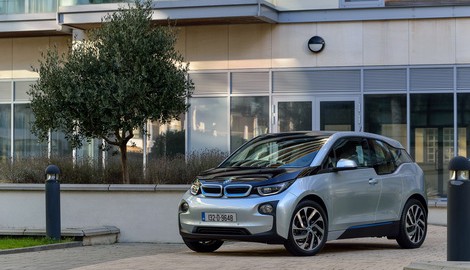
BMW i3 Review

BMW dives into the electric vehicle waters with the first of a new dedicated model range.

Our view:

All too frequently these days automotive manufacturers profess to have invented/enhanced/created (delete where you see fit) the next great revolution in motoring. In many cases it is merely a misuse of the very word revolutionary, and at worst it is the result of a delusional marketing department. But then, a few times a decade, a truly revolutionary car comes along. And now, it’s the turn of BMW to stand up and proudly count itself as a game-changer.

The BMW i3 is a compact, electrically powered car, which doesn’t exactly sound revolutionary, but in terms of both form and function BMW has absolutely nailed the brief. It has looked at the problems associated with personal transport in built-up environments, studied the habits of its inhabitants and pushed the boundaries of its engineering and technical expertise to create what will undoubtedly be seen as a pivotal car in the German firm’s history.

It is certainly one of the most divisively styled BMWs in the post-Bangle era leaving aside the similarities in overall shape to the born-too-soon Audi A2 – itself a ground-breaking car for its decade. The i3 is a car that demonstrates some clever packaging with design flourishes the likes of which usher in a new era of BMW design. With next to no overhangs at the front or rear, the city-car credentials are abundant. Seeing the car in person is oddly different to seeing it in images. It’s larger than you’d expect. It is tall and rolls on 19-inch alloy wheels that are shod with surprisingly skinny 155/70 tyres.

Overall the i3 is a busy design whose abundance of lines, bends are curves are far from what we are used to seeing from BMW. From the contrasting two-tone paint to the back doors that are rear-hinged to reveal a large, B-pillar free aperture into the cabin. The doors also feature a large glass area and a distinctive design that some could see as a new interpretation of the Hofmeister Kink. Its short, stubby bonnet also incorporates a new interpretation of those iconic kidney grilles, which now exist merely for aesthetic reasons rather than functional.

13_BMW_i3_CompleteCar

Under the clamshell-like plastic bonnet isn’t an engine, but a small storage compartment just big enough to carry a spare charging cable. In the i3, BMW designed a car that is built around a carbon fibre reinforced plastic (CFRP) passenger cell, which has allowed it to sandwich the batteries underneath the floor and within the wheelbase to the benefit of the car in two key areas: occupants can enjoy a completely flat floor free of drivetrain tunnels and, more importantly from a handling perspective, the centre of gravity is considerably lower.

This particular i3 is also equipped with the 657cc ‘range extender’ engine, which adds another dimension to the BMW. This compact petrol motor is located in the rear of the car, underneath the floor of the 260-litre boot and its sole purpose is to act as a generator to either maintain the battery level or to recharge it, thus effectively eliminating so-called ‘range anxiety’. With the range extender option you do gain an additional 140 or so kilometres, and as long as you keep filling up the nine-litre fuel tank in the front of the car you can prolong having to plug in and charge the car. The only downside to choosing this option is that you do miss out on half of the €2,500 VRT relief, meaning it will cost a private buyer €41,040 as opposed to €34,010 for the electric only version. A substantial enough price.

It is when it comes to driving that the i3 really proves itself as a game changer. Many electric cars give an enhanced perception of performance due to the lack or an audible engine, but the i3 really is noticeably swifter than any of the other mainstream electric cars currently on the market. From a standing start the i3 silently hits 100km/h in just 7.9 seconds, though it feels faster than that.

Read more: CompleteCar.ie

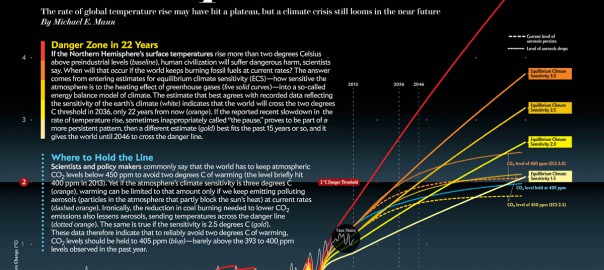
Earth Will Cross the Climate Danger Threshold by 2036

The rate of global temperature rise mayhave hit a plateau, but a climate crisis still looms in the near future

“Temperatures have been flat for 15 years—nobody can properly explain it,” the Wall Street Journal says. “Global warming ‘pause’ may last for 20 more years, and Arctic sea ice has already started to recover,” the Daily Mail says. Such reassuring claims about climate abound in the popular media, but they are misleading at best. Global warming continues unabated, and it remains an urgent problem.

earth-will_cross_climate-danger-threshold_ScientAm

The misunderstanding stems from data showing that during the past decade there was a slowing in the rate at which the earth’s average surface temperature had been increasing. The event is commonly referred to as “the pause,” but that is a misnomer: temperatures still rose, just not as fast as during the prior decade. The important question is, What does the short-term slowdown portend for how the world may warm in the future?

The Intergovernmental Panel on Climate Change (IPCC) is charged with answering such questions. In response to the data, the IPCC in its September 2013 report lowered one aspect of its prediction for future warming. Its forecasts, released every five to seven years, drive climate policy worldwide, so even the small change raised debate over how fast the planet is warming and how much time we have to stop it. The IPCC has not yet weighed in on the impacts of the warming or how to mitigate it, which it will do in reports that were due this March and April. Yet I have done some calculations that I think can answer those questions now: If the world keeps burning fossil fuels at the current rate, it will cross a threshold into environmental ruin by 2036. The “faux pause” could buy the planet a few extra years beyond that date to reduce greenhouse gas emissions and avoid the crossover—but only a few.

A Sensitive Debate

The dramatic nature of global warming captured world attention in 2001, when the IPCC published a graph that my co-authors and I devised, which became known as the “hockey stick.” The shaft of the stick, horizontal and sloping gently downward from left to right, indicated only modest changes in Northern Hemisphere temperature for almost 1,000 years—as far back as our data went. The upturned blade of the stick, at the right, indicated an abrupt and unprecedented rise since the mid-1800s. The graph became a lightning rod in the climate change debate, and I, as a result, reluctantly became a public figure. In its September 2013 report, the IPCC extended the stick back in time, concluding that the recent warming was likely unprecedented for at least 1,400 years.

Although the earth has experienced exceptional warming over the past century, to estimate how much more will occur we need to know how temperature will respond to the ongoing human-caused rise in atmospheric greenhouse gases, primarily carbon dioxide. Scientists call this responsiveness “equilibrium climate sensitivity” (ECS). ECS is a common measure of the heating effect of greenhouse gases. It represents the warming at the earth’s surface that is expected after the concentration of CO2 in the atmosphere doubles and the climate subsequently stabilizes (reaches equilibrium).

The preindustrial level of CO2 was about 280 parts per million (ppm), so double is roughly 560 ppm. Scientists expect this doubling to occur later this century if nations continue to burn fossil fuels as they do now—the “business as usual” scenario—instead of curtailing fossil-fuel use. The more sensitive the atmosphere is to a rise in CO2, the higher the ECS, and the faster the temperature will rise. ECS is shorthand for the amount of warming expected, given a particular fossil-fuel emissions scenario.

It is difficult to determine an exact value of ECS because warming is affected by feedback mechanisms, including clouds, ice and other factors. Different modeling groups come to different conclusions on what the precise effects of these feedbacks may be. Clouds could be the most significant. They can have both a cooling effect, by blocking out incoming sunlight, and a warming effect, by absorbing some of the heat energy that the earth sends out toward space. Which of these effects dominates depends on the type, distribution and altitude of the clouds—difficult for climate models to predict. Other feedback factors relate to how much water vapor there will be in a warmer atmosphere and how fast sea ice and continental ice sheets will melt.

Because the nature of these feedback factors is uncertain, the IPCC provides a range for ECS, rather than a single number. In the September report—the IPCC’s fifth major assessment—the panel settled on a range of 1.5 to 4.5 degrees Celsius (roughly three to eight degrees Fahrenheit). The IPCC had lowered the bottom end of the range, down from the two degrees C it had set in its Fourth Assessment Report, issued in 2007. The IPCC based the lowered bound on one narrow line of evidence: the slowing of surface warming during the past decade—yes, the faux pause.

Many climate scientists—myself included—think that a single decade is too brief to accurately measure global warming and that the IPCC was unduly influenced by this one, short-term number. Furthermore, other explanations for the speed bump do not contradict the preponderance of evidence that suggests that temperatures will continue to rise. For example, the accumulated effect of volcanic eruptions during the past decade, including the Icelandic volcano with the impossible name, Eyjafjallajökull, may have had a greater cooling effect on the earth’s surface than has been accounted for in most climate model simulations. There was also a slight but measurable decrease in the sun’s output that was not taken into account in the IPCC’s simulations.

Natural variability in the amount of heat the oceans absorb may have played a role. In the latter half of the decade, La Niña conditions persisted in the eastern and central tropical Pacific, keeping global surface temperatures about 0.1 degree C colder than average—a small effect compared with long-term global warming but a substantial one over a decade. Finally, one recent study suggests that incomplete sampling of Arctic temperatures led to underestimation of how much the globe actually warmed.

None of these plausible explanations would imply that climate is less sensitive to greenhouse gases. Other measurements also do not support the IPCC’s revised lower bound of 1.5 degrees C. When all the forms of evidence are combined, they point to a most likely value for ECS that is close to three degrees C. And as it turns out, the climate models the IPCC actually used in its Fifth Assessment Report imply an even higher value of 3.2 degrees C. The IPCC’s lower bound for ECS, in other words, probably does not have much significance for future world climate—and neither does the faux pause.

For argument’s sake, however, let us take the pause at face value. What would it mean if the actual ECS were half a degree lower than previously thought? Would it change the risks presented by business-as-usual fossil-fuel burning? How quickly would the earth cross the critical threshold?

Read more: Scientific American

Guardian Media Group to divest its £800m fund from fossil fuels

GMG becomes largest fund yet known to pull out of coal, oil and gas companies in a move chair Neil Berkett calls a ‘hard-nosed business decision’ justified on ethical and financial grounds

The Guardian Media Group (GMG) is to sell all the fossil fuel assets in its investment fund of over £800m, making it the largest yet known to pull out of coal, oil and gas companies.

The decision was justified on both financial and ethical grounds, said Neil Berkett, GMG chair:

“It is a hard-nosed business decision, but it is influenced by the values of our organisation. It is a holistic decision taking into account all of those things.”

Berkett said fossil fuel assets had performed relatively poorly in recent years and were threatened by future climate change action, while an ethical fund already held by GMG had been a “stellar” performer and renewable energy was growing strongly.

“This means we can adopt socially responsible investment criteria without putting at risk the core purpose of GMG’s investment funds: to generate long-term returns that guarantee the financial future and editorial independence of the Guardian in perpetuity,” he said.

A series of analyses have shown that current reserves of coal, oil and gas are several times greater than can be burned whilst limiting climate change to the internationally agreed limit of 2C. The fast-growing, UN-backed divestment campaign argues that the business models of fossil fuel companies, which continue to spend billions on searching for new reserves, are endangering the climate. The campaign also argues many fossil fuel assets could become worthless if the world’s governments act to curb global warming, a risk taken seriously by the World Bank and the Bank of England.

The Guardian’s Keep it in the Ground campaign is asking the world’s two biggest charitable funds – the Bill and Melinda Gates Foundation and the Wellcome Trust – to divest their endowments from all fossil fuels. Over 180 groups around the world have already taken this step, including Syracuse University, which on Tuesday committed to divesting its $1.18bn (£799m) endowment. Previously, the largest fund to divest from all fossil fuels was the Rockefeller Brothers Fund ($860m (£582m)), a fortune that originated from the company that became ExxonMobil. Others, including the world’s largest sovereign wealth fund, held by Norway, have divested from coal companies.

Berkett said the percentage of fossil fuel assets currently in the GMG investment fund was in the low, single digits. He said GMG, which owns the Guardian and Observer newspapers and website, has set a target of a “couple of years” to sell its direct fossil fuel investments, such as company shares and bonds, and five years to divest “co-mingled” funds which contained some fossil fuel assets. He said GMG would also be increasing its socially responsible investments.

Berkett led a two-month review with GMG’s investment advisers Cambridge Associates and said the critical step was deciding if GMG would be able to influence fund managers to provide the fossil-fuel-free investment options needed for GMG to divest. He said just a few dozen of the 17,400 institutional, high-quality managers were currently fossil free in their asset allocation.

“This [need to influence] is a major step in a strategy of managed divestment. It must be executed carefully to preserve our investment returns. But it remains the right thing to do,” Berkett said. “It is a policy we are proud to have initiated at a time when climate change has become an issue not just for investors, news organisations or UN negotiators – but for all of us.”

The Guardian’s editor-in-chief Alan Rusbridger said:

“I’m really delighted that GMG, having independently considered all the evidence, has decided to divest out of fossil fuels. What was a trickle is becoming a river and will, I suspect, become a flood. I’m glad that GMG is ahead of the trend – and believe this decision will be strongly influential on other companies and foundations.”

Bill McKibben, a US environmentalist who has led the divestment campaign said:

“The Guardian understands there’s an argument and a fight about climate change. The argument – as its reporters have chronicled – we have long since won; everyone knows by now the planet is in peril. But the fight with the fossil fuel industry has become a pitched battle, and now the Guardian lends its weight here as well. When the roll of honour for action on climate change is someday called, the Guardian’s name will be high on the list.”

Ellen Dorsey, executive director of the Wallace Global Fund and another key figure in the divestment movement, said:

“I think at pivotal moments in history we have seen editors and media outlets stand up and take unprecedented action. One could think of the abolition of slavery and the civil rights movement in the US and I liken the Guardian’s campaign to that kind of courageous action. I hope it will bring other institutions along to follow suit and join you.”

Source: The Guardian

Blades Being Installed on Turbine 5, Yelvertoft Wind Farm (Image: T. Larkum)

Overpopulation, overconsumption – in pictures

How do you raise awareness about population explosion? One group thought that the simplest way would be to show people

Oil wells

Blades Being Installed on Turbine 5, Yelvertoft Wind Farm (Image: T. Larkum)
Blades Being Installed on a Wind Turbine (Image: T. Larkum)

Depleting oil fields are yet another symptom of ecological overshoot as seen at the Kern River Oil Field in California

‘I don’t understand why when we destroy something created by man we call it vandalism, but when we destroy something created by nature we call it progress.’ Ed Begley, Jr.

Read more: The Guardian