Category Archives: Opinion

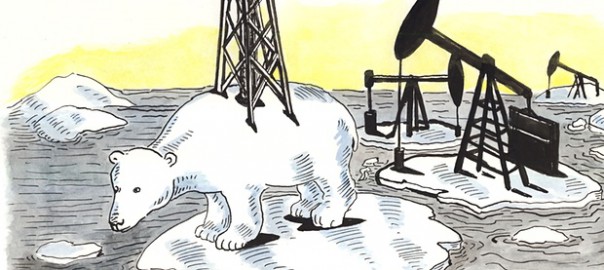
‘Oil companies have already been granted ‘ministerial buddies’ to ‘improve access to government’ – as if they didn’t have enough already.’ (Image: A. Krauze)

Taxpayers prop up toxic oil industry

As these new crisis bailouts for fossil fuels show, it’s those who are least deserving who get the most government protection

‘Oil companies have already been granted ‘ministerial buddies’ to ‘improve access to government’ – as if they didn’t have enough already.’ (Image: A. Krauze)

Those of us who predicted, during the first years of this century, an imminent peak in global oil supplies could not have been more wrong. People like the energy consultant Daniel Yergin, with whom I disputed the topic, appear to have been right: growth, he said, would continue for many years, unless governments intervened.

Oil appeared to peak in the United States in 1970, after which production fell for 40 years. That, we assumed, was the end of the story. But through fracking and horizontal drilling, production last year returned to the level it reached in 1969. Twelve years ago, the Texas oil tycoon T Boone Pickens announced that “never again will we pump more than 82 million barrels”. By the end of 2015, daily world production reached 97m .

Instead of a collapse in the supply of oil, we confront the opposite crisis: we’re drowning in the stuff. The reasons for the price crash – an astonishing slide from $115 a barrel to less than $30 over the past 20 months – are complex: among them are weaker demand in China and a strong dollar. But an analysis by the World Bank finds that changes in supply have been a much greater factor than changes in demand. Oil production has almost doubled in Iraq, as well as in the US. Saudi Arabia has opened its taps, to try to destroy the competition and sustain its market share – a strategy that some peak oil advocates once argued was impossible.

The outcomes are mixed. Cheaper oil means that more will be burned, accelerating climate breakdown. But it also means less investment in future production. Already, $380 billion that was to have been ploughed into oil and gas fields has been delayed. The first places to be spared are those in which extraction is most difficult or hazardous. Fragile ecosystems in the Arctic, in rainforests, in remote and stormy seas, have been granted a stay of execution.

Read more: The Guardian
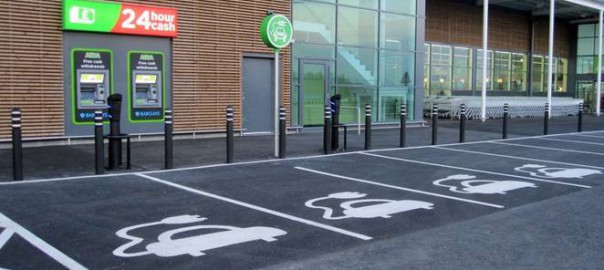
Electric car charging and parking (Image: G. Wallace)

Free parking, bus lane access for electric cars

This is becoming a perennial topic here on TreeHugger. The Guardian reports that eight UK cities are being awarded funds to provide major electric vehicle (EV) perks in an effort to increase adoption.

Electric car charging and parking (Image: G. Wallace)

Those perks will include a solar-powered charger at a York park-and-ride, free parking in Bristol and Milton Keynes, as well as bus lane access in Milton Keynes and Derby.

Cue the environmentalist handwringing.

On the one hand, I am sure Lloyd will be worrying about electric cars making it harder to fix our cities. After all, cars driving in bus lanes will inevitably impact public transit. And free parking for private automobiles seems to be the antithesis of reclaiming the ridiculous amount of space we devote to the motor car. With a demographic shift away from the car apparently underway, we do need to keep an eye on where we spend our resources.

In the other hand, I tend to be a part of the “it’s not this or that” crowd. Given our current dependence on private vehicles, and British’ cities on-going battle against life threatening smog, I’d suggest that speeding up the transition to emission-free cars is a significant step in the right direction.

The only caveat to that is the fact that the £40m pot being shared between these eight cities should not detract from other, non-car based efforts to slash emissions. From electric buses to treating cycling as mass transport, we must also continue our shift away from the car.

But surely, if done right, increased use of EVs should help us on this front too? As our streets get quieter, and as our air gets cleaner, it becomes easier and more pleasant for us to walk and cycle. And that can only be a good thing for everyone.

Read more: Treehugger

Electric vehicle sales to boom in 2016

2015 proved to be an interesting year for energy and climate issues both globally and in the UK. Will 2016 hold more of the same?

Forecasting is a dangerous business, but here are six predictions you should keep an eye on.

1) The showdown on oil prices between Saudi Arabia and the US will intensify, and the Saudis will eventually break.

It looks like oil and gas prices are going to remain low for the foreseeable future, panicking both the oil industry in Saudi Arabia and the shale gas industry in the US.

The big question is whether Saudi Arabia can keep production high and prices low long enough to bankrupt enough of the American shale industry. The answer may come by the end of 2016 and several factors point to the Saudis breaking first.

For one, despite losses for the oil industry, low oil prices benefit many sectors in the US, especially as consumers now have more spending money in their pockets. However for Saudi Arabia, an oil-dependent economy, low prices are a clear loser.

4) Hybrid sales will fall; electric vehicle sales will boom and become the hot energy news item of 2016.

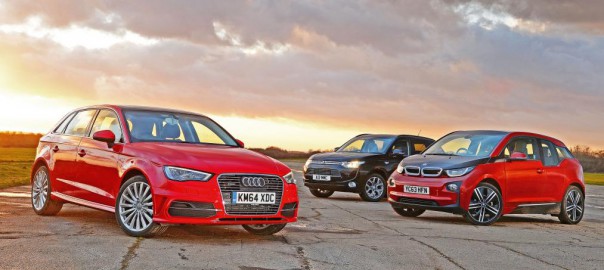
etron-statics-258_Etron_i3-Outlander_AutoExpress

More so than renewables, low-carbon vehicles are an area where you might expect low oil prices to present a difficulty as they will encourage more people to stick with their regular car.

Sales of hybrid vehicles, which many people do compare to standard combustion vehicles in purchasing decisions, will likely fall. Conversely, electric vehicle purchases tend to be made by consumers who are less sensitive to price changes, evidenced by increased EV sales in 2015 despite low oil prices. In addition, a significant portion of EV sales are in industrial, commercial and public sectors where EV mandates play a strong role.

This prediction, like most others included here, differs significantly from OPEC’s delusional World Oil Outlook. On EVs it forecasts only a moderate increase in sales all the way out to 2040. OPEC dismisses EVs as a threat because it says it will take until 2040 for battery costs to fall by 30-50%, enough to make them viable options. It’s a particularly bold prediction as battery costs have fallen by about 50% in last five years alone.

Expect to see media interest in head-to-head races between the silent rockets and a lot of interest in three big 2016 releases: the Chevy Volt, the Nissan LEAF and the Tesla Model X.

Read more: New Economics

(Image: Razzouk/Shutterstock)

2016 Will Be the Year the Fossil Fuel Era Enters Terminal Decline

This year is set to be even warmer than last, but there are reasons to believe the shift to clean energy will gain serious momentum in 2016.

(Image: Razzouk/Shutterstock)

2015 was a landmark year for climate action. Its many highlights were topped by a Paris agreement where 195 countries set themselves on a low-carbon path via economy-wide plans sure to be developed and strengthened every year.

In the meantime, climate chaos continues to build: 2015 was the warmest year of the warmest decade since we started recording temperatures. 2016 is forecast to be even warmer. The number of climate refugees are swelling and everywhere popular movements against more pollution and irresponsibility are strengthening.

Expect the following broad trends to accentuate in 2016.

Clean Energy can no Longer be Stopped

Notwithstanding the low price of coal and oil, solar power and other forms of clean energy will continue their onward march in 2016 and quasi-monopolize additions to electricity supply worldwide.

Order books for new clean energy power plants are up sharply in the United States, China, India, as well as in the developing economies of Africa and Latin America. India, for example, with current electricity grid capacity of less than 300 gigawatts (GW), is on its way to building 100 GW of solar power by 2022 (from 5 GW currently), double the current solar capacity of China.

Meanwhile, cheaper battery technology will continue to drive clean energy costs down, while changing the way people think about energy: We will produce more electricity from solar power, but also store and manage it ourselves. This foretells nothing short of a revolution in the way our modern society fuels itself, upending previous assumptions about the need for large fossil fuel plants connected by an expensive, inefficient electricity grid.

Read more: Alternet

Audi A3 e-tron, Mitsubishi Outlander and BMW i3 plug-ins

OPEC’s mortal threat from electric cars

The oil cartel is living in a time-warp, seemingly unaware that global energy politics have changed forever

etron-statics-258_Etron_i3-Outlander_AutoExpress

OPEC remains defiant. Global reliance on oil and gas will continue unchanged for another quarter century. Fossil fuels will make up 78pc of the world’s energy in 2040, barely less than today.

There will be no meaningful advances in technology. Rivals will sputter and mostly waste money. The old energy order is preserved in aspic.

Emissions of CO2 will carry on rising as if nothing significant had been agreed in a solemn and binding accord by 190 countries at the Paris climate summit.

OPEC’s World Oil Outlook released today is a remarkable document, the apologia of a pre-modern vested interest that refuses to see the writing on the wall.

The underlying message is that the COP21 deal is of no relevance to the oil industry. Pledges by world leaders to drastically alter the trajectory of greenhouse gas emissions before 2040 – let alone to reach total “decarbonisation” by 2070 – are simply ignored.

Read more: Telegraph

The sun sets on drilling (Image: Pexels)

2016: a year of living dangerously

As oil prices fall further, China slows and Brazil risks collapse, cracks will be papered over and the scene set for a new implosion

The sun sets on drilling (Image: Pexels)

Economic forecasting is a mug’s game. One thing that has been learned from the financial crisis and Great Recession is that even those equipped with the most sophisticated models get it wrong, sometimes spectacularly.

So it is with both humility and trepidation that I will try to fulfil a promise made last week and make predictions for what is going to happen in 2016. In all honesty, the future is unknowable and anybody who says otherwise is lying.

So, with that caveat, here’s what I think might happen. At some point, a recovery built on booming asset prices, weak growth in earnings and rising personal debt is going to lead to another huge financial crisis – but not in the next 12 months.

Instead, 2016 will be a year of living dangerously, papering over cracks and buying time before all the old problems resurface.

Read more: The Guardian
UK’s Poor 2015 Made Worse By Paris Agreement Expectations

2015 saw the UK destroy its position as a climate and energy leader, and now faces some tough questions in the wake of a successful Paris climate agreement.

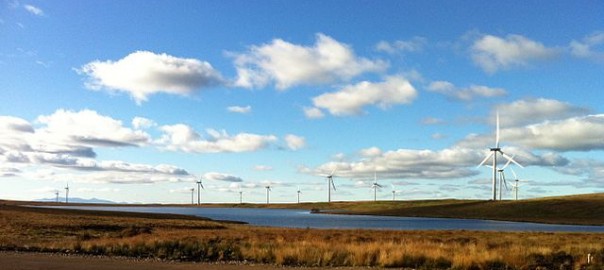
image_wind_farm_unk

Despite a big year in 2014 which saw a number of renewable energy records broken and strong momentum created for the country’s renewable energy industry, following 6 months of baffling policy decisions and a lacklustre attendance in Paris, the UK has a long way to go if it is to accomplish its role in tackling climate change.

Read more: Clean Technica

Hedge Fund Manager Chanos: Pump Oil Now Because EVs Are Coming

Hedge fund manager and Kynikos Associates President, Jim Chanos was interviewed on CNBC on Thursday, and had a couple interesting (and uncharacteristic) observations worth noting.

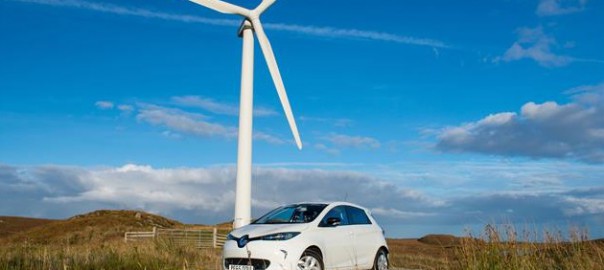
CHR3696_1_nlm_Renault_c

The first being bullish on solar, but still maintaining a short position in Solar City (of whom Chanos says is not a tech company, but a finance company); despite the recent surge in PV stocks thanks to the pending 5 year renew of the 30% federal tax credit.

The second point of interest was a message to all the oil pumpers out there:

“I think if you were to look out five or 10 years, if I was a member of OPEC, I would be pumping as much as I could today while it’s worth something, because it might not be worth a whole lot by 2030.”

The reason? Electric vehicles.

Read more: Inside EVs

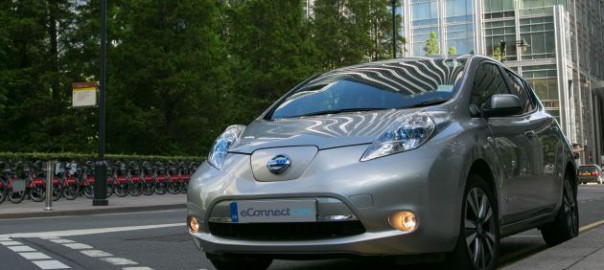
From 2020 all new private hire vehicles in London must be 'zero emission capable' (Image: eConnect Cars)

Don’t tell anyone the 2016 Leaf is out!

Back in September, I got on Nissan’s mailing list to be the “first to know” when the 2016 LEAF was released. I also asked a local Nissan dealer to contact me when it was available. Neither one contacted me.

From 2020 all new private hire vehicles in London must be 'zero emission capable' (Image: eConnect Cars)

One would think that the biggest update to the LEAF in 5 years would warrant a media fanfare. Yet, so far, Nissan has kept the 2016 LEAF release pretty much a secret.

When the new LEAF with 107 miles of range was announced, I was super excited. I’ve wanted an EV for 12 years, and the 2016 LEAF finally had the range for most of our trips at a price I could afford. Over on mynissanleaf.com, an owner in my area said Fontana Nissan had been great with his LEAF purchase back in 2011, so I emailed Fontana asking when the 2016 might be available. Their response? A form letter asking me to come down for a test drive.

I tried again, being as clear as possible that I was only interested in the date the 2016 would be released to market. This time I got a voicemail asking me to come down for a test drive. I had progressed to voicemail! Hurray.

Read more: Clean Technica

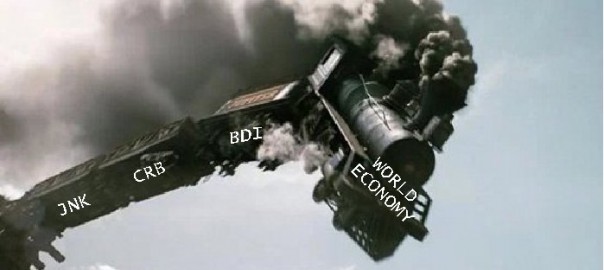
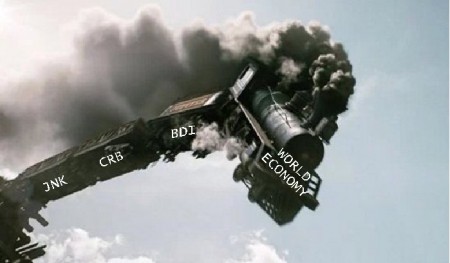
The great train wreck of 2016

Today we are going to review irrefutable evidence that a slow motion train wreck is already well underway across global markets, that will end with the last wagons on the train, the S&P500 index and the Dow Jones Industrials, disappearing into the abyss right after their immediate predecessors.

trainb_economy_wreck_cmaund

There are still a remarkable number of investors out there, and an even more remarkable percentage of mainstream financial journalists, who seem to think that everything is alright just because the flagship indices like the Dow Jones Industrials and the S&P500 haven’t caved in yet, but as we will now see they are probably just about to.

Read more: Clive Maund