Category Archives: FAQ

NEW ELECTRIC PEUGEOT 3008 CROSSOVER GETS 435-MILE RANGE AND DRAMATIC STYLING

There will be hybrid power available, too

Peugeot is replacing its highly successful 3008 crossover with an all-new model with electrification to the fore. The new all-electric E-3008 model is the latest chapter in the French brand’s shift to a fully electric future, something it plans to achieve by 2030.

Helping differentiate the new 3008 from its predecessors is a fastback design featuring a sloping roofline with an integrated spoiler. This is said to funnel airflow over the rear window in a bid to reduce drag and enhance the car’s aerodynamic efficiency.

The three-claw design that has become a signature of Peugeot is seen more vividly in the new car, with LED daytime running lights forming an extension of the headlight units into the front bumper. In the E-3008 EV, the Peugeot emblem is surrounded by a mesh effect that includes body-coloured sections to blend in with the bodywork.

Three different electric powertrains

Two batteries will be available in the E-3008, starting with a 73kWh unit that will feature in the single- and dual-motor versions providing 326 miles of driving range on the WLTP test cycle. The single-motor version has up to 207bhp, reaches 62mph in 5.4 seconds from rest and a top speed of 105mph.

Peugeot will offer an all-wheel-drive version with two motors using the same battery and managing to achieve the same driving range. Peak power climbs to 315bhp, while 0-62mph in only 3.9 seconds.

Read more: Driving

It’s Time to Go Green!

If you would like to know more about Solar Panels and the PowerBanx range of home battery systems, and get a free instant quote, please complete our online form:

ZS EV (Image: MG)

‘I bought an electric MG eight weeks ago – it’s incredible value for money’

A motoring expert has highlighted how easy it was to make the transition from a petrol-powered car to an EV.

An automotive YouTuber has revealed his thoughts on a popular , stating that it offers good value for money.

Paul runs the channel Life of Cars, and regularly posts videos in which he reviews a variety of cars and informs drivers on how to fix common issues.


ZS EV (Image: MG)
ZS EV (Image: MG)

In one of his most recent videos, Paul talks to a relative who bought an MG4 eight weeks ago about the switch from petrol to electric.

The relative said: “It’s just easy, it does it all for you. Acceleration off the line is pretty sharp, that’s a big difference.

I like to put it into eco mode and into energy saving mode which obviously helps with the battery, especially driving long distances.”

In the video, Paul and his relative take the MG4 for a spin, discussing various aspects of owning an electric car.

The relative noted that the car came equipped with several driver assistance features, such as lane keep assist, preventing the driver from accidentally drifting out of their lane.

They both added that the interior was incredibly roomy, which has been achieved by using a battery that is thinner than ones found in other EVs.

Read more: Express

It’s Time to Go Green!

If you would like to know more about Solar Panels and the PowerBanx range of home battery systems, and get a free instant quote, please complete our online form:
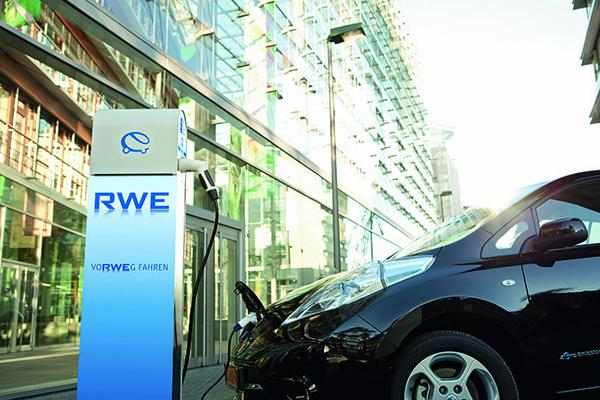
Can an EV be your everyday car? The questions to consider first

In the early 2000s, it would have been difficult to consider an EV as your everyday car. They were too expensive to buy, offered a limited driving range, and the charging network was too small to make them a realistic prospect.

Matters began to improve when the Nissan Leaf arrived in 2010, and EV uptake has only accelerated since. In August 2023, more than 20 percent of new cars sold in the UK were fully electric – and Tesla had two vehicles (the Model Y and Model 3) inside the top 10 best-sellers.

The availability of better and more affordable EVs, along with the rapid growth of the charging network, means the answer to our original question is ‘yes’ – an electric car can indeed be your everyday car.

Nonetheless, there are several important questions you need to ask yourself first…

How long is your daily commute?

The average round-trip commute in the UK is around 21 miles. Even an electric car with the most miserly range estimate will be able to cover that. You don’t even need a longer-range EV, such as a Porsche Taycan, to tackle a longer daily commute.


Kia Niro Plug-in Hybrid_Geneva 2017 (image: Next Green Car)

For example, the Kia Niro EV offers 285 miles of electric range, which might be enough for an entire week of commuting. At the time of writing, it costs £37,295 in entry-level ‘2’ specification.

Read more: MotoringElectric

It’s Time to Go Green!

If you would like to know more about Solar Panels and the PowerBanx range of home battery systems, and get a free instant quote, please complete our online form:

How long does it take to charge an electric car?

The time taken to charge an electric car can vary from as little as 20 minutes to as much as 24 hours. Here’s why…

With almost one-in-five new cars being fully electric, more drivers will be learning about charging electric cars for the first time. And alongside how much charging an electric car cost and how to use a charging point, they’ll likely be considering the time it takes to charge.

The two biggest factors in how long it’ll take to charge your electric car are the size of the battery, and the speed at which your car can charge. For example, an electric car with a small battery and a fast charging speed will charge a lot faster than one with a large battery and a slow charging speed. We’ll go into both of those factors in more depth in this story, as well as looking at the different types of electric car chargers and answering your electric car charger questions.

Types of electric car chargers

The speed at which you can charge your electric car can be governed by the type of charger you’re using. Charging at home using a three-pin plug is the slowest method, typically taking around 24hrs to replenish the battery on your car. Doing so is therefore impractical for many electric car owners, although it can be doable if you own a plug-in hybrid car.

Read more: WhatCar

It’s Time to Go Green!

If you would like to know more about Solar Panels and the PowerBanx range of home battery systems, and get a free instant quote, please complete our online form:
UK’s largest electric vehicle charging hub opens in Birmingham

Up to 180 vehicles can be charged at any one time in as little as 15 minutes at the just-opened Gigahub

The UK’s largest electric vehicle charging hub has opened at Birmingham’s NEC conference centre with the power to charge up to 180 vehicles at a time in as little as 15 minutes.

The multimillion-pound site will provide the UK’s highest concentration of super-fast chargers in one location after the biggest-ever private investment in Britain’s charging infrastructure.

The hub offers motorists in the West Midlands 150 seven-kilowatt AC charging bays and a further 30 superfast, 300kW DC charging bays, which can be used to charge up a typical passenger vehicle in about 15 minutes.

The charging zone is located on the outskirts of Birmingham at the hub of the UK motorway network, with access to the M42, M6 and A45 and what will eventually become the new HS2 rail station.

The site was officially opened on Thursday by the chancellor, Jeremy Hunt. He said the “groundbreaking” investment marked “a significant step in our rollout of electric vehicle charging infrastructure across the country”.

“This is the biggest private investment in electric charging in the UK and is a huge vote of confidence in Britain’s role as a leader in green industries,” Hunt said.

Andrew Cole, a director at the NEC Group, said the conference centre’s campus, which has 7 million visitors a year, could now charge about 1,000 electric cars in every 12-hour day.

Read more: TheGuardian

It’s Time to Go Green!

If you would like to know more about Solar Panels and the PowerBanx range of home battery systems, and get a free instant quote, please complete our online form:

‘One in five new cars turn electric in August’

The number of electric cars registered in August skyrocketed by 77% compared to the same month in 2022, according to a report

New industry figures show that one-in-five new cars registered in the UK in August were fully electric, representing the strongest month for electric vehicle (EV) registrations in 2023.

According to data from New AutoMotive, the number of electric cars registered in August 2023 surged by 77% compared to the same month in the previous year.

Electric vans also saw growth, comprising 8% of new van registrations.

In the meantime, registrations of both petrol and diesel cars are now at historic lows, with registrations of both accounting for the smallest share of new cars in any twelve-month period for the last 20 years.

Ben Nelmes, Chief Executive of New AutoMotive, said: “It is great to see British motorists embracing clean cars in their thousands. Despite an unprecedented cost of living crisis and rising interest rates, demand for electric cars has remained surprisingly resilient.


“The government should build on this progress by putting in place a strong California-style Zero Emissions Vehicle Mandate to give car companies and EV charger installers certainty.”

Commenting on the report, Greenpeace UK‘s Policy Director Doug Parr said: “Electric cars are selling like hot cakes. However, with the government deciding to ‘side with motorists’, while pursuing an anti-green agenda, you have to wonder if ministers are foolishly ignoring these soaring sales and instead listening to the vested interests attempting to park EVs’ growth.

Read more: EnergyLiveNews

It’s Time to Go Green!

If you would like to know more about Solar Panels and the PowerBanx range of home battery systems, and get a free instant quote, please complete our online form:

Hundreds more rapid charging points installed in UK to help drivers go electric

Fast charging stations that allow for longer journeys are being added in regions beyond London

Charging companies are plugging the gaps in the UK’s high-speed charger network, with hundreds added this year outside London in a shift that will help end the “range anxiety” that holds back some would-be electric car buyers.

The capital and the south-east still have far more chargers of all speeds – ranging from slow to rapid and ultra-rapid – than the rest of the country. But the presence of high-speed chargers, generally used for quick recharging on longer journeys, is increasing in other regions as electric car sales surge.

The UK’s electric vehicle drive has put the energy sector on the road to change

The West Midlands, east Midlands, the south-west of England and Wales all installed more rapid or ultra-rapid chargers than London during the past year, and their networks have grown more rapidly than the south-east of England, according to data from ZapMap, which maps UK public charging points.

Nine out of 12 regions of the UK installed more than 100 rapid chargers during the past year, ZapMap’s data showed.

Long journeys are relatively rare occurrences for most households, but perceived difficulties in finding chargers for the occasional long drive – such as the 14m trips expected over the August bank holiday weekend – have been one factor putting people off electric cars.

Read more: TheGuardian

It’s Time to Go Green!

If you would like to know more about Solar Panels and the PowerBanx range of home battery systems, and get a free instant quote, please complete our online form:

2030 UK petrol and diesel car ban: will it be delayed?

From 2030 drivers won’t be able to buy new cars powered solely by petrol or diesel, but what does this mean for you and could the ban be delayed?…

Under current Government plans, the sale of new cars powered solely by petrol and diesel will be banned from 2030. The move, announced in 2020, is intended to encourage more drivers to choose electric cars, and reduce emissions from vehicles across the UK.

Hybrid cars which can travel ‘significant’ distances on electric power alone will remain on sale until 2035, when it is expected that they too will be banned in favour of fully electric cars. The Government has yet to define what qualifies as ‘significant’.

According to official figures, electric cars currently account for around 16% of new car sales, with hybrids accounting for about 12% and plug-in hybrids 7%. Combined, that means such cars have accounted for more than a third of sales.

It’s important to note that only new car and van sales will be affected by the ban – you’ll still be able to buy used cars and vans powered solely by petrol or diesel.

In this story, we’ll cover the details of the proposed ban, including how it came about, how it affects car buyers, and whether you should still consider buying a new petrol or diesel car in 2023.

Read more: WhatCar


It’s Time to Go Green!

If you would like to know more about Solar Panels and the PowerBanx range of home battery systems, and get a free instant quote, please complete our online form:

Charging Hub with eVolt Rapid Chargers (Image: SWARCO eVolt)

Electric car charging costs

The impending ban on the sale of brand new petrol and diesel-powered cars due in 2030 may already have you thinking about switching to an electric vehicle (EV) or plug-in hybrid (PHEV) in the near future. But how much do EVs cost to charge in the UK and how much could you save by making the switch to an electric car now?

There are many ways to charge an electric car and the cost will vary depending on your choice of energy provider and your tariff. Other influencing factors on EV charging costs include the speed and power of the charger, and the size of the vehicle’s battery. Here, we take a look at how much it’ll cost you to charge an electric car, plus we delve a little deeper into whether or not it’s cheaper to run an EV than it is a petrol or diesel car.


Group sales of BMW i, BMW iPerformance, and Mini electric have seen dramatic growth

Charging an electric car at home: three-pin plug

While not recommended as such, you can charge your electric car with a conventional three-pin plug at home. It will take a long time because the power from a domestic wall socket is relatively low, so it’s best reserved for emergency charging away from home, and for cars with reasonably modest battery sizes.

The average home electricity rate costs around 30p per kWh (as of August 2023), meaning it would cost you roughly £12 and take 16-17 hours to charge a Nissan Leaf with its 40kWh battery.

Read more: FutureCar

It’s Time to Go Green!

If you would like to know more about Solar Panels and the PowerBanx range of home battery systems, and get a free instant quote, please complete our online form:

I travelled the UK and Ireland in an electric car, and what a shocker: nothing went wrong

Despite being an EV convert, fearmongering made me anxious before my holiday. But the summer road trip reaffirmed my faith

When my son suggested a road trip this summer around the UK and Ireland, I wasn’t sure. He wanted to go from our home in Brighton to Manchester, Edinburgh, Belfast, Dublin, Dingle on Ireland’s west coast, Rosslare on Ireland’s east coast, and Cardiff. We worked out a route and looked at booking hotels, a treehouse, a campervan and a lighthouse; we’d visit friends and family; and we’d explore the capital cities of four nations – it sounded amazing. The only problem was that we’d be doing it in our electric car – and it holds less than 100 miles’ worth of charge.


Nissan e-NV200 Winter Camper Concept (Image: Nissan)

I’m a convert, but even I was affected by the fearmongering that haunts the electric vehicle market. A relentless campaign in the rightwing media against government plans to ban the sale of new petrol and diesel cars in 2030 reflects the views of an increasingly desperate fossil fuels lobby, and I had read story after story about a lack of working chargers in the UK. I took out a second breakdown policy when I realised that mine covered only one callout in any 28-day period. I expected an adventure, and to come back with tales to tell, like running out of charge halfway up a mountain, or making friends for life with a random farmer as the car took all night to charge on their three-point socket.

Read more: TheGuardian

It’s Time to Go Green!

If you would like to know more about Solar Panels and the PowerBanx range of home battery systems, and get a free instant quote, please complete our online form: