Category Archives: Buying/Leasing

Debunking the Top 10 electric vehicle myths

Are you unsure about switching to an electric vehicle? Go Zero Charge debunks the Top 10 electric vehicle myths to help you transition to electrification.

As the UK heads toward the looming ban on the production of diesel and petrol cars in 2030, there’s still a significant gap in electric vehicle (EV) awareness and education in the motoring space, causing unfair prejudice against EVs due to myths that have grown in popularity.

In response, the team of EV experts behind the Optimus, www.GoZeroCharge.com‘s top-of-the-line smart EV charger, have exposed a handful of the most common electric vehicle myths in a bid to encourage more motorists to make the transition.

There’s no financial upside

One of the most common electric vehicle myths is that there are no financial upsides. In fact, owning an EV can lead to significant cost savings, particularly with the current measures in place to provide financial advantages to EV owners.
For instance, EVs are currently exempt from vehicle tax, although this exemption is scheduled to change from April 2025, when standard road tax rates (currently £165 per year) will be applicable.

In addition to the current vehicle tax exemption, some energy suppliers offer cheaper tariffs specifically for EV charging, and certain car parks provide free parking spaces for electric vehicles.

Read more: InnovationNewsNetwork

It’s Time to Go Green!

If you would like to know more about Solar Panels and the PowerBanx range of home battery systems, and get a free instant quote, please complete our online form:

Owners of the most polluting cars to pay double for parking across England

Lambeth council in London is latest to introduce emissions-based fees, with similar charges expected to be widely introduced

Owners of the most polluting cars may soon have to pay more to park as councils across England are expected to roll out new charges based on a vehicle’s CO2 emissions.

Lambeth is the latest council in London to introduce emissions-based parking fees, with similar charges now expected elsewhere in England. Owners of the most polluting cars can expect to pay more than twice as much as cleaner cars. There are now 26 different charges to park for an hour in Lambeth, depending on a car’s tax band and whether there is a diesel surcharge. The cost of a parking bay near Waterloo station in south London now ranges between £6.30 and £13.23 an hour, with payment made by an app.

The consultation on the charges introduced on 30 May included a new pricing structure for residents’ parking permits, which are already based on CO2 emissions. The annual cost of the highest band has risen from £340.73 to £500, with an additional annual surcharge of £140 for a diesel vehicle that does not comply with Euro 6 emission standards.

Of more than 2,900 responses in the consultation, 59% objected to the proposals. Lambeth has implemented the changes despite opposition, stating that air quality is a major public health issue and a wide range of interventions is required.

Read more: TheGuardian

It’s Time to Go Green!

If you would like to know more about Solar Panels and the PowerBanx range of home battery systems, and get a free instant quote, please complete our online form:

One of Felix Project's Kangoo ZE electric vans (Imaged: Renault)

Renault Kangoo, best-seller electric vehicle for its segment since 2011

– First ever electric vehicle (EV) to earn the title of International Van of The Year in 2011, thereby creating a new vehicle category, Renault Kangoo is the segment’s all-time best-selling model

– The Maubeuge factory in northern France has produced more than 90,000 Renault Kangoo & 10,000 partners vehicles fully electric vehicles since 2011.

– Since its launch, the model has served as an ideal testing ground for the brand’s electric vehicles

RENAULT KANGOO, EV PIONEER AND LEADER

Renault Kangoo has played an important and sometimes little-known role in aiding Renault develop expertise in electric vehicles.


One of Felix Project's Kangoo ZE electric vans (Imaged: Renault)
One of Felix Project’s Kangoo ZE electric vans (Imaged: Renault)

While Renault began exploring the idea of electric vans back in 1985 with an EV version of the Renault Express running on nickel-zinc batteries, this ambition became a reality in the early 2000s with the Renault Kangoo.

Renault Kangoo served as a testing ground for future electric vehicles and was available in electric (Kangoo Electri’cité) and hybrid (Kangoo Elect’road) versions as early as 2002.

These small-scale runs helped the brand build up real expertise in EV design, industrialization, and especially maintenance. At the time, a team of flying doctors would travel out to each customer to analyse, maintain, and improve those models already in circulation.

In 2011, when it was marketed to the general public, Renault Kangoo Z.E became the first full-electric vehicle to earn the title of ‘International Van of The Year’, thereby creating a segment for electric vans.

Read more: WebWire

It’s Time to Go Green!

If you would like to know more about Solar Panels and the PowerBanx range of home battery systems, and get a free instant quote, please complete our online form:

Electric Vehicles and Electric Vehicle Charging: Risk and Opportunity

UK data shows that by September 2022, there were 1 million licensed plug-in vehicles (EV) in the UK. This equated to 2.5% of all licensed road using vehicles, up from 1.6% at the end of September 2021[1]. Additionally, the UK government currently plans to prohibit the sale of new internal combustion engine (ICE) vehicles in 2030[2].


Opel Corsa-e Electric Car (Image: Opel.com)

What’s the issue?

  • EVs provide significant advantages, with benefits including:
  • Quieter engines reducing urban noise pollution.
  • Emit less emissions, though debates rage if they are truly ‘green’ bearing in mind the associated costs of mineral extraction and battery recycling.
  • Cheaper maintenance costs as simpler drive trains reduce opportunities for components to fail.
  • Cheaper running costs as electricity rates allow a cheaper cost per mile in comparison to diesel and petrol vehicles. EVs becomes even more economical where homeowners have access to solar charging for their vehicle[3].

What are the risks?

Electric vehicles commonly rely on lithium ion batteries to generate electrical power. However, when damaged or improperly manufactured these batteries can fail. Failure can raise the surrounding temperature and subsequently become the source of thermal runaway resulting in catastrophic fire damage to the vehicle – potentially also spreading to surrounding infrastructure and buildings[4]. As a result, damaged battery packs may lead insurers to write off otherwise perfectly suitable vehicles.

Read more: Marsh

It’s Time to Go Green!

If you would like to know more about Solar Panels and the PowerBanx range of home battery systems, and get a free instant quote, please complete our online form:

ENERGY SAVER I’m a car expert – here’s the top five used EVs you can buy for less than £15k

ONE of the biggest gripes about switching to an electric car is the hefty price of battery-powered models.

With more low emission zones appearing all over the UK, many motorists are finding that they need a cleaner car like an EV or a hybrid – but the problem is they just can’t afford to make the change from their petrol or diesel motor.

Recent research by carwow, the online platform for buying and selling cars, found that cost is a significant barrier to EV adoption – with 56% of consumers saying that the purchase price of an electric car is too high.

Handily, carwow’s automotive expert and YouTube star Mat Watson has shared his top picks for used EVs you can get your hands on for under £15k right now.

Nissan Leaf – £14,500

One of the original electric cars for the masses, the Nissan Leaf is a smart EV that comes with an impressive safety kit, a comfortable interior and a big, practical boot.

At this price you’ll probably only find the lower-range models, but an official 168 miles between charges should be enough for most.


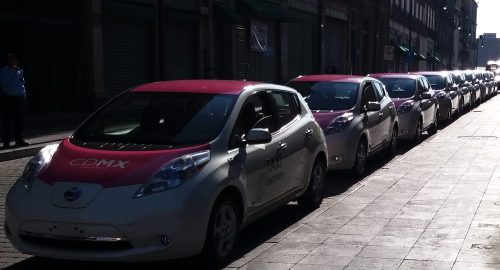
Electric Taxi Rank in Mexico City

The interior can feel a bit cheap in places, but a good driving position and good visibility make the Leaf easy to drive in town – the punchy electric motors certainly help here, too.

Read more: TheSun

It’s Time to Go Green!

If you would like to know more about Solar Panels and the PowerBanx range of home battery systems, and get a free instant quote, please complete our online form:

How safe are electric cars?

The combination of high-voltage electrical systems and reports of batteries catching fire might give you cause for concern. So, how safe are electric cars really?…

Electric cars are increasingly popular, with more than one million now on UK roads. However, as is so often the case with cutting-edge technology, there are some concerns around safety.

These fears include whether they become dangerous when exposed to water and how flammable the batteries might be in a crash. So, here we reveal everything you need to know about the safety of electric cars.

How safe are electric cars in an accident?

Electric vehicles (EVs) have to be built to the same safety standards as internal combustion engined (ICE) cars, meaning that they are actually just as safe in the event of a collision.

Most manufacturers allow their cars to be crashed and assessed by independent safety body Euro NCAP, which awards an overall safety rating for each car it tests, allowing drivers to identify the safest choice for their needs.

In fact, the fully electric Tesla Model Y is the highest-scoring car tested by Euro NCAP since the latest standards were introduced in 2020, which is part of the reason why it won our Safety Award at the 2023 What Car? Awards.

True, electric cars are built differently from ICE cars due to the absence of an engine.

Read more: WhatCar

It’s Time to Go Green!

If you would like to know more about Solar Panels and the PowerBanx range of home battery systems, and get a free instant quote, please complete our online form:
Mr. Bean says ‘our honeymoon with electric cars is coming to an end.’ It’s just the beginning.

Mr. Bean loves cars.


Over the weekend, the respected British comedian Rowan Atkinson, famous for his portrayal of a clueless social misfit in his eponymous British series, wrote about “feeling duped” for buying an electric car.

“Our honeymoon with electric cars is coming to an end,” he lamented in an opinion piece in the Guardian. “Sadly, keeping your old petrol car may be better than buying an EV.”

I can see why Mr. Bean might suggest that. I’ve been driving a 2010 Honda Fit for quite a while, and I’m sure it will keep chugging well after my odometer’s recent lap of the 100,000-mile mark.

But Atkinson, who says he has a “lifelong passion for the motorcar” and an undergraduate degree in electrical engineering, argues that people should consider keeping their internal combustion engines as long as possible, while we develop hydrogen and synthetic fuel alternatives.

On one front, Atkinson is right. EVs are not perfect. The industry, for example, has a lot of room to improve on how it sources battery materials, whose mining has ravaged communities and ecosystems around the world. Prices are high. Charging infrastructure is spotty. Supplies are tight. He points out some real problems in the current market.

But based on what we know about emissions and automobile engineering, EVs are the better choice for millions of people right now.

Read more: WashingtonPost

It’s Time to Go Green!

If you would like to know more about Solar Panels and the PowerBanx range of home battery systems, and get a free instant quote, please complete our online form:

Mazda MX-30 EV (Image: Mazda)

The biggest myths about electric cars, debunked

  • Electric vehicles are gaining momentum.
  • But drivers still have a lot of misconceptions about going electric.
  • From range to charging challenges, here are some of the biggest EV myths, debunked.

Electric cars are gaining traction, bolstered by efforts from the federal government, billions of dollars of investment from the auto industry, and momentum from sustainability advocates all over the globe.

But the US’ transition to electric has been slower than other parts of the world, hitting just about 6% EV adoption in 2022.

Some of that can be attributed to real hurdles, with infrastructure, cost, and more. But more people than might think can probably go electric, so long as some major myths are demystified and their questions answered.

Here are 8 of the biggest myths about EVs, debunked:

Myth 1. All EVs are expensive.

Most consumers who aren’t very familiar with electric vehicles or weren’t early adopters have the perception that all of them are costly.


Honda E 2021 (Image: honda.co.uk)

It’s true that the average price paid for a new EV hit $55,089 in April — higher than the average for a new gas-powered vehicle of $48,275, per Kelley Blue Book. Most US consumers have indicated they don’t want to spend more than $50,000 on one if they opt to electrify. It’s also true that EVs haven’t yet hit scale (at least in the US), and EV batteries are generally a really costly component. Plus, most of the EVs that have hit the market so far have been luxury products and bigger vehicles.

Read more: Insider

It’s Time to Go Green!

If you would like to know more about Solar Panels and the PowerBanx range of home battery systems, and get a free instant quote, please complete our online form:

Citroen Ami (Source: uk-mediacitroen.com)

Every PHEV on sale in the UK

Welcome to Autocar’s exhaustive list of PHEVs you can buy today, from Audi to Volvo

As we hurtle towards an electrified future and the UK’s 2030 ban on ICE (Internal Combustion Engine) new car sales, the need for alternatives is more pressing than ever.

BEVs (Battery Electric Vehicles) are the ultimate goal for many governments and manufacturers, but they still remain a controversial option for many buyers. Not only are they costly to buy, mainly because of their expensive batteries, they are at the mercy of public charging infrastructure that’s still not widespread and reliable enough to


On paper, the PHEV (Plug-in Hybrid Electric Vehicle) looks to be the ideal stepping stone. Combining the pure electric running for anything between 15 and nearly 100 miles, they’ve got more than enough battery power for everyday commutes and running around. However, they combine this zero emissions at the tailpipe progress with the confidence-inspiring addition of traditional petrol or diesel engines for longer journeys.

Effectively, these machines promise to offer ‘best of both worlds’ experience for those still uncertain about taking the plunge with a full EV. Even better, there’s a wide choice of models to choose from, with most manufacturers having at least one PHEV on their books.

Read more: Autocar

It’s Time to Go Green!

If you would like to know more about Solar Panels and the PowerBanx range of home battery systems, and get a free instant quote, please complete our online form:
Volkswagen ID.3 electric car (Image: Volkswagen.com)

Tesla (TSLA) Model 3 dominates reliability study, outperforming ICE counterparts

Tesla’s (NASDAQ: TSLA) participated in a new reliability study by the Allgemeiner Deutscher Automobil-Club (ADAC) in Germany where their electric Model 3 crushed its internal combustion engine (ICE) counterparts.

It should come as no surprise that electric vehicles (EVs) are generally more reliable than their fossil-fuel-powered counterparts, given their remarkable mechanical simplicity. The superiority of EVs in terms of reliability has been emphasized in a recent study conducted by the ADAC, a German vehicle analysis firm. The study found that the Tesla Model 3 outperforms a large majority of gas-powered vehicles, further solidifying the reliability advantage of electric cars.

Tesla Model 3 Unveil (Image: Tesla)

The ADAC study is an annual analysis that primarily examines vehicles that are older than three years. The group’s latest study encompassed four electric vehicles available in the German market: the Tesla Model 3, BMW i3, Volkswagen ID.3, and Renault Zoe. According to the findings from the ADAC’s data, electric vehicles not only outperform their gasoline counterparts on average, but the Tesla Model 3 exhibits a significantly higher level of reliability compared to both gasoline vehicles and other electric cars.

The study found that only 1.1 out of 1,000 2020 model-year Tesla Model 3s broke down annually, which is, surprisingly, a slight increase from the 2019 Model 3, which only had 0.9 breakdowns per 1,000 units. Comparatively, the average gas vehicle had 6.9 breakdowns per 1,000 units, and the average EV had 4.9 breakdowns per 1,000 units.

Read more: StreetInsider

It’s Time to Go Green!

If you would like to know more about Solar Panels and the PowerBanx range of home battery systems, and get a free instant quote, please complete our online form: