Category Archives: Buying/Leasing

Should I buy an electric car? The pros and cons of making the switch

The UK is on the road to becoming carbon-neutral and, from 2030, sales of all new petrol and diesel cars will be banned.

Sooner or later, motorists will have to consider switching to an electric car. The big question is whether it makes more sense now or later?

The transition from ICE (Internal Combustion Engine) cars to electric vehicles (EVs) is being driven by the impact that petrol and diesel cars have on the environment.


Fossil fuelled vehicles are responsible for around a fifth of all carbon emissions in the UK, according to Greenpeace. There’s also a clear link between pollution and life-changing illnesses such as coronary heart disease, respiratory disease and lung cancer, and asthma.

Read more: When will petrol cars be banned? The government’s plans explained

The argument for electric cars is compelling, but as with most things, EVs have their advantages and disadvantages.

We’ve weighed up the pros and cons of zero emissions vehicles to help you decide if an electric vehicle is the best option for you right now.

Read more: Yahoo

It’s Time to Go Green!

If you would like to know more about Solar Panels and the PowerBanx range of home battery systems, and get a free instant quote, please complete our online form:

Q4 e-tron (Image: audi.co.uk)

5 Reasons Electric Vehicle Sales Are Soaring

They look great, have fantastic acceleration, and cut down on your gas costs. What’s not to love?

Electric vehicle sales are soaring, and the only problem at the moment is that automakers are struggling to keep up with growing consumer demand. The surge in electric vehicle sales is the direct result of consumers learning about EVs and their benefits and an increase in manufacturers offering EVs, allowing consumers many more choices.

But there are other reasons for the ongoing uptick in electric vehicle sales and why so many people are finally making the switch.

Independence from gasoline is one of the greatest reasons to buy an electric vehicle. Not only because of the expense but simply eliminating the need to stop at a gas station from time to time. Many people have realized that electric vehicles allow the convenience of simply charging your vehicle while you sleep, in the comfort of your own home, and then getting on with your day the next morning.


Q4 e-tron (Image: audi.co.uk)

Not having to stop at a gas station is a true luxury. Furthermore, gas station prices are higher than ever before worldwide, and not only this, but it’s extremely difficult to predict when these spikes in gas prices will occur—as well as when they will go down again.

Read more: MUO

It’s Time to Go Green!

If you would like to know more about Solar Panels and the PowerBanx range of home battery systems, and get a free instant quote, please complete our online form:
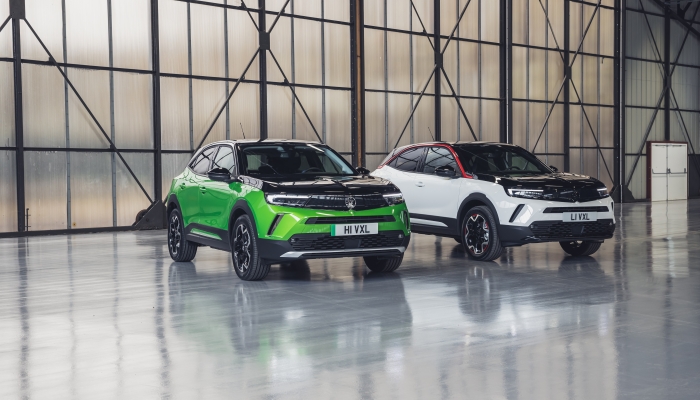
Vauxhall-Mokka-eSUV (Image: media.vauxhall.co.uk)

Want an electric car but fear the cost? Here’s how to flick the switch

Make the change without forking out huge sums

Consumers are more and more eager to go electric. The number of electric vehicles (EVs) on British roads is soon set to exceed France after a huge surge in sales. But while a growing number of motorists want to switch, many are also wondering if they can afford it.

Although they are cheaper to run, EVs are more expensive to buy than other vehicles, leading many to believe they are out of their price range. And while the number of EVs sold in the UK has now exceeded half a million, research from the Green Finance Institute says that most purchases are by corporate fleet companies, and not individuals.

Vauxhall-Mokka-eSUV (Image: media.vauxhall.co.uk)

A report from the thinktank says: “Consumer adoption of EVs is still in its infancy, and a number of barriers deter larger numbers from switching in the short term.

“Higher upfront cost of the vehicles, the pace of improvement in battery range, concerns about access to reliable charging infrastructure and perceived complexity of transitioning means many are hesitant about making an EV their next car,”

Last year the average pre-tax retail price of a medium-sized EV was €33,300 (£28,914) compared with €18,600 for a petrol car, according to BloombergNEF.

Read more: TheGuardian

It’s Time to Go Green!

If you would like to know more about Solar Panels and the PowerBanx range of home battery systems, and get a free instant quote, please complete our online form:

Vintage cars converted to electric power shown at Fully Charged Live (Image: T. Larkum)

‘Only a matter of time’ until diesel and petrol vehicles are ‘prohibited’ before 2030 ban

PETROL and diesel car sales are set to be banned from 2030 onwards, with one expert saying that cities may implement bans on polluting vehicles in the years to come.

From 2030, the Government will restrict the sale of all new petrol and diesel vehicles to boost its aim of reaching net zero emissions by 2050. Major steps are already being taken to limit the use of petrol and diesel, including tax benefits for electric cars, and penalty charges for polluting vehicles.

A handful of cities have introduced emissions-based charging zones to cut down on pollution and give drivers the incentive to switch to electric.


ZOE Headlight Bulb and Owner's Manual (Image: T. Larkum)
ZOE Headlight Bulb and Owner’s Manual (Image: T. Larkum)

One of the most popular benefits for drivers is the car tax cuts they can benefit from.

Benefit-in-Kind (BiK) tax allows drivers to get an electric car at a much lower tax rate compared to petrol and diesel alternatives.

Currently, motorists pay just two percent tax on an electric car, whereas some diesel company cars can attract a tax rate of more than 35 percent.

David Hedges, Employment Tax Partner at Azets, said the 2030 petrol and diesel sales ban will have a major impact on consumer choices in the coming years.

Speaking to Express.co.uk, he said: “Employers, with environmental, social and governance on the boardroom agenda feel it is the right thing to do for the environment as we move away from polluting fossil fuels.

Read more: Express

It’s Time to Go Green!

If you would like to know more about Solar Panels and the PowerBanx range of home battery systems, and get a free instant quote, please complete our online form:

Electric vehicle breakthrough as UK’s ‘amazing’ progress set to save Britons £12billion

BRITAIN has performed “better than expected” as its electric vehicle masterplan is set to save Britons £12billion, experts told Express.co.uk.

Last week, the independent Climate Change Committee(CCC) released a landmark 600-page assessment of the Government’s various policies and strategies surrounding the energy crisis and climate change. While the report slammed several aspects of the Government’s handling of the energy crisis, particularly surrounding insulation and emissions reduction, experts involved in the report hailed the incredible progress that the UK has made in the past few years, surpassing expectations.

The Government has previously announced plans to ban the sale of all new petrol and diesel cars by 2030, as the report noted that the UK was “on track” to hit this target.

Speaking to Express.co.uk, David Joffe, the Head of Carbon Budgets at CCC, and one of the leads on the report said: “We’re really happy with most of the plans in the sort of road-transport area where electric vehicles seem to be adopted quite widely now.

“We’re optimistic now on the path to every new car being all-electric by 2030, so that’s really positive and the government has policies to ensure that it’s properly funded.

“The latest data says 12 percent of new car sales is electric and that’s more than we expected at this point and that’s growing at this time.”

Read more: Express

It’s Time to Go Green!

If you would like to know more about Solar Panels and the PowerBanx range of home battery systems, and get a free instant quote, please complete our online form:

Carmakers Start to Starve Combustion Models Out of Existence

Investment in electric vehicles is coming at the expense of engines, transmissions and redesigns of gas burners.

Automakers have announced a whopping $526 billion collective investment in electric vehicles through 2026, more than double the amount they mapped out over a similar forward time frame a couple years ago.

Since the industry isn’t doubling its total capital spending, all that investment in EVs — tallied by consulting firm AlixPartners — will come at the expense of development dollars for new and redesigned internal combustion engine vehicles.

Makes sense, right? The hot growth is in EVs. But hang on. General Motors has said it aspires to go all-electric by 2035, and other companies are saying 2040 or later. That means consumers will be able to buy a brand new gasoline-burning vehicle for another 15 or 20 years.

If models running on fuel will be available that far into the future, but most of the investment is going into EVs, auto dealers will be selling some very stale sets of wheels in the coming years.

Read more: Bloomberg

It’s Time to Go Green!

If you would like to know more about Solar Panels and the PowerBanx range of home battery systems, and get a free instant quote, please complete our online form:

Have Electric Vehicles Reached Parity With Their ICE Counterparts?

Naysayers argue that electric vehicles have too many obstacles yet to make them appealing to mass consumer audiences. Yet the numbers seem to indicate that we’re a lot closer to making EVs the better financial choice than many so-called experts want to admit.

Germany will end sales of new ICE vehicles in 2030. What has long been seen as a massive gap between the appeal of ICEs and EVs is quickly fading. Globally, EV sales grew 80% in 2021.

Kia Ceed Sportwagon PHEV and XCeed PHEV (Image: Kia)

The National Academies of Sciences, Engineering, and Medicine declares that “the period from 2025-2035 could bring the most fundamental transformation in the 100-plus year history of the automobile” as battery costs fall and EVs reach price parity with internal combustion engine vehicles, leading them to become the “dominant type of new vehicles sold by 2035.”

It is expected that, by 2030, battery EVs will account for 81% (25.3 million) of all new EVs sold.

Besides eliminating exhaust emissions and tackling part of the 23% of global CO2 emissions contributed by the transportation sector, EVs will also provide key flexibility to the grid as we transition to a greater share of renewable energy supply.

Read more: CleanTechnica

It’s Time to Go Green!

If you would like to know more about Solar Panels and the PowerBanx range of home battery systems, and get a free instant quote, please complete our online form:

Vauxhall Grandland X Hybrid4 (Image: Vauxhall.co.uk)

EV sales continue to rise despite supply failing to keep pace with demand

For the second month in a row, sales of electric vehicles (EVs) were the vehicle segment to grow, but data shows the government’s ambitions for the EV transition does not go far enough, according to the latest data from New AutoMotive.

The company’s most recent figures show that during June 2022, 20,837 pure EVs were sold, with EVs now representing one in six of all new vehicle registrations.

Meanwhile, sales of hybrid vehicles decreased to 31,531 in June 2022, from 40,265 the same month last year.

With sales of EVs already at 16%, up from 10% year-on-year, the government’s request to manufacturers to achieve 22% of sales from EVs by end of 2024 is “lagging behind consumer demand,” according to NewAutomtive.

This echo’s the Climate Change Committee’s findings in its recent progress report, which suggested that the adoption of EVs is already ahead of both its own and government growth projections, highlighting that consumers and households are willing to adopt low-carbon options when cost-effective products are offered.


Vauxhall Grandland X Hybrid4 (Image: Vauxhall.co.uk)

Despite the increased sale of EVs in June, overall car sales decreased by a quarter and even with the rising prices of petrol and diesel driving consumers towards electric cars, supply is currently not keeping pace with demand, according to Ben Nelmes, head of policy and research at New AutoMotive.

Read more: Current+

It’s Time to Go Green!

If you would like to know more about Solar Panels and the PowerBanx range of home battery systems, and get a free instant quote, please complete our online form:

Electric cars make up almost half of all new sales across London

Diesel sales have halved in the drive to go electric

Electric vehicles accounted for almost one in two new cars bought in London last month, it has been revealed.

Almost 6,000 fully electric or hybrid plug-in cars were registered in London in June, outselling conventional petrol cars by more than 200 vehicles. The figures, from New AutoMotive, a non-profit organisation aiming to accelerate the move to electric vehicles, show London continues to lead the rest of the country in switching to greener forms of motoring.

It comes after the Standard launched a major campaign, Plug It In, to highlight the benefits and explore the challenges of the capital going electric.


Battery electric cars, which rely solely on electric power stored in an on-board battery, were the second most popular type of new car after petrol, with 2,932 registered in the capital last month.

Hybrid electric cars, which have a smaller battery and a conventional internal combustion engine which kicks in on longer journeys, were only slightly less popular, with 2,909 registered.

It means 5,841 new electric vehicles were registered — compared with 5,628 petrol cars and 697 diesel cars. A total of 1,167 fewer patrol cars were registered in London last month than a year earlier. Monthly diesel sales have roughly halved year on year.

Read more: EveningStandard

It’s Time to Go Green!

If you would like to know more about Solar Panels and the PowerBanx range of home battery systems, and get a free instant quote, please complete our online form:

Drivers urged to switch to electric cars as fuel prices continue to rise – ‘Much cheaper!’

DRIVERS have been urged to switch to electric cars amid the rising fuel prices. An expert has told Express.co.uk that EVs are “significantly” cheaper to run than petrol and diesel alternatives.

Quentin Willson, an ex-Top Gear presenter and the founder of FairCharge, told Express.co.uk that the overall costs of running an electric car are much cheaper than those of a combustion car. The TV presenter also claimed that the second-hand values of EVs are going up.

The latest RAC Fuel Watch indicates that drivers will have to pay 191.10p for a litre of petrol and 198.96p for a litre of diesel.

And, with that in mind, it comes as no surprise that motorists might think about switching to battery-powered vehicles.

Research carried out by Next Green Car showed a growth of 74 percent in registered electric cars since 2020.

On top of that, the number of electric vehicles bought in the UK in March alone was higher than during the entirety of 2019.

Read more: Express

It’s Time to Go Green!

If you would like to know more about Solar Panels and the PowerBanx range of home battery systems, and get a free instant quote, please complete our online form: