Category Archives: Electric Vans

News and reviews of electric vans (including plug-in hybrids).

The top 5 electric vans

There might not be a big history of electric vans in the UK, but expect this to change rapidly as the number of battery-powered commercial vehicles is set to grow in the coming years. Here we recommend 5 great electric vans…

While you could count the number of electric vans on one hand in recent times, this will be very different in just a few years’ time.

Electric vans provide the same benefits as electric cars, but there are some additional challenges that private drivers won’t have to factor in. The obvious benefit is the lack of emissions, with EV vans able to drive around without producing any tailpipe emissions. These are the factors to consider when deciding whether an electric van will work for you or not.
ULEZ charges
This means that they aren’t subject to any of the inner-city charges that are either already in place or are planned for the coming years. In London they are exempt from the Ultra Low Emission Zone charge that operates 24 hours a day and costs £12.50.

They are also exempt from the London Congestion Charge (£15.00 a day as of 22 June) although that will end in 2025. As all the current electric vans are classified as light commercial vehicles, they are not eligible for the LEZ that applies to heavy duty vans and trucks. Future charge zones are designed to reduce pollution in urban areas above all else so it is highly likely that electric vehicles will be exempt from charges in other cities for the foreseeable future, too.
Range
The range that a van can travel between charges is the biggest barrier for many, and it is fair to say that a battery-powered van will not be able to replace a diesel model if you are going to do anything other than short-distance urban deliveries or predictable daily routes.

As it stands, the longest official range available in an electric van is 143 miles from the Renault Kangoo Z.E. 33, while many, like the VW e Transporter and Mercedes eVito offer an official range of below 100 miles.

This range will be impacted by how fast you drive, how cold the weather is and, crucially, how much weight you carry in the back. Hauling around a full payload could reduce the range by around 10%, or 10 miles or more, so it is a notable factor.

Read more: Autotrader

It’s Time to Go Green!

If you would like to know more about Solar Panels and the PowerBanx range of home battery systems, and get a free instant quote, please complete our online form:

Scottish Water Renault Kangoo electric van (Image: Renault)

Renault Kangoo Z.E. Line-up Bolstered by New Business+ Model

  • New Business+ trim level now available for popular Kangoo Z.E. range
  • Added to line-up following increasing demand for zero-emission commercial vehicle
  • New trim features additional equipment for enhanced driver comfort and convenience
  • Available in medium and long-wheelbase panel vans, Kangoo Z.E. range now mirrors ICE (Internal Combustion Engine) version
  • Popularity continues to rise since its launch in 2017 with year-on-year sales increase
  • Latest selection of finance offers from Renault Pro+ add further appeal to the full electric model
  • Orders open now, with prices starting at £19,836 + VAT and after Plug-in Van Grant

Renault Pro+ today announces the addition of the feature-packed Business+ trim level to the Kangoo Z.E. electric van range. Based on the existing and popular Business trim, the Business+ brings a host of upgrades and equipment delivering enhanced comfort and convenience for drivers.

Scottish Water Renault Kangoo electric van (Image: Renault)
Renault Kangoo electric van (Image: Renault)

The Kangoo Z.E. continues to be a hit since going on sale in 2017, with a 217% increase in volume in 2019 compared with the previous year, representing a 30.15% share of the electric van market.

Available in both medium and long-wheelbase panel vans, the Kangoo Z.E. Business+ retains the 33kWh battery and 44kW motor, for the same 143-mile (WLTP) range and zero tailpipe emissions. The Business+ features £1,070 worth of equipment for just £600 compared to the Business version, offering strong value for money.

Sophisticated look and generous equipment list

On the outside, the new Business+ trim benefits from metallic paint with body-coloured bumpers front and rear for a more sophisticated look, while electrically operated and folding wing mirrors are finished in stylish gloss black.

Inside, there’s a comfortable cab environment for the driver and passenger thanks to a central armrest with storage below and an overhead parcel shelf to boost practicality. Further back, the generous load area comes fitted with a practical rubber floor covering.

Making life easier for the driver is standard-fit one-touch functionality for the electric front windows, while rear parking sensors give drivers greater confidence when dealing with tight spaces or difficult manoeuvres.

This all builds on the Kangoo Z.E’s already generous equipment list, payload ranging from 605kg to 640kg and enough space to accommodate a British or Euro pallet. It also benefits from the comprehensive Renault Pro+ three-year/100,000-mile warranty.

Read more: Renault

It’s Time to Go Green!

If you would like to know more about Solar Panels and the PowerBanx range of home battery systems, and get a free instant quote, please complete our online form:

Nissan NV-400 (Renault Master ZE) Ambulance

Nissan NV400 becomes Japan’s first electric ambulance

It will be used by the Tokyo Fire Department

Consumer passenger cars aren’t the only vehicles undergoing electric transformations. We’ve seen the introduction of early electric fire trucks, and now Japan is getting its first electric ambulance. It’s a Nissan NV400, and it will be used by the Tokyo Fire Department at the Ikebukuro station.

Nissan NV-400 (Renault Master ZE) Ambulance

Though badged as a Nissan, the NV400 is at its heart a Renault Master Z.E. electric van. The powertrain is the same as the French van with a 33-kilowatt-hour battery (7 kWhs less than the base Nissan Leaf) and a 55-kW motor driving the front wheels. That translates to 74 horsepower and 162 pound-feet of torque. That doesn’t sound like much, but in as dense a city as Tokyo, it’s not likely the NV400 will be able to reach high speeds at all, even if it had a Hellcat engine.

There are a couple of unique additions to the van to enhance its ambulance capability. One is the inclusion of a separate 8-kWh lithium-ion battery that can operate all the equipment on board for long periods of time without eating into the ambulance’s range. It can even be used like a generator to provide power to external emergency equipment. Then there’s the stretcher, which Nissan vaguely says is electrified to make it easier to use by the medical personnel. We presume the stretcher has an electric motor to make it easier to push around.

Read more: Autoblog

It’s Time to Go Green!

If you would like to know more about Solar Panels and the PowerBanx range of home battery systems, and get a free instant quote, please complete our online form:

Dennis Eagle eConnect electric refuse vehicle (Image: Dennis/Twitter)

Cambridge councils roll out electric refuse vehicle

The Greater Cambridge Shared Waste Service – a partnership between South Cambridgeshire district and Cambridge city councils – has rolled out its first electric refuse collection vehicle (RCV).

The fully electric Dennis Eagle ‘eCollect’ costs around £400,000, which the partnership says is more than the approximate £185,000 cost of a diesel bin lorry.

Dennis Eagle eConnect electric refuse vehicle (Image: Dennis/Twitter)

However the partnership said this highlights its the two council’s commitment to the“growing climate emergency”, and the Shared Waste Service says it will eventually replace all current 55 diesel vehicles across its fleet with electric or hydrogen lorries.

Carbon emissions

Cambridge city council’s executive councillor for climate change, Rosy Moore, said:

“Our shared waste service eventually aims to replace all bin lorries with zero emission options – by 2028 at the latest. As well as reducing our carbon emissions, electric vehicles also contribute to cleaner air and given our focus on air quality, this is another reason we’ve made this purchase.”

The current diesel vehicles that collect waste and recycling in Cambridge are among the largest CO2 emitters in both councils, according to the Shared Waste Service.

The service reportedly uses around 50,000 litres of diesel a month with a cost of £55,000.


Ms Moore added:

“It’s an exciting new technology but inside the lorry itself it is quite like what we already have. So, we know our crews will quickly become familiar with it. As well as electric vehicles, we’re also investigating the possibility of testing vehicles that are powered by hydrogen in future too. We’re committed to doing what we can to cut our own carbon emissions and decarbonising our waste fleet will be a big step towards this.”

Read more: Lets Recycle

It’s Time to Go Green!

If you would like to know more about Solar Panels and the PowerBanx range of home battery systems, and get a free instant quote, please complete our online form:
Electric vehicle loan scheme in Nottingham provides blueprint for UK cities

A new 30-day ‘try before you buy’ electric vehicle loan scheme piloted by the Nottingham ULEV Experience project could act as a blueprint for other UK cities that are considering Clean Air Zones.

The scheme offers businesses and public sector organisations the opportunity of a fully-funded trial of electric cars and vans for 30 days and has been delivered by vehicle leasing firm DriveElectric for the Nottingham ULEV Experience project for the last two years, helped by Nottingham City Council’s Go Ultra Low funding.

And the firm says similar EV loan schemes could be adopted by other cities around the UK that are implementing measures such as Clean Air Zones to improve air quality.

The loans enable fleets to trial vehicles for longer than vehicle dealership loans, and include latest electric vehicles such as the Hyundai Kona Electric and Kia e-Niro and electric vans; positive feedback has been received about the Nissan e-NV200 van in particular.

A total of 52 organisations in Nottingham have enjoyed 72 EV loans over the last 18 months, with 20 EVs being adopted as a result so far.

Read more: Fleet World

It’s Time to Go Green!

If you would like to know more about Solar Panels and the PowerBanx range of home battery systems, and get a free instant quote, please complete our online form:

The Renault Electric Z.E. Range (Image: Renault)

Renault Z.E. Carries Off Honours in 2019 Company Van Today Awards

  • Renault’s Z.E. range of commercial vehicles win the coveted Green Award in the 2019 Company Van Today Awards
  • Prestigious title awarded by the expert panel of Company Van Today magazine
  • Award recognises Renault’s commitment to electric vehicle technology
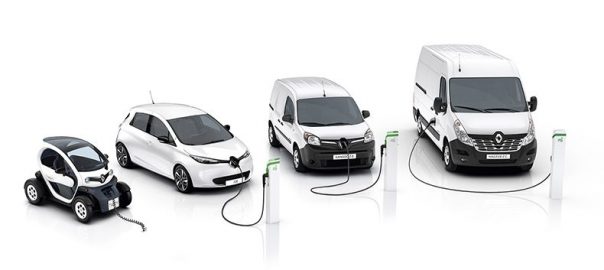
  • Master Z.E., Kangoo Z.E. 33 and Twizy Cargo form the UK’s most comprehensive electric van line-up

Renault Z.E. commercial vehicles have scooped the Green Award at the 2019 Company Van Today Awards. Recognising the very best in light commercial vehicles, these awards are decided by the Company Van Today expert editorial panel, which has decades of experience to draw upon. With a focus on the low running costs, high quality, efficiency and great features that fleets look out for, the awards are some of the most prestigious in the business.

Reflecting on the success of the Renault Z.E. range, Tom Webster, Company Van Today editor said: ‘Renault’s pioneering position with electric light commercial vehicles has been enhanced in the past few months with the arrival of the Master van, which sees the brand again break new ground for fleets looking to cut their fleet emissions. No other manufacturer can match the breadth and ability of Renault’s Z.E. powertrains, and the vehicles offer a genuine zero emission alternative for an increasingly wide user base, which is why the brand is a worthy winner of the Green Award for 2019.”

The Renault Electric Z.E. Range (Image: Renault)

On receiving the award Steve Wilson, Range Manager Renault Pro+ and LCV, remarked: “We’re delighted the Renault Z.E. commercial range has been recognised by the judges at Company Van Today. This award both highlights Renault’s commitment to cutting edge E.V. technology and the impressively wide offering of the firm’s commercial vehicle range.”

The Renault Z.E range of electric commercial vehicles is one of the most comprehensive in the UK. At the large end of the scale is the Master Z.E, which is available in three lengths, two heights and two body styles (panel van and versatile platform cab). The powerful 57kW motor gives ample pulling power, even when making use of the 1,128kg payload, while a potential range of up to 124 miles and an 80 percent charge in a touch over four hours, the Master Z.E. delivers class-leading flexibility.

For businesses looking for a more compact zero emissions solution, the Kangoo Z.E. fits the bill to perfection. Available in three body styles (Panel Van, Maxi and Crew Cab) the Kangoo’s load area stretches up to 4.6 cubic metres, depending on the model. Powered by a 44kW motor with a muscular 225Nm of torque and mated to a smooth single speed transmission it’s a top choice for urban and open road deliveries, helped in no small part by a potential range of up to 162 miles.

Completing Renault’s range of Z.E. commercial vehicles is the Twizy Cargo. Ideal for last mile deliveries, inner city couriers and food delivery services, the Cargo gets a useful lockable 180-litre storage area. Powered by a zippy 8kW motor and with a range of up to 56 miles, the Twizy Cargo is the perfect choice for businesses wanting to conquer congested city delivery routes.

Source: Renault Press

The Renault Electric Z.E. Range (Image: Renault)

Renault EV Sales Strongly Increase In June 2019: 3rd Best Month Ever

Both the Renault ZOE and the Kangoo Z.E. sell like hot cakes

Renault noted a very strong electric car sales results in June 2019, delivering some 6,418 cars (excluding Twizy), which is 45% more than a year ago.

After six months, sales amounted to 30,659 YTD (up 43%):

  • Renault ZOE (passenger and commercial versions) – 5,309 (up 49%) and 25,686 YTD (up 44%)
  • Renault Kangoo Z.E. – 1,036 (up 22%) and 4,759 YTD (up 31%)
  • Renault Master Z.E. – 73 (up 3,550%) and 214 YTD (up 1,845%)

A great June (the third-best month ever) means that the unveiling of the all-new Renault ZOE Z.E. 50 in mid-June didn’t decrease demand for the outgoing generation of ZOE – at least not immediately.

Renault lineup – from left Twizy, ZOE, Kangoo Z.E., Master Z.E.

This past month BEVs accounted for close to 2.4% of all cars sold by Renault globally and 3.9% in Europe (where almost all Renault EVs are sold).

Source: Inside EVs

Nissan's e-NV200 Electric Ice Cream Van (Image: Nissan)

Nissan Has Served Up A Treat With This Electric Ice Cream Van

An electric vehicle you’ll hear coming.

Nissan has partnered with the famous Mackies of Scotland to create a rather sweet concept vehicle.

The electric vehicle pioneers and the ice cream brand have collaborated to create an all-electric ice cream van for “Clean Air Day” in the U.K. on June 20th, which demonstrates how a “Sky to Scoop” approach can remove carbon dependence at every stage of “the ice cream journey.”

Nissan's e-NV200 Electric Ice Cream Van (Image: Nissan)
Nissan’s e-NV200 Electric Ice Cream Van (Image: Nissan)

Going green is nothing new for Mackies, which powers its family-owned dairy farm by renewable wind and solar energy, but most ice cream vans across Britain are powered by diesel engines which stay running even when the van is stopped to power the fridges and freezers onboard.

In fact, some U.K. towns and cities are even looking to ban ice cream vans – which is a preposterous thought, even for someone like me who can’t eat ice cream. Nissan’s new concept provides something of a solution to the impending doom of the good old ice cream van, reducing its carbon footprint while keeping kids happy and parents predictably out of pocket.

Read more: Motor1

New LEVC electric van (Image: LEVC)

New LEVC electric van based on London taxi could be a game changer

THE all-new LEVC electric van is based on the LEVC London cab which has 80-miles of zero-emissions range and a 377-range-extender hybrid.

The makers of the new electric London cab has now developed a new van which could be a game changer in cities. LEVC’s new commercial vehicle is a zero-emissions light van which is similar to a Ford Transit in size. It was unveiled by London Mayor Sadiq Khan and LEVC CEO Joerg Hofmann at the Institution of Engineering and Technology. The vehicle is based on the same architecture and proven e-City range extender technology as LEVC’s TX taxi, of which there are now just under 2,000 on the roads.

It has an all-electric range of 80-miles, making it suitable for city drivers and with a range extender petrol engine it has a total range of 377-miles.

New LEVC electric van (Image: LEVC)

Therefore it is essentially a plug-in hybrid but achieves more pure electric range than a typical hybrid.

The vehicle will allow the driver to avoid any city driving charges and reduce the amount spent on fuel over time.

Read more: Express

Nissan e-NV200 sales soar as UK small businesses electrify their van fleets

  • UK sales of Nissan e-NV200 increase by 200% as business leaders switch to zero emission deliveries
  • e-NV200 tops zero-emissions LCV sales in 10 European markets, including UK, Italy, Norway and the Netherlands
  • The Nissan e-NV200’s environmental credentials and practicality attracts fleet customers including DHL, Chronopost, in adddition to private hire businesses

LONDON, UK (June 14, 2019) – UK sales of the fully electric Nissan e-NV200 have increased by 200% in 2019 as small business leaders look to increase fleet efficiency and reduce costs, amid changing emissions legislation and the introduction of London’s Ultra Low Emission Zone.

The surging demand echoes the results of a recent Nissan survey, showing that 24% of UK small businesses expect van fleets to be fully electric within a decade*.

1 in 3 UK van fleet operators also say that business efficiency is their main motivation when adopting new technologies, followed by cost saving (17%). The e-NV200 is perfect for addressing this demand, with running costs from 2p per mile, and zero tailpipe emissions that ensure the vehicle is exempt from low emission charge zones.

Paolo D’Ettore, Director LCV Business Unit Nissan Europe, said

“The success of e-NV200 truly demonstrates that we have the right product at the right time. The acceleration of fleet electrification – especially in city centres – is a challenge for our customers, so we recognise the need to work with them and provide the optimal ecosystem to support a smooth transition to electric vehicles.

“Thanks to its intelligent design and zero-emissions powertrain, the Nissan e-NV200 is the perfect tool to help businesses maximise their operational success and contribute to a more sustainable future.”

With particularly high demand from last-mile delivery businesses the 40kW e-NV200 has posted record sales across Europe, with over 10,000 orders since its introduction in February 2018.

Read more: Nissan News