Category Archives: Sales

Tesla Model3 (Image: Wikimedia/Carlquinn)

As More Electric Cars Arrive, What’s The Future For Gas-Powered Engines?

Most American automobiles are powered by internal combustion engines: Gas or diesel goes in, tiny explosions power pistons and turn a crankshaft, the car moves forward, and carbon dioxide goes out.

But a growing chorus of environmental activists, business analysts and auto executives are predicting a sea change as battery-powered electric vehicles grow in popularity.
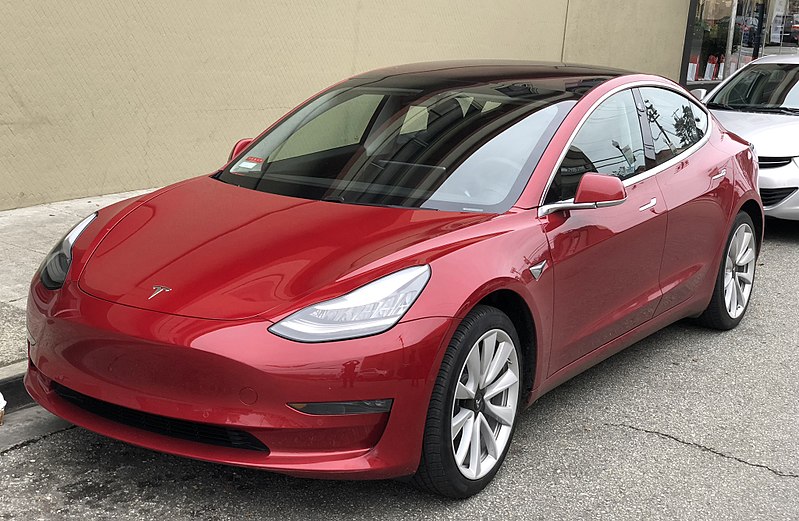
Tesla Model3 (Image: Wikimedia/Carlquinn)

Going electric is not just an eco-friendly goal, an ambition that would help fight climate change. It’s a business reality, according to industry analysts. But if the general path ahead is widely agreed on, the speed of the change — and the role that combustion vehicles will play during the transition — is far from clear.

‘You cannot stop it any more — it’s coming’

“Electrification, you cannot stop it anymore — it’s coming,” says Elmer Kades, a managing director with the consulting firm AlixPartners. “We have fantastic growth rates, between 50 and 60 percent on a global level.”

Electric vehicles are currently a tiny fraction of the car market, which is dominated by internal combustion engines. But many more electric car models will hit showrooms in the next few years, and several factors have analysts convinced that is part of a major transition in the industry.

Read more: National Public Radio
Cheap Motoring

Is This The Tipping Point For Electric Vehicles?

A new report by McKinsey forecasts a rapid switch from gas guzzlers to electric vehicles on the world’s roads will be boosted by the plummeting costs of owning a battery powered vehicle.

The consulting firm’s 2019 Global Energy Perspective report foresees a two-thirds drop in the cost of EV battery packs by 2030. The tipping point at which EVs will be cheaper to own than internal combustion engine-powered vehicles is forecast to be reached in the early 2020s:

The timing of total cost of ownership (TCO) parity in the U.S. and China is comparable to Europe, with China slightly earlier and the U.S. slightly later, reflecting differences in fuel taxation and subsidies for electric vehicles.

Cheap Motoring

After this tipping point, “economic considerations alone” would be sufficient to accelerate the growth of EV sales, says McKinsey. Car sharing and autonomous driving will add further incentives to go electric. Improving battery technologies will mean that even long-haul trucks could be economically electrified during the second half of the next decade.

Read more: Oil Price

Electric cars are already cheaper to own and run

Petrol and diesel vehicles cost more over four years in UK and four other European nations

Electric cars are already cheaper to own and run than petrol or diesel alternatives in five European countries analysed in new research.

The study examined the purchase, fuel and tax costs of Europe’s bestselling car, the VW golf, in its battery electric, hybrid, petrol and diesel versions. Over four years, the pure electric version was the cheapest in all places – UK, Germany, France, Netherlands and Norway – owing to a combination of lower taxes, fuel costs and subsidies on the purchase price.

Researchers from the International Council for Clean Transportation (ICCT) said their report showed that tax breaks are a key way to drive the rollout of electric vehicles and tackle climate change and air pollution.

Carbon emissions from transport are a big contributor to global warming, but have been rising in recent years in the European Union. Vehicles are also a source of much air pollution, which causes 500,000 early deaths a year in the EU.

Electric cars offer the biggest savings over diesel in Norway (27%) as the battery-powered vehicles are exempt from a heavy registration tax. The ICCT analysis was updated for the Guardian after recent cuts in the UK’s grants for electric car purchases. It shows British drivers see the smallest saving – 5%. In Germany, France and the Netherlands, the saving varied from 11% to 15%.

Read more: The Guardian

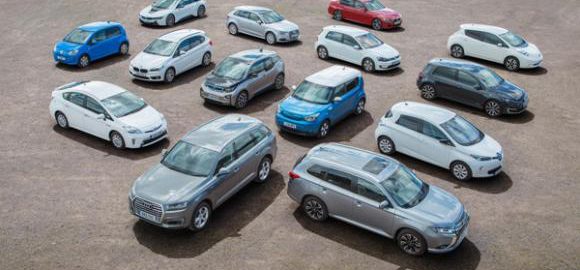
Electric Car Line-up (Image: Go Ultra Low)

EV100: 31 companies join drive to switch to electric vehicles

Global EV100 initiative reports progress among major corporates shifting towards 100 per cent electric fleets as it targets two million EVs by 2030

More than 30 global corporates have now pledged to switch their road fleets to electric vehicles through the EV100 initiative, which has set a target of electrifying two million vehicles by 2030 through its membership.

Published today, The Climate Group’s first annual report on its EV100 initiative reveals 31 companies with a combined revenue of over $500bn have now made EV commitments as part of the campaign, including high profile names such as BT, IKEA, Unilever, EDF, and Heathrow Airport.

Electric Car Line-up (Image: Go Ultra Low)

The report provides a detailed update on the commitments made by 23 member companies, which have together pledged to switch 145,000 vehicles to electric in 66 markets around the world by 2030.

Collectively, the EV commitments from these 23 firms could help to save an estimated 6.6 million metric tonnes of CO2, the equivalent carbon footprint of 1.9 million UK households, according to the report.

Of these members, 95 per cent cited greenhouse gas reduction as a ‘very significant’ or ‘significant’ driver for switching to EVs, and 80 per cent highlighted tackling air pollution as a key reason. A third also identified financial savings as an incentive for investing in EVs.

However, over 70 per cent of EV100 members also identified a lack of EV charging infrastructure as one of the biggest barriers to increased electric vehicle adoption.

Nevertheless, the report states that collectively EV100 member companies have made commitments that will give access to EV charging to over 630,000 of their employees by 2030.

Helen Clarkson, CEO of The Climate Group, said the report showed how leading corporates are helping to accelerate the wider market shift to electric transport by 2030.

With countries pledging to end sales of the combustion engine and cities bringing in low or zero emission zones, forward-thinking companies are getting ahead of the curve now by switching to electric vehicles, she said. “The private sector has an instrumental part to play in bringing down emissions and cleaning up our air – and there are big opportunities for companies taking action now here in the UK.”

Read more: Business Green

EVs to be as cheap as conventional vehicles in the UK by 2021

More than 21 million electric vehicles could be sold each year by the end of the next decade, with EVs achieving cost parity with conventional vehicles in the UK as early as 2021.

Those are the headline findings in new research compiled by advisory firm Deloitte, which has also forecast that electric vehicle supply could outstrip demand, heaping pressure on manufacturers.

The research, published this week, details how Deloitte expects the global adoption of EVs to accelerate in the coming years. Deloitte expects the number of new EVs on the road to double from two million in 2018 to four million in 2020, before soaring to 12 million by 2025.

This is then expected to rise further to 21 million vehicles by 2030, by which time battery electric vehicles are expected to account for 70% of total EV sales the world over.

That surge in demand is to be driven by both growing consumer demand for greener vehicles and government policies driving their adoption. While the UK government has tinkered with the financial incentives on offer, the plug-in car grant continues to support purchases of certain types of low-emission vehicle in the UK.

And the UK looks set to lead the pack in cost-parity, with Deloitte’s automotive partner Michael Woodward expecting electric vehicles to be as cheap to own as petrol and diesel vehicles in the UK as early as 2021.

“In the UK, the cost of petrol and diesel vehicle ownership will converge with electric over the next five years. Supported by existing government subsidies and technology advances, this tipping point could be reached as early as 2021. From this point, cost will no longer be a barrier to purchase, and owning an EV will become a realistic, viable option for new buyers,” he said.

Read more: Current News

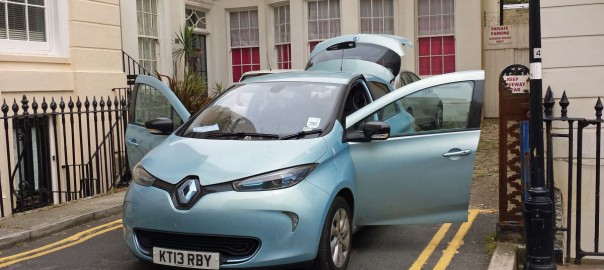
Packing up the ZOE in Brighton ready to go home (Image: T. Larkum)

All-Electric Renault Zoe Named ‘Best Used Electric Car’

  • Renault ZOE named ‘Best Used Electric Car’ in DieselCar and EcoCar’s Used Car Top 50 2019
  • All-electric ZOE takes the title for the second consecutive year
  • Five-door supermini also voted 21st overall out of over 750 cars that were evaluated
  • Renault is the number one EV manufacturer in Europe

LONDON – January 25, 2019: The 100 per cent electric Renault ZOE has successfully defended its title of ‘Best Used Electric Car’ in DieselCar and EcoCar’s Used Car Top 50 2019.

The ZOE clinched the title for the second consecutive year after impressing the magazine’s judging panel of second-hand car experts with its ease-of-ownership, clean looks and nippy yet relaxed driving experience. The award joins an ever-growing list of industry accolades bestowed on the stylish supermini. Additionally, the magazine placed the ZOE 21st overall out of over 750 cars evaluated.

Packing up the ZOE in Brighton ready to go home (Image: T. Larkum)
Renault ZOE 22kWh (Image: T. Larkum)

Diesel Car and Eco Car reached its decision after assessing the Renault ZOE on a multitude of factors, including purchase price, residual value, general competency and fitness for purpose. Every car evaluated was given a score out of 10 that determined its final placing.

On awarding the Renault ZOE for the second year running, Ian Robertson, Editor and Publisher, DieselCar and EcoCar, said

“A supermini rather than a family car, the attractive ZOE is a stylish all-electric model that makes adopting electric motoring remarkably easy. Drive one around town in near-silence with zippy acceleration and zero tailpipe emissions and you’ll be convinced electric power is the future. That’s especially the case in cities like London, where it’s Congestion Charge exempt, saving owners a fortune. Be sure to check if the battery pack is included, as customers were given the choice of buying it outright or leasing the batteries separately.”

Read more: The Auto Channel

It’s Plug-Ins Versus Pickups in Newest Culture Crash

Electric vehicle sales are on the rise all over the world. That doesn’t mean some traditionalists are taking it well.

2018 is shaping up to be a record year for electric vehicles. My Bloomberg NEF colleagues expect 1.9 million EVs will have been sold last year, up from 1.1 million the year before, with the bulk of those sales in Asia. Overall, China’s new passenger vehicle sales were in significant decline for the first time in more than 20 years.

Rapid growth requires the infrastructure to keep those electric vehicles charging on road trips, at offices or any time their owners aren’t plugging in at home. That infrastructure is being built in major auto markets — and some new behaviors are cropping up, too, as electric vehicle charging outlets are being built at retailers, apartment complexes and especially at gas stations.

There are currently about 50,000 fast-charging outlets in the U.S., and Germany and Japan have 30,000 to 40,000 each. However, as Bloomberg News’s Marie Mawad found out during her recent drive from Paris to Mannheim, Germany, there are still not enough charging outlets to set a road-tripping EV driver’s mind at ease.

China has … a few more. And for good reason: Very few drivers in China have personal garages in which to slow-charge overnight.

Meanwhile, by the end of last year, there were reports of U.S. drivers being “ICEd out”: drivers of internal combustion engine cars deliberately occupying dedicated charging spots, preventing EV drivers from using them. Besides being deliberate and hostile, it’s not an exaggeration to call such behavior the result of a culture clash between the environmentally minded and coal-rolling enthusiasts. More plainly, perhaps, it is new versus old.

Read more: Bloomberg

Report: 2018 was ‘most successful year yet’ for UK’s EV market

The UK’s electric vehicle (EV) market grew by a record-breaking 19% in 2018, with one EV being registered every nine minutes.

That is a key finding of a new research paper from pro-EV campaign group Go Ultra Low, which found that almost 60,000 fully-electric and plug-in hybrid electric vehicles were registered in the UK last year.

Published today (21 January), the research draws on the latest official Government figures, revealing that the uptake of EVs grew at a similar rate between the UK’s business and domestic car users throughout 2018.

Electric car sales are expected to overtake petrol by 2040

In total, 59,911 EVs were registered in the UK last year, of which 74% were plug-in hybrids, the paper claims. While only 26% of EV registrations were for fully-electric models, this was still an increase on 2017’s 14% proportion.

The registrations mean that the nation’s total EV stock now stands at more than 196,300 vehicles, following seven consecutive years of growth.

Go Ultra Low has predicted that the EV revolution will continue to take hold in 2019, as carmakers launch new electric models and the Government begins distributing the first string of funding set out in its Road to Zero strategy.

“In the context of the wider new car market, it is fantastic to see plug-in car registrations continue to go from strength-to-strength” Go Ultra Low’s head, Poppy Welch, said.

“With even more new models being released, coupled with the introduction of initiatives such as London’s Ultra Low Emission Zone, we’re confident that the next 12 months will be a landmark year for the nation’s switch to electric.”

According to Go Ultra Low, some of the more noteworthy EV releases in 2019 will be the all-electric Kia e-Niro, Audi e-tron and Nissan LEAF. The Nissan LEAF 3.ZERO e+ Limited Edition – of which only 5,000 units will be produced for the European market – is expected to deliver a driving range of up to 239 miles on a single charge of the 62kWh capacity battery.

Read more: Edie

Was 2018 the peak for internal-combustion car sales?

Electric-car sales are growing. Total car sales around the world are shrinking.

Put the two together, and the conclusion from many analysts is that sales of cars powered by internal combustion engines around the world have already peaked.

From 2019 onward, they’re likely to do nothing but shrink, according to several automotive analysts interviewed in the Financial Times (subscription required) for a piece published late last month.

The FT quotes several analytics firms forecasting that global auto sales will fall in 2019 compared with a record 95.5 million cars sold in 2018, according to Moody’s Analytics.

There are several factors at play: an international trade war among the U.S., China, and Europe; tighter consumer credit in the world’s largest auto market, China; troubled Brexit negotiations; and tighter European restrictions on carbon-dioxide emissions.

Other analytics firms, including Evercore ISI, Accenture, and Jato Dynamics told the FT that they expect a structural downturn in 2019, based on slower sales in the second half of 2018.

At the same time, sales of electric cars are rising. AlixPartners, a British consulting service, says it expects electric car sales to grow by 1.5 million in 2019, reaching about 1.6 percent of the global market.

“Peak ICE” may already have occurred at the end of 2018, Elmer Kades, global co-leader of AlixPartners’ automotive practice told the FT. “It’s this slowing growth of the overall pie that the industry should be most concerned with, even as it has to … pay for the continuing switchover to electric vehicles.”

Read more: Green Car Reports

Millions could miss out on benefits of electric vehicles

Millions of people could miss out on the environmental and financial benefits of electric vehicles (EVs), according to a new report.

The report by the think tank Localis warns poorer parts of the country could get left behind unless local authorities are given to power to draw up their own ‘smart city’ plans and energy policies.

In addition, it argues local authorities should be able to form their own consortiums using existing knowledge of their local areas, and also be empowered to work with private energy network providers to deliver the infrastructure they need for the future.

The report also emphasised that families across the UK are at risk of sharing the cost for necessary new energy infrastructure, but not being able to access for themselves the benefits of EVs and other ‘smart’ technologies – driving further inequality between richer and poorer parts of the country.

‘Without a change in regulation, behaviour and a wholesale transfer of powers for local energy policies, we risk a tale of two cities in our major urban centres – deepening levels of inequality between the prosperous and more deprived parts of town,’ said Localis chief executive, Jonathan Werran.

‘A ‘devolution revolution’ in locally-regulated energy markets has the potential to accelerate the nation’s switch to clean growth, turn UK cities into powerhouses for sustainable and inclusive prosperity and improve livelihoods in towns and cities across the UK.’

Read more: Environment Journal