Category Archives: Sales

Electric Vehicle Sales Are Exploding In Europe

The next two years are likely to be the tipping point for electric vehicles (EVs) going mainstream in Europe, as the number of electric car models on the European market is set to more than triple in the next three years, Transport & Environment (T&E), Europe’s leading clean transport campaign group, says in a new analysis.

According to T&E, which analyzed the upcoming offerings using data from authoritative industry source IHS Markit, the number of EV models made across the European Union (EU) will jump from around 60 models available at end-2018 to a total of 214 battery electric (BEV), plug-in hybrid (PHEV), and fuel cell (FCEV) models in 2021, and further up to 333 models in 2025.

“Until recently, the EV market was limited to a niche of early adopters but tomorrow’s landscape will be very different as EVs enter a new phase and near the mass market,” the report from T&E says.

Based on IHS Markit’s light vehicle production forecast data and in-house T&E analysis, the production of EVs in Europe is set to surge six-fold between 2019 and 2025, reaching more than 4 million cars and vans. This production volume would account more than a fifth of the EU car production volumes.

EV manufacturing will be replacing diesel-fueled car making across Europe, with the largest production sites in western Europe—Germany, France, Spain, and Italy, T&E’s analysis shows. In central and eastern Europe, Slovakia, the Czech Republic, and Hungary are also expected to be significant EV production centers.

Read more: Oil Price
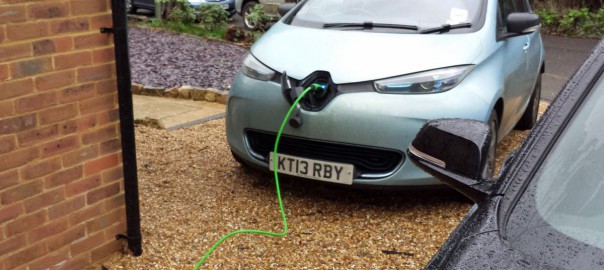
Figure 4: Charging on Christmas Day (Image: T. Larkum)

More than 1.5 million UK households could go electric without compromise

Millions of buyers are in the perfect position to buy an electric car, research by What Car? has found…

Electric car ownership is the right choice for at least 1.5 million UK households today, according to new research by What Car?. That’s the number of multi-car homes in the UK with a sweet-spot combination of off-street parking for home-charging and at least one vehicle that never does more than 100 miles in a single journey.

What Car? approached 2310 current electric vehicle owners and a further 23,500 non-EV owners to understand how they used their cars on an everyday basis.

The research found that 17% of multi-car households have at least one vehicle that never makes a journey of more than 100 miles. Overlaying these numbers with the percentage that have a driveway for home-charging (88%), What Car? calculated that 1.56m households – of the 27m in the UK – could convert to a pure electric vehicle without any compromises today. This figure is set to increase as charging infrastructure and electric vehicle range increases in future years.

Figure 4: Charging on Christmas Day (Image: T. Larkum)

To further support the arguments for purchasing an electric car, a surprising two-thirds of households that already have one, as well as a traditional petrol or diesel vehicle, say they now use the EV as their main vehicle.

2019 has been labelled the year of the electric vehicle, with no fewer than 19 different pure battery powered cars hitting the showrooms. The latest is the Oxford-built all-electric Mini Electric, which launches this week. It is being revealed just months after What Car? awarded its coveted Car of the Year accolade to the all-electric Kia e-Niro – the first time that an electric car has won the award.

Read more: What Car

The sun sets on drilling (Image: Pexels)

Redefining Geopolitics in the Age of Electric Vehicles

Oil has played a pivotal role in shaping geopolitics for more than a century. But the rise of electric vehicles and shift toward cleaner fuels means that the world’s dependence on oil could begin to shrink, with both expected and unexpected consequences.

Most countries are not prepared for the consequences of this transition, according to E3G’s new report Rules of the Road: The Geopolitics of Electric Vehicles in Eurasia. The biggest sources of conflict will not come from the places security and foreign policy analysts instinctively look, like the struggle to control valuable mineral resources. Rather they will emerge from the need to navigate the social impacts of the energy transition, including supply chain disruption, employment impacts, and trade disputes.

The sun sets on drilling (Image: Pexels)

Fast-growing Electric Vehicle Market

Electric Vehicle (EV) sales have been growing at a rapid pace—between 40 percent and 50 percent per year, according to McKinsey. Even conservative forecasts show significant growth in EV adoption over the next several decades, with some projections showing EV penetration rising high enough to flatten oil demand from 2020 to 2030. Oil demand could fall steadily thereafter.

This shift could occur much faster than mid-range forecasts predict. The world’s largest independent energy trader has predicted peak oil demand in 15 years and signaled it intends to focus on clean fuels and power trading. Many of the international oil companies (IOCs) now are getting involved in EV markets or supply chains. Several of the world’s largest economies, including France and the UK, have set phase-out targets for internal combustion engine vehicles, and car companies collectively have announced that they are investing more than US$100 billion new EV models. It’s also worth noting that most forecasts have consistently underestimated EV deployment and other clean energy technology adoption rates.

Read more: New Security Beat

Sales of EVs soar by 61% amidst charging expansions

Sales of battery electric vehicles (BEV) in the UK have soared by 61%, according to new figures released by the Society of Motor Manufacturers and Traders (SMMT).

Last month 2,461 BEVs were registered, going up from the 1,522 registered in the June of 2018.

Overall sale of vehicles dropped by 4.9%, with the worst hit being plug-in hybrid electric vehicles (PHEV), which fell by 50.4%. This places BEVs and PHEVs almost level, with BEVs now making up 1.1% of the market, up on the 0.6% of 2018, and PHEVs making up 1.0%, falling from 1.9%.

This comes at a time when EV charging in the UK is undergoing rapid expansion, with the number of charging sites overtaking petrol stations in May. Ultra-rapid 150kW chargers are also finding their way onto the market, with Shell claiming the first UK install of a 150kW charger and BP Chargemaster revealing plans to install 150kW chargers across its Polar network.

Read more: Current News

Electric cars exempt from company car tax next year

UK’s million or so company car users will escape Benefit-in-Kind tax if they have an electric car in the 2020/21 financial year

Company car users who drive an electric car will not have to pay any Benefit-in-Kind (BiK) tax during the next financial year, after the Treasury reviewed tax rules.

The change follows the introduction of the WLTP (Worldwide Harmonised Light Vehicle Test Procedure) emissions regulations, which are more stringent than the NEDC regime they replaced. Because BiK rates are based on CO2 outputs, and WLTP sees higher on-paper emissions recorded, company car users faced a potentially significant hike in the BiK rates they faced.

To offset that rise, the Treasury has replaced previously published BiK rates for the 2020/21 financial year with new tables that see most BiK percentage bands reduced by two points.

Electric cars were due to get a two per cent BiK rate in 2020/21, so the changes will mean drivers choosing an EV as their company car will pay no Benefit-in-Kind rate whatsoever for that financial year. The tax exemption applies to EVs registered from 6 April 2020, and those registered before that date.

Read more: Auto Express

Electric Vehicles — Thinking People’s Cars

What’s the ROI (return on investment) for filling a gas car? None, zero! You pay from the moment you sign on the dotted line — engine repairs, routine maintenance, gas, gas, and gas. Did I mention gas? Automakers love you, auto dealers love you, repair shops love you, and the fossil fuel industry loves you. Why not? You’re constantly at their doors with your wallet open.

Many studies showing the cost of owning an electric vehicle (EV) as opposed to a fossil fuel vehicle (FFV) are distorted and biased toward FFVs, as we’ve simply been programmed to think from a FFV perspective. This is by design, just like the skillful manipulation that has people pulling up to the pump without thinking about what’s going on and how devastating it is to them and the environment. The technological advantages and power of EVs when combined with renewables should not be underestimated or overlooked when we compare different propulsion systems.

You can never drive a gas car for the cost of driving an EV. You will always be tethered to the pump, but you will always have the option of paying very little to nothing for the energy to drive an EV. An unfair comparison? When we list the benefits of driving both cars, automakers are quick to point out how fast a gas car can be refilled, so if that’s a benefit of gas cars then surely being able to charge an EV from your own power is a benefit of electric cars. Combining EVs and renewables forms a bond that gas cars can not compete with and as technology improves, as it has done and will keep on doing, this will only get better. As charging rates continue to go up, the line between filling a gas car and charging an EV will vanish, and we are already starting to seeing this.

Read more: Clean Technica

Switching to an electric car could save you £41,000 in your lifetime

SWITCHING to an electric car could save drivers a whopping £41,000 over their lifetime, finds new research.

The future of the car industry is with electric cars. Carmakers and governments are pushing towards these zero emissions vehicles as new emissions and pollution targets need to be met. Electric cars are, however, still more expensive to buy on average than petrol and diesel variants and also perceived to be pricier. Recent research estimates that electric cars will become as affordable as petrol and diesel cars by as early as 2024.

However, they could already be a savvier investment and save you thousands over the course of your lifetime.

New research actually suggests the buying an electric car could save you £41,000 over your life.

The average British motorist will spend over a staggering £56,000 on petrol in a lifetime, according to new figures.

With the average lifetime cost of charging an electric vehicle coming in at just over £15,000, savvy Brits could save over £41,000 on fuel by going electric in the near future.

Read more: Express

The Guilt & Embarrassment Of NOT Driving An EV

For several years now, I’ve felt both guilt and embarrassment for not driving an EV.

I wonder how many other CleanTechnica readers who don’t own an EV yet, who own an ICE (internal combustion engine) car, feel similarly. This article is intended to bring to the surface a possible undercurrent that may exist for many of us who care about the environment, and the climate crisis, and who support EVs.

My next car will be an EV, but mostly for financial reasons (caused primarily by doing a lot of non-paying community volunteer work), I’m not at the moment in a position to buy a new or even a used EV. This bothers me. Every time I go to a gas station and pay money to the oil industry, it bothers me. It bothers me a lot.

Perhaps one might think that the commitment to EVs is shallow. I read CleanTechnica daily, I have for several years, and watch a number of YouTubers who are focused on EVs, including Zac and Jesse of Now You Know, Ben Sullins of Teslanomics, Sean Mitchell of All Things EV, Gali Russell of HyperChange TV, Fully Charged, Tesla Owners Online, Kyle Field, Frugal Tesla Guy, Sandy Munro on Autoline, Tesloop, and E for Electric. I’m a member of the local EV club, and I run a local Green Community Meetup group.

I love new technology, and I’ve attended a local electric utility event where I got to drive a Tesla Model 3, Model S, Nissan Leaf, and Chevy Bolt. There’s another one this weekend that I’ll be attending where I hope I can drive a Model X. I care about the environment, live vegan in part due to environmental considerations, and have studied and written about climate heating here, here, and here.

In short, while I consider myself a well informed and strong supporter of EVs, I still reluctantly drive a gasoline vehicle.

Read more: Clean Technica

Electric Models To Dominate Car Sales By 2040, Wiping Out 13m Barrels A Day Of Oil Demand

It may not seem like it now, but we may now be living in a world where sales of conventional passenger cars have already peaked, a development that will have widespread implications not just for the automotive sector but also oil and gas companies and metals and mining groups.

Electric vehicles (EVs) are set to make up more than half of global passenger car sales by 2040 and completely dominate the bus market according to new research.

Sales of diesel and gasoline vehicles will continue to decline, according to BloombergNEF’s Electric Vehicle Outlook 2019.

The report shows that electrics will take up 57% of the global passenger car sales by 2040, with electric buses dominating their sector, holding 81% of municipal bus sales by the same date.

Electric models will also make up 56% of light commercial vehicle sales – vans and light trucks in Europe, the US and China within the next two decades, and 31% of the medium commercial market. However, heavy trucks will be a harder nut for electric technology to crack because of their weight, but electric heavy trucks will still comprise almost a fifth of the market, although these will be mostly limited to shorter routes.

Conventional heavy trucks will, however face competition from other alternative fuels such as natural gas and hydrogen fuel cells.

Colin McKerracher, head of advanced transport for BNEF, commented: “Our conclusions are stark for fossil fuel use in road transport. Electrification will still take time because the global fleet changes over slowly but, once it gets rolling in the 2020s, it starts to spread to many other areas of road transport. We see a real possibility that global sales of conventional passenger cars have already passed their peak.”

Read more: Forbes

Cheapest Electric Cars UK (Image: Fuel Included)

Increase in residual value of electric cars boosted by greater range

Sales of fully electric cars are growing rapidly, which in the long term will also lead to a larger supply of used electric cars. ING expects a quarter of the used car market to favour electric cars by 2025.

The demand for used electric cars will outstrip supply, resulting in rising used car prices.

Cheapest Electric Cars UK (Image: Fuel Included)
Cheapest Electric Cars in the UK (Image: Fuel Included)

This means that electric cars will keep their value better than petrol and diesel models. ING estimates that new electric cars will keep 40% to 50% of their value after five years – more than petrol vehicles (35% to 42.5%) and diesel vehicles (27.5% to 35%).

Read report: ING