Category Archives: Sales

Cheap Motoring

We All Can Benefit from More Electric Vehicles

Environmental advocates and consumer groups are often at odds with investor-owned electric utilities.

In fact, NRDC is currently opposing electric utilities in several active lawsuits. However, we all agree that electrifying our nation’s cars, trucks, and buses can benefit everyone and that the transition must benefit communities most in need of relief from pain at the pump and from toxic, vehicular air pollution.

The Edison Electric Institute, Illinois Citizens Utility Board, National Consumer Law Center, Natural Resources Defense Council, and Sierra Club have issued a joint statement underscoring that agreement. The full statement is available here and is reproduced below. This is a landmark accord that unites these groups for the first time on the shared goal of electrifying our transportation system and ensuring those benefits are shared broadly.

Cheap Motoring

This is important because transportation is now the largest source of carbon pollution in the nation.

Electric utilities are currently investing $1.4 billion in programs designed to accelerate the electrification of the transportation sector, largely helping to speed the deployment of charging infrastructure for electric vehicles (EVs). Nearly $1 billion of that collective investment is in programs that prioritize under-served communities, and $345 million is allocated directly to disadvantaged communities and low-income customers.

And the largest utility transportation electrification programs approved to-date will speed the deployment of zero-emission trucks, buses, port equipment, and other vehicles that emit dangerous diesel pollution that disproportionately harms low-income communities.

Utility investments to accelerate transportation electrification also pay broader dividends. Multiple studies reveal that widespread EV charging can provide billions of dollars in reduced utility bills resulting from the fact that EV charging brings in new revenue in excess of associated costs, money that is returned to all customers in the form of lower rates and bills.

Read more: NRDC

It’s Time to Go Green!

If you would like to know more about Solar Panels and the PowerBanx range of home battery systems, and get a free instant quote, please complete our online form:

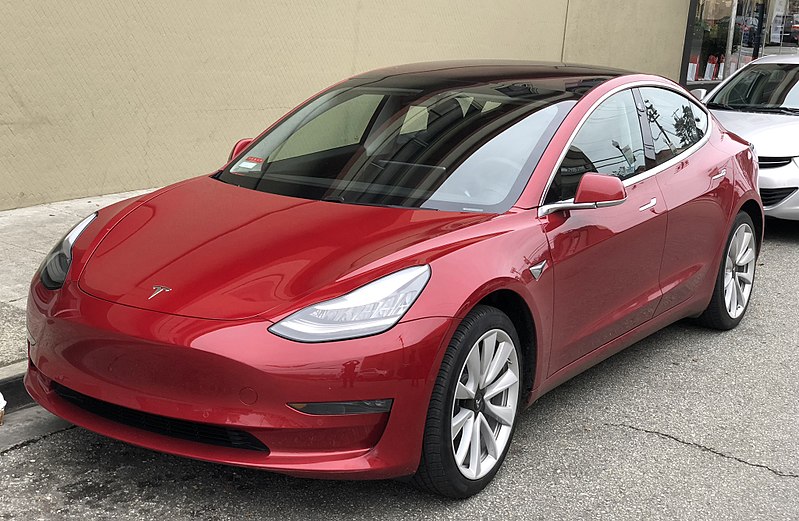
Tesla Model3 (Image: Wikimedia/Carlquinn)

Car tax 2020: How employers could help you save 40 percent on a new car with tax changes

CAR TAX changes are coming into effect in 2020 and your employer could be the answer to getting a brand new vehicle for a cheap price tag.

Car tax rules for company vehicles are set to change this year which will see a complete ban on benefit-in-kind rates as rates are dramatically cut. The updates will slash benefit-in-kind rates to zero percent from 16 in a massive win for those wishing to get involved with the electric car revolution ahead of 2035’s petrol and diesel ban.

Changes to the rates will see some of the most popular EV’s on the market go for budget prices as the government aims to increase the uptake of the machines.

A premium Tesla Model 3 is estimated to cost around £530 under a 48-month contract. However, company car owners could see a 42 percent discount by paying just £307 per month.

Tesla Model3 (Image: Wikimedia/Carlquinn)

Discounts would also come into force across the affordable market with Renault’s Zoe around 32 percent cheaper.

The city runaround is estimated to cost around £270 per month through a finance deal but a slash in benefit-in-kind rates for company car owners could see motorists paying just £184 per month.

Read more: Express

It’s Time to Go Green!

If you would like to know more about Solar Panels and the PowerBanx range of home battery systems, and get a free instant quote, please complete our online form:

Alternatively fuelled vehicle sales continue to smash records, as charge point roll-out accelerates

Sales of battery electric vehicles (BEVs) have continued to soar, exceeding the 100,000 mark in January 2019.

Sales were up 203.9% compared to 2019, according to new statistics from the Society of Motor Manufacturers and Traders (SMMT), with 4,0054 BEVs registered during the month compared to 1,334 in the year previously.

However, plug-in hybrids (PHEVs) outperformed BEVs for the first time since May 2019, with 4,788 registered in the month.

Combined, alternatively fuelled vehicle registrations reached 11.9% of the market in January, which the SMMT says is the highest on record and is up from 6.8% the year prior.

The figures come in a week where it was announced the government will seek to bring the phase-out of petrol and diesel vehicles to 2035, and include hybrids within this for the first time.

Mike Hawes, chief executive SMMT, said:

“While ambition is understandable, as we must address climate change and air quality concerns, blanket bans do not help short-term consumer confidence.

“To be successful, government must lead the transition with an extensive and appropriately funded package of fiscal incentives, policies and investment to drive demand. We want to deliver air quality and environmental improvements now but need a strong market to do so.”

As sales of electric vehicles increase, the amount of charging infrastructure across the UK also does. By the end of 2019, there were 17,000 public charge points recorded on Zap-Map and over 10,500 charging locations.

Read more: Current News

It’s Time to Go Green!

If you would like to know more about Solar Panels and the PowerBanx range of home battery systems, and get a free instant quote, please complete our online form:

PM confirms 2035 ICE ban, but must be followed with ‘real action’ industry warns

The phase-out of petrol and diesel cars is to be brought forward from 2040 to 2035, Prime Minister Boris Johnson today confirmed.

The ban is also now set to include hybrids for the first time, with the potential for an earlier phase-out date than 2035 subject to a consultation.

The PM confirmed the new date in a speech at a launch event for COP26, which is to be held in Glasgow later this year.

Transport secretary Grant Shapps said the government is bringing forward the “already ambitious target” as it wants to go “further than ever before”.

Shapps first announced plans to consult on an earlier phase-out date in October 2019, suggesting 2035 as the date the government should aim for.

The commitment to a new date has been welcomed, with OVO Energy’s director of EVs Tom Pakenham saying it “indicates how the government is serious in” leading the world in transport electrification.

“The new 2035 deadline will accelerate the supply and uptake of electric vehicles, but also give enterprises and the grid enough time to create the solutions needed to effectively manage them.”

However, Helen Clarkson, CEO of The Climate Group, which runs the EV100 scheme, said the date “could still be sooner”, suggesting that 2030 is required to be a global leader or else the UK risks “being out of step with our international peers”.

Read more: Current News

It’s Time to Go Green!

If you would like to know more about Solar Panels and the PowerBanx range of home battery systems, and get a free instant quote, please complete our online form:

New tax rules herald EV sales boom

From April, company car tax will be scrapped for electric car buyers; experts predict big surge in demand for EVs

The electric car revolution is poised to hit the UK this year, but not because of purchase grants, green-shaming or European Union regulations. Instead, the expected sales boom is set to be driven largely by a change to company car tax regulations.

After the upcoming changes were announced in July 2019, sales of EVs doubled in the second half of the year compared with the first half, according to figures from the Society of Motor Manufacturers and Traders (SMMT). Business lease firm Alphabet reported a 165% rise in orders for plug-in vehicles.

The UK’s company car market is big business. Up to the end of November last year, 53% of cars sold went to fleets, SMMT figures show. Company cars aren’t free; they are a heavily taxed perk and, since 2002, the government has pegged the rate of duty to the car’s official CO2 emission figure. That move forced drivers out of thirsty petrol-engined cars and into more frugal diesels as companies sought to reduce the tax burden on their employees.

This year, however, the focus switches to plug-in cars. From April, people who choose electric cars will pay 0% company car tax: nothing at all.

“The fleet sector has a lot of pent-up demand, and this tax incentive could lead to a big surge in EVs,” said Gerry Keaney, chief executive of the British Vehicle Rental and Leasing Association (BVRLA).

Simultaneously, company car tax will for the first time be calculated using the CO2 figures generated by the new, tougher Worldwide Harmonised Light Vehicle Test (WLTP) regime. In short, the government is offering a huge, juicy carrot for drivers choosing electric and plug-in hybrid cars, and an extra whack of the stick for staying with conventional diesels or petrols.

Read more: Autocar

It’s Time to Go Green!

If you would like to know more about Solar Panels and the PowerBanx range of home battery systems, and get a free instant quote, please complete our online form:
Is 2020 the year of the electric car?

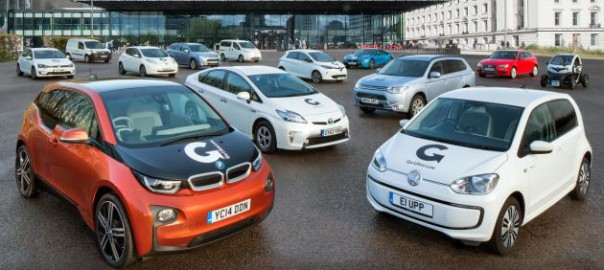
Could 2020 be the year the UK electric car market reaches a major milestone, and hit 5% of new car sales for the first time?

The fast-evolving market forces point to it, as the introduction of Clean Air Zones, new models on the market and impassioned campaigning for stronger CO2 regulations mean the stars may be aligning.

The UK lags behind some of its neighbours. In Europe’s pacesetter, Norway, nearly 60% of new cars sold were electric during a record-breaking month last year. In the UK, battery-powered Electric Vehicles (EVs) make up only 3.3% of new car sales, though this rose from 1.1% in a year.

In the UK, EVs are exempt from Vehicle Excise Duty (VED), though not if they have a list price of more than £40,000, and grants towards the purchase and home charger are available, although the amount available has fallen by £1,000.

New measures may be necessary to convince UK drivers to leave diesel and petrol behind. The Government’s Road to Zero has three key ambitions; for at least 50% of new car sales to be ultra-low emission by 2030, to ban the sale of new combustion engine vehicles by 2040, and, by 2050, for virtually all cars and vans sold to have zero tailpipe emissions.

In the lead up to 2040 grants may be vital to chip away at the high price points attached to many EVs, while removing VAT from the sale of EVs, along with getting rid of the premium VED, should encourage uptake.

When benefit-in-kind taxes for electric company cars reduce to 0% in April, manufacturers will likely see an uptake in business from employers and fleet operators. Manufacturers could use those profits to reduce prices for individual consumers, thus encouraging their transition to EV and increasing sales.

As EVs become more mainstream in the new car market, motorists are hoping this will also impact the used car market, making these greener vehicles more accessible to people who cannot afford to buy brand new or simply do not want to.

Read more: Motor Trader

It’s Time to Go Green!

If you would like to know more about Solar Panels and the PowerBanx range of home battery systems, and get a free instant quote, please complete our online form:

Ultra-low emission registrations up 386% on first quarter of 2014 (Image: OLEV)

Why electric car owners are the happiest

When it comes to owner satisfaction, electric car drivers are the happiest of the lot

We road and lab test hundreds of new cars each year, identifying the heroes and villains across the price spectrum. We also survey thousands of car owners, so you can use the results of our annual car survey to find out which models are the most reliable, and which are likely to leave you frustrated at the side of the road. However, when it comes to really knowing a car inside out, nothing beats living with it for a prolonged period of time. That’s why our annual car survey has a specific section on satisfaction – namely how happy you are with your car and how likely you are to recommend it to a friend.

Ultra-low emission registrations up 386% on first quarter of 2014 (Image: OLEV)

Each year, we dig into our data and discover which cars that kept their owners most satisfied, across our car classes. This is separate to our reliability ratings, which tell you how reliable a car is. It’s also separate to our overall test scores for each model, which are made up of the results of our independent lab tests, as well as our reliability ratings. Instead, our satisfaction scores focus purely on how happy owners are. We’re seeing electric cars taking the top spot in a number of key car classes. Below are the areas in which they’ve overtaken the established competition to become the most satisfying cars to own.

Which small electric cars make their owners happy?

Buyers expect a lot from the small car class, despite their compact dimensions and (mostly) modest prices. This class is easily the most popular in the UK, with UK bestsellers such as the Ford Fiesta and Vauxhall Corsa championed for their blend of hatchback practicality and ease of use in congested city centres. However, of all the new small cars we’ve tested, it’s the BMW i3 (in both pure EV and ‘range extender hybrid’ guises) and the zero-emissions Renault Zoe that have taken podium places for owner satisfaction.

Read more: Which?

It’s Time to Go Green!

If you would like to know more about Solar Panels and the PowerBanx range of home battery systems, and get a free instant quote, please complete our online form:

Renault Zoe retains its fastest selling used car title

Renault’s electric automatic Zoe electric vehicle (EV) has retained its title as the fastest selling used car in the UK, with the 2016 variant taking the top spot in the first review of the Auto Trader Fastest Selling Index of the year.

The result adds further weight to the prediction from automotive analysts that 2020 is set to be the year of the electric car. The latest figures from the Index, which live tracks the speed at which vehicles sell combined with a 1-100 Retail Rating determined by live supply and demand, showed that the French ultra-low emission vehicle (ULEV) currently has the potential to leave forecourts in just 25 days. Despite the 2016 variant topping January’s list, with just one Zoe featuring on the top 10, January marks a slight decline in popularity compared to December, where three made the list.

2018 – Renault ZOE

“Despite a slight increase of traditional fuelled vehicles on the top 10, it’s impossible to ignore the huge shift in consumer perception towards low emission cars”

said Auto Trader’s director of commercial products, Karolina Edwards-Smajda, commenting on the Index.

“Whilst we’re a long way from mass adoption, every metric on our marketplace indicates an ever-growing appetite for electric. Not only has the ZOE continued its reign into the new year, but over the last 12 months we’ve seen a significant 78 percent increase in searches for EVs on Auto Trader. With more and more new generation models set to reach showrooms this year, coupled with fast improving infrastructure, its looking increasingly likely that 2020 will indeed be the year of electric.”

Read more: Renewable Energy Magazine

It’s Time to Go Green!

If you would like to know more about Solar Panels and the PowerBanx range of home battery systems, and get a free instant quote, please complete our online form:
How Soon Will Electric Vehicles Kill The Gasoline Car?

When I talk about exponential growth in clean transportation—or say anything optimistic about climate change—the pessimists baulk.

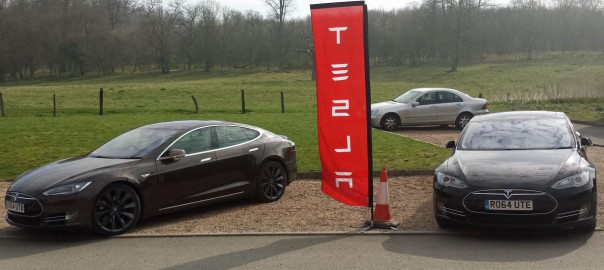
C’mon, they say, the overwhelming majority of our electricity comes from fossil fuels. Demand for oil is still growing. Electric vehicles (EVs) are a miniscule percentage of cars sold. What good can a few wealthy Tesla owners possibly do for the environment?

To pessimists, the EV revolution seems underwhelming. That’s because they underestimate the power of exponential growth.

Optimists don’t demand instant results from innovation. Rather, they recognize how sudden technological transformation can be. Societies won’t register the full potential of EVs until moments before they sweep gasoline cars into the dustbin of history.

What Exponential Growth Really Means

People say that innovations like the Internet, smartphone and social media grew “exponentially” because they radically changed our lives within a few years of appearing. But what do we mean by “exponential”? The late physics professor Al Bartlett used to demonstrate the shocking power of exponential growth very clearly.

Imagine a glass with one bacterium that divides into two bacteria every minute. In one hour, that doubling process fills the glass. If you started the process at 11 am, at what time would the glass be half full?

Many people assume 11:30 am. In reality, the glass is only half full at 11:59 am. At 11:58, it’s 25% full, and at 11:55, it’s only 3% full! 97% seems like business as usual, with no tipping point in sight. The progress seems unimpressive until the moment the bacteria become ubiquitous. The same is likely true of electric vehicles.

Read more: Forbes

It’s Time to Go Green!

If you would like to know more about Solar Panels and the PowerBanx range of home battery systems, and get a free instant quote, please complete our online form:

Nissan supplies discounted Leaf EVs to Uber in London

Mobility service plans for all 45,000 of its London drivers to use electric vehicles by 2025

Nissan will supply 2000 Leaf EVs to Uber in London, as part of the mobility service’s goal to make its fleet in the capital fully electric by 2025.

Supplied in entry-level 40kWh guise, the Sunderland-built Leaf offers Uber drivers 168 miles of range per charge. Nissan is supplying the electric hatch to the ride-hailing firm at a ‘dedicated transaction price’, offering drivers around £4500 off the car’s £26,345 list price, depending on the number of miles they have driven.

The company has added a 15p ‘Clean Air Fee’ to all journeys made in London, which will be used to help its employees pay for the new Nissan models.

Uber hopes that all 45,000 Uber cars operating in London will be fully electric by 2025, and has so far raised £80 million to “support drivers transitioning to electric vehicles”. After switching into an EV, the Clean Air Fee will go towards the driver’s ongoing operating costs.

Uber’s ‘Clean Air Plan’ to reduce emissions came into effect in January 2019. The company claims 900,000 trips across the capital have been made in electric vehicles since then – a 350% increase over 2018 – and that more than 500 drivers per week are using fully electric cars.

Read more: Autocar

It’s Time to Go Green!

If you would like to know more about Solar Panels and the PowerBanx range of home battery systems, and get a free instant quote, please complete our online form: